Kirjojen hintavertailu. Mukana 11 518 949 kirjaa ja 12 kauppaa.

Kirjahaku

Etsi kirjoja tekijän nimen, kirjan nimen tai ISBN:n perusteella.

5 kirjaa tekijältä Patricia Nelson Limerick

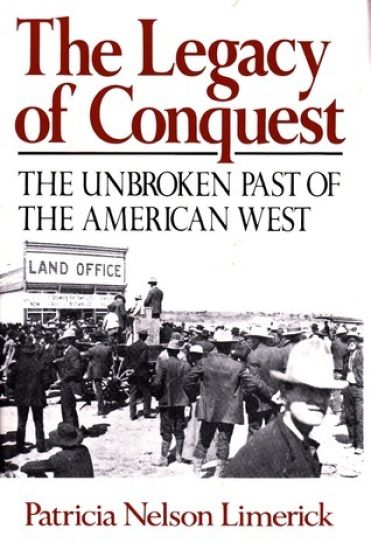
The Legacy of Conquest

The Legacy of Conquest

Patricia Nelson Limerick

WW Norton Co
1988
nidottu
The "settling" of the American West has been perceived throughout the world as a series of quaint, violent, and romantic adventures. But in fact, Patricia Nelson Limerick argues, the West has a history grounded primarily in economic reality; in hardheaded questions of profit, loss, competition, and consolidation. Here she interprets the stories and the characters in a new way: the trappers, traders, Indians, farmers, oilmen, cowboys, and sheriffs of the Old West "meant business" in more ways than one, and their descendents mean business today.
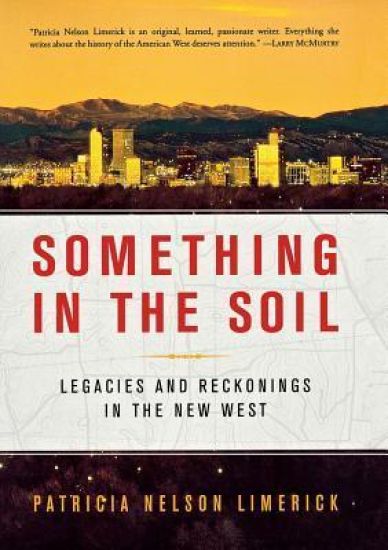
Something in the Soil

Something in the Soil

Patricia Nelson Limerick

WW Norton Co
2001
nidottu
In Something in the Soil, Patricia Nelson Limerick travels far outside the usual academic circles to bring Western past and Western present into a spirited union. Whether her topic is the rapid growth in the West today, the patent awfulness of most academic writing, or struggles over the standing of the "Great White Men" of the region’s past, Limerick operates on the principle that history is an active presence in the West, layers of collective memory that are, quite literally, "something in the soil." Enlightening and always witty, this wide-ranging collection of essays and arguments from the New West’s landmark historian offers an artful journey into its dramatic past and contentious present.
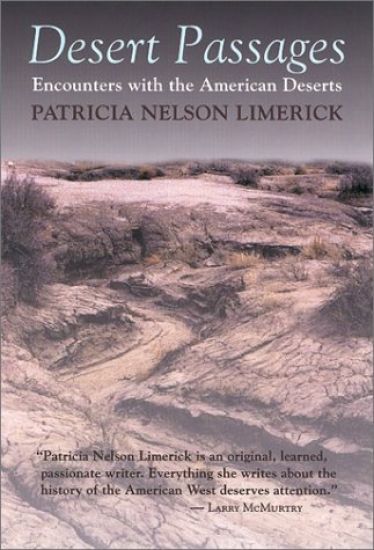
Desert Passages

Desert Passages

Patricia Nelson Limerick

University of New Mexico Press
1985
nidottu
This lively book traces the development of American attitudes toward the desert using case studies from the writings of John C Fr+(c)mont, William Lewis Manly, Mark Twain, William Ellsworth Smythe, John Van Dyke, George Wharton James, Joseph Wood Krutch, and Edward Abbey.
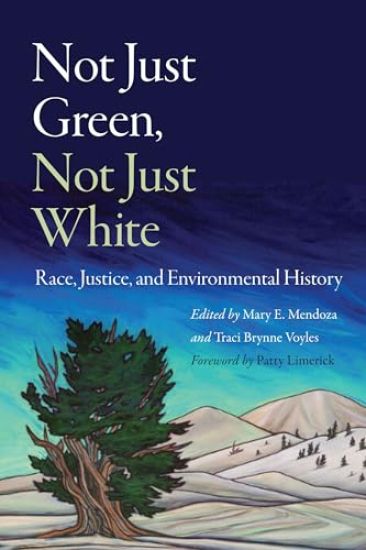
Not Just Green, not Just White

Not Just Green, not Just White

Patricia Nelson Limerick

University of Nebraska Press
2025
sidottu
Not Just Green, Not Just White brings together a group of diverse contributors to explore the rich intersections between race and environment. Together these contributors demonstrate that the field of environmental history, with its core questions and critical engagement with the nonhuman world, provides a fertile context for understanding racism and ongoing colonialism as power structures in the United States. Earlier historiography has defined environmental history as the study of the changing relationships between humans and the environment-or nature. This volume aims to redefine the field, arguing that neither humans nor environment is a monolithic actor in any given story. Both humans and the environment are diverse, and often the environment causes conflict between and among peoples, leaving unequal access and power in its wake. Just as important, these histories often reveal how, despite unequal power, those who carry less privilege still persist. Together these essays demonstrate the promise of the field of environmental history and reveal how, when practitioners in the field decide to move away from “green” and “white” topics, they will be able to explain much more about our collective past than anyone ever imagined.
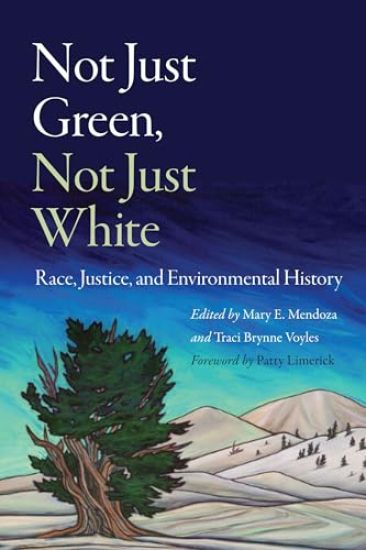
Not Just Green, not Just White

Not Just Green, not Just White

Patricia Nelson Limerick

University of Nebraska Press
2025
pokkari
Not Just Green, Not Just White brings together a group of diverse contributors to explore the rich intersections between race and environment. Together these contributors demonstrate that the field of environmental history, with its core questions and critical engagement with the nonhuman world, provides a fertile context for understanding racism and ongoing colonialism as power structures in the United States. Earlier historiography has defined environmental history as the study of the changing relationships between humans and the environment-or nature. This volume aims to redefine the field, arguing that neither humans nor environment is a monolithic actor in any given story. Both humans and the environment are diverse, and often the environment causes conflict between and among peoples, leaving unequal access and power in its wake. Just as important, these histories often reveal how, despite unequal power, those who carry less privilege still persist. Together these essays demonstrate the promise of the field of environmental history and reveal how, when practitioners in the field decide to move away from “green” and “white” topics, they will be able to explain much more about our collective past than anyone ever imagined.