Kirjojen hintavertailu. Mukana 11 699 587 kirjaa ja 12 kauppaa.

Kirjahaku

Etsi kirjoja tekijän nimen, kirjan nimen tai ISBN:n perusteella.

5 kirjaa tekijältä Patricia Waugh

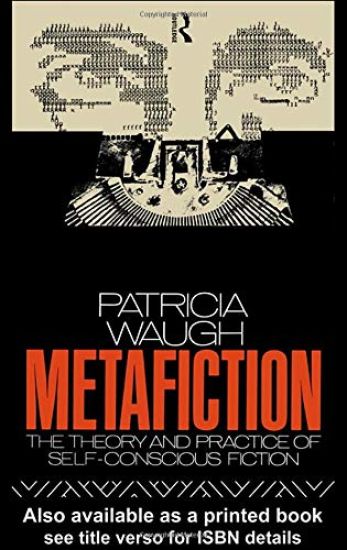
Metafiction

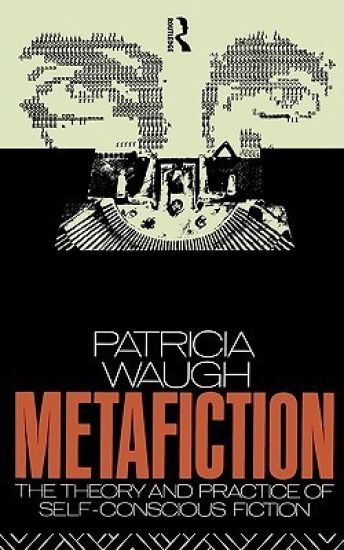
Metafiction

Patricia Waugh

Routledge
1984
nidottu
Metafiction begins by surveying the state of contemporary fiction in Britain and America and explores the complex political, social and economic factors which influence critical judgment of fiction. The author shows how, as the novel has been eclipsed by the mass media, novelists have sought to retain and regain a wide readership by drawing on the themes and preoccupations of these forms. Making use of contemporary fiction by such writers as Fowles, Borges, Spark, Barthelme, Brautigan, Vonnegut and Barth, and drawing on Russian Formalist theories of literary evolution, the book argues that metafiction uses parody along with popular genres and non-literary forms as a way not only of exposing the inadequate and obsolescent conventions of the classic novel, but of stuggesting the lines along which fiction might develop in the future.
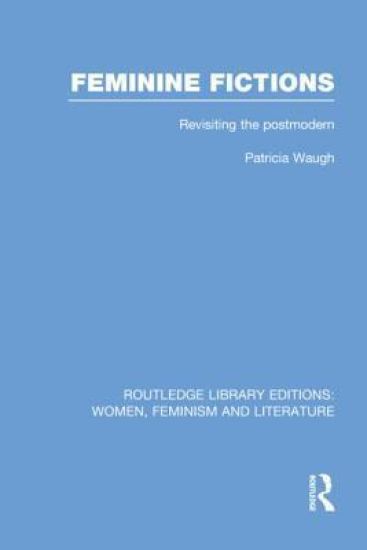
Feminine Fictions

Feminine Fictions

Patricia Waugh

Routledge
2012
sidottu
‘Postmodernism’ and ‘feminism’ have become familiar terms since the 1960s, developing alongside one another and clearly sharing many strong points of contact. Why then have the critical debates arising out of these movements had so little to say about each other? Patricia Waugh addresses the relationship between feminist and postmodernist writing and theory through the insights of psychoanalysis and in the context of the development of modern fiction in Britain and America. She attempts to uncover the reasons why women writers have been excluded from the considerations of postmodern art.Her route takes her through the theorization of self offered by Freud and Lacan and on to the concept of subjectivity articulated by Kleinian and later object-relations psychoanalysts. She argues that much women’s writing has been inappropriately placed and interpreted within a predominantly formalist-orientated aesthetic and a post-Freudian/liberal, individualist conceptualization of subjectivity and artistic expression. This tendency has been intensified in discussions of postmodernism, and a new feminist aesthetic is thus badly needed.In the second part of the book Patricia Waugh analyses the work of six ‘traditional’ and six ‘experimental’ writers, challenging the restrictive definitions of ‘realist’, ‘modernist’, ‘postmodernist’ in the light of the theoretical position developed in part one. Authors covered include: Woolf (viewed as a postmodernist ‘precursor’ rather than a ‘high’ modernist), Drabble, Tyler, Plath, Brookner, Paley, Lessing, Weldon, Atwood, Walker, Spark, Russ, and Piercy.
Feminine Fictions

Feminine Fictions

Patricia Waugh

Routledge
2014
nidottu
‘Postmodernism’ and ‘feminism’ have become familiar terms since the 1960s, developing alongside one another and clearly sharing many strong points of contact. Why then have the critical debates arising out of these movements had so little to say about each other? Patricia Waugh addresses the relationship between feminist and postmodernist writing and theory through the insights of psychoanalysis and in the context of the development of modern fiction in Britain and America. She attempts to uncover the reasons why women writers have been excluded from the considerations of postmodern art.Her route takes her through the theorization of self offered by Freud and Lacan and on to the concept of subjectivity articulated by Kleinian and later object-relations psychoanalysts. She argues that much women’s writing has been inappropriately placed and interpreted within a predominantly formalist-orientated aesthetic and a post-Freudian/liberal, individualist conceptualization of subjectivity and artistic expression. This tendency has been intensified in discussions of postmodernism, and a new feminist aesthetic is thus badly needed.In the second part of the book Patricia Waugh analyses the work of six ‘traditional’ and six ‘experimental’ writers, challenging the restrictive definitions of ‘realist’, ‘modernist’, ‘postmodernist’ in the light of the theoretical position developed in part one. Authors covered include: Woolf (viewed as a postmodernist ‘precursor’ rather than a ‘high’ modernist), Drabble, Tyler, Plath, Brookner, Paley, Lessing, Weldon, Atwood, Walker, Spark, Russ, and Piercy.
Metafiction

Metafiction

Patricia Waugh

Routledge
2015
sidottu
Metafiction begins by surveying the state of contemporary fiction in Britain and America and explores the complex political, social and economic factors which influence critical judgment of fiction. The author shows how, as the novel has been eclipsed by the mass media, novelists have sought to retain and regain a wide readership by drawing on the themes and preoccupations of these forms. Making use of contemporary fiction by such writers as Fowles, Borges, Spark, Barthelme, Brautigan, Vonnegut and Barth, and drawing on Russian Formalist theories of literary evolution, the book argues that metafiction uses parody along with popular genres and non-literary forms as a way not only of exposing the inadequate and obsolescent conventions of the classic novel, but of stuggesting the lines along which fiction might develop in the future.