Kirjojen hintavertailu. Mukana 11 699 587 kirjaa ja 12 kauppaa.

Kirjahaku

Etsi kirjoja tekijän nimen, kirjan nimen tai ISBN:n perusteella.

15 kirjaa tekijältä Patrick Anderson

Sun Yatsen, Robert Wilcox and Their Failed Revolutions, Honolulu and Canton 1895
Dynamite on the Tropic of Cancer is the radical, explosive retelling of the first decade of the 'Father of Modern China' Dr Sun Yatsen’s globally shaped formation as a professional revolutionist, and of the impact of the adult Sun’s revolutionary relationship with Hawai?i and with his varied communities of supporters there during its own most turbulent political decade, the 1890s, years in which this remote island nation transformed from native monarchy, via sovereign independent republic, to become the USA’s first overseas territory. Drawn from neglected primary sources, Dynamite reveals the hitherto untold story of the secret revolutionary alliance forged in Honolulu’s backstreets between Sun’s Xingzhonghui and the idiosyncratic italophile soldier Robert Wilcox, "Hawai?i’s Garibaldi" and leader of the Kanaka/Native Hawaiian counterrevolution of January 1895. This failed uprising to restore Hawai?i’s tragic last Queen, witnessed firsthand by Sun Yatsen, became the archetype upon which ten months later Sun would base his own first attempt at armed insurrection in China: the Canton uprising of 26 October 1895. With an epic sweep across the Pacific’s Tropic of Cancer, Dynamite is the most important study yet written on the origins of Sun Yatsen’s Chinese Revolution and its dynamic interface with Hawaiian history.
Sun Yatsen, Robert Wilcox and Their Failed Revolutions, Honolulu and Canton 1895
Dynamite on the Tropic of Cancer is the radical, explosive retelling of the first decade of the 'Father of Modern China' Dr Sun Yatsen’s globally shaped formation as a professional revolutionist, and of the impact of the adult Sun’s revolutionary relationship with Hawai?i and with his varied communities of supporters there during its own most turbulent political decade, the 1890s, years in which this remote island nation transformed from native monarchy, via sovereign independent republic, to become the USA’s first overseas territory. Drawn from neglected primary sources, Dynamite reveals the hitherto untold story of the secret revolutionary alliance forged in Honolulu’s backstreets between Sun’s Xingzhonghui and the idiosyncratic italophile soldier Robert Wilcox, "Hawai?i’s Garibaldi" and leader of the Kanaka/Native Hawaiian counterrevolution of January 1895. This failed uprising to restore Hawai?i’s tragic last Queen, witnessed firsthand by Sun Yatsen, became the archetype upon which ten months later Sun would base his own first attempt at armed insurrection in China: the Canton uprising of 26 October 1895. With an epic sweep across the Pacific’s Tropic of Cancer, Dynamite is the most important study yet written on the origins of Sun Yatsen’s Chinese Revolution and its dynamic interface with Hawaiian history.
The Economics of Business Valuation

The Economics of Business Valuation

Patrick Anderson

Stanford University Press
2013
sidottu
For decades, the market, asset, and income approaches to business valuation have taken center stage in the assessment of the firm. This book brings to light an expanded valuation toolkit, consisting of nine well-defined valuation principles hailing from the fields of economics, finance, accounting, taxation, and management. It ultimately argues that the "value functional" approach to business valuation avoids most of the shortcomings of its competitors, and more correctly matches the actual motivations and information set held by stakeholders. Much of what we know about corporate finance and mathematical finance derives from a narrow subset of firms: publicly traded corporations. The value functional approach can be readily applied to both large firms and companies that do not issue publicly traded stocks and bonds, cannot borrow without constraints, and often rely upon entrepreneurs to both finance and manage their operations. With historical side notes from an international set of sources and real-world exemplars that run throughout the text, this book is a future-facing resource for scholars in economics and finance, as well as the academically minded valuation practitioner.
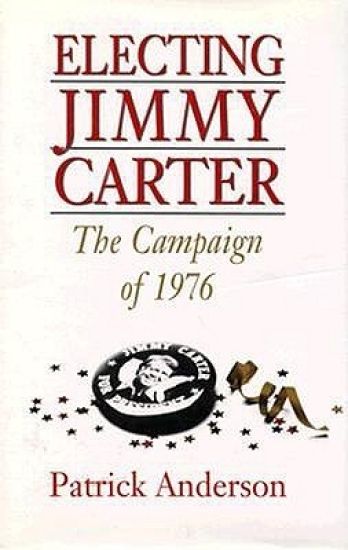
Electing Jimmy Carter

Electing Jimmy Carter

Patrick Anderson

Louisiana State University Press
1994
sidottu
In May of 1976, fresh from writing a best-selling political novel, Patrick Anderson signed on as Jimmy Carter's chief speechwriter. Now, in this remarkable memoir, he brings Carter to life as never before. Behind the Georgian's famous smile we discover a complex politician who was variously inspiring and petty, naïve and calculating, stubborn and elusive, humble and proud, sardonic and compassionate, and ultimately an enigma even to those closest to him.Rarely if ever has a skilled novelist and journalist had such access to a future president, then chosen to write about him with such relentless honesty. Electing Jimmy Carter is the most revealing portrait of Carter yet to appear, and it is also one of the funniest, most perceptive accounts of an American presidential campaign ever written.The cast of characters includes not only Jimmy and Rosalynn Carter, and top aides Hamilton Jordan and Jody Powell, but such supporting actors as Warren Beatty, Norman Mailer, Jerry Brown, Bella Abzug, Hugh Hefner, Sam Donaldson, Walter Mondale, and Billy Carter. Fast paced and dramatic, Electing Jimmy Carter reads like a novel, but one that happens to be true.
So Much Wasted

So Much Wasted

Patrick Anderson

Duke University Press
2010
sidottu
In So Much Wasted, Patrick Anderson analyzes self-starvation as a significant mode of staging political arguments across the institutional domains of the clinic, the gallery, and the prison. Homing in on those who starve themselves for various reasons and the cultural and political contexts in which they do so, he examines the diagnostic history of anorexia nervosa, fasts staged by artists including Ana Mendieta and Marina Abramovic, and a hunger strike initiated by Turkish prisoners. Anderson explores what it means for the clinic, the gallery, and the prison when one performs a refusal to consume as a strategy of negation or resistance, and the ways that self-starvation, as a project of refusal aimed, however unconsciously, toward death, produces violence, suffering, disappearance, and loss differently from other practices. Drawing on the work of Martin Heidegger, Sigmund Freud, Giorgio Agamben, Peggy Phelan, and others, he considers how the subject of self-starvation is refigured in relation to larger institutional and ideological drives, including those of the state. The ontological significance of performance as disappearance constitutes what Anderson calls the “politics of morbidity,” the embodied, interventional embrace of mortality and disappearance not as destructive, but rather as radically productive stagings of subject formations in which subjectivity and objecthood, presence and absence, and life and death are intertwined.
So Much Wasted

So Much Wasted

Patrick Anderson

Duke University Press
2010
pokkari
In So Much Wasted, Patrick Anderson analyzes self-starvation as a significant mode of staging political arguments across the institutional domains of the clinic, the gallery, and the prison. Homing in on those who starve themselves for various reasons and the cultural and political contexts in which they do so, he examines the diagnostic history of anorexia nervosa, fasts staged by artists including Ana Mendieta and Marina Abramovic, and a hunger strike initiated by Turkish prisoners. Anderson explores what it means for the clinic, the gallery, and the prison when one performs a refusal to consume as a strategy of negation or resistance, and the ways that self-starvation, as a project of refusal aimed, however unconsciously, toward death, produces violence, suffering, disappearance, and loss differently from other practices. Drawing on the work of Martin Heidegger, Sigmund Freud, Giorgio Agamben, Peggy Phelan, and others, he considers how the subject of self-starvation is refigured in relation to larger institutional and ideological drives, including those of the state. The ontological significance of performance as disappearance constitutes what Anderson calls the “politics of morbidity,” the embodied, interventional embrace of mortality and disappearance not as destructive, but rather as radically productive stagings of subject formations in which subjectivity and objecthood, presence and absence, and life and death are intertwined.
The Lost Book of Sun Yatsen and Edwin Collins
Sun Yatsen (1866-1925) occupies a unique position in modern Chinese history: he is equally venerated as the founding father of the nation by both the mainland Communist government and its Nationalist rival in Taiwan. The first president of the Republic of China in 1911-12, the peasant-born yet Western-trained Dr Sun was also a dedicated political theorist, constantly in search of the ideal political and constitutional blueprint to underpin his incomplete revolution. A decade before the public emergence in Japan of his ‘Three Principles of the People’, and weeks before even his first slim publication in 1897, Kidnapped in London, Sun was already hard at work in the Reading Room of the British Museum, planning his most ambitious book yet: a comprehensive political treatise in English on the tyrannical misgovernment of the Chinese nation by the Manchus of the Qing Dynasty. Started then abandoned twice over, destined never to be completed, let alone published, we can only conjecture what title this revolutionary book might have had.The Lost Book of Sun Yatsen and Edwin Collins is the first study of this lost work in all scholarship, Western or Chinese. It draws its originality and its themes from three primary sources, all presented here for the first time. The first is a series of interconnected lost writings co-authored by Sun Yatsen between 1896 and 1898. The second is the mass of lost political interviews with, and articles dedicated to, Sun Yatsen and his politics, first published in the British press in the aftermath the dramatic world-famous rescue of Sun from inside the Chinese Legation in London in 1896. The third source is the ‘Apostle of the Simple Life for Children’, the Anglo-Jewish Rabbi Edwin Collins (1858-1936), a devotee and practitioner of Jean-Jacques Rousseau’s Émile and the New Education movement it inspired, who became Sun’s writing collaborator of choice during his years of political exile from China. Drawing on this wealth of neglected material, Patrick Anderson’s book offers a genuinely fresh perspective on Sun Yatsen and his political motivations and beliefs.
The Lost Book of Sun Yatsen and Edwin Collins
Sun Yatsen (1866-1925) occupies a unique position in modern Chinese history: he is equally venerated as the founding father of the nation by both the mainland Communist government and its Nationalist rival in Taiwan. The first president of the Republic of China in 1911-12, the peasant-born yet Western-trained Dr Sun was also a dedicated political theorist, constantly in search of the ideal political and constitutional blueprint to underpin his incomplete revolution. A decade before the public emergence in Japan of his ‘Three Principles of the People’, and weeks before even his first slim publication in 1897, Kidnapped in London, Sun was already hard at work in the Reading Room of the British Museum, planning his most ambitious book yet: a comprehensive political treatise in English on the tyrannical misgovernment of the Chinese nation by the Manchus of the Qing Dynasty. Started then abandoned twice over, destined never to be completed, let alone published, we can only conjecture what title this revolutionary book might have had.The Lost Book of Sun Yatsen and Edwin Collins is the first study of this lost work in all scholarship, Western or Chinese. It draws its originality and its themes from three primary sources, all presented here for the first time. The first is a series of interconnected lost writings co-authored by Sun Yatsen between 1896 and 1898. The second is the mass of lost political interviews with, and articles dedicated to, Sun Yatsen and his politics, first published in the British press in the aftermath the dramatic world-famous rescue of Sun from inside the Chinese Legation in London in 1896. The third source is the ‘Apostle of the Simple Life for Children’, the Anglo-Jewish Rabbi Edwin Collins (1858-1936), a devotee and practitioner of Jean-Jacques Rousseau’s Émile and the New Education movement it inspired, who became Sun’s writing collaborator of choice during his years of political exile from China. Drawing on this wealth of neglected material, Patrick Anderson’s book offers a genuinely fresh perspective on Sun Yatsen and his political motivations and beliefs.
Autobiography of a Disease

Autobiography of a Disease

Patrick Anderson

Routledge
2017
sidottu
Autobiography of a Disease documents, in experimental form, the experience of extended life-threatening illness in contemporary US hospitals and clinics. The narrative is based primarily on the author’s sudden and catastrophic collapse into a coma and long hospitalization thirteen years ago; but it has also been crafted from twelve years of research on the history of microbiology, literary representations of illness and medical treatment, cultural analysis of MRSA in the popular press, and extended autoethnographic work on medicalization. An experiment in form, the book blends the genres of storytelling, historiography, ethnography, and memoir. Unlike most medical memoirs, told from the perspective of the human patient, Autobiography of a Disease is told from the perspective of a bacterial cluster. This orientation is intended to represent the distribution of perspectives on illness, disability, and pain across subjective centers—from patient to monitoring machine, from body to cell, from caregiver to cared-for—and thus makes sense of illness only in a social context.
Autobiography of a Disease

Autobiography of a Disease

Patrick Anderson

Routledge
2017
nidottu
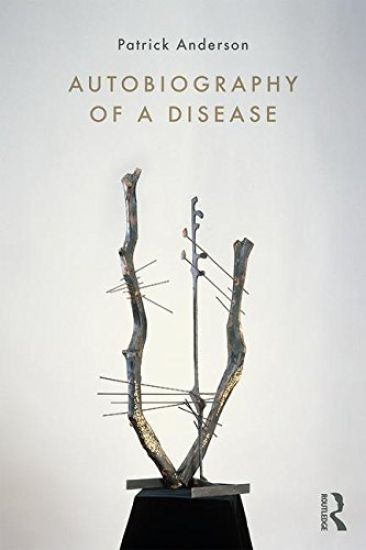
Autobiography of a Disease documents, in experimental form, the experience of extended life-threatening illness in contemporary US hospitals and clinics. The narrative is based primarily on the author’s sudden and catastrophic collapse into a coma and long hospitalization thirteen years ago; but it has also been crafted from twelve years of research on the history of microbiology, literary representations of illness and medical treatment, cultural analysis of MRSA in the popular press, and extended autoethnographic work on medicalization. An experiment in form, the book blends the genres of storytelling, historiography, ethnography, and memoir. Unlike most medical memoirs, told from the perspective of the human patient, Autobiography of a Disease is told from the perspective of a bacterial cluster. This orientation is intended to represent the distribution of perspectives on illness, disability, and pain across subjective centers—from patient to monitoring machine, from body to cell, from caregiver to cared-for—and thus makes sense of illness only in a social context.
The Lamentations

The Lamentations

Patrick Anderson

FORDHAM UNIVERSITY PRESS
2024
sidottu
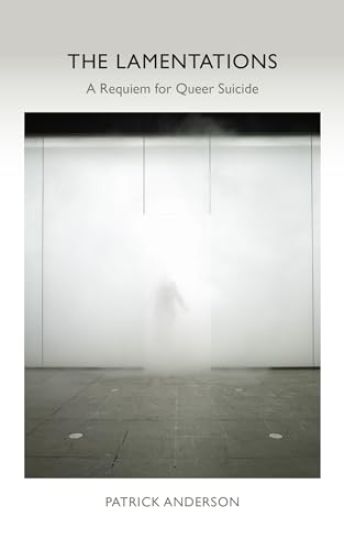
A moving journey through the shadows of queer suicide and a tribute to lives marked by struggle and beauty The Lamentations explores the struggles and resilience within the queer community, offering a unique blend of historical analysis and emotional tribute to those affected. Author Patrick Anderson examines the phenomenon of queer suicide across various art forms such as film, theatre, and literature, tracing its evolution from the twentieth century to today. Anderson brings to light the personal stories of individuals in the queer community who have ended their lives, compiling narratives from sources like newspaper articles, obituaries, and case studies. The book confronts the harsh realities of loneliness, shame, and oppression faced by many LGBTQ+ individuals, providing a poignant reflection on the societal challenges they face. The Lamentations is more than a meditation on death; it's a narrative of survival, mourning, and healing. Sharing personal accounts, including the losses of loved ones and friends, Anderson highlights the importance of memory and storytelling in celebrating the vibrancy of queer life amidst the sorrow of loss. Accessible to a broad readership, the book transcends academic boundaries to address themes of love, loss, and the human spirit. It's a compelling read for anyone interested in queer studies or anyone seeking to understand human experience through the lens of loss and legacy.
The Lamentations

The Lamentations

Patrick Anderson

FORDHAM UNIVERSITY PRESS
2024
pokkari
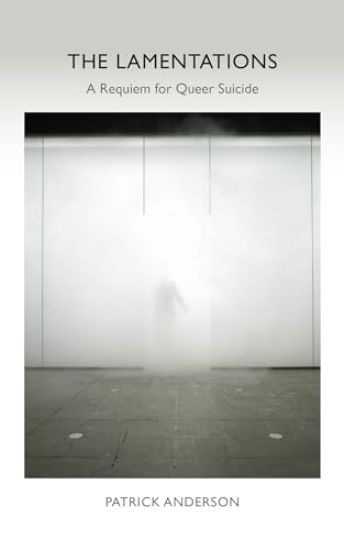
A moving journey through the shadows of queer suicide and a tribute to lives marked by struggle and beauty The Lamentations explores the struggles and resilience within the queer community, offering a unique blend of historical analysis and emotional tribute to those affected. Author Patrick Anderson examines the phenomenon of queer suicide across various art forms such as film, theatre, and literature, tracing its evolution from the twentieth century to today. Anderson brings to light the personal stories of individuals in the queer community who have ended their lives, compiling narratives from sources like newspaper articles, obituaries, and case studies. The book confronts the harsh realities of loneliness, shame, and oppression faced by many LGBTQ+ individuals, providing a poignant reflection on the societal challenges they face. The Lamentations is more than a meditation on death; it's a narrative of survival, mourning, and healing. Sharing personal accounts, including the losses of loved ones and friends, Anderson highlights the importance of memory and storytelling in celebrating the vibrancy of queer life amidst the sorrow of loss. Accessible to a broad readership, the book transcends academic boundaries to address themes of love, loss, and the human spirit. It's a compelling read for anyone interested in queer studies or anyone seeking to understand human experience through the lens of loss and legacy.
Riders In Disguise

Riders In Disguise

Patrick Anderson

Jitney Books
2023
pokkari
Miami, 1979. Rig Lopez-Campbell is a middle-schooler navigating the streets of Liberty City following his father's imprisonment. Tommy Munoz is a Pedro Pan survivor and former accountant dragged into the violent world of cocaine trafficking. Tina Pacheco is a Puerto-Rican freelance photographer-turned-journalist after capturing images of the Dadeland Mall Massacre. Ralph Williams is a homicide detective tasked with stemming the tide of carnage in the face of growing corruption within his own department. Touring Magic City during the height of the Cocaine Cowboy era, Riders in Disguise takes a broad look at the most influential period in South Florida's history. Praise for Riders in Disguise: "Brilliant and scathing...Anderson Jr. delivers a smart vibrant unforgettable knockout..."-Junot Diaz, Pulitzer Prize winning author of This Is How You Lose Her "...Compelling from the first page, Riders in Disguise perfectly captures the contradictions that beset Miami, a city both blessed and cursed by its diversity and its fearlessness."- Susan Hubbard, author of The Society of S Trilogy "In this terrifying and stunning debut, Patrick Anderson shines a prismatic light on Miami's violent past..."- Darlin Neal, author of Rattlesnakes & The Moon and Elegant Punk