
Kirjahaku
Etsi kirjoja tekijän nimen, kirjan nimen tai ISBN:n perusteella.
6 kirjaa tekijältä Patrick Brode
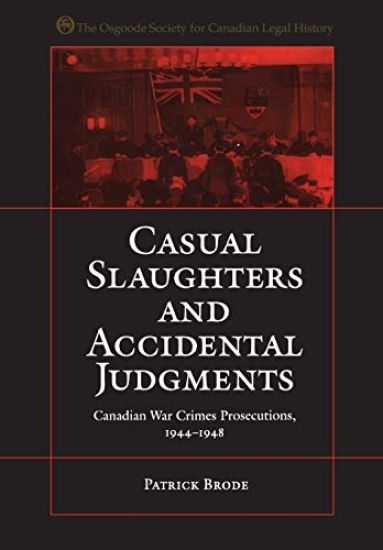
War crimes prosecutions create unique difficulties as civilian standards of law are applied to the extraordinary circumstances of war. Governments are often surprisingly hesitant to pursue war criminals. Patrick Brode has produced a fascinating study of such issues in Casual Slaughters and Accidental Judgements, a history of Canada’s prosecution of war crimes committed during the Second World War. It is a history that includes personalities such as Lt. Col. Bruce Macdonald, whose persistence overcame Ottawa’s reluctance to pursue the ‘war crimes business,’ and SS Brigadeführer Kurt Meyer, whose last-minute reprieve from death by firing squad followed a trial reminiscent of a Hollywood melodrama. Brode illustrates the difficulties of applying law to a recently defeated enemy when the emotions and politics of war distort any sense of impartial justice. The trials also reveal much about the legal and diplomatic views that prevailed at the end of the war and democratic Canada’s willingness to overcome its colonial past to defend its own interests on the international stage. The objectivity of the trials is still subject to question and they have been condemned by some as retaliatory. Brode clearly shows that Canada’s war crimes trials of 1945 to 1948 were a part of a movement to apply humane standards of conduct to warfare. Recent events in places such as Vietnam, Bosnia, and Somalia show how pertinent these concerns remain. (The Osgoode Society for Canadian Legal History)
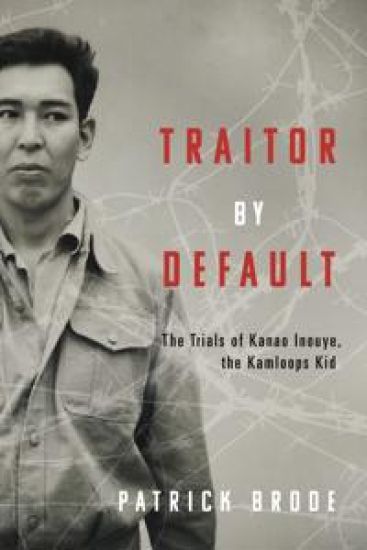
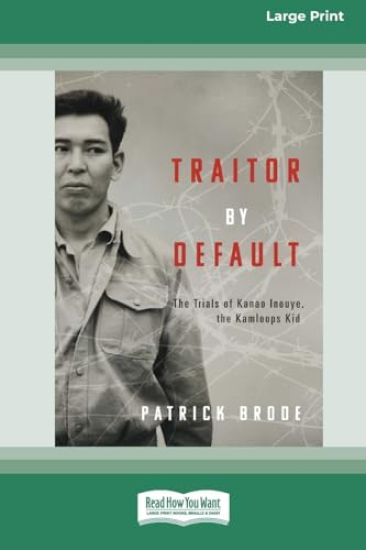
At the end of World War II, a young Japanese Canadian would stand trial and face execution for having committed war crimes and betraying his country.One of the most bizarre stories to emerge at the end of the Second World War was that of Kanao Inouye. Born in Kamloops, B.C., in 1916, he had relocated to his ancestral homeland of Japan, and by 1942 was a translator for the Japanese army. He was assigned to the prisoner of war camp in Hong Kong where he became infamous as one of the “most sadistic guards” over the Canadian survivors of the Battle of Hong Kong. Scores of prisoners would attest to his brutality administered in revenge for the treatment he had received growing up in Canada.His reputation was such that he was quickly apprehended after the war and faced charges of war crimes. But his subsequent trials became mired in questions as to who he really was. Was he a Canadian forced to serve in the Japanese military machine? Or was he a devoted soldier of his emperor obeying his superiors?
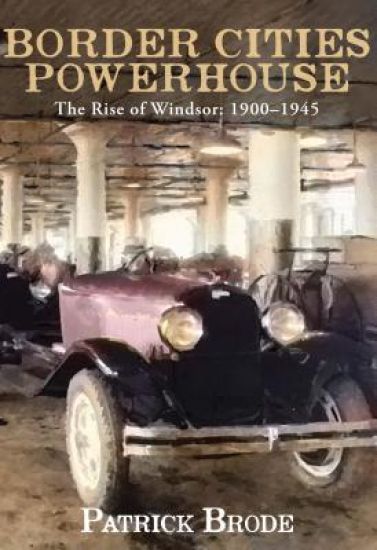
This is the first comprehensive history of the Border Cities area during its formative period in the first half of the 20th Century. The story of Windsor’s emergence during this period is largely one of confrontation and conflict: a multicultural population, industrial expansion, radical politics, and military production all played their part in the city's early history.
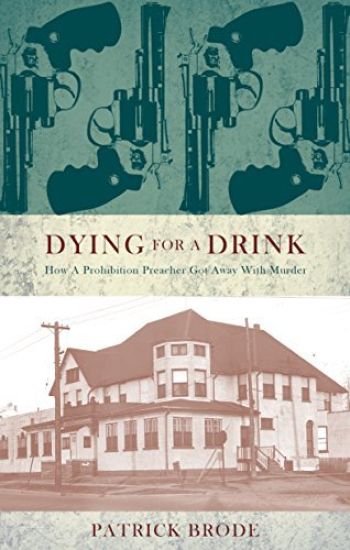
style="text-align: center;">AS SEEN ON TV ONTARIO'S THE AGENDA WITH STEVE PAIKIN style="text-align: center;">FINALIST FOR THE 2019 ARTHUR ELLIS AWARD FOR BEST NON-FICTION CRIME BOOK Known to history as “The Fighting Parson,” Reverend J.O.L. Spracklin broke into a notorious Windsor roadhouse one chilly November night in 1920 and shot and killed barkeep Beverly “Babe” Trumble. Easily acquitted by reason of self-defense, he never served a day of time. A provincial liquor license inspector already known for his brash tactics, Spracklin’s audacious tactics solidified across North America the Detroit-Windsor borderlands’ reputation as the new Wild West—an uncivilized outpost where whisky flowed freely, warrants were forged on the spot, and ministers toted guns to keep the peace. To the rest of Ontario, a dry province, Spracklin was the saviour they’d been waiting for, the answer to the lawlessness of the Border Cities—that is, until he shot a man at point blank range. In this exploration of the period, decorated Ontario historian Patrick Brode unpacks this infamous piece of Prohibition lore and asks: Why did Babe Trumble die? What led to a hotheaded reverend taking the law into his own hands, killing a man, and getting away with it? Full of fire-and-brimstone preachers, crooked politicians, wily rum runners, grandstanding lawyers, and innocents caught in the crossfire, Dying for a Drink is a fascinating read that will captivate anyone interested in the real stories behind this fabled time.
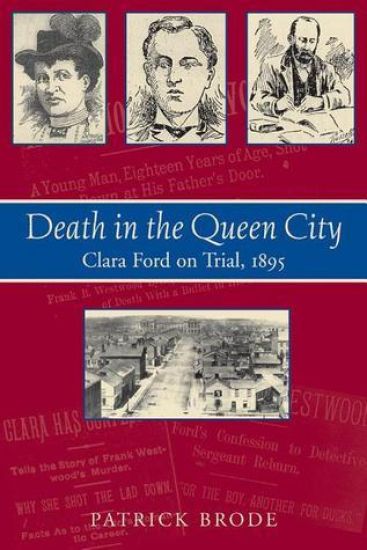
A single gunshot on Saturday night, October 6, 1894, shattered Toronto's prevailing sense of peace and security. That gunshot took the life of Frank Westwood, a respectable young man from one of the city's most prominent families. This unprecedented attack produced a feeling of hysteria throughout Toronto and baffled the municipal police forces. The mystery was even referred to Arthur Conan Doyle, the creator of Sherlock Holmes. However, even the Great Detective could not solve the Westwood murder. Finally, a chance rumour led to the most unlikely of suspects -- a young Black woman named Clara Ford. She was a most unusual character, a tough, revolver-toting lady who often wore men's clothing and defied the norms of late Victorian Toronto. While the police increasingly focused their investigation on her, the motives for the killing remained a puzzle. Was Clara seeking revenge for a previous assault, or was she the frustrated lover of a young white man? The trial of Clara Ford captured Toronto's attention like no other case before it. The evidence revealed a bizarre story of romance and racism.In addition to the wildly unconventional Clara, the cast of characters featured dogged detectives, and wily lawyers who at times seemed to make this cause celebre more of a theatrical than a judicial display.