Kirjojen hintavertailu. Mukana 11 342 296 kirjaa ja 12 kauppaa.

Kirjahaku

Etsi kirjoja tekijän nimen, kirjan nimen tai ISBN:n perusteella.

18 kirjaa tekijältä Patrick Collinson

The Birthpangs of Protestant England

The Birthpangs of Protestant England

Patrick Collinson

Palgrave Macmillan
1988
sidottu
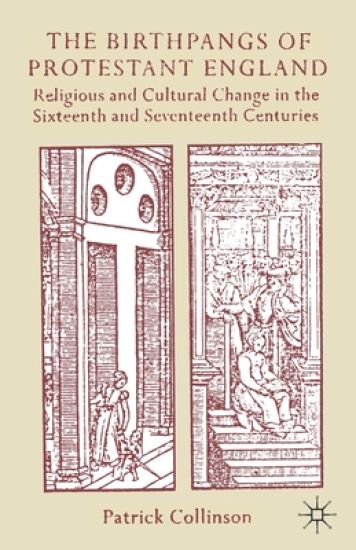
'...a masterly study.' Alister McGrath, Theological Book Review '...a splendid read.' J.J.Scarisbrick, TLS '...profound, witty...of immense value.' David Loades, History Today Historians have always known that the English Reformation was more than a simple change of religious belief and practice. It altered the political constitution and, according to Max Weber, the attitudes and motives which governed the getting and investment of wealth, facilitating the rise of capitalism and industrialisation. This book investigates further implications of the transformative religious changes of the sixteenth and seventeenth centuries for the nation, the town, the family, and for their culture.
The Birthpangs of Protestant England

The Birthpangs of Protestant England

Patrick Collinson

Palgrave Macmillan
1991
nidottu
'...a masterly study.' Alister McGrath, Theological Book Review '...a splendid read.' J.J.Scarisbrick, TLS '...profound, witty...of immense value.' David Loades, History Today Historians have always known that the English Reformation was more than a simple change of religious belief and practice. It altered the political constitution and, according to Max Weber, the attitudes and motives which governed the getting and investment of wealth, facilitating the rise of capitalism and industrialisation. This book investigates further implications of the transformative religious changes of the sixteenth and seventeenth centuries for the nation, the town, the family, and for their culture.
The Elizabethan Puritan Movement

The Elizabethan Puritan Movement

Patrick Collinson

Routledge
2020
sidottu
Originally published in 1967, this book is a history of church puritanism as a movement and as a political and ecclesiastical organism; of its membership structure and internal contradictions; of the quest for ‘a further reformation’. It tells the fascinating story of the rise of a revolutionary moment and its ultimate destruction.
The Elizabethan Puritan Movement

The Elizabethan Puritan Movement

Patrick Collinson

TAYLOR FRANCIS LTD
2022
nidottu
Originally published in 1967, this book is a history of church puritanism as a movement and as a political and ecclesiastical organism; of its membership structure and internal contradictions; of the quest for ‘a further reformation’. It tells the fascinating story of the rise of a revolutionary moment and its ultimate destruction.
Archbishop Grindal, 1519-1583

Archbishop Grindal, 1519-1583

Patrick Collinson

University of California Press
2021
pokkari
This biography of Edmund Grindal, Archbishop of Canterbury during the Elizabethan era, reveals the complexities and challenges he faced in his attempts to reform the English Church. Historically, Grindal’s primacy has often been viewed skeptically, with some historians and contemporaries labeling him ineffective or overly sympathetic to Puritanism, which conflicted with Elizabeth I's religious policies. Despite being criticized for his administrative abilities and branded as too lenient, Grindal held steadfast to his beliefs. His refusal to suppress the "prophesyings" — public Bible expositions popular among Puritans — led to a serious conflict with Queen Elizabeth, who placed him under suspension. Grindal’s resistance to what he saw as autocratic demands reflected his commitment to a more reformed, less politically compromised church, an ideal he upheld even when it led to his personal and professional downfall. In his lifetime and beyond, Grindal’s reputation became a battleground for opposing views within the English Church, from those who admired his Protestant integrity to those who saw him as overly accommodating to Puritan influences. As the political climate shifted, Grindal was alternately praised by Puritans as a standard-bearer for reform and criticized by later figures for his perceived leniency toward dissenters. In post-revolutionary England, his image further polarized, with high church advocates viewing him as a weak link in Elizabeth's ecclesiastical hierarchy, while others praised his resistance to authoritarian control. Grindal's legacy was contested, caught between different visions of Anglican identity and church governance. This biography seeks to re-evaluate Grindal, considering the unique context of the early English Reformation. Rather than depicting him simply as either a weak administrator or a proto-Puritan, it presents him as a representative of an early Elizabethan Protestantism shaped by experiences under Edward VI and exile during Mary I’s reign. Grindal’s vision for the Church aligned with the ideals of continental reformers like Bucer and Calvin, which often clashed with the monarch’s more conservative approach. His efforts highlight a pivotal moment in the history of the English Church, one that points to the potential for a more integrated Protestant reform that ultimately, due to political pressures and institutional resistance, remained unrealized. This title is part of UC Press's Voices Revived program, which commemorates University of California Press’s mission to seek out and cultivate the brightest minds and give them voice, reach, and impact. Drawing on a backlist dating to 1893, Voices Revived makes high-quality, peer-reviewed scholarship accessible once again using print-on-demand technology. This title was originally published in 1979.
Archbishop Grindal, 1519-1583

Archbishop Grindal, 1519-1583

Patrick Collinson

University of California Press
2021
sidottu
This biography of Edmund Grindal, Archbishop of Canterbury during the Elizabethan era, reveals the complexities and challenges he faced in his attempts to reform the English Church. Historically, Grindal’s primacy has often been viewed skeptically, with some historians and contemporaries labeling him ineffective or overly sympathetic to Puritanism, which conflicted with Elizabeth I's religious policies. Despite being criticized for his administrative abilities and branded as too lenient, Grindal held steadfast to his beliefs. His refusal to suppress the "prophesyings" — public Bible expositions popular among Puritans — led to a serious conflict with Queen Elizabeth, who placed him under suspension. Grindal’s resistance to what he saw as autocratic demands reflected his commitment to a more reformed, less politically compromised church, an ideal he upheld even when it led to his personal and professional downfall. In his lifetime and beyond, Grindal’s reputation became a battleground for opposing views within the English Church, from those who admired his Protestant integrity to those who saw him as overly accommodating to Puritan influences. As the political climate shifted, Grindal was alternately praised by Puritans as a standard-bearer for reform and criticized by later figures for his perceived leniency toward dissenters. In post-revolutionary England, his image further polarized, with high church advocates viewing him as a weak link in Elizabeth's ecclesiastical hierarchy, while others praised his resistance to authoritarian control. Grindal's legacy was contested, caught between different visions of Anglican identity and church governance. This biography seeks to re-evaluate Grindal, considering the unique context of the early English Reformation. Rather than depicting him simply as either a weak administrator or a proto-Puritan, it presents him as a representative of an early Elizabethan Protestantism shaped by experiences under Edward VI and exile during Mary I’s reign. Grindal’s vision for the Church aligned with the ideals of continental reformers like Bucer and Calvin, which often clashed with the monarch’s more conservative approach. His efforts highlight a pivotal moment in the history of the English Church, one that points to the potential for a more integrated Protestant reform that ultimately, due to political pressures and institutional resistance, remained unrealized. This title is part of UC Press's Voices Revived program, which commemorates University of California Press’s mission to seek out and cultivate the brightest minds and give them voice, reach, and impact. Drawing on a backlist dating to 1893, Voices Revived makes high-quality, peer-reviewed scholarship accessible once again using print-on-demand technology. This title was originally published in 1979.
This England

This England

Patrick Collinson

Manchester University Press
2011
sidottu
‘This England’ is a celebration of ‘Englishness’ in the sixteenth century, explores the growing conviction of ‘Englishness’ through the rapidly developing English language; the reinforcement of cultural nationalism as a result of the Protestant Reformation; the national and international situation of England at a time of acute national catastrophe; and of Queen Elizabeth 1, the last of her line, remaining unmarried, refusing to even discuss the succession to her throne. Introducing students of the period to an aspect of history largely neglected in the current vogue for histories of the Tudors, Collinson investigates the rising role of English, of England’s God-centredness, before focusing on the role of Elizabethans as citizens rather than mere subjects. It responds to a demand for a history which is no less social than political, investigates what it meant to be a citizen of England, living through the 1570’s and 1580’s.
This England

This England

Patrick Collinson

Manchester University Press
2013
nidottu
Patrick Collinson was one of Britain’s foremost early modern historians. This volume collects together a number of his most interesting and least easily accessible essays with a thoughtful introduction written specifically for this book.This England is a celebration of ‘Englishness’ in the sixteenth century. It explores the growing conviction of ‘Englishness’ through the rapidly developing English language; the reinforcement of cultural nationalism as a result of the Protestant Reformation; the national and international situation of England at a time of acute national catastrophe; and of Queen Elizabeth I, the last of her line, remaining unmarried, refusing to even discuss the succession to her throne. Introducing students of the period to an aspect of history largely neglected in the current vogue for histories of the Tudors, Collinson investigates the rising role of English, of England’s God-centredness, before focusing on the role of Elizabethans as citizens rather than mere subjects. It responds to a demand for a history which is no less social than political, and investigates what it meant to be a citizen of early modern England, living through the 1570s and 1580s.
The Reformation: A History

The Reformation: A History

Patrick Collinson

Random House Group
2006
nidottu
"No revolution however drastic has ever involved a total repudiation of what came before it."The religious reformations of the sixteenth century were the crucible of modern Western civilization, profoundly reshaping the identity of Europe's emerging nation-states. In The Reformation, one of the preeminent historians of the period, Patrick Collinson, offers a concise yet thorough overview of the drastic ecumenical revolution of the late medieval and Renaissance eras. In looking at the sum effect of such disparate elements as the humanist philosophy of Desiderius Erasmus and the impact on civilization of movable-type printing and "vulgate" scriptures, or in defining the differences between the evangelical (Lutheran) and reformed (Calvinist) churches, Collinson makes clear how the battles for mens' lives were often hatched in the battles for mens' souls. Collinson also examines the interplay of spiritual and temporal matters in the spread of religious reform to all corners of Europe, and at how the Catholic Counter-Reformation used both coercion and institutional reform to retain its ecclesiastical control of Christendom. Powerful and remarkably well written, The Reformation is possibly the finest available introduction to this hugely important chapter in religious and political history.
Godly People

Godly People

Patrick Collinson

Hambledon Continuum
1982
sidottu
Some of the sons and grandsons of the English Reformation, the 'hotter sort', were known to their contemporaries as 'puritans', but they called themselves 'the godly'. This career-spanning collection of essays by Patrick Collinson, Regius Professor of Modern History at Cambridge University, deals with numerous aspects of the religious culture of post-Reformation England and its implications for the politics, mentality, and social relations of the Elizabethans and Jacobeans.
Richard Bancroft and Elizabethan Anti-Puritanism

Richard Bancroft and Elizabethan Anti-Puritanism

Patrick Collinson

Cambridge University Press
2013
sidottu
This major new study is an exploration of the Elizabethan Puritan movement through the eyes of its most determined and relentless opponent, Richard Bancroft, later Archbishop of Canterbury. It analyses his obsession with the perceived threat to the stability of the church and state presented by the advocates of radical presbyterian reform. The book forensically examines Bancroft's polemical tracts and archive of documents and letters, casting important new light on religious politics and culture. Focussing on the ways in which anti-Puritanism interacted with Puritanism, it also illuminates the process by which religious identities were forged in the early modern era. The final book of Patrick Collinson, the pre-eminent historian of sixteenth-century England, this is the culmination of a lifetime of seminal work on the English Reformation and its ramifications.
Richard Bancroft and Elizabethan Anti-Puritanism

Richard Bancroft and Elizabethan Anti-Puritanism

Patrick Collinson

Cambridge University Press
2016
pokkari
This major new study is an exploration of the Elizabethan Puritan movement through the eyes of its most determined and relentless opponent, Richard Bancroft, later Archbishop of Canterbury. It analyses his obsession with the perceived threat to the stability of the church and state presented by the advocates of radical presbyterian reform. The book forensically examines Bancroft's polemical tracts and archive of documents and letters, casting important new light on religious politics and culture. Focussing on the ways in which anti-Puritanism interacted with Puritanism, it also illuminates the process by which religious identities were forged in the early modern era. The final book of Patrick Collinson, the pre-eminent historian of sixteenth-century England, this is the culmination of a lifetime of seminal work on the English Reformation and its ramifications.
The Birthpangs of Protestant England

The Birthpangs of Protestant England

Patrick Collinson

Palgrave Macmillan
1988
nidottu
'...a masterly study.' Alister McGrath, Theological Book Review '...a splendid read.' J.J.Scarisbrick, TLS '...profound, witty...of immense value.' David Loades, History Today Historians have always known that the English Reformation was more than a simple change of religious belief and practice. It altered the political constitution and, according to Max Weber, the attitudes and motives which governed the getting and investment of wealth, facilitating the rise of capitalism and industrialisation. This book investigates further implications of the transformative religious changes of the sixteenth and seventeenth centuries for the nation, the town, the family, and for their culture.
Elizabethan Essays

Elizabethan Essays

Patrick Collinson

Hambledon Continuum
1994
sidottu
The age of Elizabeth I exercises a fascination unmatched by other periods of English history. Yet while the leading figures may seem familiar, many Elizabethan personalities, including the queen herself, remain enigmatic; their attitudes to life, politics and religion often difficult to comprehend. Patrick Collinson redraws the main features of the political and religious struggle of the reign. In engaging with the virgin queen herself he tackles the old conundrum: was she a religious woman? He also investigates the no less inscrutable religious position adopted by the by the notorious turncoat, Andrew Perne, the reliability as a historian of the martyrologist John Foxe (whose religion is in no doubt) and the religious environment which shaped William Shakespeare.
From Cranmer to Sancroft

From Cranmer to Sancroft

Patrick Collinson

Hambledon Continuum
2006
sidottu
Patrick Collinson is the leading historian of English religion in the years after the Reformation. The topics covered by this collection of essays ranges from Thomas Cranmer, who was burnt at the stake after repeated recantations in 1556, to William Sancroft, the only other post-Reformation archbishop of Canterbury to have been deprived of office. Patrick Collinson's work explores the complex interactions between the inclusive and exclusive tendencies in English Protestantism, focusing both on famous figures, such as John Foxe and Richard Hooker, and on the individual reactions of lesser figures to the religious challenges of the time. Two themes throughout are the importance of the Bible and the emergence of Puritanism inside the Church of England.
Elizabethans

Elizabethans

Patrick Collinson

Hambledon Continuum
2003
nidottu
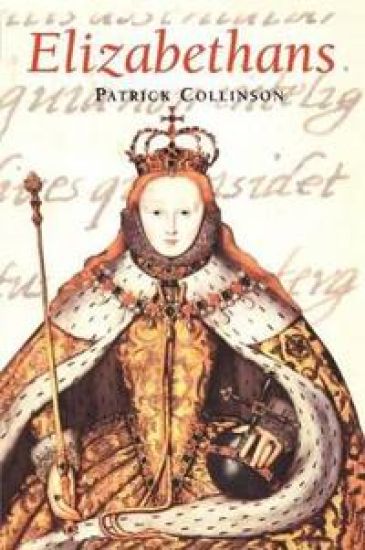
The age of Elizabeth I continues to exercise a fascination unmatched by other periods of English history. Yet while the leading figures may seem familiar, many Elizabethan figures, including the queen herself, remain enigmatic. In Elizabethans Patrick Collinson examines the religious beliefs both of Elizabeth and of Shakespeare, as well as redrawing the main features of the political and religious structure of the reign. He understands the characters of the period, whether John Foxe the martyrologist or Andrew Perne, the notorious Cambridge turncoat, as individuals and is also sensitive to the attitudes and beliefs of the day. Social history is not history with the politics left out, nor can religious history be written without an understanding of its political and social context. This is the approach that Patrick Collinson advocates and practises in Elizabethans.
From Cranmer to Sancroft

From Cranmer to Sancroft

Patrick Collinson

Hambledon Continuum
2007
nidottu
Patrick Collinson is the leading historian of English religion in the years after the Reformation. The topics covered by this collection of essays ranges from Thomas Cranmer, who was burnt at the stake after repeated recantations in 1556, to William Sancroft, the only other post-Reformation archbishop of Canterbury to have been deprived of office. Patrick Collinson's work explores the complex interactions between the inclusive and exclusive tendencies in English Protestantism, focusing both on famous figures, such as John Foxe and Richard Hooker, and on the individual reactions of lesser figures to the religious challenges of the time. Two themes throughout are the importance of the Bible and the emergence of Puritanism inside the Church of England.