
Kirjahaku
Etsi kirjoja tekijän nimen, kirjan nimen tai ISBN:n perusteella.
14 kirjaa tekijältä Patrick Delaforce

The 7th Armoured Division was widely recognized as being the most powerful in Europe during World War II. Its emblem of a scarlet desert rat became famous throughout the British Army and to the war-torn British public as a symbol of heroism in their time of need. This volume sees the Desert Rats fighting in North Africa, Burma, Sicily and Italy. Their bravery is relived through the words of the combatant soldiers - the author has interviewed troopers, gunners and infantrymen to tell this story of Churchill's favourite division. Patrick Delaforce fought with the 11th Armoured Division as a troop leader in Normandy and as FOO in Holland and Germany during World War II.
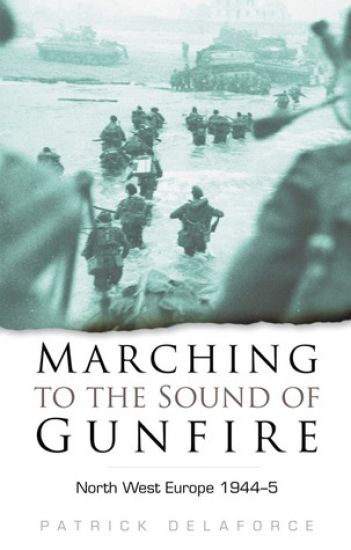
In this work, scores of British soldiers tell their amazing stories of life - and death - at the sharp end. In the 11 frenzied months of warfare that followed D-Day, these soldiers successfully drove the Nazi hordes back into their Fatherland, and beat them into surrender.
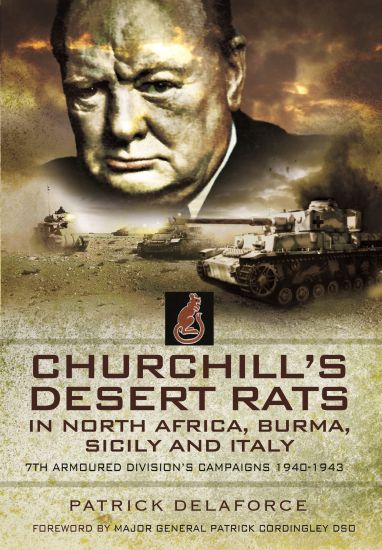
Churchill's Desert Rats in North Africa, Burma, Sicily and Italy
Patrick Delaforce
PEN SWORD BOOKS LTD
2022
nidottu
This well researched and well written book covers the early campaigns and battles that earned The Desert Rats their fame and name. This volume covers the difficult early years when ultimate victory was less than certain. The Nazis were victorious on many fronts and Britain stood alone. Indeed it was at El Alamein that 7 Armoured Division and the rest of Montgomerys Eighth Army turned the tide. The church bells rang out in Britain and a new spirit was born. But much fighting lay ahead and many were to die. The successful completion of the North African campaign led to the invasion of Sicily and the long slog up Italy. The Desert Rats were at the forefront of these campaigns. Three Victoria Crosses were won in the desert and many famous names were associated with the Division, such as Field Marshal Lord Carver and Major General Pip Roberts. The Divisions story is told by many first hand contributions and is the result of painstaking research by the author who was also a Desert Rat.
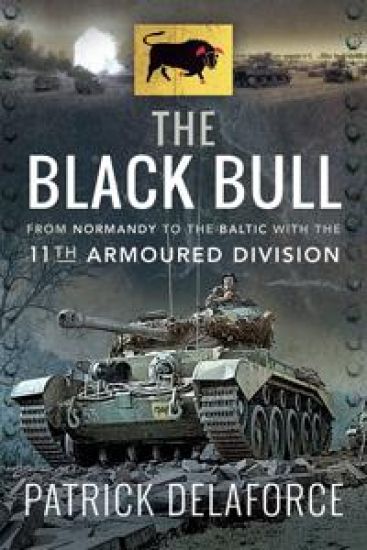
The 11th Armoured Division, famous for its Black Bull insignia, was widely recognized as being among the best armoured divisions in north-west Europe during the Second World War. This book tells the story of the Division in the words of the soldiers who fought with it: of its part in the three ferocious battles in Normandy Operations EPSOM, GOODWOOD and BLUECOAT, the great Swan to Amiens, the taking of Antwerp; right flanking for MARKET GARDEN, back-up in the Ardennes and the final slog into Germany across well-defended river barriers, to the liberation of Belsen, Lbeck and the Danish frontier. The Division suffered 10,000 casualties, with almost 2,000 lost in action, and so this is also a story of courage and the hardships of a winter campaign, of being wounded, comradeship and fighting fear. Contributions are included from twelve of the regiments who proudly wore the sign of the Black Bull. Memories from troop commanders and riflemen, bombardiers and signalmen, tank crews, troop leaders and from the dashing GOC are brought together to reveal what life was like at the sharp end. The Black Bull is liberally illustrated with contemporary photographs showing the Division in action. It will appeal not only to those who still have memories of the battles and to those who fought in the Second World War, but also to readers interested in the day-to-day actions and thoughts of soldiers in the front line for almost a year.
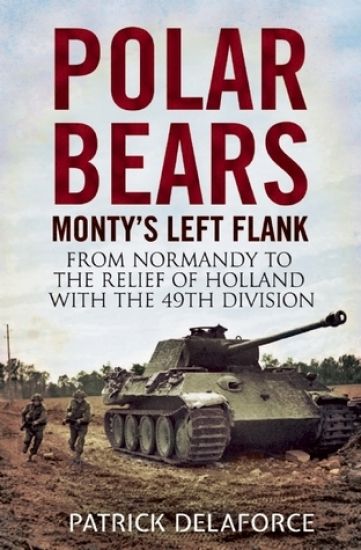
Originally a Territorial unit with its roots in the West Riding of Yorkshire, the 49th Infantry Division saw action in the ill-fated Norwegian campaign in 1940, before it was appointed to garrison Iceland where it stayed for two years. In August 1944, under the command of the Canadian Army, the Polar Bears acted as Monty's left flank after the invasion of France. Following the battle for Normandy, the Polar Bears played a key role in the capture of Le Havre, campaigned vigorously in Belgium and garrisoned the 'island' between Arnhem and Nijmegen during the winter of 1944. They helped to take Arnhem and then liberated Utrecht and Hilversum; and the Recce regiment were the first to arrive with their armoured cars in Amsterdam. In the final weeks of the war the Polar Bears played a humanitarian role by bringing desperately needed food supplies to the starving population of Holland. During the campaign in North West Europe, the Polar Bears were a completely British division with units drawn from Yorkshire, Durham, Royal Scots Fusiliers, Tyneside Scottish, Lincolnshire, Leicestershire, Kent Yeomanry and Suffolk Hussars. In August 1944 they were joined by the South Wales Borderers, the Gloucesters and the Essex regiments. The Polar Bears suffered 11,000 casualties and earned a Victoria Cross. Following the successful formula adopted for his other divisional histories, Patrick Delaforce draws on contributions from the soldiers who fought with the Polar Bears - privates, NCOs and officers alike. In their own words they tell just what it was like as they fought through from Normandy to the relief of Holland.
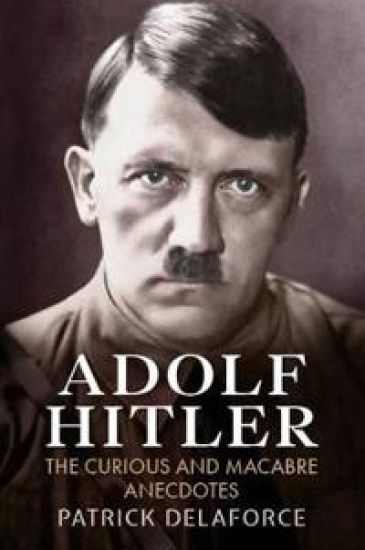
Adolf Hitler was born in Austria in April 1889, and shot himself in a bunker in Berlin in April 1945 with Russian soldiers beating at the door, surrounded by the ruins of the country he had vowed to restore to greatness. Adolf Hitler: The Curious and Macabre Anecdotes - part biography, part miscellany, part historical overview - presents the life and times of der Fuhrer in a unique and compelling manner. The early life of the loner son of an Austrian customs official gave little clue as to his later years. As a decorated, twice-wounded soldier of the First World War, through shrewd manipulation of Germany's offended national pride after the war, Hitler ascended rapidly through the political system, rousing the masses behind him with a thundering rhetoric that amplified the nation's growing resentment and brought him the adulation of millions. By the age of 44, he had become both a millionaire with secret bank accounts in Switzerland and Holland, and the unrivalled leader of Germany, whose military might he had resurrected; six years later, he provoked the world to war. Patrick Delaforce's book is a masterly assessment of Hitler's life, career and beliefs, drawn not only from its subject's own writings, speeches, conversation, poetry and art, but also from the accounts of those who knew him, loved him, or loathed him. The journey of an ordinary young man to callous dictator and architect of the 'Final Solution' makes for provocative and important - thought not always comfortable - reading.
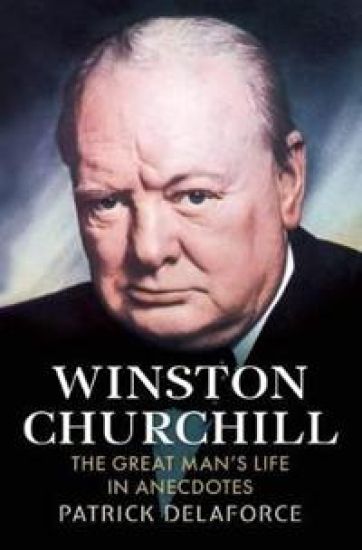
In the welter of popular and well-known stories and reminiscences about Churchill (many of them more legend than fact), it can be easy to forget that he was more than an inspirational leader and figurehead to a nation and its allies. For in spite of his many and varied successes, Britain's last great wartime Prime Minister was also a full-blooded human being, with all of the foibles, fallibility, bad temper, pig-headedness and vanity that are so often the shadows of such greatness. Ebullient, sometimes moody, and often mischievous, he lived a full and varied life beyond the demands of Parliament: sailing with his beloved wife, Clemmie, on the Admiralty yacht Enchantress, owning racehorses, playing polo, entertaining friends and family, all of which, and more, find a place in Winston Churchill: Anecdotes. With a light touch and a great, though not always uncritical, affection for its subject, Patrick Delaforce's wide-ranging collection reveals many little known facets of this illustrious man and his incredible life. It is at once a treasury of anecdote and recollection, an insight into Churchill's larger-than-life personality, a record of his often caustic, yet brilliant wit, and, by the use of long out of print and forgotten sources, a lasting testament to his remarkable, indeed immeasurable contribution to the modern world.
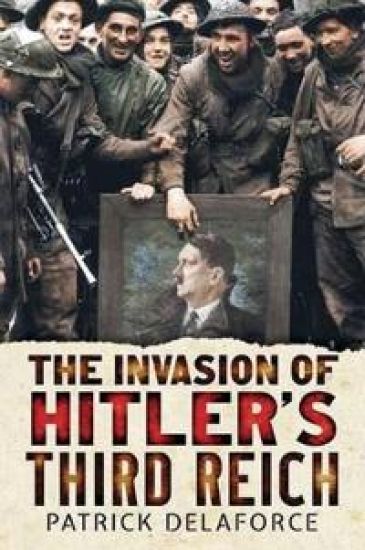
Early in 1945 the British Liberation Army (BLA), who had battled their way from the Normandy beaches to the borders of Germany, embarked on Operation Eclipse. This was the 'end-game' of the Second World War, the unique military campaign to invade and conquer Hitler's Third Reich and liberate 20 million enslaved nationals from Holland, Denmark and Norway; to free multitudes of displaced persons (DPs) or slaves; and inter alia to free the survivors of twenty concentration camps and many Allied POW camps. The Allied Military Government (AMG) brought law and order to 23 million German nationals in the allocated British zone of occupation (BAOR) and appropriate retribution too. A thrilling race with Stalin's Red Army ensued to reach the Baltic. A matter of a few hours and Denmark and Norway would have been swept into the evil Soviet empire. The author fought vigorously as a junior RHA officer in the five great river battles - Rhine, Dortmund-Ems, Weser, Aller and the Elbe. Soon after VE Day he was the junior officer in War Crimes Tribunals in Hamburg and Oldenburg and witnessed Mr Alfred Pierrepoint administering the hanging of prison camp guards.
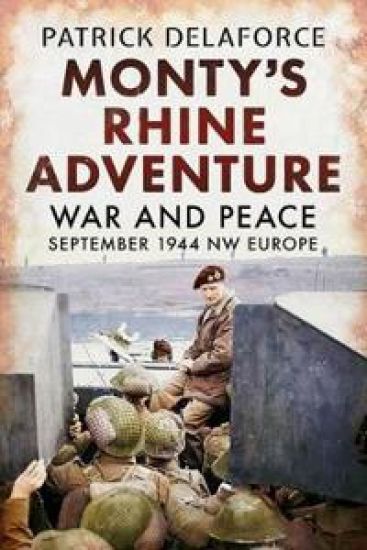
This is the second volume, but the last to be published of a trilogy - the other volumes being Smashing the Atlantic Wall and The Battle of the Bulge. Monty's Rhine Adventure begins immediately after the Normandy invasion with the euphoria surrounding the belief that the war would soon be won. However, it was not to be as easy Monty hoped. The book covers the difficult next few months as the Allies slogged through France and Belgium fighting stern and skilled Nazi resistance. However, the centrepiece of Monty's Rhine Adventure is Operation Market garden - Monty's bold plan to cut through the German defences via the eight bridges which spanned the Dutch/German border. The book deals with the plan, its execution and its aftermath in rigorous detail. Had Market Garden gone to plan, it might have led to the overall defeat of the Third Reich before the end of 1944. As it was, it was the Russians that entered Berlin first in May 1945. Nonetheless, this period remains one of the boldest and most exciting of the Second World War.

Monty's desert legions - 7th Armoured Division, 51st Highland Division and 50th Northumbrian Division - helped him win at El Alamein and throughout North Africa, and eventually in North West Europe after D-Day. Monty's Northern Legions is the story of two distinguished formations who played significant roles in the liberation of North West Europe. 50th Tyne Tees Division was a fine infantry division first blooded at El Alamein and later in Sicily. Monty gave 50th Division the dangerous honour of attacking on D-Day in the first wave ashore on 'Gold' Beach. The only D-Day Victoria Cross was awarded to CSM Hollis of the Green Howards. The division fought through the Normandy campaign up towards the German border before disbandment in late 1944. 15th Scottish Division's three brigades swept into Normandy in Operation 'Epsom', Monty's first great battle for Caen. They fought their way through France and the Low Countries and were one of two assault divisions entrusted with storming across the Rhine in Operation 'Plunder'.

In this third volume on the progress of the Second World War after the D-Day landings, Patrick Delaforce examines the final weeks of World War Two, beyond the Yalta Conference, when the question to be asked was not who would win, but how to prevent the war dragging on and also how to prevent Hitler from implementing a scorched earth policy across the Reichland. Then there was the race to win territory as the Russians, too, clawed their way across Europe. Operation Eclipse, begun in March1945, both prevented the Russians from occupying Denmark in violation of the agreement at Yalta but also occupied the Kiel naval base. The book also examines events immediately after the surrender and Hitler's suicide, and the creation of the short-lived fourth reich under the leadership of Admiral Donitz. As well as Denmark, the book also covers the liberations of both Holland and Norway. Most poignant of all, the liberation of the prisoners of war is covered as well as the freeing those that had toiled for Hitler against their will, as slaves. The book ends with the famous war crimes trials and the beginnings of the Cold War.
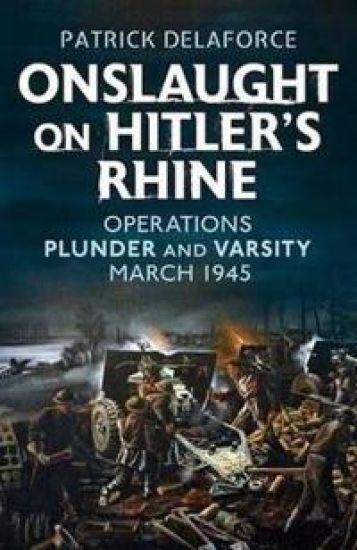
Beginning on the night of 23 March 1945, Operation Plunder was the crossing of the River Rhine at Rees, Wesel, and south of the Lippe River by the British 2nd Army, under Lieutenant-General Miles Dempsey. At 17:00, 1,300 guns of the 21st Army Group unleashed a terrific bombardment of the east bank of the Rhine. The bombardment, continuing for four hours and was the largest undertaken by the Royal Artillery during the War. This was just the first phase of Montgomery's plan to cross Hitler's last obstacle to the attacking forces of the Western Allies-the River Rhine. The plans were broken into smaller operations, Turnscrew-a diversion ten miles to the north of where the main attack was to take place with the assault elements of the 51st (Highland) Division and 9th Canadian Infantry Brigade; Widgeon-a subordinate operation by 1st Commando Brigade to capture and hold Wesel; and Torchlight-the second major operation for 15th Scottish Division to capture the key area between Bislich and Rees. A fourth-and controversial component with the benefit of hindsight-was Operation Varsity consisting of the British 6th Airborne Division and the US 17th Airborne Division, conducting parachute landings on the east bank in support of the operation. The American and Canadian forces south and north of Plunder were part of Field Marshal Bernard Montgomery's huge army. This was part of a coordinated set of Rhine crossings and the race to the Baltic.
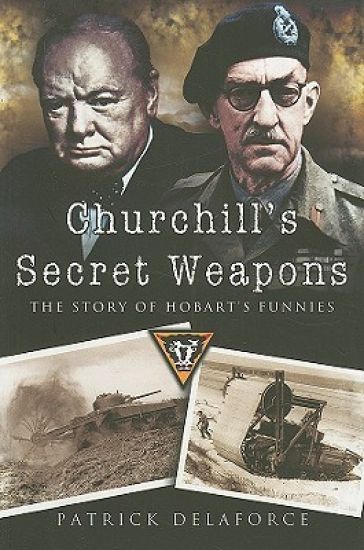
Churchill's Secret Weapons: the Story of Hobart's Funnies
Patrick Delaforce
Pen Sword Military
2008
nidottu
In the dark days when Britain stood alone, Prime Minister Churchill realised that, to win the war against an enemy superior in strength, science had to be harnessed to devise new weapons. Three men had Churchill's confidence; Lord Cherwell (the Prof), his brilliant main scientific adviser; Millis Jefferis who ran MDI (The Toy Factory); and the irascible and eccentric Major General Percy Hobart. Despite being Monty's brother-in-law and a talented tank expert, Hobart had been banished to the Home Guard. Churchill rescued him and tasked him to form, equip and train a secret armoured division which went on to storm the Normandy Beaches. Hobart was the mastermind behind an extraordinary collection of tank-based secret weapons (known as Hobart's Funnies) which supported every British and Canadian army and many US divisions for the rest of the War.