This book describes the period in Jamaica's history that follows the abolition of slavery, up to the introduction of universal adult suffrage. These years are the least studied period of Jamaica's modern history, and Bryan provides a penetrating analysis of the social, intellectual and political history of this era. Crown colony government, law and order, religious and social structure, labour, health and poor relief, the black middle class and the ideas of the black intelligentsia are explored in the context of race, class and ethnicity.
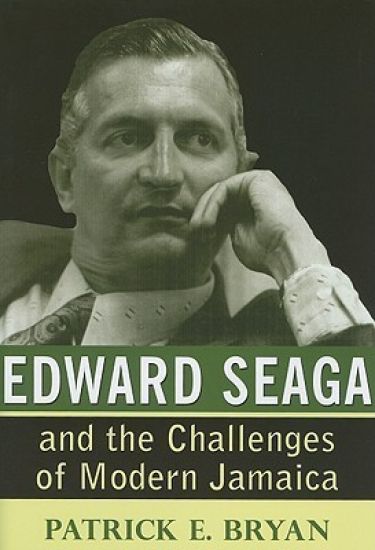
This is the first scholarly biography of Edward Philip George Seaga, retired prime minister of Jamaica (1980-1989) and former leader of the Jamaica Labour Party (1974-2005). Patrick Bryan examines Seaga in light of the twentieth-century history of Jamaica, which experienced the challenges of race, colour, economic dependence, the transition from the British colonial period to independence in 1962, and the challenges of creating a Jamaican national state and separate cultural identity. Although the study focuses on Edward Seaga, the historical forces that shaped Jamaica's history are central, in particular the way in which he confronted these forces. In placing Seaga in historical perspective, this work strikes a seasoned and balanced analysis of the man and is neither an apologia nor iconoclastic. Based on a variety of primary sources, government records, interviews and secondary sources, the author paints a compelling portrait of a complex man, a contradictory mixture of idealism and pragmatism, but, above all, a Jamaican nationalist who had a profound impact on Jamaican politics, tourism, culture and finance.
This is the first scholarly biography of Edward Philip George Seaga, retired prime minister of Jamaica (1980–1989) and former leader of the Jamaica Labour Party (1974–2005). Patrick Bryan examines Seaga in light of the twentieth-century history of Jamaica, which experienced the challenges of race, colour, economic dependence, the transition from the British colonial period to independence in 1962, and the challenges of creating a Jamaican national state and separate cultural identity. Although the study focuses on Edward Seaga, the historical forces that shaped Jamaica’s history are central, in particular the way in which he confronted these forces. In placing Seaga in historical perspective, this work strikes a seasoned and balanced analysis of the man and is neither an apologia nor iconoclastic. Based on a variety of primary sources, government records, interviews and secondary sources, the author paints a compelling portrait of a complex man, a contradictory mixture of idealism and pragmatism, but, above all, a Jamaican nationalist who had a profound impact on Jamaican politics, tourism, culture and finance.
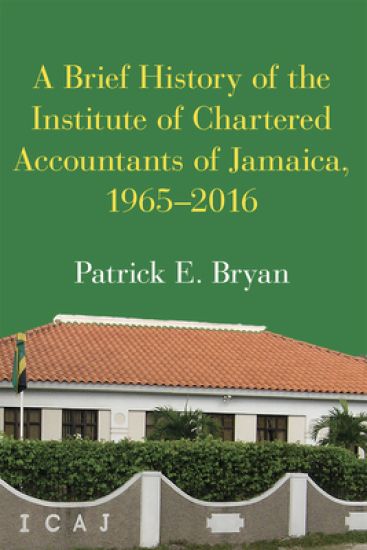
The foundation in 1965 of the Institute of Chartered Accountants of Jamaica (ICAJ) was the fruit of agitation by Jamaican nationalists to create an indigenous accounting institution, which would give greater opportunity to Jamaicans and replace expatriate with Jamaican accountants, trained and examined by the ICAJ. Durable associations with the Association of Chartered Certified Accountants, the University of the West Indies and the University of Technology (formerly the College of Arts, Science and Technology) have shaped the ICAJ's evolution as an educational institution. The ICAJ also added to its role of training accountants that of advising accountancy professionals, making an input into government policy and informing public opinion. The Institute, responding to initiatives that encouraged closer Caribbean cooperation, was very active in the establishment of the Institute of Chartered Accountants of the Caribbean. The original membership of twenty men in 1965 has risen to over one thousand members, almost equally divided between men and women.