Kirjojen hintavertailu. Mukana 11 518 949 kirjaa ja 12 kauppaa.

Kirjahaku

Etsi kirjoja tekijän nimen, kirjan nimen tai ISBN:n perusteella.

21 kirjaa tekijältä Patrick Grant

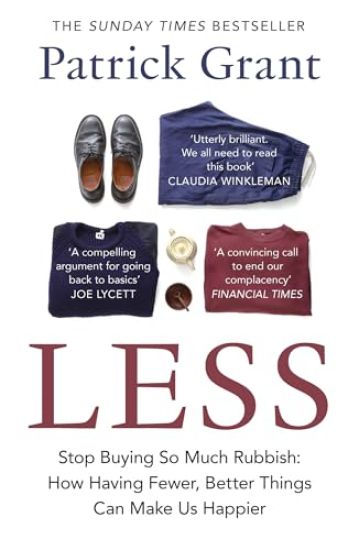
Less

Less

Patrick Grant

HARPERCOLLINS PUBLISHERS
2025
nidottu
THE SUNDAY TIMES BESTELLER ‘Utterly brilliant. We all need to read this book’ CLAUDIA WINKLEMAN 'Patrick’s book is fascinating and sobering and makes a compelling argument for going back to basics’ JOE LYCETT We used to care a lot about our clothes. We didn’t have many but those we had were important to us. We’d cherish them, repair them and pass them on. And making them provided fulfilling work for millions of skilled people locally. ?Today the average person has nearly five times as many clothes as they did just 50 years ago. Last year, 100 billion garments were produced worldwide, most made from oil, 30% of which were not even sold, and the equivalent of one bin lorry full of clothing is dumped in landfill or burned every single second. Our wardrobes are full to bursting with clothes we never wear so why do we keep buying more? In this passionate and revealing book about loving clothes but despairing of a broken global system Patrick Grant considers the crisis of consumption and quality in fashion, and how we might make ourselves happier by rediscovering the joy of living with fewer, better-quality things. Weaving in his personal journey through fashion, clothing and the other everyday objects in his life, this is a book that celebrates craftsmanship, making things with care, buying things with thought and valuing everything we own. It explains how rethinking our relationship with clothing could kickstart a thriving new local economy bringing prosperity and hope back to places in our country that have lost out to globalisation, offshore manufacturing and to the madness of price and quantity being the only things that matter. 'Presents a new way of thinking about the things we buy' KEITH BRYMER-JONES
Less

Less

Patrick Grant

HARPERCOLLINS PUBLISHERS
2024
sidottu
THE SUNDAY TIMES BESTELLER ‘Utterly brilliant. We all need to read this book’ CLAUDIA WINKLEMAN 'Patrick’s book is fascinating and sobering and makes a compelling argument for going back to basics’ JOE LYCETT We used to care a lot about our clothes. We didn’t have many but those we had were important to us. We’d cherish them, repair them and pass them on. And making them provided fulfilling work for millions of skilled people locally. ?Today the average person has nearly five times as many clothes as they did just 50 years ago. Last year, 100 billion garments were produced worldwide, most made from oil, 30% of which were not even sold, and the equivalent of one bin lorry full of clothing is dumped in landfill or burned every single second. Our wardrobes are full to bursting with clothes we never wear so why do we keep buying more? In this passionate and revealing book about loving clothes but despairing of a broken global system Patrick Grant considers the crisis of consumption and quality in fashion, and how we might make ourselves happier by rediscovering the joy of living with fewer, better-quality things. Weaving in his personal journey through fashion, clothing and the other everyday objects in his life, this is a book that celebrates craftsmanship, making things with care, buying things with thought and valuing everything we own. It explains how rethinking our relationship with clothing could kickstart a thriving new local economy bringing prosperity and hope back to places in our country that have lost out to globalisation, offshore manufacturing and to the madness of price and quantity being the only things that matter. 'Presents a new way of thinking about the things we buy' KEITH BRYMER-JONES
Dialogue in the Digital Age

Dialogue in the Digital Age

Patrick Grant

Routledge
2021
sidottu
Combining literary criticism and theory with anthropology and cognitive science, this highly relevant book argues that we are fundamentally shaped by dialogue. Patrick Grant looks at the manner in which dialogue informs and connects the personal, political, and religious dimensions of human experience and how literacy is being eroded through many factors, including advances in digital technology.The book begins by tracing the history of evolved communication skills and looks at ways in which interconnections among tragedy, the limits of language, and the silence of abjection contribute to an adequate understanding of dialogue. Looking at examples such as “truth decay” in journalism and falling literacy levels in school, alongside literary texts from Malory and Shakespeare, Grant shows how literature and criticism embody the essential values of dialogue. The maintenance of complex reading and interpretive skills is recommended for the recuperation of dialogue and for a better understanding of its fundamental significance in the shaping of our personal and social lives.Tapping into debates about the value of literature and the humanities, and the challenges posed by digitalization, this book will be of interest and significance to people working in a wide range of subjects, including literary studies, communication studies, digital humanities, social policy, and anthropology.
Dialogue in the Digital Age

Dialogue in the Digital Age

Patrick Grant

TAYLOR FRANCIS LTD
2023
nidottu
Combining literary criticism and theory with anthropology and cognitive science, this highly relevant book argues that we are fundamentally shaped by dialogue. Patrick Grant looks at the manner in which dialogue informs and connects the personal, political, and religious dimensions of human experience and how literacy is being eroded through many factors, including advances in digital technology.The book begins by tracing the history of evolved communication skills and looks at ways in which interconnections among tragedy, the limits of language, and the silence of abjection contribute to an adequate understanding of dialogue. Looking at examples such as “truth decay” in journalism and falling literacy levels in school, alongside literary texts from Malory and Shakespeare, Grant shows how literature and criticism embody the essential values of dialogue. The maintenance of complex reading and interpretive skills is recommended for the recuperation of dialogue and for a better understanding of its fundamental significance in the shaping of our personal and social lives.Tapping into debates about the value of literature and the humanities, and the challenges posed by digitalization, this book will be of interest and significance to people working in a wide range of subjects, including literary studies, communication studies, digital humanities, social policy, and anthropology.
Buddhism and Ethnic Conflict in Sri Lanka

Buddhism and Ethnic Conflict in Sri Lanka

Patrick Grant

State University of New York Press
2010
pokkari
Looks at how a spiritual tradition can be appropriated by those involved in ethno-nationalist conflict.Patrick Grant explores the relationship between Buddhism and violent ethnic conflict in modern Sri Lanka using the concept of "regressive inversion." Regressive inversion occurs when universal teaching, such as that of the Buddha, is redeployed to supercharge passions associated with the kinds of group loyalty that the universal teaching itself intends to transcend. The book begins with an account of the main teachings of Theravada Buddhism and looks at how these inform, or fail to inform, modern interpreters. Grant considers the writings of three key figures-Anagarika Dharmapala, Walpola Rahula, and J. R. Jayewardene-who addressed Buddhism and politics in the years leading up to Sri Lanka's political independence from Britain, and subsequently, in postcolonial Sri Lanka. This book makes the Sri Lankan conflict accessible to readers interested in the modern global phenomenon of ethnic violence involving religion and also illuminates similar conflicts around the world.
Reading Modernity, Modernism and Religion Today

Reading Modernity, Modernism and Religion Today

Patrick Grant

TAYLOR FRANCIS LTD
2024
sidottu
Feelings of rootlessness, fragmentation and loneliness are endemic in today’s secular societies. In the late nineteenth century, Émile Durkheim described this kind of social malaise as anomie, a concept this book locates within a historical narrative of the emergence of Modernism from Modernity. The book focuses on two representative figures, Benedictus de Spinoza and Vincent van Gogh, on whose works it offers significant new perspectives. Spinoza drew up a blueprint for Modernity, which is to say, the cultural transformations that took place as a result of the Scientific Revolution and the Protestant Reformation. In counterpoint to his overriding confidence in reason, a persistent current in Spinoza’s writing shows how concerned he was about a possible loss of confidence in his governing idea of a single Substance, the philosophical God, with which he sought to replace the creator God of the Bible. In promoting art as a means of filling the gap left by the absence of Spinoza’s philosophical God and the failures of traditional Christianity, Van Gogh also discovered the limitations of the vocation to which he had dedicated himself. He concluded that in the tension between art and anomie, a new kind of religious sensibility and understanding might emerge. This remains the case in the current postmodern cultural phase when fragmentation and incoherence are summoning up new assessments and re-configurations of values promoting new forms of solidarity, dialogue and religious understanding.
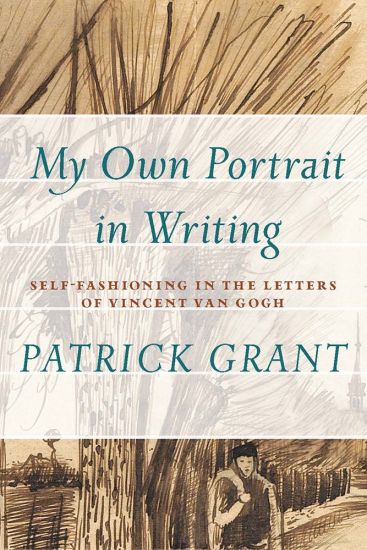
"My Own Portrait in Writing"

"My Own Portrait in Writing"

Patrick Grant

AU Press
2015
pokkari
A reading of Van Gogh's collected correspondence by way of aset of ideas about dialogue and self-fashioning derived especially fromMikhail Bakhtin. Patrick Grant's central claim is that VanGogh's letters raise from within themselves questions and issuesto which they also respond dialogically, thereby thematizing theprocess of self-fashioning within their own discourse. The manner inwhich they do so is a marker of the specifically literary dimension ofVan Gogh's writing. Complementing Grant's earlier criticalanalysis, The Letters of Vincent van Gogh: A Critical Study(AU Press, 2014), this study brings Van Gogh's collectedcorrespondence fully into the domain of modern literary studies, bothcritical and theoretical—as is long overdue.
Reading Vincent Van Gogh

Reading Vincent Van Gogh

Patrick Grant

AU Press
2016
pokkari
Soon after his death, Vincent van Gogh's reputation grew and developed through the remarkably symbiotic relationship evident between his paintings and letters. However, the sheer bulk and complexity of Van Gogh's complete surviving correspondence presents a formidable challenge to those who wish to read and analyze the whole text as a literary work.Reading Vincent van Gogh is at once an interpretive guide to Van Gogh's letters and a distillation of the key themes that reoccur throughout his collected letters – foremost among them the motifs of suffering, love, imagination, and the ineffable. In this indispensable, synoptic view of the letters, Patrick Grant makes the main lines of Vincent van Gogh's thinking accessible and displays the arresting vividness of the well-known artist's writing.
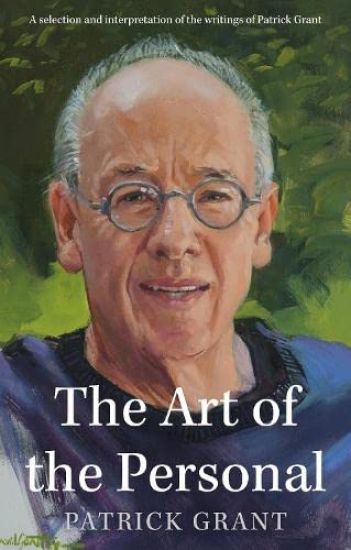
The Art of the Personal

The Art of the Personal

Patrick Grant

TROUBADOR PUBLISHING
2022
nidottu
The Art of the Personal offers a strikingly original, meticulously researched interpretation of what it means to be a person, and is highly relevant for the times in which we live. The 238 excerpts are selected from 21 books published by Patrick Grant during the past 50 years. The excerpts reach across a wide range of topics, including psychology, aesthetics, literary theory, Biblical criticism, political theory, the Northern Ireland Troubles, Sri Lanka, the place of religion in ethnic conflict, the perennial philosophy and the history of spirituality, among others. The excerpts are arranged under general headings, which are introduced and interpreted by brief essays. This format invites an interactive, dialogical response, as the book makes a case for an understanding of the person as situated within the complex networks of discourse by which its threshold status is constituted but not defined, and to which the art of dialogue is indispensable.
Imperfection

Imperfection

Patrick Grant

AU Press
2012
pokkari
Benjamin Whichcote once said that "only madmen and fools arepleased with themselves: no wise man is good enough for his ownsatisfaction." While Whichcote's wise man accepts thisdisparity, the madmen and fools suffer from a deluded self-satisfactionwhich, one can assume, might make them dangerous. The twenty-four briefchapters of Imperfection develop this governing idea as itrelates to the present state of the God debate, modern ethnic conflictsin which religion is a marker of identity, and the idea of freedom inrelation to the uncertainties of self-determination. Human beings are imperfect creatures who nonetheless have ideas aboutperfection. Grant argues that the most interesting and creative thingspeople do are shaped in the gap between these two poles. Aretrospective view of his work over forty years, Imperfectiondisplays the scope of his insights and reveals an important Canadianpublic intellectual.