Kirjojen hintavertailu. Mukana 11 244 527 kirjaa ja 12 kauppaa.

Kirjahaku

Etsi kirjoja tekijän nimen, kirjan nimen tai ISBN:n perusteella.

6 kirjaa tekijältä Patrick H. Stakem

RISC Microprocessors, History and Overview

RISC Microprocessors, History and Overview

Patrick H. Stakem

Independently Published
2018
nidottu
This book discusses the Reduced Instruction Set Computer architecture, a technique to streamline instruction execution. Sometimes, RISC is said to stand for "Relegate Important Stuff to the Compiler," since the compilation process is done offline, and then the code is run. The time penalty paid at compile time is paid back by faster code execution. RISC machines place more burdens on their compilers. The alternative to RISC is CISC - Complex Instruction Set Computer. An example would be the legacy Intel x86, IA-32 instruction set. RISC involves a series of architectural features to enhance the throughput of operations. RISC has become a mainstream architectural feature in modern processors.
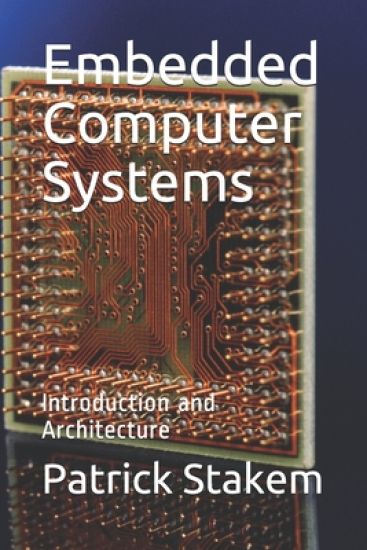
Embedded Computer Systems: Introduction and Architecture

Embedded Computer Systems: Introduction and Architecture

Patrick H. Stakem

Independently Published
2018
nidottu
Embedded systems have elements of hardware and software, and these are brought together into a working system. The systems engineering process, from requirements to testing and post-deployment support is discussed. There are known approaches that work. Software is a different animal than hardware, but the top-level principles for developing and testing derive from the same principles. Programmable hardware, in terms of FPGA's and SoC's introduce complexity, but can be addressed by the same engineering best practices.
Tracks along the Ditch, Relationships between the C&O Canal & the Railroads.
This book explores the interaction of the various transportation technologies, driven by the profit motives and political situations of the time. The interaction of the Canal and the Railroads with the National Road is also touched upon. When it was constructed, the canal was based on tried and proven technology, and had an extensive history in Europe. The railroad was new, untried technology. At its inception, it was not clear if locomotives or horses would be used on the railroad. The C&O Canal owed its existence to the much earlier Patowmack Canal Project, championed by George Washington. Interestingly, the C&O Canal did not go from the Chesapeake not to the Ohio. Perhaps we should call it the Georgetown and Cumberland Canal. It was supposed to go to Pittsburgh as well.
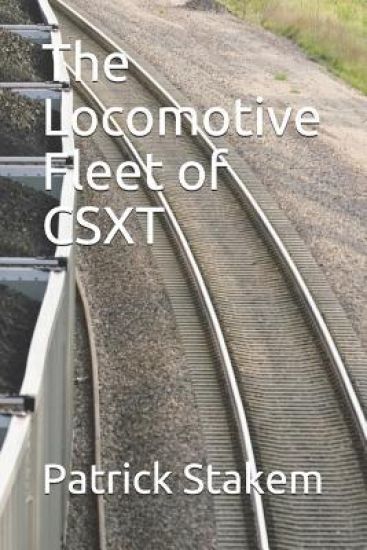
The Locomotive Fleet of Csxt

The Locomotive Fleet of Csxt

Patrick H. Stakem

Independently Published
2019
nidottu
Rich in very diverse railroad history CSX Transportation (CSXT) is the largest eastern railroad and also one of the safest in the country. CSXT is the end result of over 150 years of railroad evolution in the United States. The largest part of CSXT consists of elements of the Chessie System and the Seaboard Coast Lines. Dozens of "fallen flag" lines such as the Baltimore & Ohio, Chesapeake & Ohio, Western Maryland, Atlantic Coast Line, Richmond, Fredericksburg, and Potomac, Family Line, s and many more make up the modern CSXT.CSXT's rail spans the United States east of the Mississippi exclusive of New England. The northern portion, the Chessie system heritage serves the industrial northeast and the coal fields of Maryland, West Virginia, Pennsylvania and Kentucky. The southern section, from the SCL, handles minerals, chemicals and ocean ports. The building blocks of CSXT are the history, roadbed, and hard work of hundreds of predecessor roads, from the very beginning of flanged wheel on iron rail in America.From a 50 year old SW1200 workhorse switching cars in a yard, to mile-long unit coal trains headed by 15,000 horsepower of modern AC traction, CSXT never sleeps. CSXT uses locomotives from major United State's manufacturers General Electric (GE) and Electromotive Division (EMD), as well as new-comer NRE. The CSXT fleet of locomotives at the end of 2018 numbered around 4,000 locomotives.As this book was being prepared, CSX has 3873 units on its roster, with 800 being stored. That gives some 13,225,000 raw horsepower available. This is a data book, not a color picture book, to keep costs down. There are numerous websites and books with nice color pictures of CSX locomotives mentioned in the Reference and Resources sections.
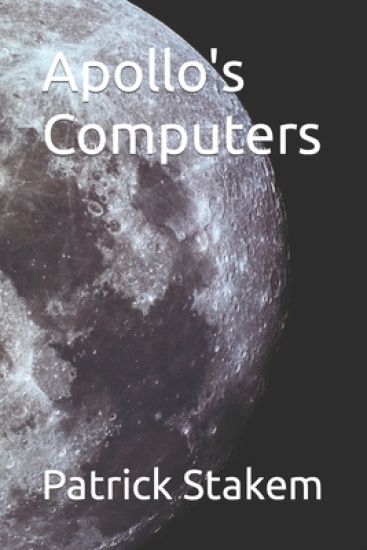
Apollo's Computers

Apollo's Computers

Patrick H. Stakem

Createspace Independent Publishing Platform
2018
nidottu
Apollo was built in the era of "big iron" computer mainframes. The concept of an onboard computer for space missions was radically new. There was only one place in the world that could design the Apollo Guidance Computers, and that was MIT. It took most of the U.S.'s production of integrated circuits, another radical idea replacing individual vacuum tubes, to build the AGC's. It took 2,000 person-years of independent code review and validation to ensure that they would operate properly.Besides the technical challenges, the Apollo missions were a matter of National Prestige. In the Space Race between the United States and the Soviet Union, President Kennedy said we were going to the Moon and return safely before the end of the (1960's) decade, so we did. The flight computers for the Saturn launch vehicle were an evolution of earlier missile guidance efforts. The massive Saturn-V first stage was built from clustered Jupiter rockets. The earlier and smaller Saturn-I was built of clustered Redstone rockets, which were themselves a derivative of the early German V-2 rockets by the Von Braun Team. The Saturn's upper stages were all new technology, using liquid hydrogen and oxygen. The vehicle had to achieve and maintain a precise trajectory from its launch site in Florida, to lunar orbit, to the lunar surface and back, and then return to Earth. All this took unprecedented computing power. This book is a brief synopsis of the architecture and applications of the Apollo computers. There is a lot of archived material on the topic, and the list of references in this book is a good starting point. The amazing thing is, the first computer on another world was designed and built before computers were commodity items. It worked as planned. Although your phone has more computing power than the entire Saturn vehicle, you shouldn't trust it to get you to the moon and back.