Kirjojen hintavertailu. Mukana 12 390 323 kirjaa ja 12 kauppaa.

Kirjahaku

Etsi kirjoja tekijän nimen, kirjan nimen tai ISBN:n perusteella.

6 kirjaa tekijältä Patrick J. Deneen

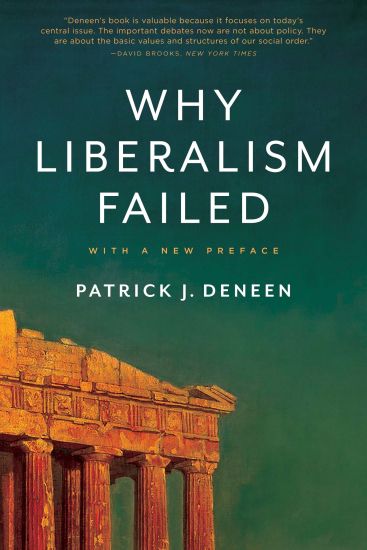
Why Liberalism Failed

Why Liberalism Failed

Patrick J. Deneen

Yale University Press
2019
pokkari
Has liberalism failed because it has succeeded? "Why Liberalism Failed offers cogent insights into the loss of meaning and community that many in the West feel, issues that liberal democracies ignore at their own peril."—President Barack Obama "Deneen's book is valuable because it focuses on today's central issue. The important debates now are not about policy. They are about the basic values and structures of our social order."—David Brooks, New York Times Of the three dominant ideologies of the twentieth century—fascism, communism, and liberalism—only the last remains. This has created a peculiar situation in which liberalism’s proponents tend to forget that it is an ideology and not the natural end-state of human political evolution. As Patrick Deneen argues in this provocative book, liberalism is built on a foundation of contradictions: it trumpets equal rights while fostering incomparable material inequality; its legitimacy rests on consent, yet it discourages civic commitments in favor of privatism; and in its pursuit of individual autonomy, it has given rise to the most far-reaching, comprehensive state system in human history. Here, Deneen offers an astringent warning that the centripetal forces now at work on our political culture are not superficial flaws but inherent features of a system whose success is generating its own failure.
Regime Change

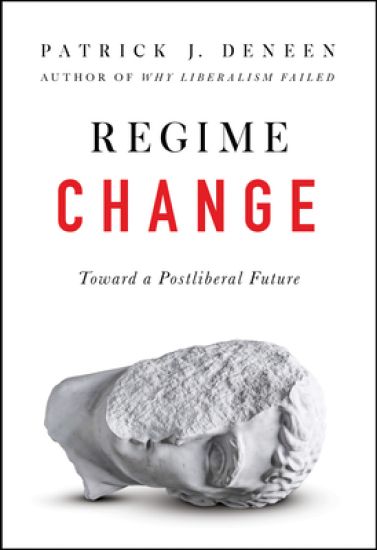
Regime Change

Patrick J. Deneen

RANDOM HOUSE USA INC
2023
sidottu
From Notre Dame professor and author of Why Liberalism Failed comes a provocative call for replacing the tyranny of the self-serving liberal elite with conservative leaders aligned with the interests of the working class Classical liberalism promised to overthrow the old aristocracy, creating an order in which individuals could create their own identities and futures. To some extent it did--but it has also demolished the traditions and institutions that nourished ordinary people and created a new and exploitative ruling class. This class's economic libertarianism, progressive values, and technocratic commitments have led them to rule for the benefit of the "few" at the expense of the "many," precipitating our current political crises. In Regime Change, Patrick Deneen proposes a bold plan for replacing the liberal elite and the ideology that created and empowered them. Grass-roots populist efforts to destroy the ruling class altogether are naive; what's needed is the strategic formation of a new elite devoted to a "pre-postmodern conservatism" and aligned with the interest of the "many." Their top-down efforts to form a new governing philosophy, ethos, and class could transform our broken regime from one that serves only the so-called meritocrats. Drawing on the oldest lessons of the western tradition but recognizing the changed conditions that arise in liberal modernity, Deneen offers a roadmap for these changes, offering hope for progress after "progress" and liberty after liberalism.
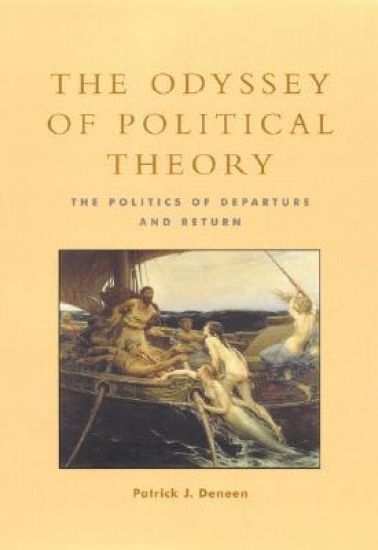
The Odyssey of Political Theory

The Odyssey of Political Theory

Patrick J. Deneen

Rowman Littlefield
2000
sidottu
This path-breaking and eloquent analysis of The Odyssey, and the way it has been interpreted by political philosophers throughout the centuries, has dramatic implications for the current state of political thought. This important book offers readers original insights into The Odyssey and it provides a new understanding of the classic works of Plato, Rousseau, Vico, Horkheimer, and Adorno. Through his analysis Patrick J. Deneen requires readers to rethink the issues that are truly at the heart of our contemporary "Culture Wars," and he encourages us to reassess our assumptions about the Western canon's virtues or viciousness. Deneen's penetrating exploration of Odysseus's and our own enduring battles between the dual temptations of homecoming and exploration, patriotism and cosmopolitanism, and relativism and universality provides an original perspective on contentious debates at the center of modern political theory and philosophy.
The Odyssey of Political Theory

The Odyssey of Political Theory

Patrick J. Deneen

Rowman Littlefield
2003
nidottu
This path-breaking and eloquent analysis of The Odyssey, and the way it has been interpreted by political philosophers throughout the centuries, has dramatic implications for the current state of political thought. This important book offers readers original insights into The Odyssey and it provides a new understanding of the classic works of Plato, Rousseau, Vico, Horkheimer, and Adorno. Through his analysis Patrick J. Deneen requires readers to rethink the issues that are truly at the heart of our contemporary 'Culture Wars,' and he encourages us to reassess our assumptions about the Western canon's virtues or viciousness. Deneen's penetrating exploration of Odysseus's and our own enduring battles between the dual temptations of homecoming and exploration, patriotism and cosmopolitanism, and relativism and universality provides an original perspective on contentious debates at the center of modern political theory and philosophy.
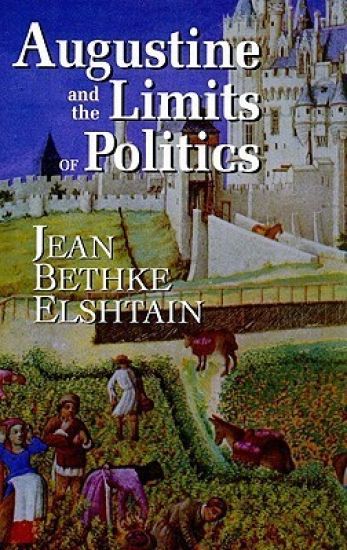
Augustine and the Limits of Politics

Augustine and the Limits of Politics

Jean Bethke Elshtain; Patrick J. Deneen

University of Notre Dame Press
2018
nidottu
Now with a new foreword by Patrick J. Deneen. Jean Bethke Elshtain brings Augustine's thought into the contemporary political arena and presents an Augustine who created a complex moral map that offers space for loyalty, love, and care, as well as a chastened form of civic virtue. The result is a controversial book about one of the world's greatest and most complex thinkers whose thought continues to haunt all of Western political philosophy. What is our business "within this common mortal life?" Augustine asks and bids us to ask ourselves. What can Augustine possibly have to say about the conditions that characterize our contemporary society and appear to put democracy in crisis? Who is Augustine for us now and what do his words have to do with political theory? These are the underlying questions that animate Jean Bethke Elshtain's fascinating engagement with the thought and work of Augustine, the ancient thinker who gave no political theory per se and refused to offer up a positive utopia. In exploring the questions, Why Augustine, why now? Elshtain argues that Augustine's great works display a canny and scrupulous attunement to the here and now and the very real limits therein. She discusses other aspects of Augustine's thought as well, including his insistence that no human city can be modeled on the heavenly city, and further elaborates on Hannah Arendt's deep indebtedness to Augustine's understanding of evil. Elshtain also presents Augustine's arguments against the pridefulness of philosophy, thereby linking him to later currents in modern thought, including Wittgenstein and Freud.