Kirjojen hintavertailu. Mukana 11 342 296 kirjaa ja 12 kauppaa.

Kirjahaku

Etsi kirjoja tekijän nimen, kirjan nimen tai ISBN:n perusteella.

11 kirjaa tekijältä Patrick J. Hartin

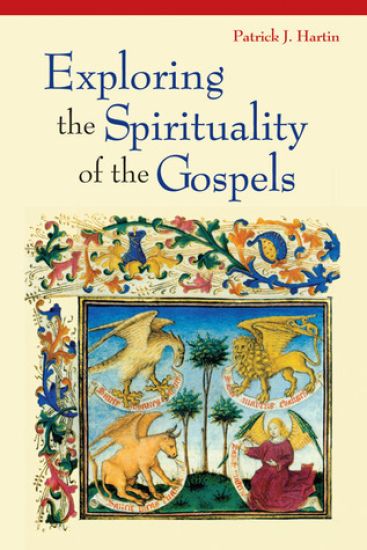
Exploring the Spirituality of the Gospels

Exploring the Spirituality of the Gospels

Patrick J. Hartin

Liturgical Press
2011
pokkari
Within each of the four gospels there is a foundational spirit, a spirituality of the gospels. That is to say, each gospel contains rich images and values central to the Vision of the person of Jesus' and to the path toward spiritual transformation in his image. In this volume Patrick Hartin first looks at each gospel and asks such questions as Who is Jesus? and What transformation does this encounter with Jesus invite? Hartin then follows with examples of people who have appropriated the transformative power of these particular spiritualties from Saint Antony and Dorothy Day to Saint Augustine and Archbishop Romero. Hartin's twofold approach gives us a deeper appreciation for the spiritual dimension of the gospels and helps us to be transformed in Christ by their message and Vision.
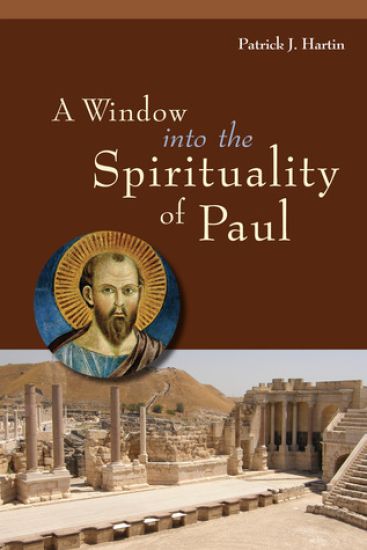
A Window into the Spirituality of Paul

A Window into the Spirituality of Paul

Patrick J. Hartin

Liturgical Press
2015
pokkari
Paul’s spiritual journey is driven by a transforming encounter with the risen Lord. In A Window into the Spirituality of Paul, Patrick J. Hartin focuses on the spiritual vision that emerges in Paul’s own personal response to Christ, found within his letters in the New Testament. Not only were early followers shaped by Paul’s example, but throughout history many saints and sinners have given flesh to this rich spiritual tradition. Their witness is an integral part of how Hartin helps us explore key aspects of Paul’s spirituality.
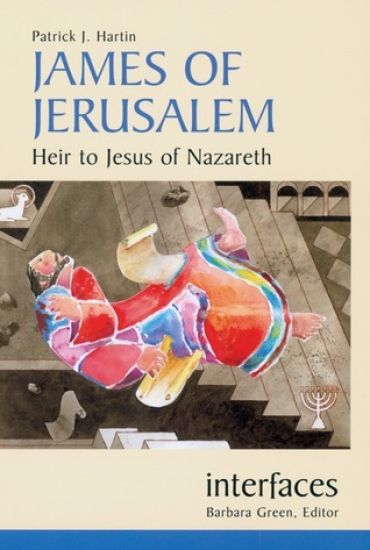
James Of Jerusalem

James Of Jerusalem

Patrick J. Hartin

Liturgical Press
2004
pokkari
Through the world of James of Jerusalem we discover the development of Christianity and its struggle for self-definition amidst Jewish roots and a rising congregation of newly converted Gentiles. In this time of early Christianity, James' presence testified to the church's diversity and he influenced Christianity beyond the literature of the New Testament. Patrick J. Hartin studies the character of James in his various life-roles: as a member of Jesus' family, as a leader and spokesperson of Jerusalem, and as an important figure in early Christian writing, including that of Paul, and the Acts of the Apostles. The use of historical critical method illustrates for students the growth of traditions and the sources behind the texts.Chapters are Jesus, James and his family," *James as leader of the Jerusalem Community, - *James and Paul, - *James in Tradition, - and conclusion.
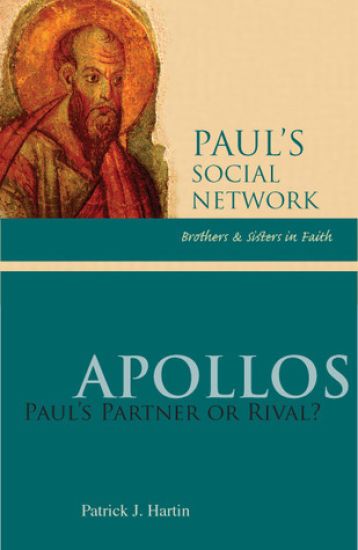
Apollos

Apollos

Patrick J. Hartin

Liturgical Press
2009
pokkari
Human beings are embedded in a set of social relations. A social network is one way of conceiving that set of relations in terms of a number of persons connected to one another by varying degrees of relatedness. In the early Jesus-group documents featuring Paul and coworkers, it takes little effort to envision the apostle's collection of friends and friends of friends that is the Pauline network. The persons who constituted that network are the focus of this set of brief books. For Christians of the Western tradition, these persons are significant ancestors in faith. While each of them is worth knowing by themselves, it is largely because of their standing within that web of social relations woven about and around Paul that they are of lasting interest. Through this series we hope to come to know those persons in ways befitting their first-century Mediterranean culture.Apollos is an enigmatic character whose name appears in only three New Testament writings. Through a social-scientific approach, this study pays attention to four main aspects relative to Apollos: his collectivistic nature as a person of the first-century Mediterranean; his relationship to Corinth and its emerging conflicts; his roots in the city of Alexandria and its contributions to his personality and identity; and, finally, his relationship to Paul and his social network. By gaining insights into a world and culture different from their own, readers will gain a deepened understanding of an important and highly educated member of Paul's social network. The person of Apollos and the entire New Testament will be seen through new lenses and will open readers to new cultural experiences from which they will emerge fuller people.
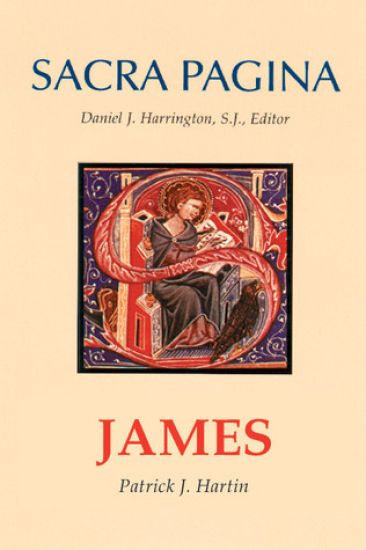
Sacra Pagina

Sacra Pagina

Patrick J. Hartin

Liturgical Press
2003
sidottu
In his commentary on the letter of James, Hartin offers a unique approach toward understanding a much-neglected writing. Refusing to read the letter of James through the lens of Paul, Hartin approaches the letter in its own right. He takes seriously the address to the twelve tribes in the Dispersion" (1:1) as directed to Jews who had embraced the message of Jesus and were living outside their homeland, Israel. At the same time, Hartin shows how this letter remains true to Jesus' heritage. Using recent studies on rhetorical culture, Hartin illustrates how James takes Jesus ' sayings and performs them again in his own way to speak to the hearers/readers of his own world. Hartin examines the text, passage by passage, while providing essential notes and an extensive explanation of the theological meaning of each passage. The value of this commentary lies in its breadth of scholarship and its empathic approach to this writing. The reader will discover new and refreshing insights into the world of early Christianity as well as a teaching that is of perennial significance. Patrick J. Hartin was born and raised in Johannesburg, South Africa. He studied at the Gregorian University in Rome and is an ordained priest of the Diocese of Spokane, Washington. He holds two doctorates in Theology: in Ethics and in the New Testament, both from the University of South Africa. Presently he teaches courses in the New Testament and in Classical Civilizations at Gonzaga University. He is the author of eleven books, including: Apollos (Paul's Social Network series), James of Jerusalem (Interfaces series), and James, First Peter, Jude, Second Peter (New Collegeville Bible Commentary series), all published by Liturgical Press.
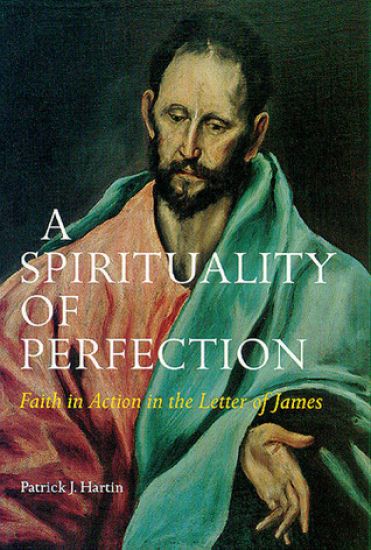
A Spirituality of Perfection

A Spirituality of Perfection

Patrick J. Hartin

Liturgical Press
1999
pokkari
2000 Catholic Press Association Award Winner!Throughout this century the Epistle of James has been viewed consistently as a disjointed set of instructions. In A Spirituality of Perfection Patrick Hartin differs from this approach by showing that the call for perfection" provides a unifying meaning for the epistle. Examining the concept of perfection against the background of the Graeco-Roman world, the Old Testament, and the Septuagint, Father Hartin shows that perfection provides a key to defining the spirituality of the Epistle of James.Father Hartin shows how the notion of perfection plays a key role in the definition of God, as well as the way one is called *to be in the world. - He adopts a fresh approach toward understanding the categories of wisdom, eschatology, and apocalyptic as they illuminate the epistle's advice. He allows James to be read in its own right, instead of through the eyes of other traditions, such asPaul, and shows that what James intends by perfection is different from our modern understanding - that the concept of perfection unlocks an important self-understanding in Christianity.Just as every generation of believers aims at putting its faith into action, A Spirituality of Perfection culminates with the question: *What direction does the Epistle of James give Christians of the twenty-first century for putting their faith into action? - Chapters are *A Cal to Perfection, - *An Overview of the Concept of Perfection in the Ancient World as a Background to the Letter of James, - *The Nature and Purpose of the Letter of James, - *Faith Perfected Through Works: A Context for the Moral Instructions in the Letter of James, - *A Spirituality of Authentic Perfection, - *Perfection in the Letter of James and the Sermon on the Mount, - and *On Reading James Today. - Patrick J. Hartin, DTh, teaches New Testament in the religious studies department at Gonzaga University in Spokane."
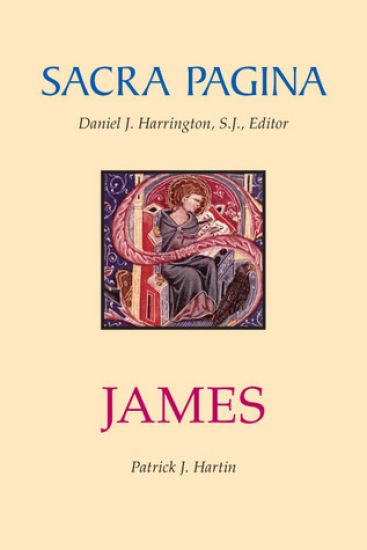
Sacra Pagina

Sacra Pagina

Patrick J. Hartin

Liturgical Press
2009
pokkari
In his commentary on the letter of James, Hartin offers a unique approach toward understanding a much-neglected writing. Refusing to read the letter of James through the lens of Paul, Hartin approaches the letter in its own right. He takes seriously the address to the twelve tribes in the Dispersion" (1:1) as directed to Jews who had embraced the message of Jesus and were living outside their homeland, Israel. At the same time, Hartin shows how this letter remains true to Jesus' heritage. Using recent studies on rhetorical culture, Hartin illustrates how James takes Jesus ' sayings and performs them again in his own way to speak to the hearers/readers of his own world. Hartin examines the text, passage by passage, while providing essential notes and an extensive explanation of the theological meaning of each passage. The value of this commentary lies in its breadth of scholarship and its empathic approach to this writing. The reader will discover new and refreshing insights into the world of early Christianity as well as a teaching that is of perennial significance. Patrick J. Hartin was born and raised in Johannesburg, South Africa. He studied at the Gregorian University in Rome and is an ordained priest of the Diocese of Spokane, Washington. He holds two doctorates in Theology: in Ethics and in the New Testament, both from the University of South Africa. Presently he teaches courses in the New Testament and in Classical Civilizations at Gonzaga University. He is the author of eleven books, including: Apollos (Paul's Social Network series), James of Jerusalem (Interfaces series), and James, First Peter, Jude, Second Peter (New Collegeville Bible Commentary series), all published by Liturgical Press.
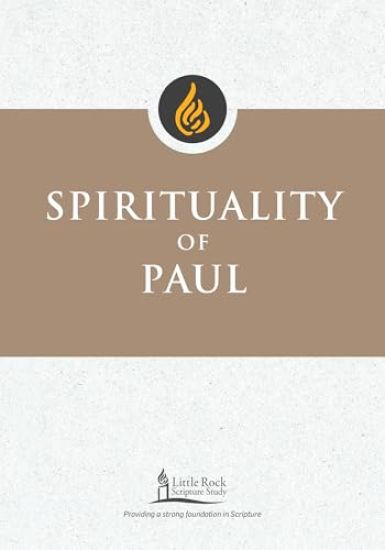
Spirituality of Paul

Spirituality of Paul

Patrick J. Hartin

Liturgical Press
2025
pokkari
An excellent guide for those who are new to St. Paul’s letters as well as those who know them by heart, Fr. Patrick Hartin’s Spirituality of Paul explores the rich and influential spiritual tradition of the Pauline letters. Learn about Paul’s own encounter with the risen Christ and embrace his message about the transforming power of the cross and resurrection. This study includes profiles of individuals whose lives bore witness to this life-changing, Christ-centered spirituality, including St. Kateri Tekakwitha and Blessed Stanley Rother. Commentary, study and reflection questions, prayers, and access to online lectures are included. 7 lessons.
Spirituality of the Gospels

Spirituality of the Gospels

Patrick J. Hartin

Liturgical Press
2025
pokkari
Within each of the four gospels there is a foundational spirit, a rich spirituality based on each gospel’s unique understanding of Jesus and what it means to be his disciple. In this study, Fr. Patrick Hartin looks at each gospel and asks such questions as Who is Jesus? and What transformation does this encounter with Jesus invite? Hartin thoroughly unpacks these questions, and then follows with examples of people who embody the transformative power of these spiritualities, from Saint Francis and Dorothy Day to Saint Augustine and Archbishop Romero. Hartin's twofold approach gives us a deeper appreciation for the spiritual dimension of the gospels and helps us to be transformed in Christ by their message and vision. Commentary, study and reflection questions, prayers, and access to online lectures are included. 6 lessons.
James and the "Q" Sayings of Jesus

James and the "Q" Sayings of Jesus

Patrick J. Hartin

Bloomsbury Academic
2015
sidottu
The Epistle of James lies on a wisdom trajectory that extends from the Old Testament through to the New. It is among the earliest of the New Testament writings, providing valuable insight into the process of transmission of the sayings of Jesus. By examining textual similarities between James and the early Jesus traditions, such as Q, QMt and QLk, Hartin argues that the Epistle of James is an independent witness to the existence of the Q source, as well as to the way in which this source developed within the Matthaean community which produced QMt.