Kirjojen hintavertailu. Mukana 11 699 587 kirjaa ja 12 kauppaa.

Kirjahaku

Etsi kirjoja tekijän nimen, kirjan nimen tai ISBN:n perusteella.

17 kirjaa tekijältä Patrick McGee

Cinema, Theory, and Political Responsibility in Contemporary Culture
This 1997 book explores the political significance of aesthetic analysis in the context of cultural studies. It applies the theories of Adorno, Derrida, and Lacan to film studies, and asks how political responsibility can be reconciled with the concept of the university as a democratic institution. Art and the university, Patrick McGee claims, share a common feature: they are commonly regarded as autonomous realms that resist the determination of economic and political interests, while still playing a crucial role in ethical and political discourse. Through detailed reference to Neil Jordan's film The Crying Game, McGee shows how film can be both a product and a critique of the culture industry. He goes on to analyse the function of the university in producing interpretations of such highly political art forms and in determining the limits of critical discussion. McGee links Adorno with Derrida to provide a new route through cultural studies and the claims of political criticism.
Cinema, Theory, and Political Responsibility in Contemporary Culture
This 1997 book explores the political significance of aesthetic analysis in the context of cultural studies. It applies the theories of Adorno, Derrida, and Lacan to film studies, and asks how political responsibility can be reconciled with the concept of the university as a democratic institution. Art and the university, Patrick McGee claims, share a common feature: they are commonly regarded as autonomous realms that resist the determination of economic and political interests, while still playing a crucial role in ethical and political discourse. Through detailed reference to Neil Jordan's film The Crying Game, McGee shows how film can be both a product and a critique of the culture industry. He goes on to analyse the function of the university in producing interpretations of such highly political art forms and in determining the limits of critical discussion. McGee links Adorno with Derrida to provide a new route through cultural studies and the claims of political criticism.
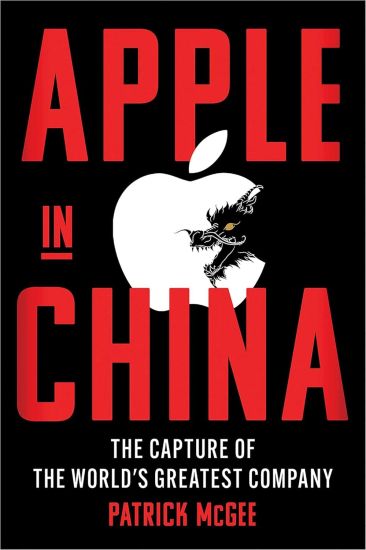
Apple in China

Apple in China

Patrick McGee

SIMON SCHUSTER LTD
2025
sidottu
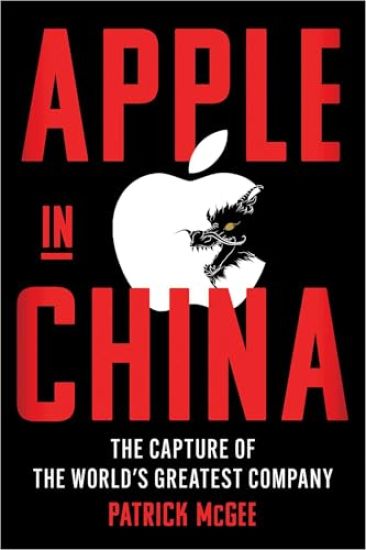
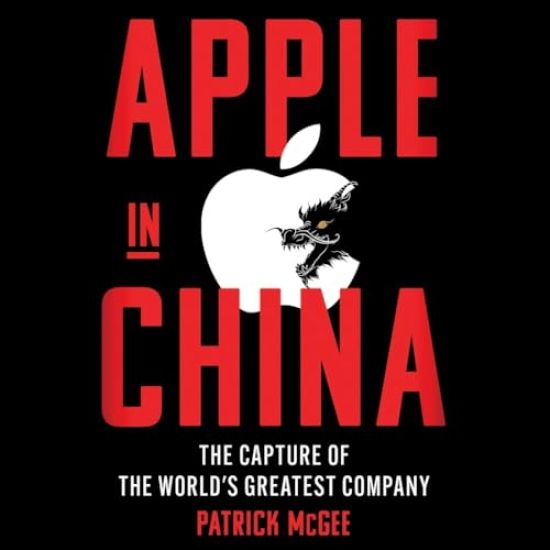
*** THE NEW YORK TIMES BESTSELLER *** ‘Absolutely riveting’ Peter Frankopan, author of The Silk Roads‘Disturbing and enlightening’ Chris Miller, author of Chip War‘Hugely important’ Rana Foroohar, author of Makers and Takers‘A once-in-a-generation read’ Robert D. Kaplan, author of Waste LandAs Trump wages a tariff war with China, seeking to boost domestic electronics manufacturing, this book offers an unparalleled insight into why his strategy is embarrassingly naïve. Apple isn’t just a brand; it’s the world’s most valuable company and creator of the 21st century’s defining product. The iPhone has revolutionized the way we live, work and connect. But Apple is now a victim of its own success, caught in the middle of a new Cold War between two superpowers. On the brink of bankruptcy in 1996, Apple adopted an outsourcing strategy. By 2003 it was lured to China by the promise of affordable, ubiquitous labour. As the iPod and iPhone transformed Apple’s fortunes, their sophisticated production played a seminal role in financing, training, supervising and supplying Chinese manufacturers – skills Beijing is now weaponizing against the West. Investigative journalist Patrick McGee draws on 200 interviews with former Apple executives and engineers to reveal how Cupertino’s choice to anchor its supply chain in China has increasingly made it vulnerable to the regime’s whims. Both an insider’s historical account and a cautionary tale, Apple in China is the first history of Apple to go beyond the biographies of its top executives and set the iPhone’s global domination within an increasingly fraught geopolitical context.
Apple in China
For readers of Walter Isaacson's Steve Jobs and Chris Miller's Chip War, a riveting look at how Apple helped build China's dominance in electronics assembly and manufacturing only to find itself trapped in a relationship with an authoritarian state making ever-increasing demands.
From Shane to Kill Bill

From Shane to Kill Bill

Patrick McGee

Wiley-Blackwell (an imprint of John Wiley Sons Ltd)
2006
sidottu
From Shane to Kill Bill: Rethinking the Western is an original and compelling critical history of the American Western film. Provides an insightful overview of the American Western genreCovers the entire history of the Western, from 1939 to the presentAnalyses Westerns as products of a genre, as well as expressions of political and social desiresDeepens an audience's understanding of the genre's most important works, including Shane, Stagecoach, The Searchers, Unforgiven, and Kill BillContains numerous illustrations of the films and issues discussed.
From Shane to Kill Bill

From Shane to Kill Bill

Patrick McGee

Wiley-Blackwell (an imprint of John Wiley Sons Ltd)
2006
nidottu
From Shane to Kill Bill: Rethinking the Western is an original and compelling critical history of the American Western film. Provides an insightful overview of the American Western genreCovers the entire history of the Western, from 1939 to the presentAnalyses Westerns as products of a genre, as well as expressions of political and social desiresDeepens an audience's understanding of the genre's most important works, including Shane, Stagecoach, The Searchers, Unforgiven, and Kill BillContains numerous illustrations of the films and issues discussed.
Political Monsters and Democratic Imagination

Political Monsters and Democratic Imagination

Patrick McGee

Bloomsbury Academic USA
2016
sidottu
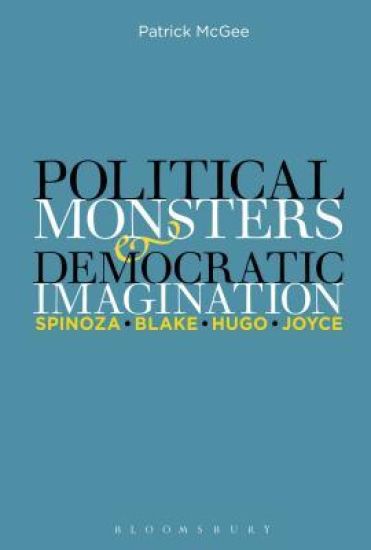
Political Monsters and Democratic Imagination explores the democratic thought of Spinoza and its relation to the thought of William Blake, Victor Hugo, and James Joyce. As a group, these visionaries articulate: a concept of power founded not on strength or might but on social cooperation; a principle of equality based not on the identity of individuals with one another but on the difference between any individual and the intellectual power of society as a whole; an understanding of thought as a process that operates between rather than within individuals; and a theory of infinite truth, something individuals only partially glimpse from their particular cultural situations. For Blake, God is the constellation of individual human beings, whose collective imagination produces revolutionary change. In Hugo’s novel, Jean Valjean learns that the greatest truth about humanity lies in the sewer or among the lowest forms of social existence. For Joyce, Leopold and Molly Bloom are everybody and nobody, singular beings whose creative power and truth is beyond categories and social hierarchies.
Political Monsters and Democratic Imagination

Political Monsters and Democratic Imagination

Patrick McGee

Bloomsbury Academic USA
2018
nidottu
Political Monsters and Democratic Imagination explores the democratic thought of Spinoza and its relation to the thought of William Blake, Victor Hugo, and James Joyce. As a group, these visionaries articulate: a concept of power founded not on strength or might but on social cooperation; a principle of equality based not on the identity of individuals with one another but on the difference between any individual and the intellectual power of society as a whole; an understanding of thought as a process that operates between rather than within individuals; and a theory of infinite truth, something individuals only partially glimpse from their particular cultural situations. For Blake, God is the constellation of individual human beings, whose collective imagination produces revolutionary change. In Hugo’s novel, Jean Valjean learns that the greatest truth about humanity lies in the sewer or among the lowest forms of social existence. For Joyce, Leopold and Molly Bloom are everybody and nobody, singular beings whose creative power and truth is beyond categories and social hierarchies.
Comedy, Book Two

Comedy, Book Two

Patrick McGee

Resource Publications (CA)
2022
pokkari
Comedy is a philosophical poem in the form of waking dream, inspired by Dante and William Blake. In book two, Cinematic Revolutions, the narrator, having passed through a cinema screen at the end of book one, arrives in the middle of a World War I field of dying men. An indescribable human figure appears who warns that these cinematic images are not real but projections of the cinematic mind with its power of empathy. Assuming different shapes and identities, this generic being becomes the narrator's guide. Through a series of dialogues and encounters, cinema and the visual culture it generates are identified with a cultural revolution--the nonviolent revolution--that surpasses the violent revolutions of the twentieth century. This view is articulated through encounters with Russian revolutionary Trotsky, twelve modernist writers and the philosopher Wittgenstein, Hitchcock, three dictators (Hitler, Stalin, Mao), a cinematic Jesus Christ, Holocaust historian Raul Hilberg, Martin Luther King, Malcolm X, and James Baldwin. Interspersed among these encounters are cinematic visions from directors like Eisenstein, Chaplin, and others. From Paris to Memphis, passing through Pasolini's black and white desert in Gospel according to Saint Matthew, descending into the dark underworld of Fritz Lang's Metropolis, rising into a Hollywood heaven of the forties, and standing on top of the Empire State Building with King Kong, cinematic images channel revolutionary desires and the necessity of nonviolence.
Comedy, Book Two

Comedy, Book Two

Patrick McGee

Resource Publications (CA)
2022
sidottu
Comedy is a philosophical poem in the form of waking dream, inspired by Dante and William Blake. In book two, Cinematic Revolutions, the narrator, having passed through a cinema screen at the end of book one, arrives in the middle of a World War I field of dying men. An indescribable human figure appears who warns that these cinematic images are not real but projections of the cinematic mind with its power of empathy. Assuming different shapes and identities, this generic being becomes the narrator's guide. Through a series of dialogues and encounters, cinema and the visual culture it generates are identified with a cultural revolution--the nonviolent revolution--that surpasses the violent revolutions of the twentieth century. This view is articulated through encounters with Russian revolutionary Trotsky, twelve modernist writers and the philosopher Wittgenstein, Hitchcock, three dictators (Hitler, Stalin, Mao), a cinematic Jesus Christ, Holocaust historian Raul Hilberg, Martin Luther King, Malcolm X, and James Baldwin. Interspersed among these encounters are cinematic visions from directors like Eisenstein, Chaplin, and others. From Paris to Memphis, passing through Pasolini's black and white desert in Gospel according to Saint Matthew, descending into the dark underworld of Fritz Lang's Metropolis, rising into a Hollywood heaven of the forties, and standing on top of the Empire State Building with King Kong, cinematic images channel revolutionary desires and the necessity of nonviolence.
Apple in China: The Capture of the World's Greatest Company
For readers of Walter Isaacson's Steve Jobs and Chris Miller's Chip War, a riveting look at how Apple helped build China's dominance in electronics assembly and manufacturing only to find itself trapped in a relationship with an authoritarian state making ever-increasing demands. After struggling to build its products on three continents, Apple was lured by China's seemingly inexhaustible supply of cheap labor. Soon it was sending thousands of engineers across the Pacific, training millions of workers, and spending hundreds of billions of dollars to create the world's most sophisticated supply chain. These capabilities enabled Apple to build the 21st century's most iconic products--in staggering volume and for enormous profit. Without explicitly intending to, Apple built an advanced electronics industry within China, only to discover that its massive investments in technology upgrades had inadvertently given Beijing a power that could be weaponized. In Apple in China, journalist Patrick McGee draws on more than two hundred interviews with former executives and engineers, supplementing their stories with unreported meetings held by Steve Jobs, emails between top executives, and internal memos regarding threats from Chinese competition. The book highlights the unknown characters who were instrumental in Apple's ascent and who tried to forge a different path, including the Mormon missionary who established the Apple Store in China; the "Gang of Eight" executives tasked with placating Beijing; and an idealistic veteran whose hopes of improving the lives of factory workers were crushed by both Cupertino's operational demands and Xi Jinping's war on civil society. Apple in China is the sometimes disturbing and always revelatory story of how an outspoken, proud company that once praised "rebels" and "troublemakers"--the company that encouraged us all to "Think Different"--devolved into passively cooperating with a belligerent regime that increasingly controls its fate.
Comedy, Book One

Comedy, Book One

Patrick McGee

Resource Publications (CA)
2020
pokkari
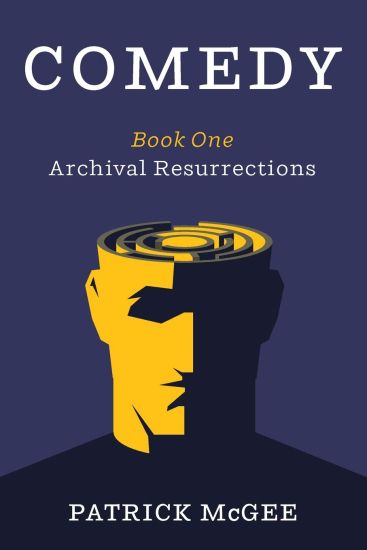
Comedy is a philosophical poem for the twenty-first century inspired by Dante's Commedia. It can be read as an ironic dream or fantasy that addresses the democratic idea. Book One, Archival Resurrections, explores the transindividual nature of human thought, which autonomously expands while it passes through different minds in historical time. On a walk in Seattle, the Narrator encounters his dead teacher, who becomes his guide through a world inside his own head where he encounters people from his personal past and past philosophers, poets, and statesmen, including Dante, Christine de Pizan, Spinoza, William Blake, Jefferson, Hamilton, Sally Hemings, Frederick Douglass, Lincoln, Marx, Oscar Wilde, James Joyce, and others. Part of the poem takes place in a library in the shape of an inverted cone, the antithesis of Dante's purgatory. Later, under the assumption that imagination is topological or plastic, there are visitations to Blake's cottage in Felpham, Lincoln's White House, Marx's London, and Wilde's and Joyce's Dublin. Joyce's Volta cinema is the gateway to Book Two, entitled Cinematic Revolutions, which will envision the twentieth century through its signature aesthetic form. Book Three, as yet untitled, will explore lived cityscapes as forms of life that gestate in themselves different possibilities for the future.
Comedy, Book One

Comedy, Book One

Patrick McGee

Resource Publications (CA)
2020
sidottu
Comedy is a philosophical poem for the twenty-first century inspired by Dante's Commedia. It can be read as an ironic dream or fantasy that addresses the democratic idea. Book One, Archival Resurrections, explores the transindividual nature of human thought, which autonomously expands while it passes through different minds in historical time. On a walk in Seattle, the Narrator encounters his dead teacher, who becomes his guide through a world inside his own head where he encounters people from his personal past and past philosophers, poets, and statesmen, including Dante, Christine de Pizan, Spinoza, William Blake, Jefferson, Hamilton, Sally Hemings, Frederick Douglass, Lincoln, Marx, Oscar Wilde, James Joyce, and others. Part of the poem takes place in a library in the shape of an inverted cone, the antithesis of Dante's purgatory. Later, under the assumption that imagination is topological or plastic, there are visitations to Blake's cottage in Felpham, Lincoln's White House, Marx's London, and Wilde's and Joyce's Dublin. Joyce's Volta cinema is the gateway to Book Two, entitled Cinematic Revolutions, which will envision the twentieth century through its signature aesthetic form. Book Three, as yet untitled, will explore lived cityscapes as forms of life that gestate in themselves different possibilities for the future.
Apple in China: The Capture of the World's Greatest Company
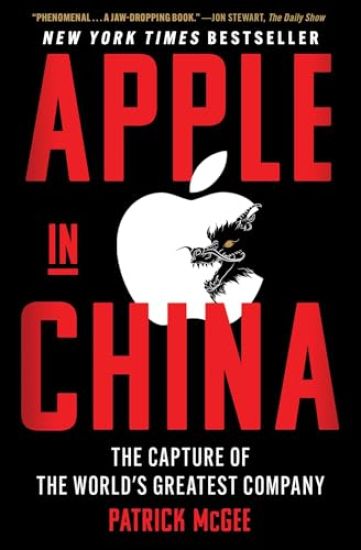
"Phenomenal...a jaw-dropping book." --Jon Stewart, The Daily Show Named by both the New York Times and the Economist as one of the best books of the year so far, this "scrupulously reported" (The New Yorker) and "astonishing" (The Daily Telegraph, London) book rivets with its portrayal of how Apple allowed itself to become dependent on China for a huge percentage of its manufacturing, making it vulnerable and unwittingly laying the groundwork for the Asian superpower to rival the US in technological expertise. After struggling to build products on three continents, Apple turned to China's seemingly endless supply of cheap labor. It soon deployed thousands of engineers, trained millions of workers, and invested hundreds of billions of dollars to create the most advanced global supply chain. These efforts fueled the iPhone's dominance--but also laid the foundation for a powerful, state-supported Chinese electronics industry. What began as a business decision evolved into a cautionary tale of global trade, tech rivalry, and national security. Without intending to, Apple helped Beijing acquire technological influence that could now be weaponized--a central concern in the ongoing US-China tech war. Drawing on over two hundred interviews, Patrick McGee exposes never-before-reported details from Silicon Valley to Shenzhen: internal emails, secretive executive meetings, and overlooked voices inside the company's China operations. You'll meet the "Gang of Eight" executives tasked with appeasing Beijing, a Mormon missionary who launched Apple retail in China, and a veteran whose dreams of improving factory conditions were crushed by both Apple's demands and Xi Jinping's authoritarian crackdown. From Foxconn and Tim Cook to the Chinese Communist Party and Taiwan Semiconductor, this is a revelatory look at how Apple, in seeking efficiency, became entangled in the very politics it once claimed to challenge. For readers of Chip War, American Factory, and The Big Short, Apple in China is a searing examination of corporate power, Chinese nationalism, deglobalization, and the fragile relationship between Silicon Valley and the world's rising superpower.