
Kirjahaku
Etsi kirjoja tekijän nimen, kirjan nimen tai ISBN:n perusteella.
9 kirjaa tekijältä Patrick O'Connor
The first book that explains why managing engineering is more difficult, more demanding and more important than managing any other human activity in modern society. It explains how, by adhering to the principles taught by Peter F. Drucker in his landmark book "The Practice of Management", managers can exploit the full potentials of their peoples' talents and of changing technologies, methods and markets. It brings together the whole range of methods used by the world's best performing engineering companies, including research, design, development, testing, production and maintenance. The philosophy and methods for achieving excellence in quality and reliability are fully described. The book offers fresh insights into a wide range of current engineering management issues, including education, MBA training, quality and safety standards and the roles of institutions, cultures and governments in engineering.
Derrida: Profanations presents a re-appraisal of Jacques Derrida's deconstruction. If philosophy articulates what it means to be human, then deconstruction, which Patrick O'Connor argues consigns all existence to a mortal, profane and worldly life remains radically philosophical. The assertion demands an analysis of Derrida's radicalisation of the key philosophers who influenced him, as well as a rebuttal of theological accounts of deconstruction. This book closely examines how the phenomenological lineage is received in deconstruction, especially the relation between deconstruction and Derrida's radical readings of Hegel, Husserl, Levinas and Heidegger. This book presents a theorisation of deconstruction as profane, atheistic and egalitarian. It reveals how deconstruction holds the resources to think ontology as a multiplicity of worlds through demonstrates the ways in which Derrida expresses a phenomenology' which disjoints humans' orientation to the world. Deconstruction is characterized as radically hubristic. For deconstruction, nothing is sacred. If nothing sustains itself as separate, exclusive or sacrosanct, then nothing can sustain the implementation of its own hierarchy.
Derrida: Profanations presents a re-appraisal of Jacques Derrida's deconstruction. If philosophy articulates what it means to be human, then deconstruction, which Patrick O Connor argues consigns all existence to a mortal, profane and worldly life remains radically philosophical. The assertion demands an analysis of Derrida's radicalisation of the key philosophers who influenced him, as well as a rebuttal of theological accounts of deconstruction. This book closely examines how the phenomenological lineage is received in deconstruction, especially the relation between deconstruction and Derrida's radical readings of Hegel, Husserl, Levinas and Heidegger. This book presents a theorisation of deconstruction as profane, atheistic and egalitarian. It reveals how deconstruction holds the resources to think ontology as a multiplicity of worlds through demonstrates the ways in which Derrida expresses a phenomenology which disjoints humans orientation to the world. Deconstruction is characterized as radically hubristic. For deconstruction, nothing is sacred. If nothing sustains itself as separate, exclusive or sacrosanct, then nothing can sustain the implementation of its own hierarchy.
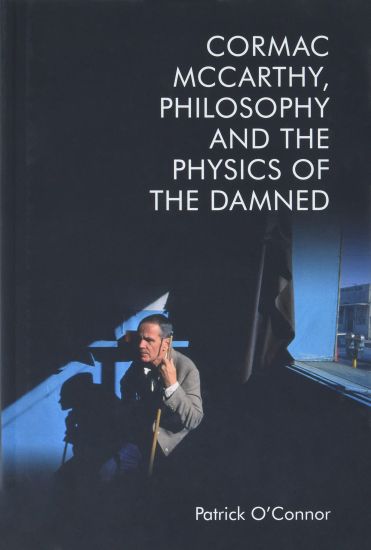
Cormac Mccarthy, Philosophy and the Physics of the Damned
Patrick O'Connor
EDINBURGH UNIVERSITY PRESS
2022
sidottu
This book explores Cormac McCarthy's literature (novels, plays, screenplays, philosophical essays and unpublished archive material) to uncover a distinct literary philosophy. More specifically, this study elucidates how McCarthy articulates a philosophical perspective which pivots on philosophical themes of mortality, the political, education, nihilism, materialism and language. Tracing these themes from the publication of his earliest novels to his most recent philosophical essays, this book argues that McCarthy offers a unique synthesis of spiritual, ethical and materialist concerns, the understanding of which is essential for coming to terms with his literature.
Cormac Mccarthy, Philosophy and the Physics of the Damned
Patrick O'Connor
EDINBURGH UNIVERSITY PRESS
2023
nidottu
Explains Cormac McCarthy's consistent philosophical preoccupations across the span of his literary output Provides a vital interpretive framework for understanding Cormac McCarthy's literary and philosophical perspectives Offers a systematic study of distinctly philosophical themes present in Cormac McCarthy's work Analyses how Cormac McCarthy offers a unique synthesis of metaphysical and materialist themes Explains the intersection of philosophical and literary themes in McCarthy's work in an accessible way This book explores Cormac McCarthy's literature (novels, plays, screenplays, philosophical essays and unpublished archive material) to uncover a distinct literary philosophy. More specifically, this study elucidates how McCarthy articulates a philosophical perspective which pivots on philosophical themes of mortality, the political, education, nihilism, materialism and language. Tracing these themes from the publication of his earliest novels to his most recent philosophical essays, this book argues that McCarthy offers a unique synthesis of spiritual, ethical and materialist concerns, the understanding of which is essential for coming to terms with his literature.
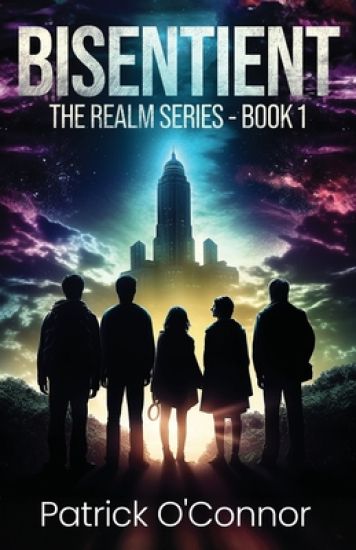
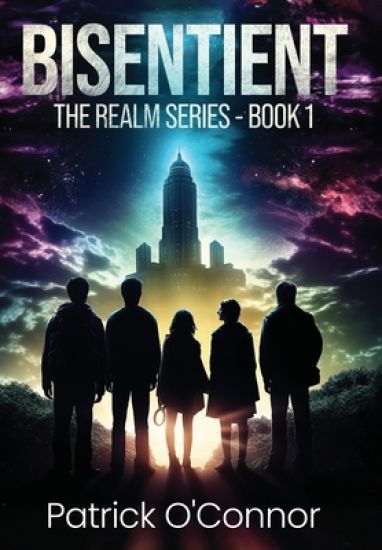
The backdrop is that aliens have been able to influence humans by inhabiting a 'parallel dimension' which comes to be known as the Realm. This place is where humans' consciousness exists during sleep and certain 'altered states' entered by meditation or ritual. The aliens try to cause chaos and destruction amongst humans, as a means to clear the planet of obstructions before arriving to make use of it themselvesThe influence comes through human religion as the aliens are behind all major human belief systems and are able to influence human behaviour through this. This also includes occult belief systems like the Astral Plane (=the Realm)Certain coma patients can live a 'normal' life in this Realm while being kept alive in the real world. Their unfortunate situation gives them special abilities in the Realm. A cameraman (Mason) encounters one such patient (Gail), while filming a documentary and then begins to see her in his dreams. She convinces him that he is unusual as he experiences the Realm and the real world with equal clarity and moves between the worlds with ease. Mason enlists the help of an intern at the film company (Molly) to help him understand what is happening to him.In the US a charismatic leader of a new church (Rev. Daniels) enters politics and looks headed for high office, maybe the Whitehouse. His religion appears to be little more than a cult. They begin to build a mysterious machine in a secret location. They believe the device is a Tower of Babel shown to their leader in revelations he had before starting the church and will enable the second coming.A secret organisation made up of influential figures in government, science, defence and industry suspects this 'alien influence' and works in secret to understand and counter this threat. They detect indications of this new device and try to find the source of the disturbance. A technician working for this organisation (Zach) is implanted with a prototype chip designed to facilitate some sort of communication with others implanted or coma patients that exhibit unusual brain activity. This chip has the effect of switching the person into the Realm, with perfect recall and consciousness.It becomes clear that Rev. Daniels' Church is building a device that could distort spacetime, using details supplied by the aliens through interactions in the Realm (the revelation). The secret organisation realise this and try to stop him. Working together Mason, Gail and eventually Zach realise the dangers of this church as well and Molly volunteers to infiltrate it.The aliens fear this new kind of person (Mason) that can more easily move between the Realm and real world and influence an occult order to kill Mason and Gail in the real world.Can Mason, Gail, Zach and Molly stop the aliens influence in the Realm? Can the secret organisation stop the building of the machine? Will the occultists succeed in killing Mason or Gail? Will the Church succeed in building the machine and welcome the Second Coming as the aliens could use the device as one end of a bridge to their world and initiate an invasion....
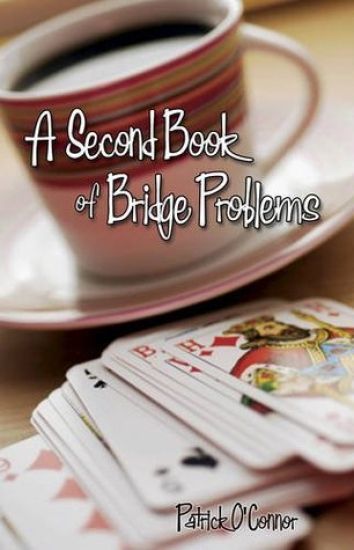
Like the author's first book (A First Book of Bridge Problems, named Book of the Year for 2011 by the American Bridge Teachers Association), this sequel comprises 50 problems in declarer play and defence for the beginning or near-beginning player, presented in approximate order of difficulty. The problems are slightly more advanced than those in the first book. Experienced players recognize certain standard situations without having to work them out. This does not apply to novices who spend a lot of mental effort on them. The aim of the book is to get novices to develop their recognition of these situations. The idea is to present bridge hands as the reader would encounter them playing at the table. Unlike in a textbook, where topics are introduced systematically, there is no clue as to what type of play is required.
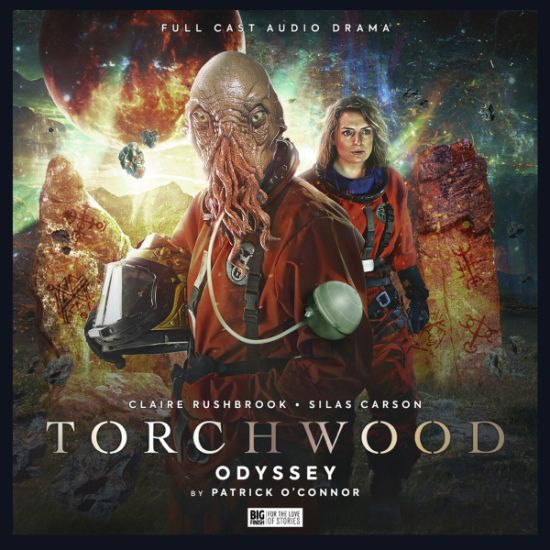
Ida Scott has spent her life running from her father. But now she’s come looking for him. The Spire is an ancient relic left behind by The Resilient – a mysterious race who warped both gravity and time. Odysseus Scott lies dying in a bed in The Spire. He believes it will cure him. But are The Resilient really dead? CAST: Claire Rushbrook (Ida Scott), Silas Carson (Dr Odysseus Scott/The Ood), Jay Perry (Thomas Good). Other parts played by members of the cast. NOTE: Torchwood contains adult material and may not be suitable for younger listeners.