Kirjojen hintavertailu. Mukana 11 627 220 kirjaa ja 12 kauppaa.

Kirjahaku

Etsi kirjoja tekijän nimen, kirjan nimen tai ISBN:n perusteella.

22 kirjaa tekijältä Patrick O'Donnell

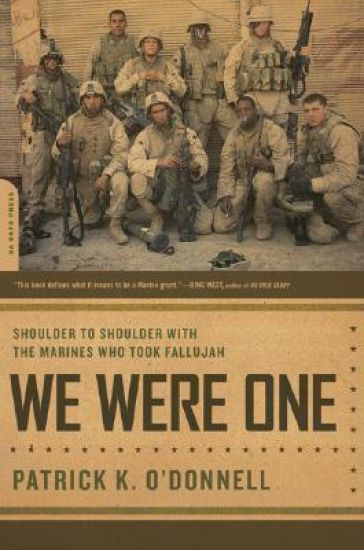
We Were One

We Were One

Patrick O'Donnell

Da Capo Press Inc
2007
pokkari
Five months after being deployed to Iraq, Lima Company's 1st Platoon, 3rd Battalion, 1st Marine Regiment, found itself in Fallujah, embroiled in some of the most intense house-to-house, hand-to-hand urban combat since World War II. In the city's bloody streets, they came face-to-face with the enemy-radical insurgents high on adrenaline, fighting to a martyr's death, and suicide bombers approaching from every corner. Award-winning author and historian Patrick O'Donnell stood shoulder to shoulder with this modern band of brothers as they marched and fought through the streets of Fallujah, and he stayed with them as the casualties mounted.
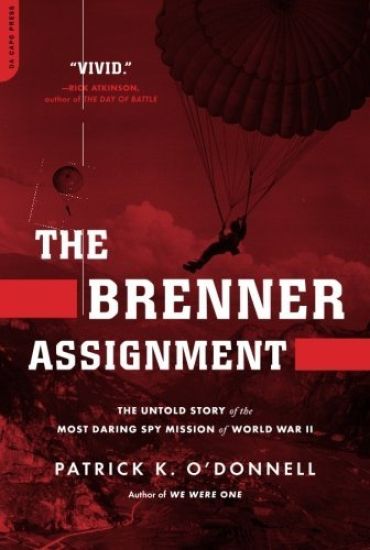
The Brenner Assignment

The Brenner Assignment

Patrick O'Donnell

Da Capo Press Inc
2009
pokkari
Like a scene from Where Eagles Dare , a small team of American spies parachutes into Italy behind enemy lines. Their orders: link up with local partisans and sabotage the well-guarded Brenner Pass,the Nazis' crucial supply route through the Alps,thereby bringing the German war effort in Italy to a grinding halt.
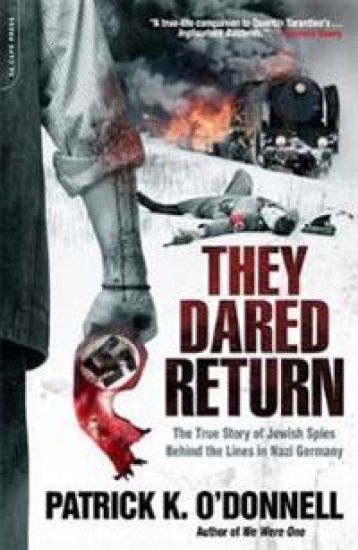
They Dared Return

They Dared Return

Patrick O'Donnell

Da Capo Press Inc
2010
pokkari
At the height of World War II, with the Third Reich's final solution in full operation, a small group of Jews who had barely escaped the Nazis did the unthinkable: They went back. Spies now, these men took on a dangerous mission behind enemy lines. They Dared Return is their story,a tale of adventure, espionage, love, and revenge.
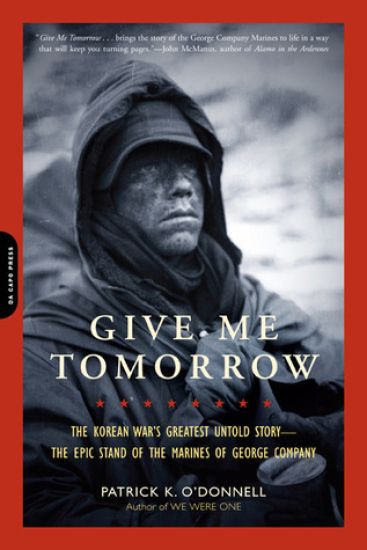
Give Me Tomorrow

Give Me Tomorrow

Patrick O'Donnell

Da Capo Press Inc
2011
pokkari
"What would you want if you could have any wish?” asked the photojournalist of the haggard, bloodied Marine before him. The Marine gaped at his interviewer. The photographer snapped his picture, which became the iconic Korean War image featured on this book's jacket."Give me tomorrow,” he said at last. After nearly four months of continuous and agonizing combat on the battlefields of Korea, such a simple request seemed impossible. For many men of George Company, or"Bloody George” as they were known- one of the Forgotten War's most decorated yet unrecognized companies- it was a wish that would not come true. This is the untold story of"Bloody George,” a Marine company formed quickly to answer its nation's call to duty in 1950. This small band of men- a colourful cast of characters, including a Native American fighting to earn his honor as a warrior, a Southern boy from Tennessee at odds with a Northern blue-blood reporter-turned-Marine, and a pair of twins who exemplified to the group the true meaning of brotherhood- were mostly green troops who had been rushed through training to fill America's urgent need on the Korean front. They would find themselves at the tip of the spear in some of the Korean War's bloodiest battles. After storming ashore at Inchon and fighting house-to-house in Seoul, George Company, one of America's last units in reserve, found itself on the frozen tundra of the Chosin Reservoir facing elements of an entire division of Chinese troops. They didn't realize it then, but they were soon to become crucial to the battle- modern-day Spartans called upon to hold off ten times their number. Give Me Tomorrow is their unforgettable story of bravery and courage. Thoroughly researched and vividly told, Give Me Tomorrow is fitting testament to the heroic deeds of George Company. They will never again be forgotten.
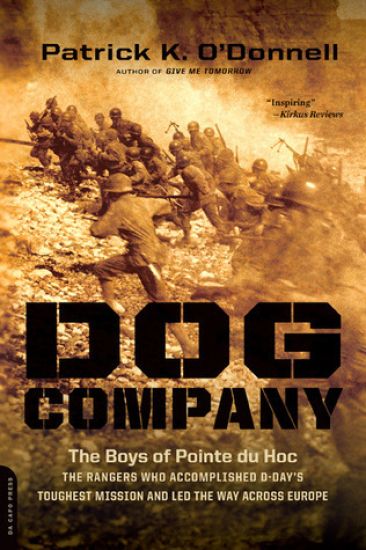
Dog Company

Dog Company

Patrick O'Donnell

Da Capo Press Inc
2013
pokkari
An epic World War II story of valor, sacrifice, and the Rangers who led the way to victory in EuropeIt is said that the right man in the right place at the right time can make the difference between victory and defeat. This is the dramatic story of sixty-eight soldiers of the U.S. Army's 2nd Ranger Battalion, D Company- Dog Company- who made that difference, time and again.From D-Day, when German guns atop Pointe du Hoc threatened the Allied landings and the men of Dog Company scaled the ninety-foot cliffs to destroy them to the thickly forested slopes of Hill 400, in Germany's Hürtgen Forest, where the Rangers launched a desperate bayonet charge across an open field, captured the crucial hill, and held it against all odds. In each battle, the men of Dog Company made the difference. Dog Company is their unforgettable story- thoroughly researched and vividly told by acclaimed combat historian Patrick K. O'Donnell- a story of extraordinary bravery, courage, and determination. America had many heroes in World War II, but few can say that, but for them, the course of the war may have been very different. The right men, in the right place, at the right time- Dog Company.
First SEALs

First SEALs

Patrick O'Donnell

Da Capo Press Inc
2015
pokkari
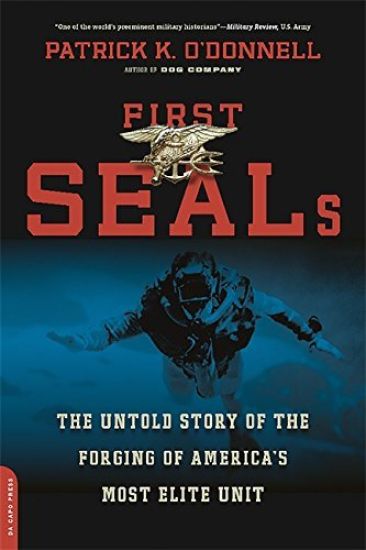
In the summer of 1942, an extraordinary group of men united to form an exceptional unit. Known as the Maritime Unit, it comprised America's first swimmer-commandos- an elite breed of warrior-spies who were decades ahead of their time when they created the tactics, technology, and philosophy that live on in today's Navy SEALs. Often armed only with knives and wearing nothing more than swim trunks and flippers, the Maritime Unit's combat swimmers and other operatives carried out seaborne clandestine missions in the Atlantic, Pacific, and Mediterranean theatres of World War II. In First SEALs , Patrick K. O'Donnell unearths their incredible history- one of the greatest untold stories of World War II.FirstSEALsBook.com
The Knights Next Door

The Knights Next Door

Patrick O'Donnell

iUniverse
2004
pokkari
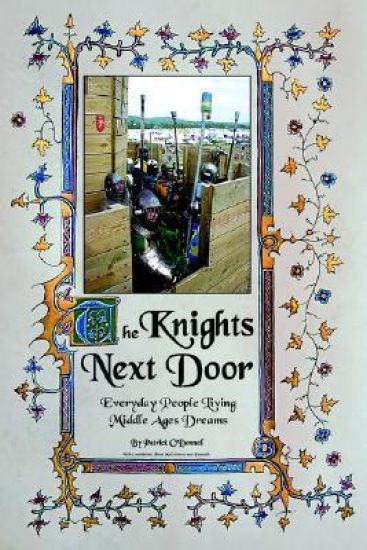
Travel back in time to the Current Middle Ages, a re-created world of knights in shining armor, lords and ladies, artisans and minstrels with one foot in history, the other in today's modern society. Join a journey through the nation's largest medievalist group, the Society for Creative Anachronism, as it and other groups act out their passion for times long past. Meet the cast of colorful characters who call this re-created world home and follow a young fighter as he struggles to earn knighthood and the crown of the kingdom that serves as his stage.
The Knights Next Door

The Knights Next Door

Patrick O'Donnell

iUniverse
2004
sidottu
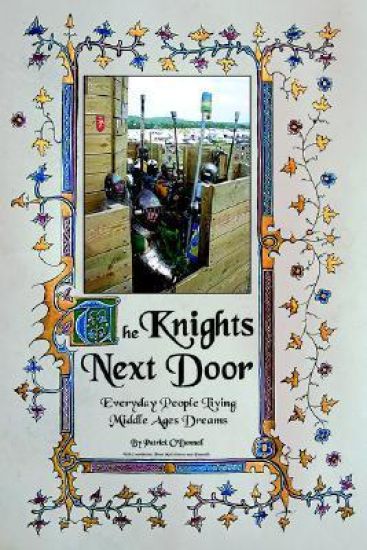
Travel back in time to the Current Middle Ages, a re-created world of knights in shining armor, lords and ladies, artisans and minstrels with one foot in history, the other in today's modern society. Join a journey through the nation's largest medievalist group, the Society for Creative Anachronism, as it and other groups act out their passion for times long past. Meet the cast of colorful characters who call this re-created world home and follow a young fighter as he struggles to earn knighthood and the crown of the kingdom that serves as his stage.
Did Dinosaurs Have Dentists?

Did Dinosaurs Have Dentists?

Patrick O'Donnell

Schiffer Publishing Ltd
2018
sidottu
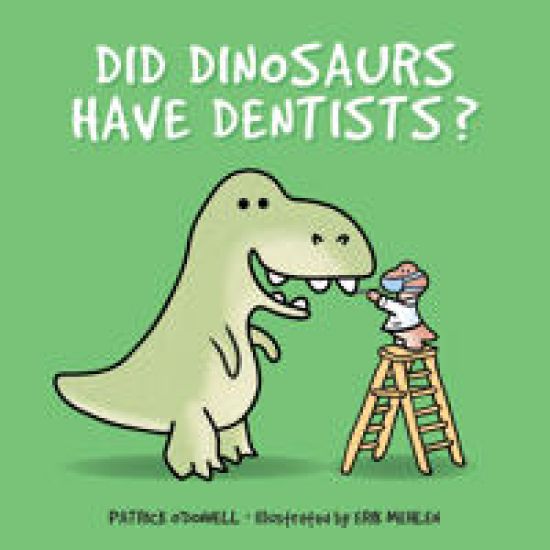
An easing of children's fears about going to the dentist by imagining dinosaur dental hygiene— Includes eleven dinosaurs and dental health terms, and a glossary of dinosaur facts. What if a brachiosaurus needed braces? If a tyrannosaurus used toothpaste, would it squash the tube? A young child on the way to a dental checkup wonders if dinosaurs ever had cavities and if they had to brush their teeth, floss, get braces, and use fluoride or mouthwash. This whimsical picture book takes an imaginative, humorous look at dinosaurs' dental health and eases children's fears about going to the dentist, while cleverly encouraging them to take care of their own teeth. Included are eleven dinosaurs and common terms related to dental and oral health, along with a glossary of name pronunciations and fun, scientific facts about each dinosaur.
Do Penguins Have Pediatricians?

Do Penguins Have Pediatricians?

Patrick O'Donnell

Schiffer Publishing Ltd
2019
sidottu
On the way to a doctor checkup, a young child asks an important question: Do animals that live in really cold places ever get sick? From the same author as Did Dinosaurs Have Dentists?, this picture book uses Arctic and Antarctic creatures to lessen anxiety about the doctor. Can penguins catch pneumonia? Can a caribou get chicken pox? By introducing ailments through charmingly drawn animals, this humorous look at common childhood illnesses will ease the fears and worries many kids have about visiting the doctor. The colorfully illustrated story contains 14 common terms related to children's health, as well as a glossary of fun, scientific facts about each of the animals featured.
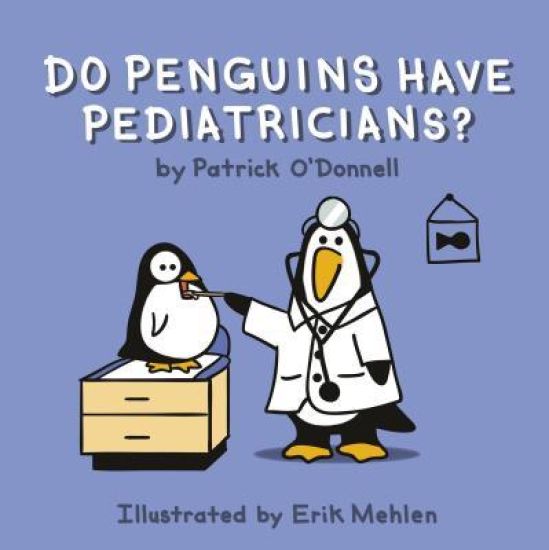
Do Penguins Have Pediatricians?

Do Penguins Have Pediatricians?

Patrick O'Donnell

Schiffer Publishing Ltd
2019
pokkari
On the way to a doctor checkup, a young child asks an important question: Do animals that live in really cold places ever get sick? From the same author as Did Dinosaurs Have Dentists?, this picture book uses Arctic and Antarctic creatures to lessen anxiety about the doctor. Can penguins catch pneumonia? Can a caribou get chicken pox? By introducing ailments through charmingly drawn animals, this humorous look at common childhood illnesses will ease the fears and worries many kids have about visiting the doctor. The colorfully illustrated story contains 14 common terms related to children's health, as well as a glossary of fun, scientific facts about each of the animals featured.
Latent Destinies

Latent Destinies

Patrick O'Donnell

Duke University Press
2000
sidottu
Latent Destinies examines the formation of postmodern sensibilities and their relationship to varieties of paranoia that have been seen as widespread in this century. Despite the fact that the Cold War has ended and the threat of nuclear annihilation has been dramatically lessened by most estimates, the paranoia that has characterized the period has not gone away. Indeed, it is as if-as O’Donnell suggests-this paranoia has been internalized, scattered, and reiterated at a multitude of sites: Oklahoma City, Waco, Ruby Ridge, Bosnia, the White House, the United Nations, and numerous other places.O’Donnell argues that paranoia on the broadly cultural level is essentially a narrative process in which history and postmodern identity are negotiated simultaneously. The result is an erasure of historical temporality-the past and future become the all-consuming, self-aware present. To explain and exemplify this, O’Donnell looks at such books and films as Libra, JFK, The Crying of Lot 49, The Truman Show, Reservoir Dogs, Empire of the Senseless, Oswald’s Tale, The Executioner’s Song, Underworld, The Killer Inside Me, and Groundhog Day. Organized around the topics of nationalism, gender, criminality, and construction of history, Latent Destinies establishes cultural paranoia as consonant with our contradictory need for multiplicity and certainty, for openness and secrecy, and for mobility and historical stability.Demonstrating how imaginative works of novels and films can be used to understand the postmodern historical condition, this book will interest students and scholars of American literature and cultural studies, postmodern theory, and film studies.
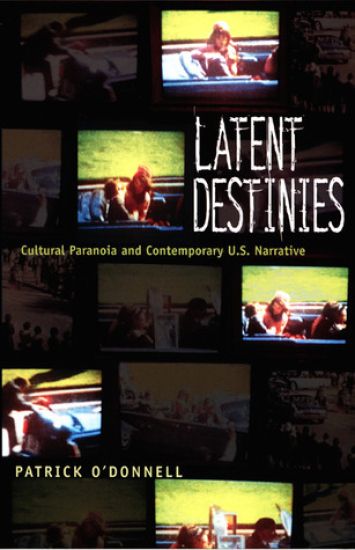
Latent Destinies

Latent Destinies

Patrick O'Donnell

Duke University Press
2000
pokkari
Latent Destinies examines the formation of postmodern sensibilities and their relationship to varieties of paranoia that have been seen as widespread in this century. Despite the fact that the Cold War has ended and the threat of nuclear annihilation has been dramatically lessened by most estimates, the paranoia that has characterized the period has not gone away. Indeed, it is as if-as O’Donnell suggests-this paranoia has been internalized, scattered, and reiterated at a multitude of sites: Oklahoma City, Waco, Ruby Ridge, Bosnia, the White House, the United Nations, and numerous other places.O’Donnell argues that paranoia on the broadly cultural level is essentially a narrative process in which history and postmodern identity are negotiated simultaneously. The result is an erasure of historical temporality-the past and future become the all-consuming, self-aware present. To explain and exemplify this, O’Donnell looks at such books and films as Libra, JFK, The Crying of Lot 49, The Truman Show, Reservoir Dogs, Empire of the Senseless, Oswald’s Tale, The Executioner’s Song, Underworld, The Killer Inside Me, and Groundhog Day. Organized around the topics of nationalism, gender, criminality, and construction of history, Latent Destinies establishes cultural paranoia as consonant with our contradictory need for multiplicity and certainty, for openness and secrecy, and for mobility and historical stability.Demonstrating how imaginative works of novels and films can be used to understand the postmodern historical condition, this book will interest students and scholars of American literature and cultural studies, postmodern theory, and film studies.
The American Novel Now

The American Novel Now

Patrick O'Donnell

Wiley-Blackwell (an imprint of John Wiley Sons Ltd)
2010
nidottu
The American Novel Now navigates the vast terrain of the American novel since 1980, exploring issues of identity, history, family, nation, and aesthetics, as well as cultural movements and narrative strategies from over seventy different authors and novels. Discusses an exceptionally wide-range of authors and novels, from established figures to significant emerging writersToni Morrison, Thomas Pynchon, Louise Erdrich, Don DeLillo, Richard Powers, Kathy Acker and many moreExplores the range of themes and styles offered in the wealth of contemporary American fiction since 1980, in both mainstream and experimental writingsReflects the liveliness and diversity of American fiction in the last thirty yearsWritten in a style that makes it ideal for students and scholars, while also accessible for general readers
The American Novel Now

The American Novel Now

Patrick O'Donnell

Wiley-Blackwell (an imprint of John Wiley Sons Ltd)
2010
sidottu
The American Novel Now navigates the vast terrain of the American novel since 1980, exploring issues of identity, history, family, nation, and aesthetics, as well as cultural movements and narrative strategies from over seventy different authors and novels. Discusses an exceptionally wide-range of authors and novels, from established figures to significant emerging writersToni Morrison, Thomas Pynchon, Louise Erdrich, Don DeLillo, Richard Powers, Kathy Acker and many moreExplores the range of themes and styles offered in the wealth of contemporary American fiction since 1980, in both mainstream and experimental writingsReflects the liveliness and diversity of American fiction in the last thirty yearsWritten in a style that makes it ideal for students and scholars, while also accessible for general readers
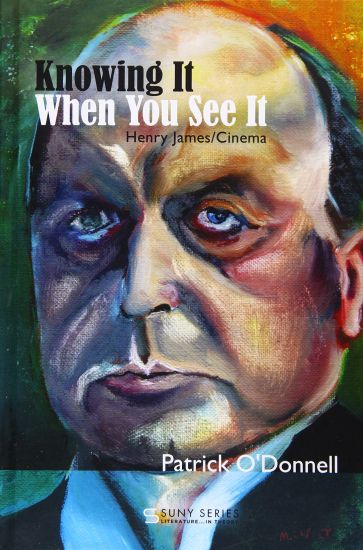
Knowing It When You See It

Knowing It When You See It

Patrick O'Donnell

State University of New York Press
2021
pokkari
Lively analysis of how Henry James's fiction anticipates later filmmakers' concerns with what we can see and what we can know.Perched as he was at the beginning of literary modernism and the evolution of film as a medium, Henry James addressed a cluster of epistemological and aesthetic issues related to the visualization of reality. In Knowing It When You See It, Patrick O'Donnell compares several late novels and stories by Henry James with a series of films directed by Michael Haneké, Alfred Hitchcock, Quentin Tarantino, Christopher Nolan, and Lars Von Trier. O'Donnell argues that these issues find parallels in films made at the other end of an arc extending from the last decades of the nineteenth century to the initial years of the twenty-first. In mapping affinities between literature and film, he is not concerned with adaptation or discursivity, but rather with how the "visual" is represented in two mediums-with how seeing becomes knowledge, how framing what is seen becomes a critical part of the story that is conveyed, and how the perspective of the camera or the narrator shapes reality. Both James and these later auteurs "think" visually in ways that inter-illuminate their fictions and films, and newly bring into relief the trajectory of modernity in relation to visuality.
Knowing It When You See It

Knowing It When You See It

Patrick O'Donnell

State University of New York Press
2021
sidottu
Lively analysis of how Henry James's fiction anticipates later filmmakers' concerns with what we can see and what we can know.Perched as he was at the beginning of literary modernism and the evolution of film as a medium, Henry James addressed a cluster of epistemological and aesthetic issues related to the visualization of reality. In Knowing It When You See It, Patrick O'Donnell compares several late novels and stories by Henry James with a series of films directed by Michael Haneké, Alfred Hitchcock, Quentin Tarantino, Christopher Nolan, and Lars Von Trier. O'Donnell argues that these issues find parallels in films made at the other end of an arc extending from the last decades of the nineteenth century to the initial years of the twenty-first. In mapping affinities between literature and film, he is not concerned with adaptation or discursivity, but rather with how the "visual" is represented in two mediums-with how seeing becomes knowledge, how framing what is seen becomes a critical part of the story that is conveyed, and how the perspective of the camera or the narrator shapes reality. Both James and these later auteurs "think" visually in ways that inter-illuminate their fictions and films, and newly bring into relief the trajectory of modernity in relation to visuality.
A Temporary Future:  The Fiction of David Mitchell

A Temporary Future: The Fiction of David Mitchell

Patrick O'Donnell

Bloomsbury Academic USA
2015
sidottu
Having emerged as one the leading contemporary British writers, David Mitchell is rapidly taking his place amongst British novelists with the gravitas of an Ishiguro or a McEwan. Written for a wide constituency of readers of contemporary literature, A Temporary Future: The Fiction of David Mitchell explores Mitchell’s main concerns—including those of identity, history, language, imperialism, childhood, the environment, and ethnicity—across the six novels published so far, as well as his protean ability to write in multiple and diverse genres. It places Mitchell in the tradition of Murakami, Sebald, and Rushdie—writers whose works explore narrative in an age of globalization and cosmopolitanism. Patrick O’Donnell traces the through-lines of Mitchell’s work from ghostwritten to The Bone Clocks and, with a chapter on each of the six novels, charts the evolution of Mitchell’s fictional project.