Kirjojen hintavertailu. Mukana 12 390 323 kirjaa ja 12 kauppaa.

Kirjahaku

Etsi kirjoja tekijän nimen, kirjan nimen tai ISBN:n perusteella.

6 kirjaa tekijältä Patrick O'Mahony

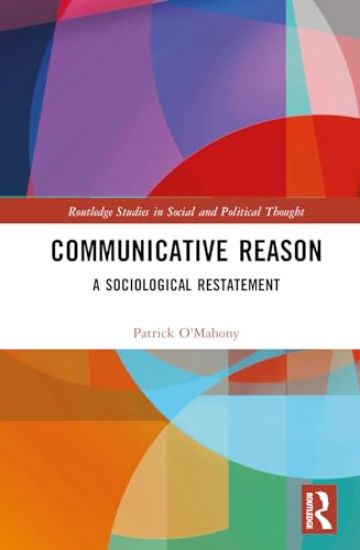
Communicative Reason

Communicative Reason

Patrick O'Mahony

TAYLOR FRANCIS LTD
2024
sidottu
The book examines philosophical and sociological approaches within critical theory and more widely from the vantage point of communicative reason. It seeks to revitalize the sociological dimension of critical theory by advancing a critical sociology of reason. It does so fully in the knowledge that reason is a contentious concept in sociology and other disciplines. Nonetheless, building on Habermas’s original insight, it argues that an extensively modified version of communicative reason is indispensable. This modified approach will draw extensively from Peirce’s pragmatist semiotics and critical cognitive sociology. Such a focus has significant implications for meta-theoretical, theoretical-empirical, and methodological approaches in critical theory, critical sociology, and related disciplines. This book will be of interest to readers in the social sciences, humanities, and philosophy who value the importance of a social theory of a reasonable society for their disciplines and for increasingly essential interdisciplinary activities. The book will also appeal to many in critical theory and beyond who are interested in the cognitive foundations of normative orders, including unjust or pathological as well as actually or potentially just foundations. The book emphasizes both validity and critique within communicative reason and critical theory and accordingly presents a distinctive perspective on critical-reconstructive research.
Communicative Reason

Communicative Reason

Patrick O'Mahony

TAYLOR FRANCIS LTD
2025
nidottu
The book examines philosophical and sociological approaches within critical theory and more widely from the vantage point of communicative reason. It seeks to revitalize the sociological dimension of critical theory by advancing a critical sociology of reason. It does so fully in the knowledge that reason is a contentious concept in sociology and other disciplines. Nonetheless, building on Habermas’s original insight, it argues that an extensively modified version of communicative reason is indispensable. This modified approach will draw extensively from Peirce’s pragmatist semiotics and critical cognitive sociology. Such a focus has significant implications for meta-theoretical, theoretical-empirical, and methodological approaches in critical theory, critical sociology, and related disciplines. This book will be of interest to readers in the social sciences, humanities, and philosophy who value the importance of a social theory of a reasonable society for their disciplines and for increasingly essential interdisciplinary activities. The book will also appeal to many in critical theory and beyond who are interested in the cognitive foundations of normative orders, including unjust or pathological as well as actually or potentially just foundations. The book emphasizes both validity and critique within communicative reason and critical theory and accordingly presents a distinctive perspective on critical-reconstructive research.

Rethinking Irish History

Rethinking Irish History

Patrick O'Mahony; Gerard Delanty

Palgrave Macmillan
1998
sidottu
This book provides a critical interpretation of the construction of Irish national identity in the longer perspective of history. Drawing on recent sociological theory, the authors demonstrate how national identity was invented and codified by a nationalist intelligentsia in the late nineteenth century. The trajectory of this national identity is traced as a process of crisis and contradiction. One of the central arguments is that the negative implications of Irish national identity have never been fully explored by social science.
Rethinking Irish History

Rethinking Irish History

Patrick O'Mahony; Gerard Delanty

Palgrave Macmillan
1998
nidottu
This book provides a critical interpretation of the construction of Irish national identity in the longer perspective of history. Drawing on recent sociological theory, the authors demonstrate how national identity was invented and codified by a nationalist intelligentsia in the late nineteenth century. The trajectory of this national identity is traced as a process of crisis and contradiction. One of the central arguments is that the negative implications of Irish national identity have never been fully explored by social science.
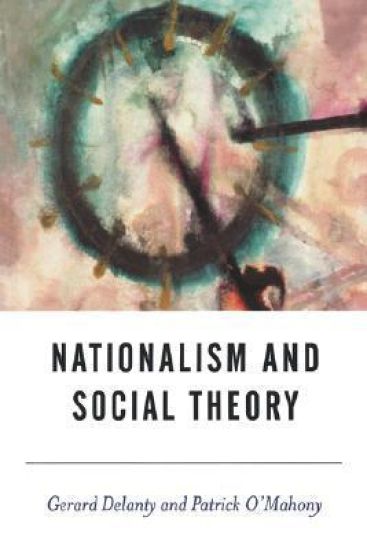
Nationalism and Social Theory

Nationalism and Social Theory

Gerard Delanty; Patrick O'Mahony

SAGE Publications Inc
2002
sidottu
Why has nationalism proved so durable? What are the roots of its appeal? This sharp and accessible book slices through the myths surrounding nationalism and provides an important new perspective on this perennial subject. The book argues that: nationalism is persistent, not merely because of its specific ideological appeal, but because it expresses some of the major conflicts in modernity; nationalism reflects and reinforces four key trends in western social development: state formation, democratization, capitalism and the rationalization of culture; the forms of nationalism can be organized into a comprehensive typology which is outlined in the course of this study; post-nationalism and cosmopolitanism are significant innovations in the debate about nation-states and nationalism; and that the new radical nationalisms have become powerful new movements in the global age.
Nationalism and Social Theory

Nationalism and Social Theory

Gerard Delanty; Patrick O'Mahony

SAGE Publications Inc
2002
nidottu
Why has nationalism proved so durable? What are the roots of its appeal? This sharp and accessible book slices through the myths surrounding nationalism and provides an important new perspective on this perennial subject. The book argues that: nationalism is persistent, not merely because of its specific ideological appeal, but because it expresses some of the major conflicts in modernity; nationalism reflects and reinforces four key trends in western social development: state formation, democratization, capitalism and the rationalization of culture; the forms of nationalism can be organized into a comprehensive typology which is outlined in the course of this study; post-nationalism and cosmopolitanism are significant innovations in the debate about nation-states and nationalism; and that the new radical nationalisms have become powerful new movements in the global age.