Kirjojen hintavertailu. Mukana 12 017 023 kirjaa ja 12 kauppaa.

Kirjahaku

Etsi kirjoja tekijän nimen, kirjan nimen tai ISBN:n perusteella.

21 kirjaa tekijältä Patrick O'Neill

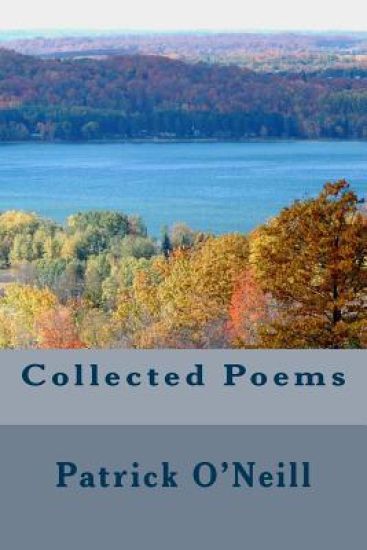
Collected Poems of Patrick O'Neill

Collected Poems of Patrick O'Neill

Patrick O'Neill

Createspace Independent Publishing Platform
2016
pokkari
The poetry of Patrick O'Neill is essential to the study and appreciation of the centuries of great poetry in the English language. He is that rarest of artist - he is an original. For all his erudition, courage, imagination and deep familiarity with English-language literature, O'Neill's poetry will nevertheless remind you of no other poet. He stands alone. Few artists can make such a claim. Readers of contemporary American or English-language poetry will find this book a gem, and aficionados will discover a must-have addition to their library.
Acts of Narrative

Acts of Narrative

Patrick O'Neill

University of Toronto Press
1996
sidottu
Because German literary criticism tends to be strongly historicist in character, modern and postmodern German narrative has remained relatively unexplored by poststructuralist critics. In the eight individual analyses of twentieth-century German texts that make up this book, Patrick O'Neill deviates from the theoretical mainstream. O'Neill applies the principles of structuralist and poststructuralist narratology to a selection of narratives from both modernist and postmodernist German authors: Mann, Kafka, and Hesse, and Canetti, Grass, Johnson, Handke, and Bernhard. O'Neill's approach rests on three assumptions: first, that all stories are stories told in particular ways; second, that these particular ways of telling stories are interesting objects of study in and for themselves; and third, that modern German fiction includes a number of narratives that allow us to indulge that interest in ways that are themselves compelling. The relationship of story and discourse is central to Acts of Narrative; in particular, each of the texts under analysis continually foregrounds the active role of the reader, which O'Neill sees as an inescapable feature of modern and postmodern narrative as a semiotic structure. The volume might be described as an exercise in semiotic narratology, exploring a variety of aspects of the semiotics of narrative as a discursive system. Acts of Narrative provides a fresh and challenging approach to German literary texts that will interest both those whose concern is narrative theory and critical practice and those who study modern and postmodern German or comparative literature.
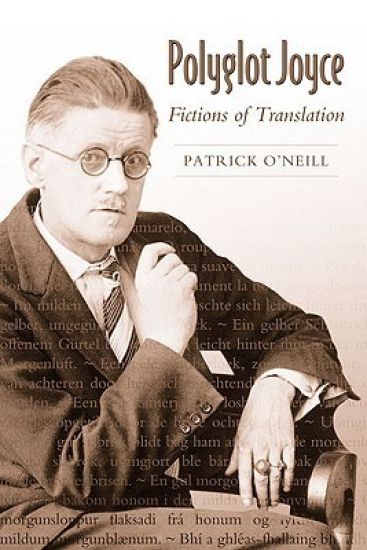
Polyglot Joyce

Polyglot Joyce

Patrick O'Neill

University of Toronto Press
2005
sidottu
James Joyce’s writings have been translated hundreds of times into dozens of different languages. Given the multitude of interpretive possibilities within these translations, Patrick O’Neill argues that the entire corpus of translations of Joyce’s work – indeed, of any author’s – can be regarded as a single and coherent object of study.Polyglot Joyce demonstrates that all the translations of a work, both in a given language and in all languages, can be considered and approached as a single polyglot macrotext.To respond to, and usefully deconstruct, a macrotext of this kind requires what O’Neill calls a ‘transtextual reading,’ a reading across the original literary text and as many as possible of its translations. Such a comparative reading explores texts that are at once different and the same, and thus simultaneously involves both intertextual and intratextual concerns. While such a model applies in principle to the work of any author, Joyce’s work from Dubliners to Finnegans Wake provides a particularly appropriate and challenging set of texts for discussion. Polyglot Joyce illustrates how a translation extends rather than distorts its original, opening many possibilities not only into the work of Joyce, but into the work of any author whose work has been translated.
Fictions of Discourse

Fictions of Discourse

Patrick O'Neill

University of Toronto Press
1996
pokkari
The fundamental principle upon which contemporary narratology is constructed is that narrative is an essentially divided endeavour, involving the story (`what really happened') and the discourse (`how what happened is presented'). For traditional criticism, the primary task of narrative discourse is essentially to convey the story as transparently as possible. Patrick O'Neill investigates the extent to which narrative discourse also contains the counter-tendency not to tell the story, indeed to subvert the story it tells in foregrounding its own performance. The systemic implications of this perspective for narrative and for narrative theory are examined within the conceptual framework provided by classical French narratology. O'Neill ultimately attempts both to expand and to problematize the structural model of narrative proposed by this centrally important tradition of narrative theory. O'Neill describes narrative as functioning in terms of four interacting levels: story, narrative text, narration, and textuality. Using a range of examples from Homer to modern European fiction, he discusses traditional narrative categories such as voice, focalization, character, and setting, and reinscribes them within the contextual space of author and reader to bring out narrative's potential for ambiguity and unreliability. He also discusses the implications of translation for narrative theory.
Negotiating Consent in Psychotherapy

Negotiating Consent in Psychotherapy

Patrick O'Neill

New York University Press
1998
sidottu
Psychotherapists have an ethical requirement to inform clients about their treatment methods, alternative treatment options, and alternative conceptions of their problem. While accepting the basis for this "informed consent" requirement, therapists have traditionally resisted giving too much information, arguing that exposure to alternative therapies could cause confusion and distress. The raging debates over false/recovered memory syndrome and the larger move towards medical disclosure have pushed the question to the fore: how much information therapists should provide to their clients? In Negotiating Consent in Psychotherapy, Patrick O'Neill provides an in-depth study of the ways in which therapists and clients negotiate consent. Based on interviews with 100 therapists and clients in the areas of eating disorders and sexual abuse, the book explores the tangle of issues that make informed consent so difficult for therapists, including what therapists believe should be part of consent and why; how they decide when consent should be renegotiated; and how clients experience this process of negotiation and renegotiation.
Negotiating Consent in Psychotherapy

Negotiating Consent in Psychotherapy

Patrick O'Neill

New York University Press
1998
pokkari
Psychotherapists have an ethical requirement to inform clients about their treatment methods, alternative treatment options, and alternative conceptions of their problem. While accepting the basis for this "informed consent" requirement, therapists have traditionally resisted giving too much information, arguing that exposure to alternative therapies could cause confusion and distress. The raging debates over false/recovered memory syndrome and the larger move towards medical disclosure have pushed the question to the fore: how much information therapists should provide to their clients? In Negotiating Consent in Psychotherapy, Patrick O'Neill provides an in-depth study of the ways in which therapists and clients negotiate consent. Based on interviews with 100 therapists and clients in the areas of eating disorders and sexual abuse, the book explores the tangle of issues that make informed consent so difficult for therapists, including what therapists believe should be part of consent and why; how they decide when consent should be renegotiated; and how clients experience this process of negotiation and renegotiation.
Impossible Joyce

Impossible Joyce

Patrick O'Neill

University of Toronto Press
2013
sidottu
James Joyce’s Finnegans Wake has repeatedly been declared to be entirely untranslatable. Nonetheless, it has been translated, transposed, or transcreated into a surprising variety of languages – including complete renditions in French, German, Portuguese, Dutch, Japanese, and Korean, and partial renditions in Italian, Spanish, and a variety of other languages. Impossible Joyce explores the fascinating range of different approaches adopted by translators in coming to grips with Joyce’s astonishing literary text. In this study, Patrick O’Neill builds on an approach first developed in his book Polyglot Joyce, but deepens his focus by considering Finnegans Wake exclusively. Venturing from Umberto Eco’s assertion that the novel is a machine designed to generate as many meanings as possible for readers, he provides a sustained examination of the textual effects generated by comparative readings of translated excerpts. In doing so, O’Neill makes manifest the ways in which attempts to translate this extraordinary text have resulted in a cumulative extension of Finnegans Wake into an even more extraordinary macrotext encompassing and subsuming its collective renderings.
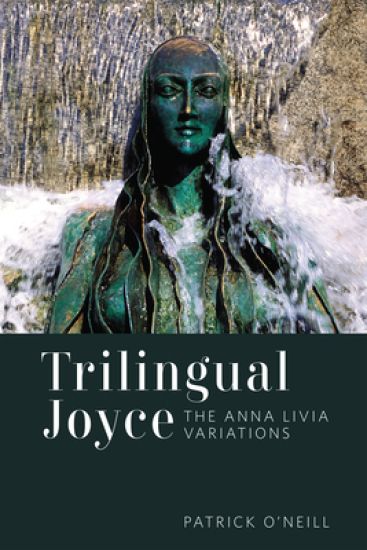
Trilingual Joyce

Trilingual Joyce

Patrick O'Neill

University of Toronto Press
2018
sidottu
Trilingual Joyce is a detailed comparative study of James Joyce’s personal involvement in both French and Italian translations of the iconic 1928 text Anna Livia Plurabelle, which later became the eighth chapter of Finnegans Wake. Considered to be completely untranslatable at the time of its publication, the translation of Anna Livia Plurabelle represented a fascinating challenge to Joyce, who collaborated in experimental renderings of the text, first into French and later into Italian. Patrick O’Neill’s Trilingual Joyce is the first comparative study of all three of the Anna Livia Plurabelle variations, and fills a long-standing gap in Joyce studies. O’Neill, an Irish-born professor who has written widely on texts in translation, also discusses in detail the avant-guard novelist and playwright Samuel Beckett’s contribution as a young man to the French rendering of Anna Livia Plurabelle.
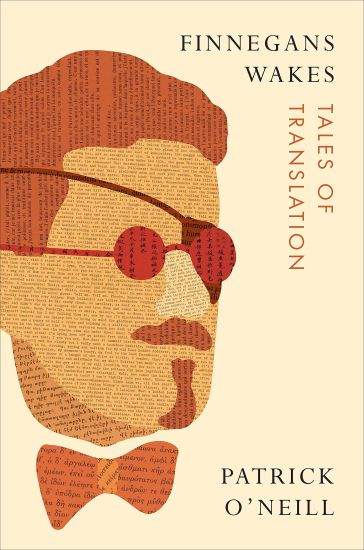
Finnegans Wakes

Finnegans Wakes

Patrick O'Neill

University of Toronto Press
2022
sidottu
James Joyce's astonishing final text, Finnegans Wake (1939), is universally acknowledged to be entirely untranslatable. And yet, no fewer than fifteen complete renderings of the 628-page text exist to date, in twelve different languages altogether – and at least ten further complete renderings have been announced as underway for publication in the early 2020s, in nine different languages. Finnegans Wakes delineates, for the first time in any language, the international history of these renderings and discusses the multiple issues faced by translators. The book also comments on partial and fragmentary renderings from some thirty languages altogether, including such perhaps unexpected languages as Galician, Guarani, Chinese, Korean, Turkish, and Irish, not to mention Latin and Ancient Egyptian. Excerpts from individual renderings are analysed in detail, together with brief biographical notes on numerous individual translators. Chronicling renderings spanning multiple decades, Finnegans Wakes illustrates the capacity of Joyce's final text to generate an inexhaustible multiplicity of possible meanings among the ever-increasing number of its impossible translations.
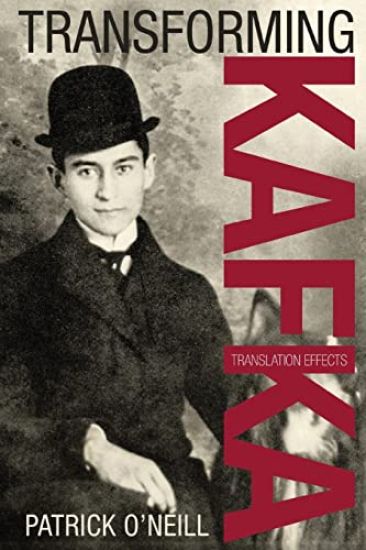
Transforming Kafka

Transforming Kafka

Patrick O'Neill

UNIVERSITY OF TORONTO PRESS
2022
pokkari
Lyrical, mysterious, and laden with symbolism, Franz Kafka’s novels and stories have been translated into more than forty languages ranging from Icelandic to Japanese. In Transforming Kafka, Patrick O’Neill approaches these texts through the method he pioneered in Polyglot Joyce and Impossible Joyce, considering the many translations of each work as a single, multilingual “macrotext.” Examining three novels – The Trial, The Castle, and America – and two short stories – “The Judgment” and “The Metamorphosis” – O’Neill offers comparative readings that consider both intertextual and intratextual themes. His innovative approach shows how comparing translations extends and expands the potential meanings of the text and reveals the subtle differences among the hundreds of translations of Kafka’s work. A sophisticated analysis of the ways in which translation shapes, rearranges, and expands our understanding of literary works, Transforming Kafka is a unique approach to reading the works of a literary giant.
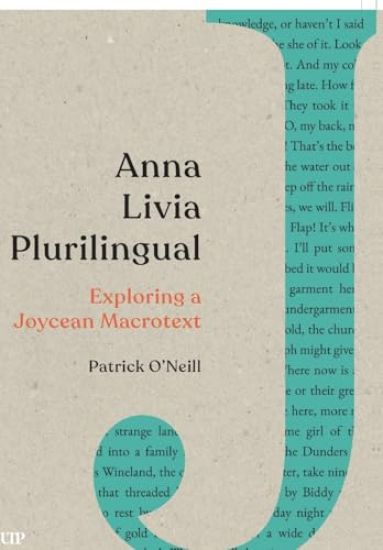
Anna Livia Plurilingual

Anna Livia Plurilingual

Patrick O'Neill

UNIVERSITY OF TORONTO PRESS
2025
sidottu
The complexity of James Joyce’s Finnegans Wake ensures that it cannot be translated; rather, it can only be rewritten. These rewritings vary significantly, and the extent of their differences – both within individual target languages and across multiple languages – invites further exploration.Anna Livia Plurilingual is a study of a Joycean macrotext that provides a detailed comparative analysis of multiple translations of selected excerpts from Joyce’s iconic Anna Livia Plurabelle (1928), which was later incorporated into Finnegans Wake (1939). Patrick O’Neill examines how these translations function as independent texts rather than mere derivatives of the original, highlighting the creative and interpretative choices made by translators.While the concept of a literary macrotext could in principle encompass all reader responses, this work specifically focuses on translations, emphasizing comparative readings of the original text alongside its diverse interpretations. O’Neill’s investigation not only illuminates the intricacies of Joyce’s language and the complexities of the resulting macrotext but also offers valuable insights into the broader field of literary translation studies.
The Comedy of Entropy

The Comedy of Entropy

Patrick O'Neill

University of Toronto Press
1990
pokkari
Entropic comedy is the phrase coined by Patrick O'Neill in this study to identify a particular mode of twentieth-century narrative that is not generally recognized. He describes it as the narrative expression of forms of decentred humour, or what might more loosely be called 'black humour.'O'Neill begins his investigation by examining the rise of an essentially new form of humour over the last three hundred years or so in the context of a rapid decay of confidence in traditional authoritative value systems. O'Neill analyses the resulting reorganization of the spectrum of humour, and examines th implications of this for the ways in which we read texts and the world we live in.He then turns from intellectual history to narratology and considers the relationship, in theoretical terms, of homour, play, and narrative as systems of discourse and the role of the reader as a textualizing agent.Finally, he considers some dozen twentieth-century narratives in French, German, and English (with occasional reference to other literatures) in the context of those historical and theoretical concerns. Authors of the texts analysed include Céline, Camus, Satre, and Robbe-Grillet in French; Heller, Beckett, Pynchon, Nabokov, and Joyce in English; Grass, Kafka, and Handke in German. The analyses proceed along lines suggested by structuralist, semiotic, and post-structuraist narrative and literary theory. From his analyses of these works O'Neill concludes they illustrate in narrative terms a mode of modern writing definable as entropic comedy, and he develops a taxonomy of the mode.
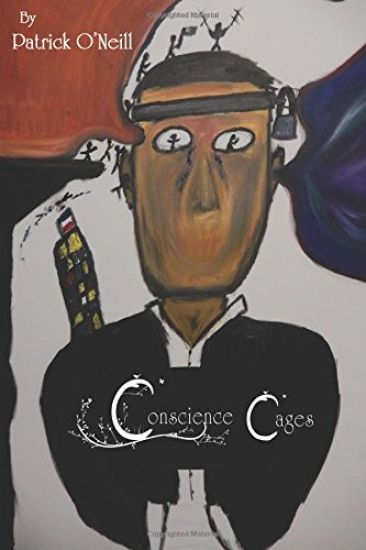
Conscience Cages

Conscience Cages

Patrick O'Neill

Llumina Press
2017
nidottu
Patrick O'Neill's verse with its wonderfully "everyman" characters brings so-called "common folks" to a literary immortality that demands his inclusion in the pantheon of old and new great poets. --Del Reitz, Ed/Pub Newsletter Inago O'Neill's use of language, pacing, and punch lines are equally sharp in three-line or three-page poems. He sets up a scene, then moves in for the kill with unflinching precision. --Diane Montz, Arts & Entertainment Writer Ironwood Daily Globe In Patrick O'Neill's poetry, inner monologues and outer dialogues fold into episodes-vignettes of everyday living. He sprinkles his poems with gentle treatments of the wisdom of animals, the revelations of plants. His poetry is a veritable kaleidoscope of highly interesting slices of life. His empathic style touches the reader's heart-felt spirits while his offbeat wit and subtle irony produce provocative revelations. --Tom Bruneau, Professor Emeritus, Radford University
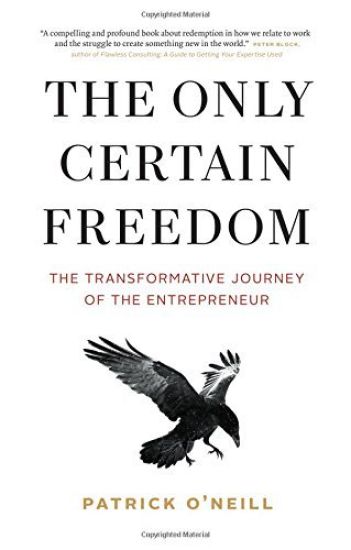
The Only Certain Freedom

The Only Certain Freedom

Patrick O'Neill

Thunder Mountain
2018
pokkari
The Only Certain Freedom explores the process, pitfalls, and triumphs of leaving the corporate world in order to fashion a career that matches our heartfelt values. Written by management consultant, teacher, and writer, Patrick O'Neill, this book will help budding entrepreneurs find the courage of their convictions, discover the universal truths that underlie their personal hero journey, and turn their nascent hope for a better career and more fulfilling life into reality.The Only Certain Freedom tells the narrative of Patrick O'Neill's own experience as he struggled to take control of his career path while connecting each twist and turn of his story to different ancient myths, clarifying the common threads of human struggle and illuminating the profound wisdom at the heart of human experience.While The Only Certain Freedom is truly a book for our era of empowered individualism, it is also a testament to the universality of human experience from time immemorial. While it promotes the individual seeker, it also connects his or her journey to the hardship and joy that all of us face when we decide to take the risks necessary to find success.The Only Certain Freedom shows that while we often think of our experiences as unique, we are, at the end of the day, fallible humans and we have as much to learn from each other--past and present--as ever.------Patrick O'Neill leads Extraordinary Conversations Inc., a Toronto-based management consulting firm founded in 1988.The firm specializes in change management, leadership development, team performance, organizational communications, and conflict resolution.A gifted teacher, consultant, mediator, and mentor, Patrick has worked with thousands of people and hundreds of teams and organizations over thirty years. He has contributed to the practices of leadership and wise governance by developing leading-edge organizational effectiveness programs that are practical, pragmatic, and applicable to the workplace and community.Patrick's expertise in organizational dynamics has taken him to global corporations in North America, Europe, and Asia-Pacific; to the townships of South Africa; and to the peace process in the Middle East.His corporate clients have included the Boeing Company, Teva Pharmaceuticals, the Ontario Pension Board, CIBC World Markets, the Walt Disney Company, Saab, Kraft, NestlE, Pearson, Revlon, Telus, and Sony BMG Music as well as mid-sized and smaller organizations.Patrick was a volunteer board member of the Angeles Arrien Foundation for Cross-Cultural Education and Research, a non-profit charitable organization based in San Francisco. He is also a past president of the Learning Disabilities Association of Ontario. Currently, he is a volunteer advisor to War Child Canada, Pathways to Education, and the Adrian Dominican Sisters. He is also an advisor to Ryerson University's Certificate in Ethics program. Patrick's insights on leadership are regularly featured in national newspapers like the Globe and Mail. He is also the author of A Hundred Chances: Short Meditations on Opportunity, Risk and Probability.www.extraordinaryconversations.com www.thefourdirections.com
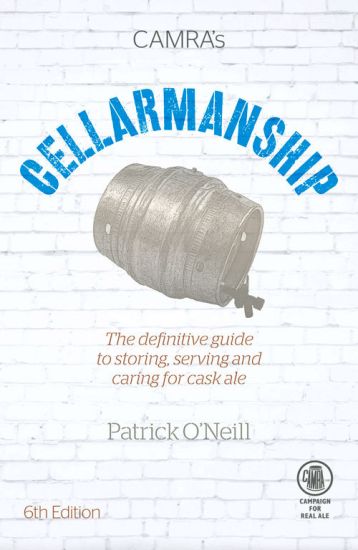
Cellarmanship

Cellarmanship

Patrick O'Neill

CAMRA Books
2015
nidottu
An essential book for professionals in the drinks trade, beer festival organisers and keen amateurs wishing to serve a decent pint at a function. This established CAMRA classic explains all you need to know about cellaring and serving real ale, with step-by-step instructions, concise information, illuminating anecdotes and new content on KeyCask, FastCask and other recent technologies.
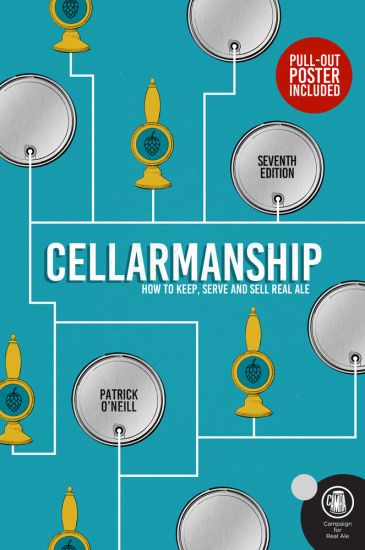
Cellarmanship

Cellarmanship

Patrick O'Neill

CAMRA Books
2020
nidottu
With a resurgence of interest inreal ale, there’s never been a better time to master how to keep, store and serve cask beer. In a fully revised and updated edition of this CAMRA classic, Patrick O’Neill explains all you need to know about running a good cellar and ensuring that the pint you serve does both pub and brewer proud. Cellarmanship is a must-have book if you are a professional or student in the drinks trade, a beer festival organiser or simply a keen amateur wishing to serve a decent pint at a private party. This fully-updated new colour edition is published in a larger format, and detachable cellar card for at-a-glance cellar tips and techniques.