Kirjojen hintavertailu. Mukana 11 244 527 kirjaa ja 12 kauppaa.

Kirjahaku

Etsi kirjoja tekijän nimen, kirjan nimen tai ISBN:n perusteella.

7 kirjaa tekijältä Patrick R. Frierson

Maria Montessori's Philosophy

Maria Montessori's Philosophy

Patrick R. Frierson

Oxford University Press
2025
sidottu
Maria Montessori's Philosophy shows how Montessori's commitment to "follow the child" can be understood as a philosophical method for answering the great philosophical questions that confront human beings. Patrick Frierson discusses historical influences on Montessori's philosophical views, focusing on showing how her commitment to children led her to profound insights about a wide range of philosophical questions, from foundational metaphysics to applied ethics and politics. Her metaphysics, grounded in the concept of life as she observes it developing in the child, helps to address fundamental questions about the nature of the universe and the emergence of consciousness and value within it. Her pragmatic empiricist epistemology provides the framework for a sophisticated account of various intellectual virtues conducive to excellent cognitive engagement with reality. Her moral philosophy weaves together a broadly Nietzschean emphasis on self-perfection with respect for all human beings and a strong interest in social solidarity. In her philosophy of religion, she follows children as they guide her to recognize a sense for the divine and the importance of sensorily-informed religious practice. Her politics, informed by lifelong feminism and concern for peace, shows how the education of the child is the key to cosmopolitan solidarity and lasting peace. Her philosophy of technology, while recognizing the dangers of technological development, also sees in children the human potential, and even vocation, to develop technology for the betterment of the world.
What is the Human Being?

What is the Human Being?

Patrick R. Frierson

Routledge
2013
sidottu
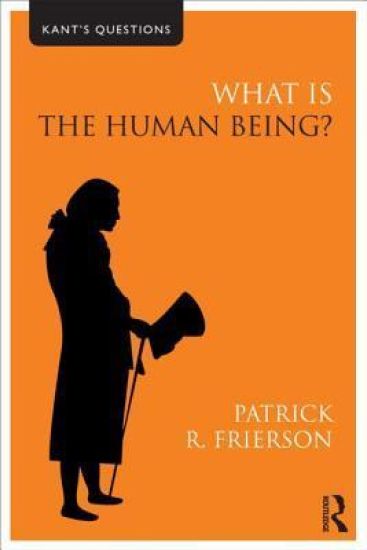
Philosophers, anthropologists and biologists have long puzzled over the question of human nature. It is also a question that Kant thought about deeply and returned to in many of his writings. In this lucid and wide-ranging introduction to Kant’s philosophy of human nature - which is essential for understanding his thought as a whole - Patrick R. Frierson assesses Kant’s theories and examines his critics.He begins by explaining how Kant articulates three ways of addressing the question ‘what is the human being?’: the transcendental, the empirical, and the pragmatic. He then considers some of the great theorists of human nature who wrestle with Kant’s views, such as Hegel, Marx, Darwin, Nietzsche, and Freud; contemporary thinkers such as E.O.Wilson and Daniel Dennett, who have sought biological explanations of human nature; Thomas Kuhn, Michel Foucault, and Clifford Geertz, who emphasize the diversity of human beings in different times and places; and existentialist philosophers such as Sartre and Heidegger.He argues that whilst these approaches challenge and enrich Kant’s views in significant ways, all suffer from serious weaknesses that Kant’s anthropology can address. Taking a core insight of Kant’s - that human beings are fundamentally free but finite - he argues that it is the existentialists, particularly Sartre, who are the most direct heirs of his transcendental anthropology.The final part of the book is an extremely helpful overview of the work of contemporary philosophers, particularly Christine Korsgaard and Jürgen Habermas. Patrick R. Frierson explains how these philosophers engage with questions of naturalism, historicism, and existentialism while developing Kantian conceptions of the human being. Including chapter summaries and annotated further reading, What is the Human Being? is an outstanding introduction to some fundamental aspects of Kant’s thought and a judicious assessment of leading theories of human nature. It is essential reading for all students of Kant and the philosophy of human nature, as well as those in related disciplines such as anthropology, politics and sociology.
What is the Human Being?

What is the Human Being?

Patrick R. Frierson

Routledge
2013
nidottu
Philosophers, anthropologists and biologists have long puzzled over the question of human nature. It is also a question that Kant thought about deeply and returned to in many of his writings. In this lucid and wide-ranging introduction to Kant’s philosophy of human nature - which is essential for understanding his thought as a whole - Patrick R. Frierson assesses Kant’s theories and examines his critics.He begins by explaining how Kant articulates three ways of addressing the question ‘what is the human being?’: the transcendental, the empirical, and the pragmatic. He then considers some of the great theorists of human nature who wrestle with Kant’s views, such as Hegel, Marx, Darwin, Nietzsche, and Freud; contemporary thinkers such as E.O.Wilson and Daniel Dennett, who have sought biological explanations of human nature; Thomas Kuhn, Michel Foucault, and Clifford Geertz, who emphasize the diversity of human beings in different times and places; and existentialist philosophers such as Sartre and Heidegger.He argues that whilst these approaches challenge and enrich Kant’s views in significant ways, all suffer from serious weaknesses that Kant’s anthropology can address. Taking a core insight of Kant’s - that human beings are fundamentally free but finite - he argues that it is the existentialists, particularly Sartre, who are the most direct heirs of his transcendental anthropology.The final part of the book is an extremely helpful overview of the work of contemporary philosophers, particularly Christine Korsgaard and Jürgen Habermas. Patrick R. Frierson explains how these philosophers engage with questions of naturalism, historicism, and existentialism while developing Kantian conceptions of the human being. Including chapter summaries and annotated further reading, What is the Human Being? is an outstanding introduction to some fundamental aspects of Kant’s thought and a judicious assessment of leading theories of human nature. It is essential reading for all students of Kant and the philosophy of human nature, as well as those in related disciplines such as anthropology, politics and sociology.
Freedom and Anthropology in Kant's Moral Philosophy

Freedom and Anthropology in Kant's Moral Philosophy

Patrick R. Frierson

Cambridge University Press
2011
pokkari
This book offers a comprehensive account of Kant's theory of freedom and his moral anthropology. The point of departure is the apparent conflict between three claims to which Kant is committed: that human beings are transcendentally free, that moral anthropology studies the empirical influences on human beings, and that more anthropology is morally relevant. Frierson shows why this conflict is only apparent. He draws on Kant's transcendental idealism and his theory of the will and describes how empirical influences can affect the empirical expression of one's will in a way that is morally significant but still consistent with Kant's concept of freedom. As a work which integrates Kant's anthropology with his philosophy as a whole, this book will be an unusually important source of study for all Kant scholars and advanced students of Kant.
Freedom and Anthropology in Kant's Moral Philosophy

Freedom and Anthropology in Kant's Moral Philosophy

Patrick R. Frierson

Cambridge University Press
2003
sidottu
This book offers a comprehensive account of Kant's theory of freedom and his moral anthropology. The point of departure is the apparent conflict between three claims to which Kant is committed: that human beings are transcendentally free, that moral anthropology studies the empirical influences on human beings, and that more anthropology is morally relevant. Frierson shows why this conflict is only apparent. He draws on Kant's transcendental idealism and his theory of the will and describes how empirical influences can affect the empirical expression of one's will in a way that is morally significant but still consistent with Kant's concept of freedom. As a work which integrates Kant's anthropology with his philosophy as a whole, this book will be an unusually important source of study for all Kant scholars and advanced students of Kant.
Kant's Empirical Psychology

Kant's Empirical Psychology

Patrick R. Frierson

Cambridge University Press
2014
sidottu
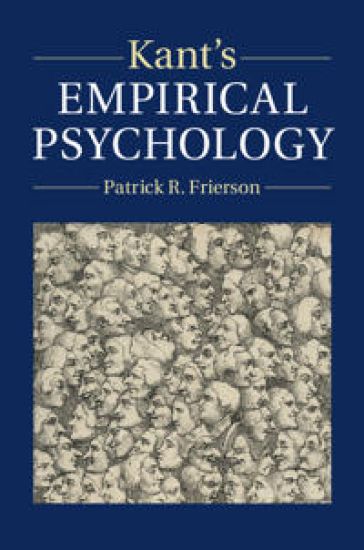
Throughout his life, Kant was concerned with questions about empirical psychology. He aimed to develop an empirical account of human beings, and his lectures and writings on the topic are recognizable today as properly 'psychological' treatments of human thought and behavior. In this book Patrick R. Frierson uses close analysis of relevant texts, including unpublished lectures and notes, to study Kant's account. He shows in detail how Kant explains human action, choice, and thought in empirical terms, and how a better understanding of Kant's psychology can shed light on major concepts in his philosophy, including the moral law, moral responsibility, weakness of will, and cognitive error. Frierson also applies Kant's accounts of mental illness to contemporary philosophical issues. His book will interest students and scholars of Kant, the history of psychology, philosophy of psychology, and philosophy of action.
Kant's Empirical Psychology

Kant's Empirical Psychology

Patrick R. Frierson

Cambridge University Press
2017
pokkari
Throughout his life, Kant was concerned with questions about empirical psychology. He aimed to develop an empirical account of human beings, and his lectures and writings on the topic are recognizable today as properly 'psychological' treatments of human thought and behavior. In this book Patrick R. Frierson uses close analysis of relevant texts, including unpublished lectures and notes, to study Kant's account. He shows in detail how Kant explains human action, choice, and thought in empirical terms, and how a better understanding of Kant's psychology can shed light on major concepts in his philosophy, including the moral law, moral responsibility, weakness of will, and cognitive error. Frierson also applies Kant's accounts of mental illness to contemporary philosophical issues. His book will interest students and scholars of Kant, the history of psychology, philosophy of psychology, and philosophy of action.