Kirjojen hintavertailu. Mukana 12 051 428 kirjaa ja 12 kauppaa.

Kirjahaku

Etsi kirjoja tekijän nimen, kirjan nimen tai ISBN:n perusteella.

18 kirjaa tekijältä Patrick Sullivan

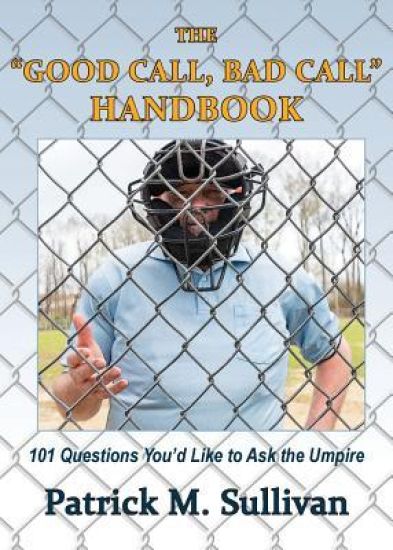
The "Good Call, Bad Call" Handbook

The "Good Call, Bad Call" Handbook

Patrick Sullivan

Montezuma Publishing
2018
nidottu
You hear them saying: "GOOD CALL " and "BAD CALL " Sometimes you even hear both at once Who's right? Who's wrong? Whether it's a rules interpretation or a judgment call, there are lots of times what happens on the field doesn't make sense in the stands. Baseball rules literacy (BRL) is poor even among fans, and worse among parents who are only at the ballpark because Johnny's too young to drive. That's because baseball rule books are BORING. The "Good Call, Bad Call" Handbook: 101 Questions You'd Like to Ask the Umpire is anything but. Patrick Sullivan umpired at every level of amateur baseball, from T-ball to college, for over 40 years. He's heard a lot of talk on, or from, the far side of the backstop. The "Good Call, Bad Call" Handbook is based on actual conversations with fans away from the ballpark, questions heard through the fence, and fans heard talking to each other who sound as wise as owls but whose actual BRL isn't worth a hoot. In the years since his first draft, every single baseball call that generated controversy in media or online is something you would have already known the right and wrong of...if you had read this book And yes: you will GET the Infield Fly Rule
The "Kill The Umpire" Handbook

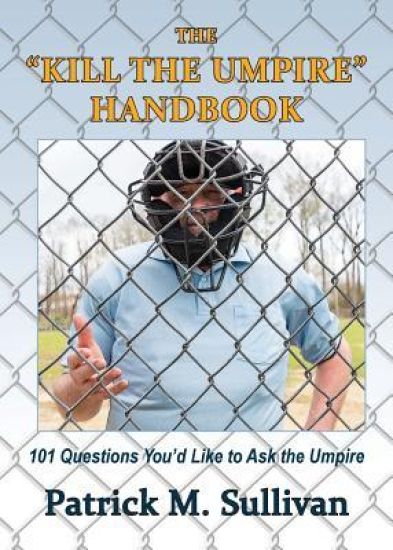
The "Kill The Umpire" Handbook

Patrick Sullivan

Montezuma Publishing
2017
nidottu
You want to SCREAM: "KILL THE UMPIRE " Now, SHOULD you? Well, of course you shouldn't kill the umpire--that would be murder. But should you WANT to? Not NEARLY as often as you think mBaseball rules literacy (BRL) is poor even among fans, andmworse among parents who are only at the ballpark because Johnny's too young to drive. That's because baseball rulebooks are BORING. The "Kill the Umpire" Handbook: 101 Questions You'd Like to Ask the Umpire is anything but. Patrick Sullivan umpired at every level of amateur baseball, from T-ball to college, for over 40 years. He's heard a lot of talk on, or from, the far side of the backstop. The "Kill the Umpire" Handbook is based on actual conversations with fans away from the ballpark, questions heard through the fence, and fans heard talking to each other who sound as wise as owls but whose actual BRL isn't worth a hoot. In the years since his first draft, every single baseball call that generated controversy in media or online is something you would have already known the right and wrong of...if you had read this book And yes: you will GET the Infield Fly Rule

Belonging Together

Belonging Together

Patrick Sullivan

Aboriginal Studies Press
2011
nidottu
Belonging Together describes current Indigenous affairs policy in Australia, concentrating on the period since the end of ATSIC in 2004. It provides a unique overview of the trajectory of current policy, with Sullivan advancing a new consolidated approach to Indigenous policy which moves beyond the debate over self-determination and assimilation. Instead, he suggests that the interests of Indigenous peoples, settlers and immigrants are fundamentally shared, and proposes adaptation on both sides, but particularly for the descendants of settlers and immigrants, to allow them to embrace the framing of their identity by Indigenous presence.
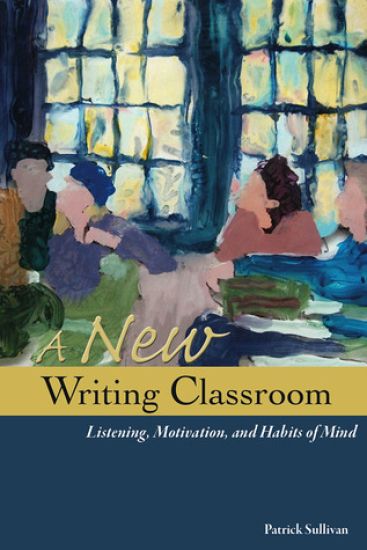
A New Writing Classroom

A New Writing Classroom

Patrick Sullivan

Utah State University Press
2014
nidottu
In "A New Writing Classroom," Patrick Sullivan provides a new generation of teachers a means and a rationale to reconceive their approach to teaching writing, calling into question the discipline's dependence on argument.Including secondary writing teachers within his purview, Sullivan advocates a more diverse, exploratory, and flexible approach to writing activities in grades six through thirteen. "A New Writing Classroom" encourages teachers to pay more attention to research in learning theory, transfer of learning, international models for nurturing excellence in the classroom, and recent work in listening to teach students the sort of dialogic stance that leads to higher-order thinking and more sophisticated communication.The conventional argumentative essay is often a simplistic form of argument, widely believed to be the most appropriate type of writing in English classes, but other kinds of writing may be more valuable to students and offer more important kinds of cognitive challenges. Focusing on listening and dispositions or "habits of mind as central elements of this new composition pedagogy, "A New Writing Classroom" draws not just on composition studies but also on cognitive psychology, philosophy, learning theory, literature, and history, making an exciting and significant contribution to the field."
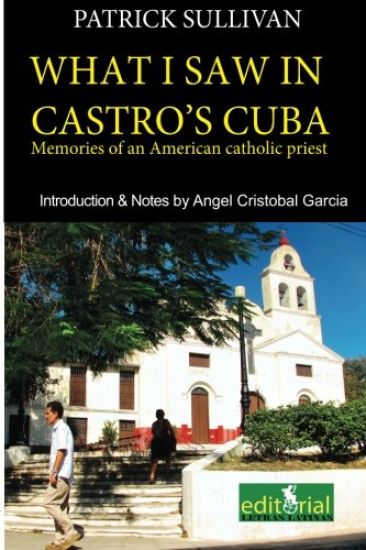
What I saw in Castro's Cuba: Memories of an American priest in Cuba

What I saw in Castro's Cuba: Memories of an American priest in Cuba

Patrick Sullivan

Createspace Independent Publishing Platform
2016
nidottu
"What I saw in Castro s Cuba it's a book of stories about a city and its people. The author, Fray Patrick Sullivan, is a religious, not a journalist, or a historian, as he warns in its pages; hence this is an authentic work written with direct worlds, able to break the powerful censorship and self censorship prevailing in the Cuban Special Period. Topics such as the visit to Cuba of Pope John Paul II, the Church and the State, Cuban Christmas, Human Rights, political and religious persecution or the embargo, though seem "foreign" to the service of a priest, in this work effectively bind to remind us the invisible pillars of democracy.
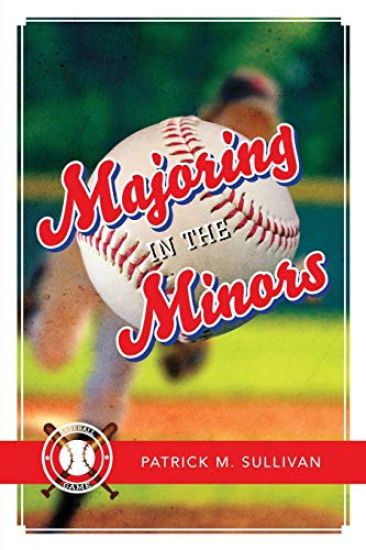
Majoring in the Minors

Majoring in the Minors

Patrick Sullivan

Montezuma Publishing
2020
nidottu
Majoring in the Minors is Patrick M. Sullivan's witty book about his quest to see baseball played in every minor-league stadium and played by every Minor League Baseball franchise. Along the way, he documents the ever-changing world of the minors, its new stadiums, its family fun, its crazy team nicknames, its wildly creative concession food, and, of course, the action on the baseball diamond. Sullivan offers a bit of history for each stadium and franchise - including tips on visiting and enjoying them. Majoring in the Minors is an ode to baseball lovers in the farthest corners of America and the fields that show off the talents of the players coming and going from the majors. Sullivan, a veteran umpire, is also author of The "Good Call, Bad Call" Handbook, which answers the baseball fan's question, "What just happened?"
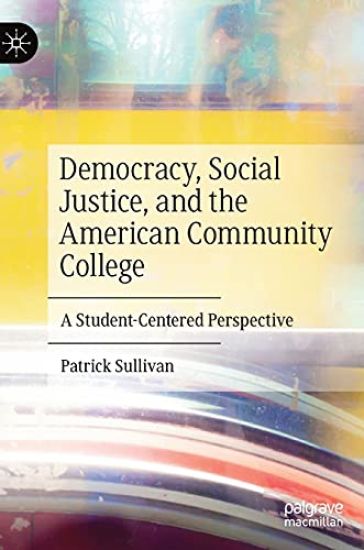
Democracy, Social Justice, and the American Community College

Democracy, Social Justice, and the American Community College

Patrick Sullivan

Springer Nature Switzerland AG
2021
sidottu
This book provides scholars, educators, and legislators with a personal, classroom-level tour of daily life at a community college. Readers will accompany the author into the classroom as he goes about his work as an English teacher meeting with classes and corresponding with students on Blackboard and e-mail. Answering the call for ”student-centered scholarship,” this book blends traditional academic writing with chapters that feature a rich variety of student work, including essays, journal entries, poems, art, and responses to creative assignments. In this volume, Sullivan theorizes the modern community college as a social justice institution. By mission and mandate, the modern community college has democratized America’s system of higher education and distributed hope, equity, and opportunity more broadly across the nation.
Democracy, Social Justice, and the American Community College

Democracy, Social Justice, and the American Community College

Patrick Sullivan

Springer Nature Switzerland AG
2022
nidottu
This book provides scholars, educators, and legislators with a personal, classroom-level tour of daily life at a community college. Readers will accompany the author into the classroom as he goes about his work as an English teacher meeting with classes and corresponding with students on Blackboard and e-mail. Answering the call for ”student-centered scholarship,” this book blends traditional academic writing with chapters that feature a rich variety of student work, including essays, journal entries, poems, art, and responses to creative assignments. In this volume, Sullivan theorizes the modern community college as a social justice institution. By mission and mandate, the modern community college has democratized America’s system of higher education and distributed hope, equity, and opportunity more broadly across the nation.
Economic Inequality, Neoliberalism, and the American Community College

Economic Inequality, Neoliberalism, and the American Community College

Patrick Sullivan

Springer International Publishing AG
2018
nidottu
This book aims to deepen public understanding of the community college and to challenge our longstanding reliance on a deficit model for defining this important, powerful, and transformative institution. Featuring a unique combination of data and research, Sullivan seeks to help redefine, update, and reshape public perception about community colleges. This book gives serious attention to student voices, and includes narratives written by community college students about their experiences attending college at an open admissions institution. Sullivan examines the history of the modern community college and the economic model that is driving much of the current discussion in higher education today. Sullivan argues that the community college has done much to promote social justice and economic equality in America since the founding of the modern community college in 1947 by the Truman Commission.
Stay Tuned

Stay Tuned

Patrick Sullivan

RUTGERS UNIVERSITY PRESS
2026
nidottu
Since the 1950s, television flooded the American soundscape with not just pictures but sounds, a constant aural stream infiltrating domestic life. In Stay Tuned, Patrick Sullivan treats network-era television sound not as background noise or auxiliary signal but as a formative texture of aesthetic life in postwar America. He theorizes how television's sonic forms—asynchronous audiovisuals, noises, affective rhythms, what he collectively terms "network aurality"—trouble traditional aesthetic theory. Stay Tuned takes up critiques of television sound and repurposes them as evidence of a deeper philosophical discomfort: namely, that television sound does something to aesthetic categories that they weren't built to handle. From the laugh track to the cartoon "boinks," from noises to the jingle, Sullivan reads television sounds not as cultural detritus but as formal interventions—forcing a redefinition of what aesthetics means when form is mass-produced, commercial, and built for syndication. What emerges is not just a new theory and history of television sound, but a reimagined account of aesthetic experience itself—expanded, recalibrated, and a little wacky.
Stay Tuned

Stay Tuned

Patrick Sullivan

RUTGERS UNIVERSITY PRESS
2026
sidottu
Since the 1950s, television flooded the American soundscape with not just pictures but sounds, a constant aural stream infiltrating domestic life. In Stay Tuned, Patrick Sullivan treats network-era television sound not as background noise or auxiliary signal but as a formative texture of aesthetic life in postwar America. He theorizes how television's sonic forms—asynchronous audiovisuals, noises, affective rhythms, what he collectively terms "network aurality"—trouble traditional aesthetic theory. Stay Tuned takes up critiques of television sound and repurposes them as evidence of a deeper philosophical discomfort: namely, that television sound does something to aesthetic categories that they weren't built to handle. From the laugh track to the cartoon "boinks," from noises to the jingle, Sullivan reads television sounds not as cultural detritus but as formal interventions—forcing a redefinition of what aesthetics means when form is mass-produced, commercial, and built for syndication. What emerges is not just a new theory and history of television sound, but a reimagined account of aesthetic experience itself—expanded, recalibrated, and a little wacky.