Kirjojen hintavertailu. Mukana 11 244 527 kirjaa ja 12 kauppaa.

Kirjahaku

Etsi kirjoja tekijän nimen, kirjan nimen tai ISBN:n perusteella.

17 kirjaa tekijältä Patrick Williams

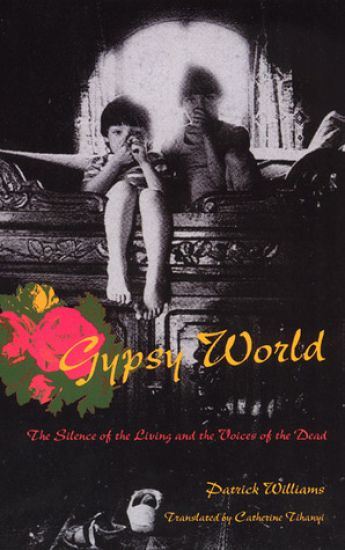
Gypsy World

Gypsy World

Patrick Williams

University of Chicago Press
2003
sidottu
For many of us, one of the most important ways of coping with the death of a close relative is talking about them, telling all who will listen what they meant to us. Yet the Gypsies of central France, the Manus, not only do not speak of their dead, they burn or discard the deceased's belongings, refrain from eating the dead person's favourite foods and avoid camping in the place where he or she died. In "Gypsy World", Patrick Williams argues that these customs are at the centre of how Manus see the world and their place in it. The Manus inhabit a world created by the "Gadzos" (non-Gypsies) , who frequently limit or even prohibit Manus's movements within it. To claim this world for themselves, the Manus employ a principle of cosmological subtraction: just as the dead seem to be absent from Manus society, argues Williams, so too do the Manus absent themselves from Gadzo society - and in so doing they assert and preserve their own separate culture and identity. Anyone interested in Gypsies, death rituals or the formation of culture should enjoy this fascinating and sensitive ethnography.
Gypsy World

Gypsy World

Patrick Williams

University of Chicago Press
2003
nidottu
For many of us, one of the most important ways of coping with the death of a close relative is talking about them, telling all who will listen what they meant to us. Yet the Gypsies of central France, the Manus, not only do not speak of their dead, they burn or discard the deceased's belongings, refrain from eating the dead person's favourite foods and avoid camping in the place where he or she died. In "Gypsy World", Patrick Williams argues that these customs are at the centre of how Manus see the world and their place in it. The Manus inhabit a world created by the "Gadzos" (non-Gypsies) , who frequently limit or even prohibit Manus's movements within it. To claim this world for themselves, the Manus employ a principle of cosmological subtraction: just as the dead seem to be absent from Manus society, argues Williams, so too do the Manus absent themselves from Gadzo society - and in so doing they assert and preserve their own separate culture and identity. Anyone interested in Gypsies, death rituals or the formation of culture should enjoy this fascinating and sensitive ethnography.
The American Public Library and the Problem of Purpose

The American Public Library and the Problem of Purpose

Patrick Williams

Praeger Publishers Inc
1988
sidottu
The problem of purpose in the title is the 130-year debate within the library community over the proper place for the library in society. Chapters discuss roles for public libraries from the founding of the Boston Public Library with its clear educational purpose through attempts at rational planning for library roles in the 1980s. The controversy about the place of popular fiction in American libraries in the late 19th century; the militant outreach efforts during the early decades of the 20th century; the adult education phase during the 1920s to 1940s; and the library as an information nexus for the people during the late 1960s and 1970s are additional topics covered. The style is highly readable and provides important historical insights that should be of interest not only to library educators and students, but to any public librarian concerned with current service roles. Library JournalSince the mid-1800s, when the first American public libraries were established, the proper role of the library as a public institution has been debated within the professional community. A systematic examination of that debate, this study provides an historical survey of the public library's view of itself--its development, social and educational functions, and larger purposes within American society.Williams begins with a discussion of the creation of the Boston Public Library. He assesses public satisfaction with the services that libraries have consistently provided, including books for the recreational reader, materials and assistance to students, and children's programs designed to make books attractive and interesting to younger readers. He looks at the changing aspirations of the community of librarians, which has envisioned the institution variously as an agency for continuing education, a civic center of inspiration and uplift for the people, and a center for the political enlightenment of the masses. The author maintains that the gulf between public and professional perceptions needs to be addressed by present-day librarians, who continue to be faced with conflicting notions of what the library's role should be. He suggests that the professional community must sooner or later integrate a broader vision of the library's purpose with the expectations of the public it is intended to serve. Both entertaining and informative, this book offers new insights and historical perspectives that will be of particular interest to the fields of library science and American social and intellectual history.
Philip II

Philip II

Patrick Williams

Red Globe Press
2001
nidottu
Four hundred years after his death, Philip II remains one of the most controversial figures in history, admired and reviled in equal measure. He is a figure of global importance, the first ruler on whose territories the sun never set. He led Europe in its defence against the seemingly irresistable power of the Ottoman Empire and many of the nations of Western Europe were forged in part by their responses to his ambitions - Portugal was conquered and most of Italy was controlled by him, while the Low Countries, England and France fought long and bitter wars against him. Philip proclaimed himself the leader of Catholic Europe but quarrelled incessantly with the popes of the Counter-Reformation. In consolidating his monarchy in Spain, Philip used the arts as a political tool; Titian and Palestrina did some of their greatest work for him.This new study traces the development of Philip II and of a kingship that lay at the heart of European political, religious and cultural evolution. It looks in detail at the ministers who worked with this most demanding of kings and at the government that evolved during his reign. It deals also with the pressures of a tortured private life and explores the paradox of a man who as a young ruler was deeply prudent but who became extraordinarily aggressive in his old age and who by his successes and failures - both of them on an epic scale - re-shaped the world in which he lived.
Ngugi Wa Thiong'O

Ngugi Wa Thiong'O

Patrick Williams

Manchester University Press
1999
nidottu
Ngugi is one of the most important novelists on the contemporary world stage, and someone whose name has for many become synonymous with cultural controversy and political struggle.Patrick William’s lucid analysis offers the most up-to-date study of Ngugi’s writing, including his most rcent collection of essays. Focusing on important aspects of Ngugi’s work which critics have hitherto ignored, and drawing on a wide range of relevant theoretical perspectives, this study examines the growing complexity of Ngugi’s accounts of the history of colonised and post-colonial Kenya. The cultural and anti-imperial politics on Ngugi’s experimentation with language and form in both novel and drama is discussed, including the important role of culture as a source of historical memory and strategies of resistance for oppressed groups.All the novels and the major plays are studies in detail, and in addition a substantial chapter examines Ngugi’s contribution in the area of non-fiction.
The Great Favourite

The Great Favourite

Patrick Williams

Manchester University Press
2007
sidottu
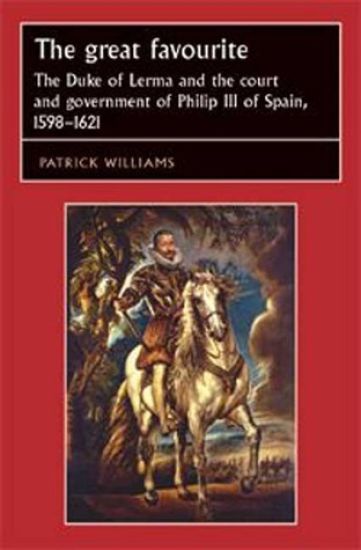
Francisco Gómez de Sandoval, Duke of Lerma (1553-1625) is the last major unknown statesman in modern European history. Patrick Williams brings him dramatically to life and challenges the assumptions that historians have made about him and about Spanish history at a time of profound crisis, inviting a re-evaluation of the phenomenon of government by favourites in this seminal period of European history. Lerma served Philip III as his favourite and first minister between 1598 and 1618. His power dazzled contemporaries; one petitioner telling Philip that he had come to see him 'because I could not get an appointment with the Duke of Lerma'. Within a decade of assuming office Lerma had raised his family from humiliating poverty to great riches and was the greatest patron of the arts in Europe. His use of power provoked intense debate about the nature of corruption in government. Yet Lerma remained deeply ambivalent about his position. Determined to follow family tradition and retire into religious life to secure the salvation of his soul, he secured a cardinalate in 1617, ending his life as a prince of the Church.
The Great Favourite

The Great Favourite

Patrick Williams

Manchester University Press
2009
nidottu
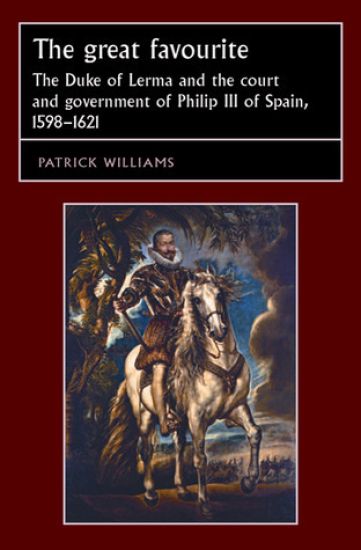
Francisco Gómez de Sandoval, Duke of Lerma (1553-1625) is the last major unknown statesman in modern European history. Patrick Williams brings him dramatically to life and challenges the assumptions that historians have made about him and about Spanish history at a time of profound crisis, inviting a re-evaluation of the phenomenon of government by favourites in this seminal period of European history.Lerma served Philip III as his favourite and first minister between 1598 and 1618. His power dazzled contemporaries; one petitioner telling Philip that he had come to see him ‘because I could not get an appointment with the Duke of Lerma’. Within a decade of assuming office Lerma had raised his family from humiliating poverty to great riches and was the greatest patron of the arts in Europe. His use of power provoked intense debate about the nature of corruption in government. Yet Lerma remained deeply ambivalent about his position. Determined to follow family tradition and retire into religious life to secure the salvation of his soul, he secured a cardinalate in 1617, ending his life as a prince of the Church.
The Armada

The Armada

Patrick Williams

NPI Media Group
2000
sidottu
In the summer of 1588 Philip II's Invincible Armada edged its way slowly down the English Channel towards the Straits of Dover. The fleet consisted of more than 130 ships and 30,000 men, but Philip II of Spain had not sent the Armada to fight the English navy; rather, he had instructed his commander to avoid battle and to ferry the invincible troops of Spain's Army of Flanders across to England to depose Elizabeth I. However, despite its awesome size the Armada did not succeed in embarking one soldier. It was brought to battle and although not conclusively defeated was forced to find its way home by a tortuous voyage around the north coastline of the British Isles. Few of the great galleons that reached Spain ever sailed again and nearly half the men on board did not survive the dreadful journey.
Armada

Armada

Patrick Williams

The History Press Ltd
2008
nidottu
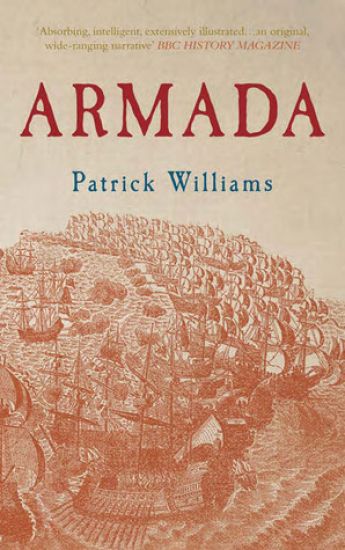
In Armada, Patrick Williams tells the only history of the Armada from the Spanish perspective. In the summer of 1588 Philip II's Invincible Armada edged its way slowly down the English Channel towards the Straits of Dover. The fleet consisted of over 130 ships and 30,000 men, but Philip II of Spain had not sent the Armada to fight the English navy; rather, he had instructed his commander to avoid battle and to ferry the invincible troops of Spain's Army of Flanders across to England to depose Elizabeth I. However, despite its awesome size the Armada did not succeed in embarking one soldier. It was brought to battle and although not conclusively defeated was forced to find its way home by a tortuous voyage around the north coastline of the British Isles. Few of the great galleons that reached Spain ever sailed again and nearly half the men on board did not survive the dreadful journey.
Lethal as Love

Lethal as Love

Patrick Williams

Createspace Independent Publishing Platform
2017
nidottu
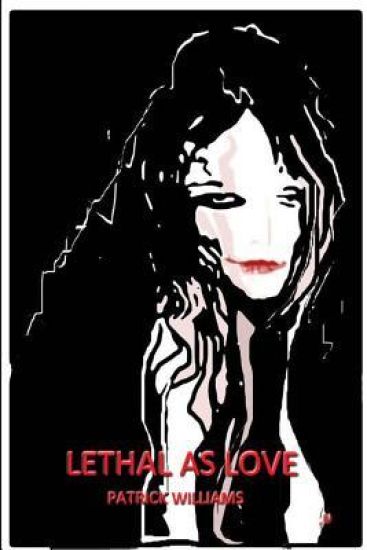
From the heady springtime rush of first meeting to the hard tear-stained winter of goodbye, these poems explore the lifespan of a relationship. Published chronologically as written for her, and sent as text messages so she could read them over her morning coffee, these poems are a passionate and painfully truthful testimony to someone who, for a much too brief time, was the poet's whole heart, and who will always hold a piece of it.
The House Rules

The House Rules

Patrick Williams

QUADRILLE PUBLISHING LTD
2026
sidottu
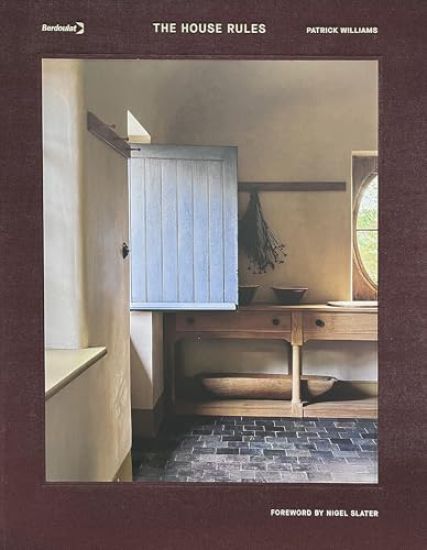
A trailblazing British interiors practice that has become THE name in authentic period design. The House Rules charts the evolution of Patrick Williams' design studio Berdoulat, and is a stunning visual exploration of his practice and meticulous approach to working with period buildings. From a 14th-century court house, to a Regency manor, through to a newly built extension to an Arts & Crafts home, Patrick Williams showcases sensitive period restorations that combine artisan techniques and heritage aesthetics with modern, sustainable sensibilities to create timeless historic interiors.
The House Rules

The House Rules

Patrick Williams

QUADRILLE PUBLISHING LTD
2026
sidottu
A trailblazing British interiors practice that has become THE name in authentic period design. This special edition is comprised of a cloth-bound slipcase with marbled inlay and contains Patrick Williams’ The House Rules, with foreword by Nigel Slater, alongside additional special content, Another Spoonful, with foreword by Charlie Porter. From a 14th-century court house, to a Regency manor, through to a newly built extension to an Arts & Crafts home, Patrick Williams’ The House Rules showcases sensitive period restorations that combine artisan techniques and heritage aesthetics with modern, sustainable sensibilities to create timeless historic interiors. Another Spoonful is an ode to an array of deeply skilled and knowledgeable artisans, whose work is stocked in Berdoulat’s shop in Bath. The book celebrates the craftsmanship and dedication that goes into keeping traditional ways of making alive.