Kirjahaku
Etsi kirjoja tekijän nimen, kirjan nimen tai ISBN:n perusteella.
6 kirjaa tekijältä Patrik Vogt
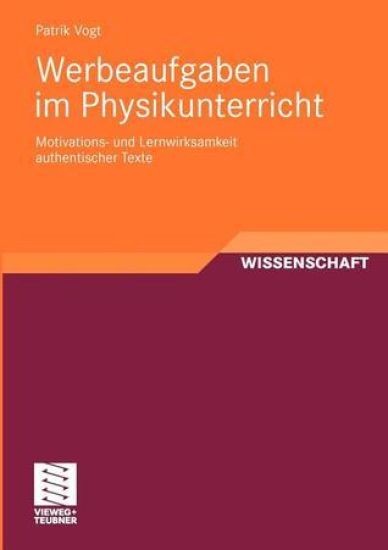
Patrik Vogt entwickelt auf Basis der „Modified-Anchored-Instruction“ kontextorientierte Aufgabenstellungen zu Werbeanzeigen und überprüft deren Wirksamkeit im täglichen Physikunterricht der Sekundarstufe I. Im Bereich der Motivation belegen die empirischen Ergebnisse deutliche Vorteile des untersuchten Aufgabentyps. Es zeigt sich, dass der zu erzielende Effekt von der Aufgabendosis abhängt.
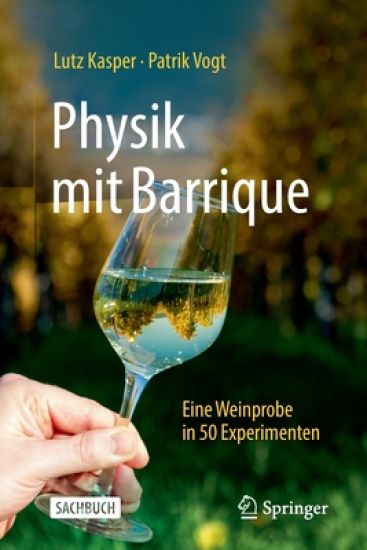
Physik mit Barrique
Lutz Kasper; Patrik Vogt
Springer-Verlag Berlin and Heidelberg GmbH Co. KG
2022
nidottu
Eine noch geschlossene Weinflasche, ein Korkenzieher und ein Smartphone sind fraglos eine vielversprechende Kombination. Mit dem einen Gerät gute Freunde benachrichtigen und mit dem anderen den Korken aus der Flasche ziehen – was will man mehr? Vielleicht dürstet aber neben der Kehle auch der „Geist“! Mit diesem Buch üben Sie Ihre physikalische Achtsamkeit beim Weingenuss: Sie erfahren, wie man mit dem charakteristischen Plopp-Geräusch beim Öffnen der Flasche die Schallgeschwindigkeit bestimmen kann, wie man einen Wein am besten karaffiert, welche Besonderheiten Rotwein im Laserlicht zeigt und was Pythagoras mit Wein zu tun hat. Physik mit Barrique schafft die wunderbare Verbindung von Wissenschaft und Wein. Ein inspirierendes Sachbuch – mit Experimenten zum Mitmachen und Nachmachen oder einfach nur Genießen. Die Autoren Lutz Kasper hat Mathematik und Physik auf Lehramt in Hannover studiert und inPhysikdidaktik an der Universität Potsdam promoviert. Seit 2011 ist er Professor für Physik und ihre Didaktik an der PH Schwäbisch Gmünd. Patrik Vogt hat sich nach einem Lehramtsstudium in Landau und dem Referendariat in Kaiserslautern im Jahr 2010 am Fachbereich „Natur- und Umweltwissenschaften“ der Universität Koblenz-Landau mit einer Arbeit zur Physikdidaktik promoviert. Nach mehreren Stationen als wissenschaftlicher Mitarbeiter und Realschullehrer leitet er seit 2019 den Fachbereich „Medienbildung, Mathematik, Naturwissenschaften, Musik, Philosophie“ am Institut für Lehrerfort- und -weiterbildung in Mainz. Seine Arbeitsschwerpunkte bilden die Einsatzmöglichkeiten mobiler Endgeräte im Physikunterricht, speziell als Messinstrument, die Aufgabenkultur sowie die Physik des Alltags.
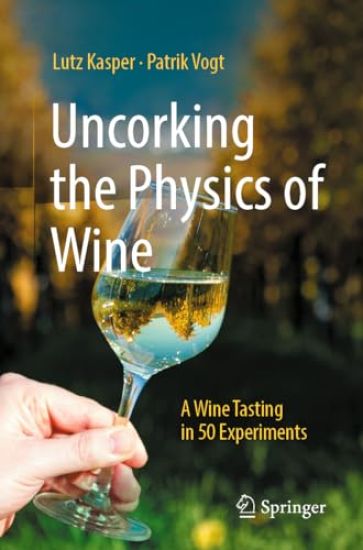
Uncorking the Physics of Wine
Lutz Kasper; Patrik Vogt
Springer-Verlag Berlin and Heidelberg GmbH Co. KG
2024
nidottu
A still sealed wine bottle, a corkscrew, and a smartphone are undoubtedly a promising combination. Notify good friends with one device and extract the cork from the bottle with the other – what more could one want? Perhaps, in addition to quenching the thirst, the "mind" also craves satisfaction!With this book, you practice your physics mindfulness during the enjoyment of wine: you learn how to determine the speed of sound with the characteristic pop sound when opening the bottle, how to properly decant wine, what peculiarities red wine shows in laser light, and what Pythagoras has to do with wine.Uncorking the Physics of Wine creates the wonderful connection between science and wine. An inspiring non-fiction book – with experiments to participate in and replicate, or simply to savor. The authorsLutz Kasper studied physics and mathematics at University of Hannover to become a teacher and completed his doctorate in physics education at the University of Potsdam. He has been a professor of physics and physics education at University of Education Schwäbisch Gmünd since 2011. In recent years, he also has worked as an invited visiting professor in the physics department of Grand Valley State University (MI) and at the Taraz Pedagogical University (Kazakhstan).Patrik Vogt studied physics and mathematics on a teaching degree at the University of Koblenz-Landau and was a research assistant and secondary school teacher at various schools and universities in Germany until 2019. Since then, he is head of the department "Media Education, Mathematics, Natural Sciences, Music, Philosophy" at the ILF in Mainz, Germany. His work focuses on the possible uses of mobile devices in physics lessons, especially as a measuring instrument, task culture and the physics of everyday life.