Kirjojen hintavertailu. Mukana 12 459 402 kirjaa ja 12 kauppaa.

Kirjahaku

Etsi kirjoja tekijän nimen, kirjan nimen tai ISBN:n perusteella.

52 kirjaa tekijältä Paul Bishop

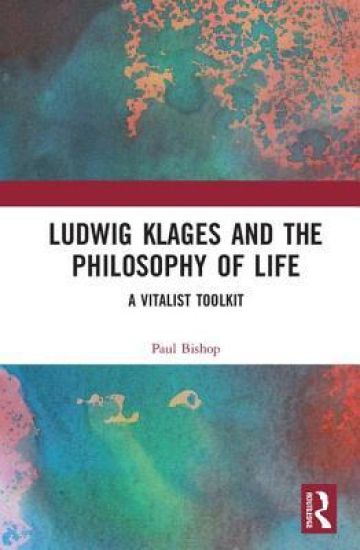
Ludwig Klages and the Philosophy of Life
This book provides a unique overview of and introduction to the work of the German psychologist and philosopher Ludwig Klages (1872-1956), an astonishing figure in the history of German ideas. Central to intellectual life in turn-of-the-century Munich, he went on to establish a reputation for himself as an original and provocative thinker. Nowadays he is often overlooked, partly because of the absence of an accessible and authoritative introduction to his thought; this volume offers just such a point of entry. With an emphasis on applicability and utility, Paul Bishop reinvigorates the discourse surrounding Klages, providing a neutral and compact account of his intellectual development and his impact on psychology and philosophy.Part 1 offers an overview of Klages’s life, visiting the major stations of his intellectual development. Part 2 examines in turn nine major conceptual ‘tools’ found in Klages’s extensive writings, aiming to clarify Klages’s terminology, to demystify his discourse, and to sift through Klages’s credentials as a psychological thinker. Part 3 consists of extracts from Klages’s writings, thematically oriented; these showcase the aphoristic and lyrical, as well as psychological and philosophical, qualities of Klages’s writing, including his interest in aesthetics. Taken together, all three parts constitute a vitalist ‘toolkit’ — to build a fuller, richer life.Drawing on previous studies of Klages that have only been available in German, Ludwig Klages and the Philosophy of Life provides a non-polemical account of Klages’s life and work, with explanations and commentaries to guide the reader through extracts from his writings. The book accessibly explains the most important ideas and concepts found in Klages’s work, including soul, spirit, character, expression, will, and consciousness, and it reveals Klages to be a serious figure whose thought remains relevant to many disciplines today. It will stimulate interest in his work and create a new readership for his remarkable worldview.
Analytical Psychology and German Classical Aesthetics: Goethe, Schiller, and Jung Volume 2
The second volume of Analytical Psychology and German Classical Aesthetics builds on the previous volume to show how German classicism, specifically the classical aesthetics associated with Goethe and Schiller known as Weimar classicism, was a major influence on psychoanalysis and analytical psychology alike.This volume examines such significant parallels between analytical psychology and Weimar classicism as the methodological similarities between Goethe’s morphological and Jung’s archetypal approaches, which both seek to use synthesis as well as analysis in their attempt to understand the world. It also focuses on the project of the construction of the self, which, it is argued, is not only a personal but also a cultural activity.This book, like its previous volume, aims to clarify the intellectual continuity between Weimar classicism and analytical psychology. It will be of interest to both students and scholars in the fields of analytical psychology, comparative literature, and the history of ideas.
Analytical Psychology and German Classical Aesthetics: Goethe, Schiller, and Jung Volume 2
The second volume of Analytical Psychology and German Classical Aesthetics builds on the previous volume to show how German classicism, specifically the classical aesthetics associated with Goethe and Schiller known as Weimar classicism, was a major influence on psychoanalysis and analytical psychology alike.This volume examines such significant parallels between analytical psychology and Weimar classicism as the methodological similarities between Goethe’s morphological and Jung’s archetypal approaches, which both seek to use synthesis as well as analysis in their attempt to understand the world. It also focuses on the project of the construction of the self, which, it is argued, is not only a personal but also a cultural activity.This book, like its previous volume, aims to clarify the intellectual continuity between Weimar classicism and analytical psychology. It will be of interest to both students and scholars in the fields of analytical psychology, comparative literature, and the history of ideas.
Ludwig Klages and the Philosophy of Life
This book provides a unique overview of and introduction to the work of the German psychologist and philosopher Ludwig Klages (1872-1956), an astonishing figure in the history of German ideas. Central to intellectual life in turn-of-the-century Munich, he went on to establish a reputation for himself as an original and provocative thinker. Nowadays he is often overlooked, partly because of the absence of an accessible and authoritative introduction to his thought; this volume offers just such a point of entry. With an emphasis on applicability and utility, Paul Bishop reinvigorates the discourse surrounding Klages, providing a neutral and compact account of his intellectual development and his impact on psychology and philosophy.Part 1 offers an overview of Klages’s life, visiting the major stations of his intellectual development. Part 2 examines in turn nine major conceptual ‘tools’ found in Klages’s extensive writings, aiming to clarify Klages’s terminology, to demystify his discourse, and to sift through Klages’s credentials as a psychological thinker. Part 3 consists of extracts from Klages’s writings, thematically oriented; these showcase the aphoristic and lyrical, as well as psychological and philosophical, qualities of Klages’s writing, including his interest in aesthetics. Taken together, all three parts constitute a vitalist ‘toolkit’ — to build a fuller, richer life.Drawing on previous studies of Klages that have only been available in German, Ludwig Klages and the Philosophy of Life provides a non-polemical account of Klages’s life and work, with explanations and commentaries to guide the reader through extracts from his writings. The book accessibly explains the most important ideas and concepts found in Klages’s work, including soul, spirit, character, expression, will, and consciousness, and it reveals Klages to be a serious figure whose thought remains relevant to many disciplines today. It will stimulate interest in his work and create a new readership for his remarkable worldview.
On the Blissful Islands with Nietzsche & Jung
What are the blissful islands? And where are they? This book takes as its starting-point the chapter called ‘On the Blissful Islands’ in Part Two of Nietzsche’s Thus Spoke Zarathustra, and its enigmatic conclusion: ‘The beauty of the Superman came to me as a shadow’. From this remarkable and powerful passage, it disengages the Nietzschean idea of the Superman and the Jungian notion of the shadow, moving these concepts into a new, interdisciplinary direction. In particular, On the Blissful Islands seeks to develop the kind of interpretative approach that Jung himself employed. Its chief topics are classical (the motif of the blissful islands), psychological (the shadow), and philosophical (the Übermensch or superman), blended together to produce a rich, intellectual-historical discussion. By bringing context and depth to a nexus of highly problematic concepts, it offers something new to the specialist and the general reader alike. So this book considers the significance of the statue in the culture of antiquity (and in alchemy), and investigates the associated notion of self-sculpting as a form of existential exercise. This Neoplatonic theme is pursued in relation to a poem by Schiller, at the centre of which lies the notion of self-sculpting, thus highlighting Nietzsche’s (and Jung’s) relationship to Idealism. Its conclusion directly addresses the vexed (and controversial) question of Nietzsche’s relation to Plato.This book’s main ambition is to provide a cross-cultural, interdisciplinary reading of key themes and motifs, using Jungian ideas in general (and Jung’s vast seminar on Zarathustra in particular) to uncover a dimension of deep meaning in key passages in Nietzsche. Engaging the reader directly on major existential questions, it aims to be an original, thought-provoking contribution to the history of ideas, and to show that Zarathustra was right: There still are blissful islands!This book will be stimulating reading for analytical psychologists, including those in training, and academics and scholars of Jungian studies, Nietzsche, and the history of ideas.
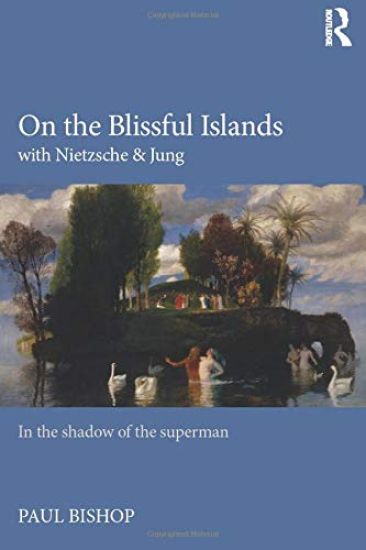
On the Blissful Islands with Nietzsche & Jung
What are the blissful islands? And where are they? This book takes as its starting-point the chapter called ‘On the Blissful Islands’ in Part Two of Nietzsche’s Thus Spoke Zarathustra, and its enigmatic conclusion: ‘The beauty of the Superman came to me as a shadow’. From this remarkable and powerful passage, it disengages the Nietzschean idea of the Superman and the Jungian notion of the shadow, moving these concepts into a new, interdisciplinary direction. In particular, On the Blissful Islands seeks to develop the kind of interpretative approach that Jung himself employed. Its chief topics are classical (the motif of the blissful islands), psychological (the shadow), and philosophical (the Übermensch or superman), blended together to produce a rich, intellectual-historical discussion. By bringing context and depth to a nexus of highly problematic concepts, it offers something new to the specialist and the general reader alike. So this book considers the significance of the statue in the culture of antiquity (and in alchemy), and investigates the associated notion of self-sculpting as a form of existential exercise. This Neoplatonic theme is pursued in relation to a poem by Schiller, at the centre of which lies the notion of self-sculpting, thus highlighting Nietzsche’s (and Jung’s) relationship to Idealism. Its conclusion directly addresses the vexed (and controversial) question of Nietzsche’s relation to Plato.This book’s main ambition is to provide a cross-cultural, interdisciplinary reading of key themes and motifs, using Jungian ideas in general (and Jung’s vast seminar on Zarathustra in particular) to uncover a dimension of deep meaning in key passages in Nietzsche. Engaging the reader directly on major existential questions, it aims to be an original, thought-provoking contribution to the history of ideas, and to show that Zarathustra was right: There still are blissful islands!This book will be stimulating reading for analytical psychologists, including those in training, and academics and scholars of Jungian studies, Nietzsche, and the history of ideas.
Nietzsche'S the Anti-Christ

Nietzsche'S the Anti-Christ

Paul Bishop

Edinburgh University Press
2021
sidottu
The Anti-Christ, although written in 1888, was not published until 1895. It is one of the most notorious, if not the most notorious, books by Nietzsche and one of his most frequently misrepresented. The main cause for scandal has been its expression of a virulent anti-religious and specifically anti-Christian stance. Precisely this aspect makes a reconsideration of this work timely, not to say urgent.Presupposing no prior knowledge of Nietzsche or the text, nor assuming you are familiar with Christian beliefs or doctrines, Paul Bishop contextualises The Anti-Christ within Nietzsche's work as a whole and carefully guides you through some of the difficulties dealing with Nietzsche's rhetoric.
Nietzsche'S the Anti-Christ

Nietzsche'S the Anti-Christ

Paul Bishop

EDINBURGH UNIVERSITY PRESS
2021
nidottu
The Anti-Christ, although written in 1888, was not published until 1895. It is one of the most notorious, if not the most notorious, books by Nietzsche and one of his most frequently misrepresented. The main cause for scandal has been its expression of a virulent anti-religious and specifically anti-Christian stance. Precisely this aspect makes a reconsideration of this work timely, not to say urgent.Presupposing no prior knowledge of Nietzsche or the text, nor assuming you are familiar with Christian beliefs or doctrines, Paul Bishop contextualises The Anti-Christ within Nietzsche's work as a whole and carefully guides you through some of the difficulties dealing with Nietzsche's rhetoric.
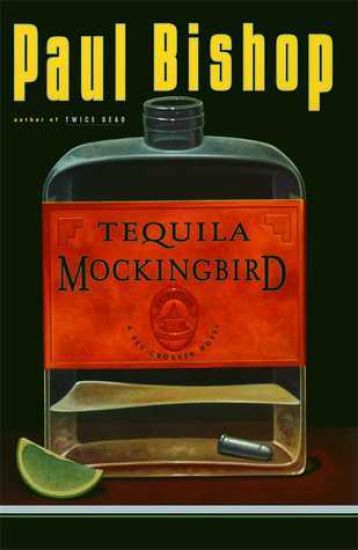
Tequila Mockingbird

Tequila Mockingbird

Paul Bishop

Scribner Book Company
2013
nidottu
Paul Bishop is one of Los Angeles's most respected cops. For over twenty years he's played hardball on the streets in what is perhaps the best-known police division in America, and he brings to his Fey Croaker novels the kind of authenticity that only an insider could achieve. The murder of Alex Waverly, a highly decorated detective assigned to the LAPD's clandestine Anti-Terrorist Division, appears to be an open-and-shut case of domestic violence turned deadly. Circumstances are not exactly what they seem, however, as Fey Croaker discovers when the chief of police removes responsibility for the investigation from the department's Robbery-Homicide Division and assigns it to her with instructions to wrap it up "quick and tidy. No muss, no fuss." Dropped into the middle of a power struggle between the chief of police and Vaughn Harrison, the department's deputy chief in charge of overseeing specialized investigation units--including Robbery-Homicide Division and Alex Waverly's Anti-Terrorist Division--Fey is torn between her loyalty to the Old Guard and following the razor's edge of integrity in a world filled with lies and deceptions. Struggling to overcome her personal demons, especially the death of her lover, Fey and her appealing crew, the dynamic Arch Hammersmith and Rhonda Lawless (a.k.a. Hammer and Nails), Brindle Jones, Abraham Cohen (a.k.a. Alphabet), and Fey's second-in-command Monk Lawson, courageously search for the truth, no matter what the cost. Racing to stay ahead of the rising body count, they quickly become moving targets in their struggle to stop a south-of-the-border terrorist from striking at the very heart of Los Angeles. Riveting in its plausibility, Tequila Mockingbird confirms Paul Bishop's place among the best of the police thriller writers and shows Fey Croaker and her team at the top of their form. Welcome aboard, fans of Joseph Wambaugh and William Caunitz. Paul Bishop has arrived.
Chalk Whispers: A Fey Croaker LAPD Crime Novel
When LAPD homicide detective Fey Croaker is promoted to the elite Robbery-Homicide division, her team's first case plunges them into a deadly investigation rife with betrayal. Not only does it pit them against a daunting list of high-profile suspects and an underground abused-child protection ring, the case also brings to light the legacy of Fey's own abusive father, who may have knowingly put an innocent black activist on death row. That man now claims to hold the key to the current investigation, and "female tough guy" (The Washington Post) Detective Croaker is about to face her darkest demons dead in the eye.
Jung's Answer to Job

Jung's Answer to Job

Paul Bishop

Brunner-Mazel Inc
2002
sidottu
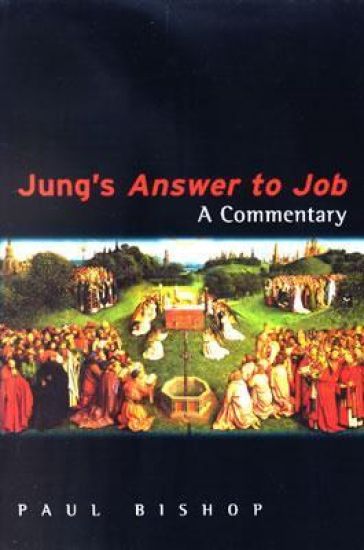
Greeted with controversy on its publication, Answer to Job has long been neglected by many serious commentators on Jung. This book offers an intellectual and cultural context for C.G.Jung's 1952 publication.In Jung's Answer to Job: A Commentary, the author argues that such neglect is due to a failure to understand Jung's objectives in this text and offers a new way of reading the work. The book places Answer to Job in the context of biblical commentary, and then examines the circumstances surrounding its compositions and immediate reception. A detailed commentary on the work discusses the major methodological presuppositions informing it and explains how key Jungian concepts operate in the text. Jung's Answer to Job: A Commentary unravels Jung's narrative by reading it in the chronological order of the biblical events it analyses and the book to which it refers, offering a comprehensive re-reading of Jung's text. An original argument put across in a scholarly and accessible style provides an essential framework for understanding the work. Whilst taking account of the tenets of analytical psychology, this commentary underlines Answer to Job's more general significance in terms of cultural history. It will be invaluable to students and scholars of analytical psychology, the history of ideas, intercultural studies, comparative literature, religion and religious studies.
Jung's Answer to Job

Jung's Answer to Job

Paul Bishop

Brunner-Mazel Inc
2002
nidottu
Greeted with controversy on its publication, Answer to Job has long been neglected by many serious commentators on Jung. This book offers an intellectual and cultural context for C.G.Jung's 1952 publication.In Jung's Answer to Job: A Commentary, the author argues that such neglect is due to a failure to understand Jung's objectives in this text and offers a new way of reading the work. The book places Answer to Job in the context of biblical commentary, and then examines the circumstances surrounding its compositions and immediate reception. A detailed commentary on the work discusses the major methodological presuppositions informing it and explains how key Jungian concepts operate in the text. Jung's Answer to Job: A Commentary unravels Jung's narrative by reading it in the chronological order of the biblical events it analyses and the book to which it refers, offering a comprehensive re-reading of Jung's text. An original argument put across in a scholarly and accessible style provides an essential framework for understanding the work. Whilst taking account of the tenets of analytical psychology, this commentary underlines Answer to Job's more general significance in terms of cultural history. It will be invaluable to students and scholars of analytical psychology, the history of ideas, intercultural studies, comparative literature, religion and religious studies.
Analytical Psychology and German Classical Aesthetics: Goethe, Schiller, and Jung, Volume 1
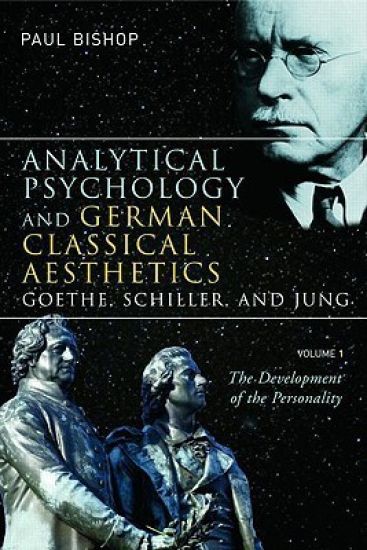
In this volume, Paul Bishop investigates the extent to which analytical psychology draws on concepts found in German classical aesthetics. It aims to place analytical psychology in the German-speaking tradition of Goethe and Schiller, with which Jung was well acquainted. Analytical Psychology and German Classical Aesthetics argues that analytical psychology appropriates many of its central notions from German classical aesthetics, and that, when seen in its intellectual historical context, the true originality of analytical psychology lies in its reformulation of key tenets of German classicism. Although the importance for Jung of German thought in general, and of Goethe and Schiller in particular, has frequently been acknowledged, until now it has never been examined in any detailed or systematic way. Through an analysis of Jung’s reception of Goethe and Schiller, Analytical Psychology and German Classical Aesthetics demonstrates the intellectual continuity within analytical psychology and the filiation of ideas from German classical aesthetics to Jungian thought. In this way it suggests that a rereading of analytical psychology in the light of German classical aesthetics offers an intellectually coherent understanding of analytical psychology.By uncovering the philosophical sources of analytical psychology, this first volume returns Jung’s thought to its core intellectual tradition, in the light of which analytical psychology gains new critical impact and fresh relevance for modern thought. Written in a scholarly yet accessible style, this book will interest students and scholars alike in the areas of analytical psychology, comparative literature, and the history of ideas.
Analytical Psychology and German Classical Aesthetics: Goethe, Schiller, and Jung, Volume 1
In this volume, Paul Bishop investigates the extent to which analytical psychology draws on concepts found in German classical aesthetics. It aims to place analytical psychology in the German-speaking tradition of Goethe and Schiller, with which Jung was well acquainted. Analytical Psychology and German Classical Aesthetics argues that analytical psychology appropriates many of its central notions from German classical aesthetics, and that, when seen in its intellectual historical context, the true originality of analytical psychology lies in its reformulation of key tenets of German classicism. Although the importance for Jung of German thought in general, and of Goethe and Schiller in particular, has frequently been acknowledged, until now it has never been examined in any detailed or systematic way. Through an analysis of Jung’s reception of Goethe and Schiller, Analytical Psychology and German Classical Aesthetics demonstrates the intellectual continuity within analytical psychology and the filiation of ideas from German classical aesthetics to Jungian thought. In this way it suggests that a rereading of analytical psychology in the light of German classical aesthetics offers an intellectually coherent understanding of analytical psychology.By uncovering the philosophical sources of analytical psychology, this first volume returns Jung’s thought to its core intellectual tradition, in the light of which analytical psychology gains new critical impact and fresh relevance for modern thought. Written in a scholarly yet accessible style, this book will interest students and scholars alike in the areas of analytical psychology, comparative literature, and the history of ideas.
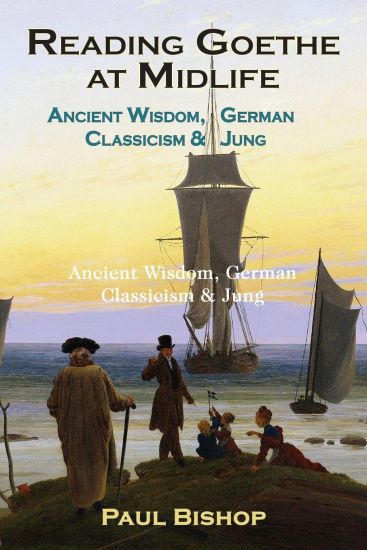
Reading Goethe at Midlife

Reading Goethe at Midlife

Paul Bishop

Chiron Publications
2020
pokkari
This book explores the history of the idea of the midlife crisis, using the writings of C.G. Jung and Goethe to investigate its relevance for today. Tracing how "the ages of humankind" became "the stages of life" in which the midlife crisis represents a pivotal moment, Paul Bishop offers a detailed analysis of a paper by Jung on this subject. He then shifts the focus to Goethe's interest in Orphic wisdom, and one of Goethe's major later poems, "Primal Words. Orphic" (Urworte Orphisch). Using Jungian ideas to explore the psychological implications of this poem, Bishop draws on Goethe's own commentary, and other background material, to uncover its vital message.Reading Goethe at Midlife reveals the remarkable symmetry between the ideas and Jung and Goethe. Jung's analysis of the stages of life, and his advice to heed the "call of the self," are brought into the conjunction with Goethe's emphasis on the importance of hope, showing an underlying continuity of thought and relevance from ancient wisdom, via German classicism to analytical psychology.Table of ContentsList of Abbreviations Acknowledgments Preface to the second edition PART ONEChapter 1: The Stages of Life and the Midlife Crisis: A BriefHistory of an Idea Two Visual Starting Points - From the Ages of Humankind......to the Stages of Life -- The Stages of Life: An Idea Comesof Age - The Midlife Crisis - Walter B. Pitkin and EdmundBergler - Erik H. Erikson and Elliott Jaques - Gail Sheehy andDaniel J. Levinson - Other Approaches, Including the Return ofthe Noonday Demon - Jungian Approaches to Midlife -Literature of the Nineties - Recent French Approaches: ricDeschavanne and Pierre-Henri Tavoillot, Marie de Hennezeland Bertrand VergelyChapter 2: The Turning Point in Life: What Conflict the SunMust Experience at Midday PART TWOChapter 3: Goethe's OrphismThe Cult of Orpheus - Orpheus in the Age of Romanticism -Goethe's Relation to the Orphic Mysteries - Creuzer andHermann, Zoega and Welcker - Faust as Orpheus - Orphism, and Primal WordsChapter 4: Primal Words. OrphicDaimon - Chance - Eros - The Necessity of Love; or, EroticNecessity - The Necessity of Necessity; or, Necessary Necessity -Hope - ConclusionIndex
Reading Goethe at Midlife

Reading Goethe at Midlife

Paul Bishop

Chiron Publications
2020
sidottu
This book explores the history of the idea of the midlife crisis, using the writings of C.G. Jung and Goethe to investigate its relevance for today. Tracing how "the ages of humankind" became "the stages of life" in which the midlife crisis represents a pivotal moment, Paul Bishop offers a detailed analysis of a paper by Jung on this subject. He then shifts the focus to Goethe's interest in Orphic wisdom, and one of Goethe's major later poems, "Primal Words. Orphic" (Urworte Orphisch). Using Jungian ideas to explore the psychological implications of this poem, Bishop draws on Goethe's own commentary, and other background material, to uncover its vital message.Reading Goethe at Midlife reveals the remarkable symmetry between the ideas and Jung and Goethe. Jung's analysis of the stages of life, and his advice to heed the "call of the self," are brought into the conjunction with Goethe's emphasis on the importance of hope, showing an underlying continuity of thought and relevance from ancient wisdom, via German classicism to analytical psychology.Table of ContentsList of Abbreviations Acknowledgments Preface to the second edition PART ONEChapter 1: The Stages of Life and the Midlife Crisis: A BriefHistory of an Idea Two Visual Starting Points - From the Ages of Humankind......to the Stages of Life -- The Stages of Life: An Idea Comesof Age - The Midlife Crisis - Walter B. Pitkin and EdmundBergler - Erik H. Erikson and Elliott Jaques - Gail Sheehy andDaniel J. Levinson - Other Approaches, Including the Return ofthe Noonday Demon - Jungian Approaches to Midlife -Literature of the Nineties - Recent French Approaches: ricDeschavanne and Pierre-Henri Tavoillot, Marie de Hennezeland Bertrand VergelyChapter 2: The Turning Point in Life: What Conflict the SunMust Experience at Midday PART TWOChapter 3: Goethe's OrphismThe Cult of Orpheus - Orpheus in the Age of Romanticism -Goethe's Relation to the Orphic Mysteries - Creuzer andHermann, Zoega and Welcker - Faust as Orpheus - Orphism, and Primal WordsChapter 4: Primal Words. OrphicDaimon - Chance - Eros - The Necessity of Love; or, EroticNecessity - The Necessity of Necessity; or, Necessary Necessity -Hope - ConclusionIndex