Kirjojen hintavertailu. Mukana 11 627 362 kirjaa ja 12 kauppaa.

Kirjahaku

Etsi kirjoja tekijän nimen, kirjan nimen tai ISBN:n perusteella.

16 kirjaa tekijältä Paul Bowman

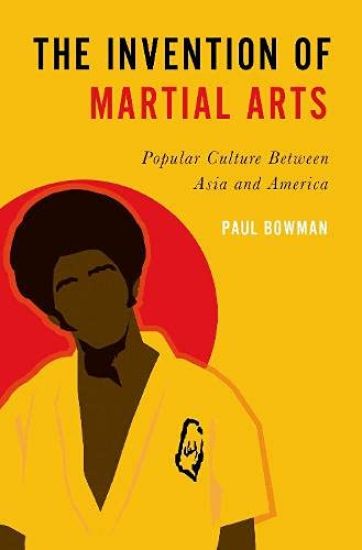
The Invention of Martial Arts

The Invention of Martial Arts

Paul Bowman

Oxford University Press Inc
2021
sidottu
Through popular movies starring Bruce Lee and songs like the disco hit "Kung Fu Fighting," martial arts have found a central place in the Western cultural imagination. But what would 'martial arts' be without the explosion of media texts and images that brought it to a wide audience in the late 1960s and early 1970s? In this examination of the media history of what we now call martial arts, author Paul Bowman makes the bold case that the phenomenon of martial arts is chiefly an invention of media representations. Rather than passively taking up a preexisting history of martial arts practices--some of which, of course, predated the martial arts boom in popular culture--media images and narratives actively constructed martial arts. Grounded in a historical survey of the British media history of martial arts such as Bartitsu, jujutsu, judo, karate, tai chi, and MMA across a range of media, this book thoroughly recasts our understanding of the history of martial arts. By interweaving theories of key thinkers on historiography, such as Foucault and Hobsbawm, and Said's ideas on Orientalism with analyses of both mainstream and marginal media texts, Bowman arrives at the surprising insight that media representations created martial arts rather than the other way around. In this way, he not only deepens our understanding of martial arts but also demonstrates the productive power of media discourses.
The Invention of Martial Arts

The Invention of Martial Arts

Paul Bowman

Oxford University Press Inc
2021
nidottu
Through popular movies starring Bruce Lee and songs like the disco hit "Kung Fu Fighting," martial arts have found a central place in the Western cultural imagination. But what would 'martial arts' be without the explosion of media texts and images that brought it to a wide audience in the late 1960s and early 1970s? In this examination of the media history of what we now call martial arts, author Paul Bowman makes the bold case that the phenomenon of martial arts is chiefly an invention of media representations. Rather than passively taking up a preexisting history of martial arts practices--some of which, of course, predated the martial arts boom in popular culture--media images and narratives actively constructed martial arts. Grounded in a historical survey of the British media history of martial arts such as Bartitsu, jujutsu, judo, karate, tai chi, and MMA across a range of media, this book thoroughly recasts our understanding of the history of martial arts. By interweaving theories of key thinkers on historiography, such as Foucault and Hobsbawm, and Said's ideas on Orientalism with analyses of both mainstream and marginal media texts, Bowman arrives at the surprising insight that media representations created martial arts rather than the other way around. In this way, he not only deepens our understanding of martial arts but also demonstrates the productive power of media discourses.
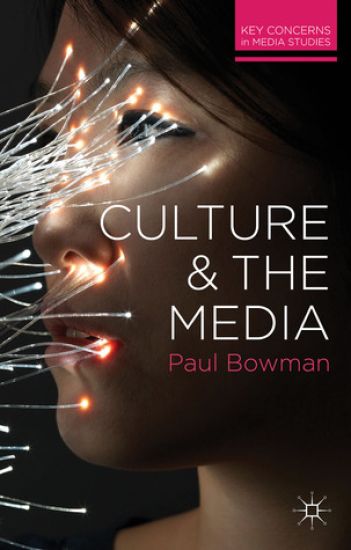
Culture and the Media

Culture and the Media

Paul Bowman

Red Globe Press
2012
nidottu
Culture and the Media looks at the relationship between what we term 'media' and 'culture', asking the question: where does one end and the other begin? Written in a lively and accessible style, this book introduces and contextualises the range of different approaches to the study of both of these fields.Using a lively range of examples and case studies - including moral panics in the British media around punk rock in the 1970s, critiques of consumerism in the films Fight Club and American Psycho, and the YouTube-captured 'violence' of protests against student fees – Culture and the Media shows how theoretical and disciplinary debates over the meaning of the media and culture relate to our everyday cultural experiences. PAUL BOWMAN teaches media and cultural studies at Cardiff University. His other books include: Interrogating Cultural Studies (2003), The Truth of Žižek (2006), Post-Marxism versus Cultural Studies (2007), Deconstructing Popular Culture (2008), Theorizing Bruce Lee (2010), The Rey Chow Reader (2010), Reading Rancière (2011), and Beyond Bruce Lee (2013).Key Concerns in Media StudiesSeries Editor: Andrew Crissell
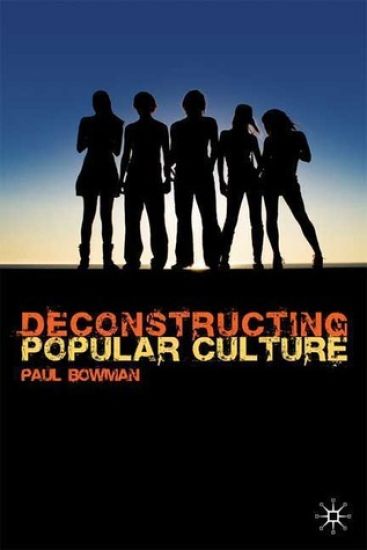
Deconstructing Popular Culture

Deconstructing Popular Culture

Paul Bowman

Red Globe Press
2008
nidottu
Popular culture permeates every aspect of our lives: from the music we listen to, the films and television shows we watch and the books we read. But who decides what counts as popular culture? Why is it so important? And how do we go about studying it? This book provides a comprehensive introduction to popular culture and examines the problems and possibilities of studying this fast changing field. Employing a unique approach, Bowman uses techniques of deconstruction to unpick, analyse and deconstruct contemporary examples of popular culture. The book looks at music, Hollywood film and the self-help movement to question claims behind the importance of popular culture and encourage readers to form their own interpretations of the culture they experience every day.With theory interwoven throughout, but in a way that is barely noticeable to the reader, the book provides covers the important theoretical work in the field, whilst directing the reader through ways to avoid common pitfalls in studying theory. An innovative user guide and glossary explain essential terms and ideas, making difficult concepts relevant, accessible and interesting. This witty, thought-provoking book provides a clear, novel introduction to popular culture for all students of cultural studies, media studies and sociology
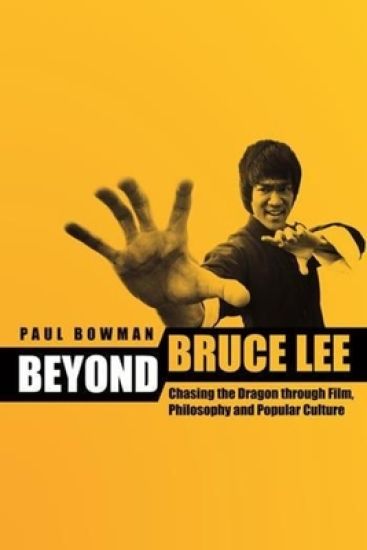
Beyond Bruce Lee

Beyond Bruce Lee

Paul Bowman

Wallflower Press
2013
sidottu
In order to understand Bruce Lee, we must look beyond Bruce Lee to the artist's intricate cultural and historical contexts. This work begins by contextualising Lee, examining his films and martial arts work, and his changing cultural status within different times and places. The text examines Bruce Lee's films and philosophy in relation to the popular culture and cultural politics of the 1960s and 1970s, and it addresses the resurgence of his popularity in Hong Kong and China in the twenty-first century. The study also explores Lee's ongoing legacy and influence in the West, considering his function as a shifting symbol of ethnic politics and the ways in which he continues to inform Hollywood film-fight choreography. Beyond Bruce Lee ultimately argues Lee is best understood in terms of "cultural translation" and that his interventions and importance are ongoing.
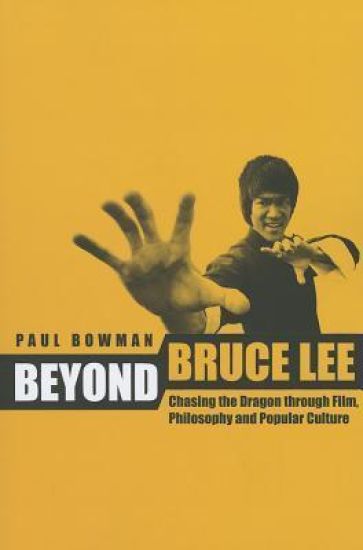
Beyond Bruce Lee

Beyond Bruce Lee

Paul Bowman

Wallflower Press
2013
pokkari
In order to understand Bruce Lee, we must look beyond Bruce Lee to the artist's intricate cultural and historical contexts. This work begins by contextualising Lee, examining his films and martial arts work, and his changing cultural status within different times and places. The text examines Bruce Lee's films and philosophy in relation to the popular culture and cultural politics of the 1960s and 1970s, and it addresses the resurgence of his popularity in Hong Kong and China in the twenty-first century. The study also explores Lee's ongoing legacy and influence in the West, considering his function as a shifting symbol of ethnic politics and the ways in which he continues to inform Hollywood film-fight choreography. Beyond Bruce Lee ultimately argues Lee is best understood in terms of "cultural translation" and that his interventions and importance are ongoing.
Post-Marxism Versus Cultural Studies

Post-Marxism Versus Cultural Studies

Paul Bowman

Edinburgh University Press
2007
sidottu
Post-Marxism versus Cultural Studies is an innovative exploration of the ethical and political significance of Cultural Studies and Post-Marxist discourse theory. It argues that although Cultural Studies and post-Marxism tend to present themselves as distinct entities, they actually share a project -- that of taking on the political. Post-Marxism presents itself as having a developed theory of political strategy, while Cultural Studies has claimed to be both practical and political. Bowman examines these intertwined, overlapping, controversial and contested claims and orientations by way of a deconstructive reading that is led by the question of intervention: what is the intervention of post-Marxism, of Cultural Studies, of each into the other, and into other institutional and political contexts and scenes? Through considerations of key aspects of Cultural Studies and cultural theory, Post-Marxism versus Cultural Studies argues that the very thing that is fundamental to both of these 'politicised' approaches -- the quest to establish a theory of intervention, and to relate this to a practice -- actually remains frustrated and unrealised as a direct result of the way this has been approached. Because of this stalemate, Post-Marxism versus Cultural Studies proposes a new theory of pragmatic intervention -- one that is derived from Derridean deconstruction, post-Marxism and Cultural Studies, and which will be of importance and value for politicised academics and intellectuals working in all areas of political and Cultural Studies. Key Features * An innovative take on the disciplines of Cultural Studies and Post-Marxism with a clear account of what Cultural Studies and post-Marxism are and why they are important * Offers explanations, accounts and critiques of key figures of Cultural Studies and post-Marxism, such as Butler, Derrida, Hall, Laclau, Mowitt, Rorty and Zizek * Draws out the similarities and clarifies the significance of the differences between the approaches and develops a new perspective on the theory and practice of intervention * Shows how, by seeing the links and differences between the approaches, both post-Marxism and cultural studies can be reorientated in order to have positive results in the political world
Reading Rey Chow

Reading Rey Chow

Paul Bowman

Peter Lang Publishing Inc
2013
nidottu
This is the first book-length study of the groundbreaking work of Rey Chow, whose work has transformed the fields of postcolonialism, cultural studies, film, ethnicity and gender. It describes and explains the features and the breadth of Chow's interventions and illustrates Chow’s arguments by way of the analysis of a range of engaging examples drawn from the fields of film, popular music, identity and popular culture. Chow’s work is of interest and importance to anyone working on questions of international and transnational film; popular culture; postcolonialism; poststructuralism; and Chinese, Hong Kong and Asian identity in different national contexts; as well as sex, gender and ethnic politics in general. This book elaborates on and illustrates Chow’s fascinating contributions to scholarship and knowledge across many different fields by arguing that her work can best be understood in relation to the «projects» of cultural studies and postcolonial studies. In this way, the work sets out both the enduring importance of these wider projects and the importance of Rey Chow’s contributions to them.
Reading Rey Chow

Reading Rey Chow

Paul Bowman

Peter Lang Publishing Inc
2013
sidottu
This is the first book-length study of the groundbreaking work of Rey Chow, whose work has transformed the fields of postcolonialism, cultural studies, film, ethnicity and gender. It describes and explains the features and the breadth of Chow's interventions and illustrates Chow’s arguments by way of the analysis of a range of engaging examples drawn from the fields of film, popular music, identity and popular culture. Chow’s work is of interest and importance to anyone working on questions of international and transnational film; popular culture; postcolonialism; poststructuralism; and Chinese, Hong Kong and Asian identity in different national contexts; as well as sex, gender and ethnic politics in general. This book elaborates on and illustrates Chow’s fascinating contributions to scholarship and knowledge across many different fields by arguing that her work can best be understood in relation to the «projects» of cultural studies and postcolonial studies. In this way, the work sets out both the enduring importance of these wider projects and the importance of Rey Chow’s contributions to them.
Martial Arts Studies

Martial Arts Studies

Paul Bowman

Rowman Littlefield International
2015
sidottu
The phrase “martial arts studies” is increasingly circulating as a term to describe a new field of interest. But many academic fields including history, philosophy, anthropology, and Area studies already engage with martial arts in their own particular way. Therefore, is there really such a thing as a unique field of martial arts studies? Martial Arts Studies is the first book to engage directly with these questions. It assesses the multiplicity and heterogeneity of possible approaches to martial arts studies, exploring orientations and limitations of existing approaches. It makes a case for constructing the field of martial arts studies in terms of key coordinates from post-structuralism, cultural studies, media studies, and post-colonialism. By using these anti-disciplinary approaches to disrupt the approaches of other disciplines, Martial Arts Studies proposes a field that both emerges out of and differs from its many disciplinary locations.
Martial Arts Studies

Martial Arts Studies

Paul Bowman

Rowman Littlefield International
2015
nidottu
The phrase “martial arts studies” is increasingly circulating as a term to describe a new field of interest. But many academic fields including history, philosophy, anthropology, and Area studies already engage with martial arts in their own particular way. Therefore, is there really such a thing as a unique field of martial arts studies? Martial Arts Studies is the first book to engage directly with these questions. It assesses the multiplicity and heterogeneity of possible approaches to martial arts studies, exploring orientations and limitations of existing approaches. It makes a case for constructing the field of martial arts studies in terms of key coordinates from post-structuralism, cultural studies, media studies, and post-colonialism. By using these anti-disciplinary approaches to disrupt the approaches of other disciplines, Martial Arts Studies proposes a field that both emerges out of and differs from its many disciplinary locations.
Mythologies of Martial Arts

Mythologies of Martial Arts

Paul Bowman

Rowman Littlefield
2016
sidottu
What do martial arts signify today? What do they mean for East-West cross cultural exchanges? How does the representation of martial arts in popular culture impact on the wide world? What is authentic practice? What does it all mean? From Kung Fu to Jiujitsu and from Bruce Lee to The Karate Kid, Mythologies of Martial Arts explores the key myths and ideologies in martial arts in contemporary popular culture. The book combines the author’s practical, professional and academic experience of martial arts to offer new insights into this complex, contradictory world. Inspired by the work of Roland Barthes in Mythologies, the book focusses on the signs, signifiers and practices of martial arts globally. Bringing together cultural studies, film studies, media studies, postcolonial studies with the emerging field of martial arts studies the book explores the broader significance of martial arts in global culture. Using an accessible yet theoretically sophisticated style the book is ideal for students, scholars and anyone interested in any type of martial art.
Mythologies of Martial Arts

Mythologies of Martial Arts

Paul Bowman

Rowman Littlefield
2016
nidottu
What do martial arts signify today? What do they mean for East-West cross cultural exchanges? How does the representation of martial arts in popular culture impact on the wide world? What is authentic practice? What does it all mean? From Kung Fu to Jiujitsu and from Bruce Lee to The Karate Kid, Mythologies of Martial Arts explores the key myths and ideologies in martial arts in contemporary popular culture. The book combines the author’s practical, professional and academic experience of martial arts to offer new insights into this complex, contradictory world. Inspired by the work of Roland Barthes in Mythologies, the book focusses on the signs, signifiers and practices of martial arts globally. Bringing together cultural studies, film studies, media studies, postcolonial studies with the emerging field of martial arts studies the book explores the broader significance of martial arts in global culture. Using an accessible yet theoretically sophisticated style the book is ideal for students, scholars and anyone interested in any type of martial art.
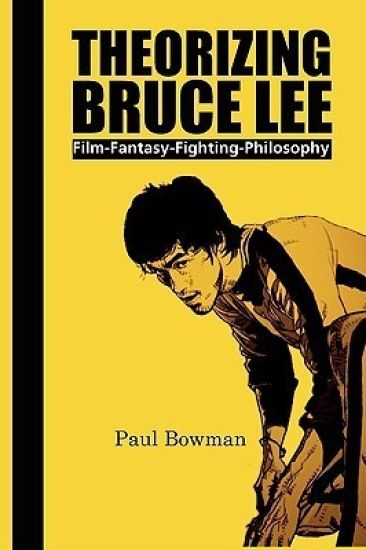
Theorizing Bruce Lee

Theorizing Bruce Lee

Paul Bowman

Editions Rodopi B.V.
2010
nidottu
Theorizing Bruce Lee is a unique work, which uses cultural theory to analyse and assess Bruce Lee, and uses Bruce Lee to analyse and assess cultural theory. Lee is shown to be a major ‘event’ in both global film and global popular culture – a figure who’s central to many intercultural encounters, texts, and practices. Many key elements of film and cultural theory are employed to theorize Bruce Lee, and Lee is shown to be a complex – and consequential – multimedia, multidisciplinary and multicultural phenomenon. Theorizing Bruce Lee is essential reading for anyone interested in Bruce Lee in popular culture and as an object of academic study.