Kirjojen hintavertailu. Mukana 12 016 292 kirjaa ja 12 kauppaa.

Kirjahaku

Etsi kirjoja tekijän nimen, kirjan nimen tai ISBN:n perusteella.

5 kirjaa tekijältä Paul Burstein

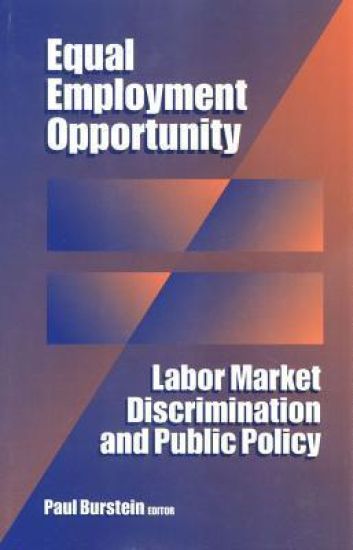
Equal Employment Opportunity

Equal Employment Opportunity

Paul Burstein

AldineTransaction
1994
sidottu
Although equal employment opportunity laws are often at the center of political debate, it has been difficult for students, teachers, and concerned citizens to learn about the controversy over EEO. Contributions to our understanding are scattered, this collection of writings is a broad interdisciplinary introduction to the struggle for EEO and its consequences. No other collection brings together articles on theories of dis-criminations; competing theories about the likely impact of EEO laws; analyses of the laws' impact on women, blacks, and other minorities; and debates about affirmative action.
Equal Employment Opportunity

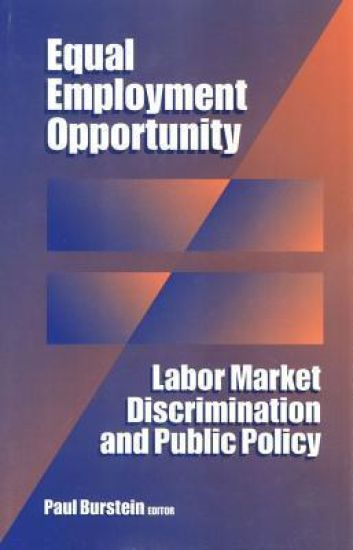
Equal Employment Opportunity

Paul Burstein

AldineTransaction
1994
nidottu
Although equal employment opportunity laws are often at the center of political debate, it has been difficult for students, teachers, and concerned citizens to learn about the controversy over EEO. Contributions to our understanding are scattered, this collection of writings is a broad interdisciplinary introduction to the struggle for EEO and its consequences. No other collection brings together articles on theories of dis-criminations; competing theories about the likely impact of EEO laws; analyses of the laws' impact on women, blacks, and other minorities; and debates about affirmative action.
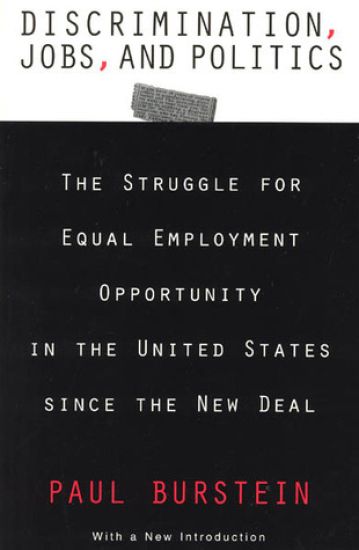
Discrimination, Jobs, and Politics

Discrimination, Jobs, and Politics

Paul Burstein

University of Chicago Press
1998
nidottu
At a time when many leading civil rights officials are obfuscating the history of civil rights in the USA, and undermining enforcement methods which have proved effective, this study challenges conventional wisdom on the genesis of civil rights legislation in the US. It seeks to advance our knowledge of the post-New Deal civil rights debates, using empirical, quantitative data to answer some of the many questions concerning the relative impact of movements, public opinion, and political leadership on civil rights-related legislation.
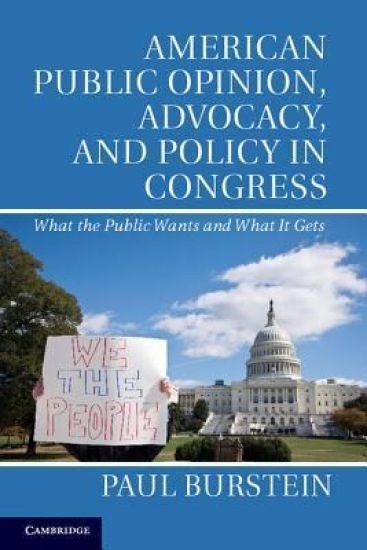
American Public Opinion, Advocacy, and Policy in Congress

American Public Opinion, Advocacy, and Policy in Congress

Paul Burstein

Cambridge University Press
2014
sidottu
Between one election and the next, members of Congress introduce thousands of bills. What determines which become law? Is it the public? Do we have government 'of the people, by the people, for the people?' Or is it those who have the resources to organize and pressure government who get what they want? In the first study ever of a random sample of policy proposals, Paul Burstein finds that the public can get what it wants - but mainly on the few issues that attract its attention. Does this mean organized interests get what they want? Not necessarily - on most issues there is so little political activity that it hardly matters. Politics may be less of a battle between the public and organized interests than a struggle for attention. American society is so much more complex than it was when the Constitution was written that we may need to reconsider what it means, in fact, to be a democracy.
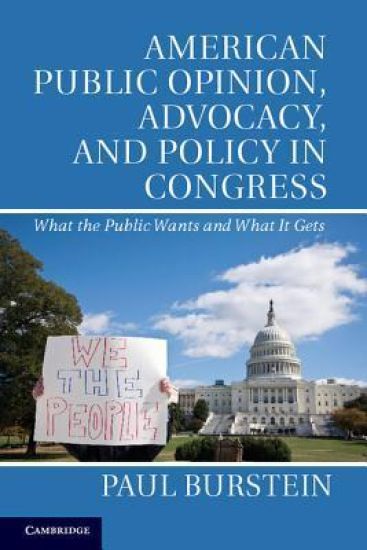
American Public Opinion, Advocacy, and Policy in Congress

American Public Opinion, Advocacy, and Policy in Congress

Paul Burstein

Cambridge University Press
2014
pokkari
Between one election and the next, members of Congress introduce thousands of bills. What determines which become law? Is it the public? Do we have government 'of the people, by the people, for the people?' Or is it those who have the resources to organize and pressure government who get what they want? In the first study ever of a random sample of policy proposals, Paul Burstein finds that the public can get what it wants - but mainly on the few issues that attract its attention. Does this mean organized interests get what they want? Not necessarily - on most issues there is so little political activity that it hardly matters. Politics may be less of a battle between the public and organized interests than a struggle for attention. American society is so much more complex than it was when the Constitution was written that we may need to reconsider what it means, in fact, to be a democracy.