Kirjojen hintavertailu. Mukana 11 717 486 kirjaa ja 12 kauppaa.

Kirjahaku

Etsi kirjoja tekijän nimen, kirjan nimen tai ISBN:n perusteella.

11 kirjaa tekijältä Paul Bushkovitch

Religion and Society in Russia

Religion and Society in Russia

Paul Bushkovitch

Oxford University Press Inc
1992
sidottu
Bushkovitch's book traces the evolution of religious attitudes in this important transitional period in Russian history. The sixteenth and seventeenth centuries in Russia saw the gradual decline of monastic spirituality, the rise of miracle cults, and ultimately the birth of a more personal and private faith that stressed morality instead of public rituals. Bushkovitch not only skilfully reconstructs these rapid and fundamental changes in the Russian religious experience, but also shows how they were influenced by Western European religious ideas and how they foreshadowed the secularization of Russian society usually credited to Peter the Great.
Peter the Great

Peter the Great

Paul Bushkovitch

Cambridge University Press
2007
pokkari
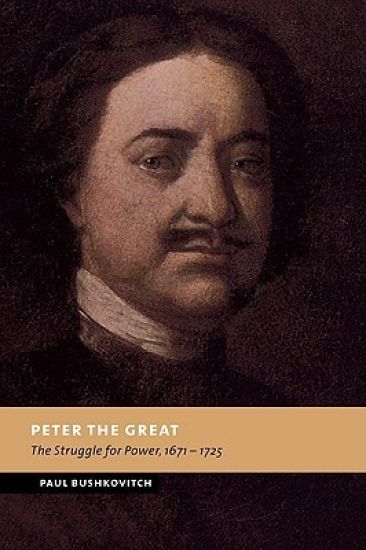
A narrative of the fifty years of political struggles at the Russian court, 1671–1725. This book shows how Peter the Great was not the all-powerful tsar working alone to reform Russia, but that he colluded with powerful and contentious aristocrats in order to achieve his goals. After the early victory of Peter's boyar supporters in the 1690s, Peter turned against them and tried to rule through favourites - an experiment which ended in the establishment of a decentralized 'aristocratic' administration, followed by an equally aristocratic Senate in 1711. The aristocrats' hegemony came to an end in the wake of the affair of Peter's son, Tsarevich Aleksei, in 1718. After that moment Peter ruled through a complex group of favourites, a few aristocrats and appointees promoted through merit, and carried out his most long-lasting reforms. The outcome was a new balance of power at the centre and a new, European, conception of politics.
The Merchants of Moscow 1580–1650

The Merchants of Moscow 1580–1650

Paul Bushkovitch

Cambridge University Press
2008
pokkari
Using evidence drawn from archives in Moscow, Professor Bushkovitch challenges conventional analyses of trade and industry during this period. The Merchants of Moscow 1580–1650 examines the formation of the merchant class in Russia before the reforms of Peter the Great, focusing on the role of the Muscovite merchants in the establishment of foreign and domestic trade and commerce. Bushkovitch places the merchants of Moscow within the context of Eastern Europe, a region whose economic complexities and contradictions make it a more apt standard for comparison than the Western European nations against whom the merchants are usually measured. By shifting his focus to Eastern Europe, Bushkovitch is able to re-evaluate their position in the state and other branches of the Russian economy as well as their role in international commerce. Rather than presenting them as debilitated by an absolutist state whose demands depleted their time and wealth, Bushkovitch finds that the merchants of Moscow were a stable and prosperous group whose activities were central to the emerging Russian economy and whose relations with the state formed a contradictory pattern of dependence and independence.
A Concise History of Russia

A Concise History of Russia

Paul Bushkovitch

Cambridge University Press
2011
pokkari
Accessible to students, tourists and general readers alike, this book provides a broad overview of Russian history since the ninth century. Paul Bushkovitch emphasizes the enormous changes in the understanding of Russian history resulting from the end of the Soviet Union in 1991. Since then, new material has come to light on the history of the Soviet era, providing new conceptions of Russia's pre-revolutionary past. The book traces not only the political history of Russia, but also developments in its literature, art and science. Bushkovitch describes well-known cultural figures, such as Chekhov, Tolstoy and Mendeleev, in their institutional and historical contexts. Though the 1917 revolution, the resulting Soviet system and the Cold War were a crucial part of Russian and world history, Bushkovitch presents earlier developments as more than just a prelude to Bolshevik power.
Peter the Great

Peter the Great

Paul Bushkovitch

Cambridge University Press
2001
sidottu
A narrative of the fifty years of political struggles at the Russian court, 1671–1725. This book shows how Peter the Great was not the all-powerful tsar working alone to reform Russia, but that he colluded with powerful and contentious aristocrats in order to achieve his goals. After the early victory of Peter's boyar supporters in the 1690s, Peter turned against them and tried to rule through favourites - an experiment which ended in the establishment of a decentralized 'aristocratic' administration, followed by an equally aristocratic Senate in 1711. The aristocrats' hegemony came to an end in the wake of the affair of Peter's son, Tsarevich Aleksei, in 1718. After that moment Peter ruled through a complex group of favourites, a few aristocrats and appointees promoted through merit, and carried out his most long-lasting reforms. The outcome was a new balance of power at the centre and a new, European, conception of politics.
A Concise History of Russia

A Concise History of Russia

Paul Bushkovitch

Cambridge University Press
2011
sidottu
Accessible to students, tourists and general readers alike, this book provides a broad overview of Russian history since the ninth century. Paul Bushkovitch emphasizes the enormous changes in the understanding of Russian history resulting from the end of the Soviet Union in 1991. Since then, new material has come to light on the history of the Soviet era, providing new conceptions of Russia's pre-revolutionary past. The book traces not only the political history of Russia, but also developments in its literature, art and science. Bushkovitch describes well-known cultural figures, such as Chekhov, Tolstoy and Mendeleev, in their institutional and historical contexts. Though the 1917 revolution, the resulting Soviet system and the Cold War were a crucial part of Russian and world history, Bushkovitch presents earlier developments as more than just a prelude to Bolshevik power.
Succession to the Throne in Early Modern Russia

Succession to the Throne in Early Modern Russia

Paul Bushkovitch

Cambridge University Press
2021
sidottu
This revisionist history of succession to the throne in early modern Russia, from the Moscow princes of the fifteenth century to Peter the Great, argues that legal primogeniture never existed: the monarch designated an heir that was usually the eldest son only by custom, not by law. Overturning generations of scholarship, Paul Bushkovitch persuasively demonstrates the many paths to succession to the throne, where designation of the heir and occasional elections were part of the relations of the monarch with the ruling elite, and to some extent the larger population. Exploring how the forms of designation evolved over the centuries as Russian culture changed, and in the later seventeenth century made use of Western practices, this study shows how, when Peter the Great finally formalized the custom in 1722 by enshrining the power of the tsar to designate in law, this was not a radical innovation but was in fact consistent with the experience of the previous centuries.
Succession to the Throne in Early Modern Russia

Succession to the Throne in Early Modern Russia

Paul Bushkovitch

Cambridge University Press
2024
pokkari
This revisionist history of succession to the throne in early modern Russia, from the Moscow princes of the fifteenth century to Peter the Great, argues that legal primogeniture never existed: the monarch designated an heir that was usually the eldest son only by custom, not by law. Overturning generations of scholarship, Paul Bushkovitch persuasively demonstrates the many paths to succession to the throne, where designation of the heir and occasional elections were part of the relations of the monarch with the ruling elite, and to some extent the larger population. Exploring how the forms of designation evolved over the centuries as Russian culture changed, and in the later seventeenth century made use of Western practices, this study shows how, when Peter the Great finally formalized the custom in 1722 by enshrining the power of the tsar to designate in law, this was not a radical innovation but was in fact consistent with the experience of the previous centuries.
Peter the Great

Peter the Great

Paul Bushkovitch

Rowman Littlefield
2016
sidottu
Centuries after he ruled Russia from 1689 to 1725, Peter the Great remains one of the most revered and enigmatic leaders in world history. Now in a new edition, this penetrating study by noted Yale historian Paul Bushkovitch casts new light on Peter and his times, and demonstrates why it is impossible to comprehend the later course of Russian history without first grasping Peter's profound influence. Bushkovitch illustrates how Peter, during his thirty-six years as tsar, transformed his country into a modern nation—he strengthened the state, reorganized the army, established a navy, and conquered new territories. In addition to these momentous achievements, Peter changed the face of the Russian character by introducing European culture, scientific innovations, and political thought to Russia. His influence ultimately paved the way for liberalism, Western-style nationalism, and communism. In the end, neither his contemporaries nor generations of future historians can agree on how Peter should be remembered: was he a heroic reformer who brought Russia into the modern age, or a violent despot who valued the ideas of foreigners over Russian heritage?
Peter the Great

Peter the Great

Paul Bushkovitch

Rowman Littlefield
2016
nidottu
Centuries after he ruled Russia from 1689 to 1725, Peter the Great remains one of the most revered and enigmatic leaders in world history. Now in a new edition, this penetrating study by noted Yale historian Paul Bushkovitch casts new light on Peter and his times, and demonstrates why it is impossible to comprehend the later course of Russian history without first grasping Peter's profound influence. Bushkovitch illustrates how Peter, during his thirty-six years as tsar, transformed his country into a modern nation—he strengthened the state, reorganized the army, established a navy, and conquered new territories. In addition to these momentous achievements, Peter changed the face of the Russian character by introducing European culture, scientific innovations, and political thought to Russia. His influence ultimately paved the way for liberalism, Western-style nationalism, and communism. In the end, neither his contemporaries nor generations of future historians can agree on how Peter should be remembered: was he a heroic reformer who brought Russia into the modern age, or a violent despot who valued the ideas of foreigners over Russian heritage?
Trojanskaja vojna v Rossii XVI stoletija

Trojanskaja vojna v Rossii XVI stoletija

Paul Bushkovitch

Novoe literaturnoe obozrenie
2026
sidottu
Novaja rabota izvestnogo amerikanskogo istorika-slavista Pola Bushkovicha posvjaschena kulturno-istoricheskomu kontekstu pojavlenija v Rossii XVI veka perevoda "Istorii o razrushenii Troi", napisannoj sitsilijtsem Gvido delle Kolonne v XIII stoletii. Sredi chitatelej etogo truda, osnovannogo na sjuzhetakh antichnoj literatury i mifologii, byl tsar Ivan IV: v chastnosti, on upominaetsja v pervom poslanii k politicheskomu opponentu - knjazju Andreju Kurbskomu. Polnyj tekst "Istorii" byl vposledstvii vkljuchen v Litsevoj letopisnyj svod, odin iz izvestnejshikh literaturnykh pamjatnikov pozdnesrednevekovoj Rossii. Avtor knigi issleduet, kak sozdavalas "Istorija" v Italii i gotovilis ee perevody v Novgorode i Moskve. Pojavlenie perevoda etogo sochinenija v Moskovskom gosudarstve simvolizirovalo novyj vazhnyj moment v istorii religioznoj kultury dopetrovskoj Rusi, svjazannyj s apropriatsiej kanonov svetskoj literatury zapadnogo Srednevekovja. Pol Bushkovich - amerikanskij istorik-slavist, professor. Perevod s anglijskogo Seregina Anna