Kirjojen hintavertailu. Mukana 12 404 903 kirjaa ja 12 kauppaa.

Kirjahaku

Etsi kirjoja tekijän nimen, kirjan nimen tai ISBN:n perusteella.

49 kirjaa tekijältä Paul Celan

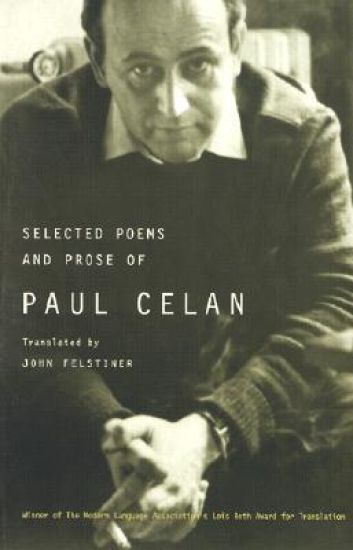
Selected Poems and Prose of Paul Celan
Paul Celan was born in 1920 in the East European province of Bukovina. Soon after his parents, German-speaking Jews, had perished at the hands of the Nazis, Celan wrote "Todesfuge" ("Deathfugue"), the most compelling poem to emerge from the Holocaust. Self-exiled in Paris, for twenty-five years Celan continued writing in his German mother tongue, although it had "passed through the thousand darknesses of deathbringing speech." His writing purges and remakes that language, often achieving a hope-struck radiance never before seen in modern poetry. But in 1970, his psychic wounds unhealed, Celan drowned himself in the Seine. This landmark volume includes youthful lyrics, unpublished poems, and prose. All poems appear in the original and in translation on facing pages. John Felstiner's translations stem from a twenty-year immersion in Celan's life and work. John Bayley wrote in the New York Review of Books, "Felstiner translates ... brilliantly."
Paul Celan

Paul Celan

Paul Celan

University of California Press
2005
pokkari
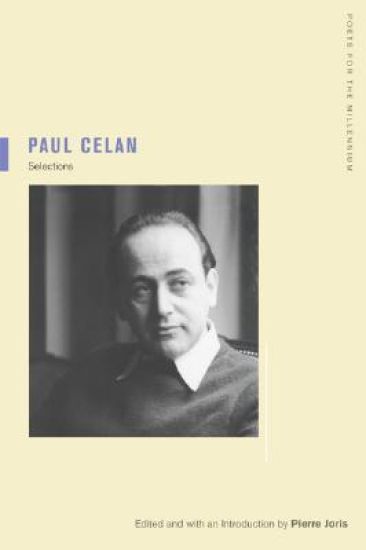
The best introduction to the work of Paul Celan, this anthology offers a broad collection of his writing in unsurpassed English translations along with a wealth of commentaries by major writers and philosophers. The present selection is based on Celan's own 1968 selected poems, though enlarged to include both earlier and later poems, as well as two prose works, The Meridian, Celan's core statement on poetics, and the narrative Conversation in the Mountains. This volume also includes letters to Celan's wife, the artist Gisele Celan-Lestrange; to his friend Erich Einhorn; and to Rene Char and Jean-Paul Sartre - all appearing here for the first time in English.
Conversation in the Mountains: Collected Prose of Paul Celan

Conversation in the Mountains: Collected Prose of Paul Celan

Paul Celan

NEW DIRECTIONS PUBLISHING CORPORATION
2026
nidottu
"I am supposed to tell you some of the words I heard deep down in the sea where there is much silence and so much happens." So begins the first text in this indispensable volume, which includes: "Edgar Jen and the Dream about the Dream," "Backlight," "The Meridian," and the piece which Celan himself deemed his most important, "Conversation in the Mountains." George Steiner wrote in The New Yorker that Celan's prose was "transforming the landscape of poetic theory and of the philosophy of language." This collection of essays, speeches, letters, as well as notes on Alexander Blok and Osip Mandelstam is a great gift to readers and to anyone who wishes to understand the twentieth century. As the philosopher Hans-Georg Gadamer wrote, "Paul Celan's poems reach us, but we miss them." Perhaps through these rare prose texts we may find the key to what we missed.
Poems of Paul Celan

Poems of Paul Celan

Paul Celan; Michael Hamburger

Persea Books Inc
2002
pokkari
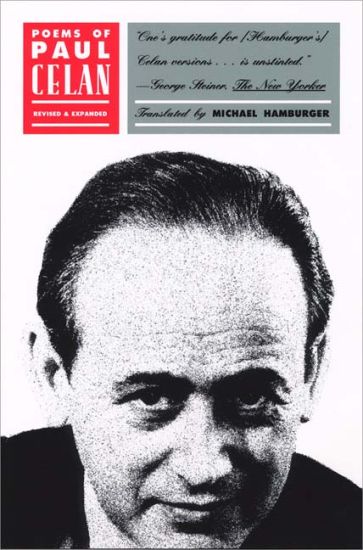
Paul Celan is one the twentieth century's most essential poets, and twenty-two years after its publication, Poems of Paul Celan continues to be the single truest access for English-speakers to this poet's work. This new edition adds ten more poems and a significant essay, "On Translating Celan" by Michael Hamburger.
Paul Celan, Nelly Sachs

Paul Celan, Nelly Sachs

Paul Celan; Nelly Sachs

Sheep Meadow Press,U.S.
1998
sidottu
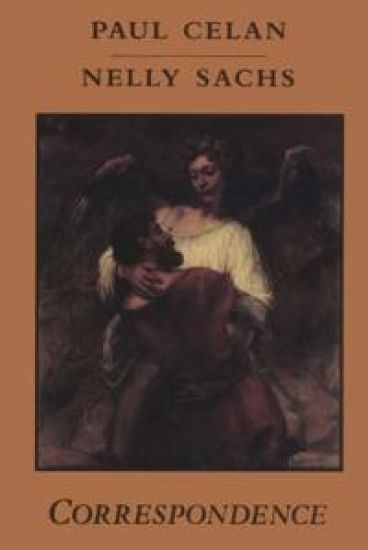
Here are the letters between Nelly Sachs (1891-1970), recipient of the 1966 Nobel Prize for Literature, and the great German-speaking poet Paul Celan (1920-1970). Their correspondence lasted from 1954 until Celan's death by suicide. Sachs died the day Celan was buried. 'What Paul Celan once said of his mother tongue holds as well for Nelly Sachs: 'Reachable, near and not lost, there remained amid the losses this one thing: language. It, the language, remained, not lost, yes in spite of everything. But it had to pass through its own answerlessness, pass through frightful muting, pass through the thousand darknesses of death bringing speech'. Sachs put it this way: 'The frightful experiences that brought me to the edge of death and darkness are my tutors. If I couldn't have written, I wouldn't have survived...my metaphors are my wounds'. From the Introduction.
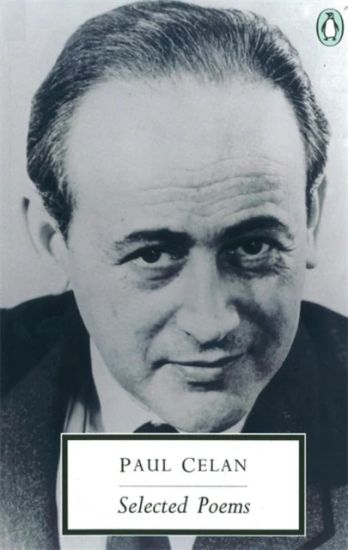
Selected Poems

Selected Poems

Paul Celan

Penguin Classics
1996
pokkari
One of the major twentieth-century European poets, Paul Celan wrote poetry of exceptional linguistic brilliance and intensity drawn from his experiences, particularly of the war years and the loss of his parents in the death camps. In his verse he sought to express 'not only what the experience felt like, but also a sense of living, with comprehension, inside the experience'. WINNER OF THE FIRST EUROPEAN TRANSLATION PRIZE
Memory Rose Into Threshold Speech: The Collected Earlier Poetry: A Bilingual Edition
Memory Rose into Threshold Speech gathers the poet Paul Celan's first four books, written between 1952 and 1963, which established his reputation as the major post-World War II German-language poet. Celan, a Bukovinian Jew who lived through the Holocaust, created work that displays both great lyric power and an uncanny ability to pinpoint totalitarian cultural and political tendencies. His quest, however, is not only reflective: there is in Celan's writing a profound need and desire to create a new, inhabitable world and a new language for it. In Memory Rose into Threshold Speech, Celan's reader witnesses his poetry, which starts lush with surrealistic imagery, become gradually pared down; its syntax tightens and his trademark neologisms and word formations increase toward a polysemic language of great accuracy that tries, in the poet's own words, "to measure the area of the given and the possible." Translated by the prize-winning poet and translator Pierre Joris, this bilingual edition follows the 2014 publication of Breathturn into Timestead, Celan's collected later poetry. All nine volumes of Celan's poetry are now available in Joris's carefully crafted translations, accompanied here by a new introduction and extensive commentary. The four volumes in this edition show the flowering of one of the major literary figures of the last century. This volume collects Celan's first four books: Mohn und Ged chtnis (Poppy and Memory), Von Schwelle zu Schwelle (Threshold to Threshold), Sprachgitter (Speechgrille), and Die Niemandsrose (NoOnesRose).
Memory Rose Into Threshold Speech: The Collected Earlier Poetry: A Bilingual Edition
Memory Rose into Threshold Speech gathers the poet Paul Celan's first four books, written between 1952 and 1963, which established his reputation as a major post-World War II German-language poet. Celan, a Bukovinian Jew who lived through the Holocaust, created work that displays both great lyric power and an uncanny ability to pinpoint totalitarian cultural and political tendencies. His quest, however, is not only reflective: there is in Celan's writing a profound need and desire to create a new, inhabitable world and a new language for it. In Memory Rose into Threshold Speech, Celan's reader witnesses his poetry, which starts lush with surrealistic imagery, become gradually pared down; its syntax tightens and his trademark neologisms and word formations increase toward a polysemic language of great accuracy that tries, in the poet's own words, "to measure the area of the given and the possible." Translated by the prize-winning poet and translator Pierre Joris, this bilingual edition follows the 2014 publication of Breathturn into Timestead, Celan's collected later poetry. All nine volumes of Celan's poetry are now available in Joris's carefully crafted translations, accompanied here by a new introduction, as well as extensive commentary by Joris and Barbara Wiedemann. The four volumes in this edition show the flowering of one of the major literary figures of the last century. This volume collects Celan's first four books: Mohn und Ged chtnis (Poppy and Memory), Von Schwelle zu Schwelle (Threshold to Threshold), Sprachgitter (Speechgrille), and Die Niemandsrose (NoOnesRose).
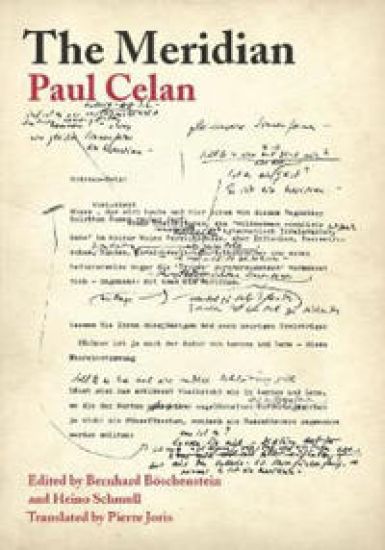
The Meridian

The Meridian

Paul Celan

Stanford University Press
2011
pokkari
Originally presented as a speech to the German Academy for Language and Poetry on the occasion of Celan's acceptance of the Georg Büchner Prize for literature, The Meridian is one of, if not the most important poetological statement of the second half of the twentieth century. Much more than a personal statement or occasional piece, it is a meditation on the state of poetry and art in general and a rigorous attempt to account for what poetry is, can, and must be after the Holocaust. This definitive historico-critical edition, available for the first time in English, presents not only the first drafts, but also a vast array of notes and preparatory work and a brief essay on Osip Mandelstam, all of which work to expand the field of reference of Celan's manifesto and reveal its true scope. Rich commentaries clarify Celan's notes to authors as diverse as Leibniz, Scheler, Kafka, Hofmannsthal, Husserl, Pascal, Valéry, Heidegger, and others. Listen to an interview about Celan's Meridian with translator Pierre Joris on the radio program Cross Cultural Poetics, hosted by poet and professor Leonard Schwartz at writing.upenn.edu/pennsound/x/XCP.php#253.
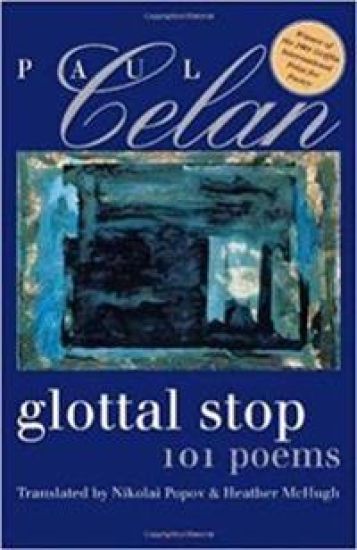
Glottal Stop

Glottal Stop

Paul Celan

Wesleyan University Press
2004
nidottu
Paul Celan s widely recognized as the greatest and most studied post-war European poet. At once demanding and highly rewarding, his poetry dominates the field in the aftermath of the Holocaust. This selection of poems, now available in paper for the first time, is comprised of previously untranslated work, opening facets of Celan's oeuvre never before available to readers of English. These translations, called "perfect in language, music, and spirit" by Yehuda Amichai, work from the implied premise of what has been called Intention auf die Sprache, delivering the spirit of Celan's work-his dense multilingual resonances, his brutal broken music, syntactic ruptures and dizzying wordplay.
Breathturn

Breathturn

Paul Celan

Green Integer
2006
pokkari
A German-English Bilingual Edition.Breathturn (German: Atemwende) is the first of Paul Celan's three major poetry books before his death by suicide in 1970. This book brilliantly reveals the "Wende" or turning point of his writing.Translator Pierre Joris won the 2004 PEN Translation Award for Paul Celan's Lightduress.
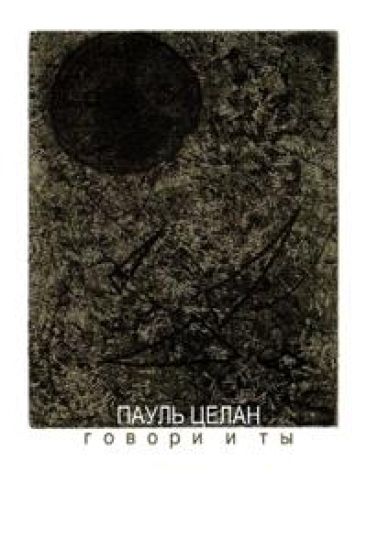
Speak you, too. Translated by Anna Glazova

Speak you, too. Translated by Anna Glazova

Paul Celan

Ailuros Publishing
2012
pokkari
Пауль Целан. Говори и ты / Составление, перевод с немецкого и комментарии Анны Глазовой. - New York, Ailuros Publishing, 2012. - 115 с. ISBN 978-0-9838762-9-8 Собрание избранных стихотворений классика европейской поэзии ХХ века Пауля Целана в переводах современного русского поэта Анны Глазовой. В оформлении книги и обложки использована графика Жизель Целан-Лестранж. Редактор Елена Сунцова. Бумажная версия книги доставляется в любую точку мира. PDF книги доступен для скачивания бесплатно на сайте издательства http: //www.elenasuntsova.com/celan
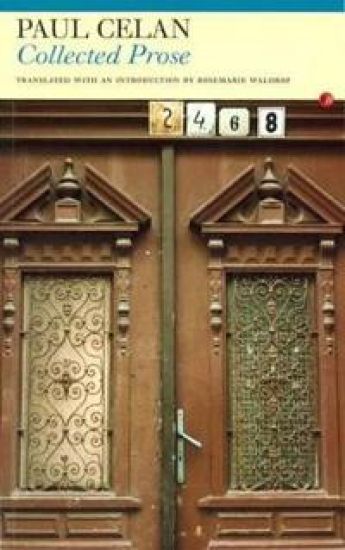
Collected Prose

Collected Prose

Paul Celan

Fyfield Books
2003
nidottu
Paul Celan (1920-1970) stands as one of the greatest post-war European poets. Celan's prose is as thought-provoking as, and less familiar than, his poetry. The writings and aphorisms on poetry and art illuminate the sources of his language.
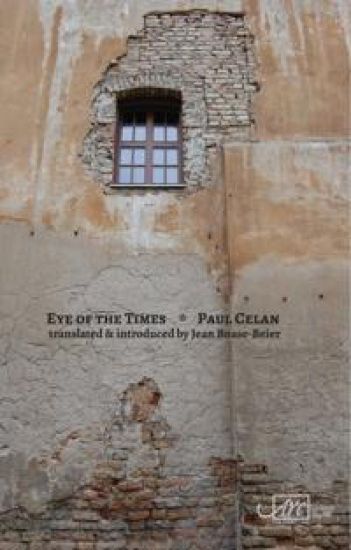
Eye of the Times

Eye of the Times

Paul Celan

Arc Publications
2021
lehtivihko, moniste
It is generally accepted that Paul Celan is a notoriously ‘difficult’ poet to understand, yet this small collection, with an introduction by a leading expert on Holocaust poetry, and with each of the ten poems accompanied by a brief note which acts as a contextual orientation for the reader, is an excellent starting-point for anyone who is not familiar with his poems.
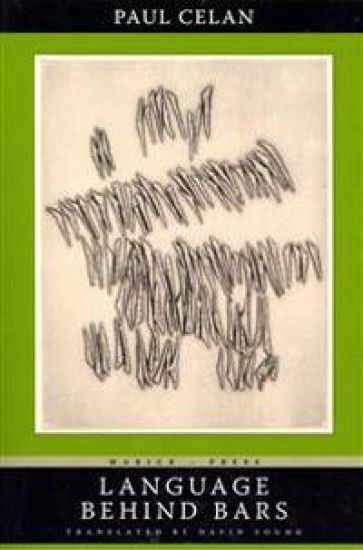
Language Behind Bars

Language Behind Bars

Paul Celan

Marick Press
2012
nidottu
Celan's English language readers, and readers to come, will be deeply grateful for this new translation of his third book. I admire David Young's clear and respectful introduction, generous to his colleagues in Celan translation, and helpful in providing a broad context for this poetry; and I admire, especially, his faithfulness in spirit as he becomes a "water-diviner" of Celan's work. Young is a subtle, trusting reader of the ways this poet of poets took - as he had to - to create a completely new poetry. - Jean Valentine