Kirjojen hintavertailu. Mukana 11 244 527 kirjaa ja 12 kauppaa.

Kirjahaku

Etsi kirjoja tekijän nimen, kirjan nimen tai ISBN:n perusteella.

19 kirjaa tekijältä Paul Clements

Rawlsian Political Analysis

Rawlsian Political Analysis

Paul Clements

University of Notre Dame Press
2012
nidottu
In Rawlsian Political Analysis: Rethinking the Microfoundations of Social Science, Paul Clements develops a new, morally grounded model of political and social analysis as a critique of and improvement on both neoclassical economics and rational choice theory. What if practical reason is based not only on interests and ideas of the good, as these theories have it, but also on principles and sentiments of right? The answer, Clements argues, requires a radical reorientation of social science from the idea of interests to the idea of social justice. According to Clements, systematic weaknesses in neoclassical economics and rational choice theory are due to their limited model of choice. According to such theories in the utilitarian tradition, all our practical decisions aim to maximize the satisfaction of our interests. These neo-utilitarian approaches focus on how we promote our interests, but Clements argues, our ideas of right, cognitively represented in principles, contribute independently and no less fundamentally to our practical decisions. The most significant challenge to utilitarianism in the last half century is found in John Rawls's Theory of Justice and Political Liberalism, in which Rawls builds on Kant's concept of practical reason. Clements extends Rawls's moral theory and his critique of utilitarianism by arguing for social analysis based on the Kantian and Rawlsian model of choice. To illustrate the explanatory power of his model, he presents three detailed case studies: a program analysis of the Grameen Bank of Bangladesh, a political economy analysis of the causes of poverty in the Indian state of Bihar, and a problem-based analysis of the ethics and politics of climate change. He concludes by exploring the broad implications of social analysis grounded in a concept of social justice.
The Outsider, Art and Humour

The Outsider, Art and Humour

Paul Clements

Routledge
2020
sidottu
This cross-disciplinary book, situated on the periphery of culture, employs humour to better comprehend the arts, the outsider and exclusion, illuminating the ever-changing social landscape, the vagaries of taste and limits of political correctness. Each chapter deals with specific themes and approaches – from the construct of outsider and complexity of humour, to Outsider Art and spaces – using various theoretical and analytical methods. Paul Clements draws on humour, especially from visual arts and culture (and to a lesser extent literature, film, music and performance), as a tool of ridicule, amongst other discourses, employed by the powerful but also as a weapon to satirize them. These ambiguous representations vary depending on context, often assimilated then reinterpreted in a game of authenticity that is poignant in a world of facsimile and 'fake news'. The humour styles of a range of artists are highlighted to reveal the fluidity and diversity of meaning which challenges expectations and at its best offers resistance and, crucially, a voice for the marginal. This book will be of particular interest to scholars in art history, cultural studies, fine art, humour studies and visual culture.
The Creative Underground

The Creative Underground

Paul Clements

Routledge
2019
nidottu
Paul Clements champions the creative underground and expressions of difference through visionary avant-garde and resistant ideas. This is represented by an admixture of utopian literature, manifestos and lifestyles which challenge normality and attempt to reinvent society, as practiced for example, by radicals in bohemian enclaves or youth subcultures. He showcases a range of 'art' and participatory cultural practices that are examined sociopolitically and historically, employing key theoretical ideas which highlight their contribution to aesthetic thinking, political ideology, and public discourse. A reevaluation of the arts and progressive modernism can reinvigorate culture through active leisure and post-work possibilities beyond materialism and its constraints, thereby presenting alternatives to established understandings and everyday cultural processes. The book teases out the difficult relationship between the individual, culture and society especially in relation to autonomy and marginality, while arguing that the creative underground is crucial for a better world, as it offers enchantment, vitality and hope.
Charles Bukowski, Outsider Literature, and the Beat Movement
This book uses cultural and psycho-social analysis to examine the beat writer Charles Bukowski and his literature, focusing on representations of the anti-hero rebel and outsider. Clements considers the complexities, ambiguities, and contradictions represented by the author and his work, exploring Bukowski’s visceral writing of the cultural ordinary and everyday self-narrative. The study considers Bukowski’s apolitical, gendered, and working-class stance to understand how the writer represents reality and is represented with regards to counter-cultural literature. In addition, Clements provides a broader socio-cultural focus that evaluates counterculture in relation to the American beat movement and mythology, highlighting the male cool anti-hero. The cultural practices and discourses utilized to situate Bukowski include the individual and society, outsiderdom, cult celebrity, fan embodiment, and disneyfication, providing a greater understanding of the beat generation and counterculture literature.
Tell Them We Were Rising

Tell Them We Were Rising

Paul Clements

Clearview Press Inc
2022
sidottu
Tell Them We Were Rising is a collection of biographies describing various individuals of color from Nashville and the surrounding region, who experienced slavery and went on to live compelling lives. Along with details of their family backgrounds, their struggles and triumphs are often related in their own words. A series of intimate and vivid accounts, extending from slavery to what were once the fleeting possibilities of Reconstruction, reveal the nuances of slavery and race from the perspective of individual lives. There is the history of a girl who was able to save her family by bearing the children of her former master, There are the writings of a young woman who used her musical ability to help establish a university, and the remarkable narrative written by an old man about the plantation where he had lived as a boy. There is the small, uneducated man who eventually led hundreds of people to what he saw as a land of greater opportunity, and the young man who escaped brutality and became a leading figure in the Underground Railroad. There is the man who was brought from Africa to America as a slave, and who ultimately gave rise to generations of architects and engineers. There is the family that included a betrayed West Point cadet, a notable government official, and individuals who found success in a wide range of different arenas. And along with an educator who taught black children to read and write long before it was legal, there is a beloved and iconic physician, there are dynamic businessmen, and there are ministers who worked tirelessly on behalf of their community. Taken together, the arcs of those lives illuminate a period that is often so generalized that it becomes difficult to see. Those whose voices are heard in Tell Them We Were Rising not only talk about curse of slavery, and about Reconstruction and Jim Crow, they speak about the journey they were on, and the destination they expected their people to eventually reach.
Jan Morris

Jan Morris

Paul Clements

University of Wales Press
1998
nidottu
This is the first full-length study of Jan Morris, one of Britain's foremost travel essayist and popular historians. It takes a critical look at a unique writer who after spending more than forty years as a man, underwent a sex-change in the 1970s and became a woman. The book outlines Morris's early life and education as James. It focuses on his early journalistic career when in 1953, as The Times correspondent, he took part in the British conquest of Everest and scooped the world with his reports. Morris's writings span nearly fifty years. Since the 1950s she has been a major figure in journalism and travel writing in both Britain and the United States. This book examines her writing technique and the style she uses in evoking the spirit of a place. It looks at her talent as a prolific author of romantic and imaginative prose in such books as The Matter of Wales, The Presence of Spain and Venice. As a historian she is best known for her trilogy on the British Empire, Pax Britannica, a powerful reconstruction of the empire and an enduring work of literary history. The book also looks at her most recent work Fifty Years of Europe. For those coming fresh to Jan Morris, it provides an introductory overview of her style - of the unique and peculiar words she uses - and her ability, through descriptive and imaginative prose, to capture the spirit of a place.
Charles Bukowski, Outsider Literature, and the Beat Movement
This book uses cultural and psycho-social analysis to examine the beat writer Charles Bukowski and his literature, focusing on representations of the anti-hero rebel and outsider. Clements considers the complexities, ambiguities, and contradictions represented by the author and his work, exploring Bukowski’s visceral writing of the cultural ordinary and everyday self-narrative. The study considers Bukowski’s apolitical, gendered, and working-class stance to understand how the writer represents reality and is represented with regards to counter-cultural literature. In addition, Clements provides a broader socio-cultural focus that evaluates counterculture in relation to the American beat movement and mythology, highlighting the male cool anti-hero. The cultural practices and discourses utilized to situate Bukowski include the individual and society, outsiderdom, cult celebrity, fan embodiment, and disneyfication, providing a greater understanding of the beat generation and counterculture literature.
Art, Elitism, Authenticity and Liberty

Art, Elitism, Authenticity and Liberty

Paul Clements

TAYLOR FRANCIS LTD
2024
sidottu
This book excavates the depths of creative purpose and meaning-making and the extent to which artist autonomy and authenticity in art is a struggle against psychological conditioning, controlling cultural institutions and markets, key to which is representation.The chapters are underpinned by examples from the arts, and the narrative weaves a trail through a range of conceptualizations that are applied to various aspects of visual culture from mainstream canonical arts to avant-garde, community and public art; social and political art to commercial art; and ethereal art to the popular, edgy and kitsch. The book is wide-ranging and employs various aesthetic, cultural, philosophical, political, psycho-social and sociological debates to highlight the problems and contradictions that an encounter with the arts and creativity engenders.The book will be of interest to scholars working in art history, museum studies, arts management, cultural policy, cultural studies and cultural theory.
The Creative Underground

The Creative Underground

Paul Clements

Routledge
2016
sidottu
Paul Clements champions the creative underground and expressions of difference through visionary avant-garde and resistant ideas. This is represented by an admixture of utopian literature, manifestos and lifestyles which challenge normality and attempt to reinvent society, as practiced for example, by radicals in bohemian enclaves or youth subcultures. He showcases a range of 'art' and participatory cultural practices that are examined sociopolitically and historically, employing key theoretical ideas which highlight their contribution to aesthetic thinking, political ideology, and public discourse. A reevaluation of the arts and progressive modernism can reinvigorate culture through active leisure and post-work possibilities beyond materialism and its constraints, thereby presenting alternatives to established understandings and everyday cultural processes. The book teases out the difficult relationship between the individual, culture and society especially in relation to autonomy and marginality, while arguing that the creative underground is crucial for a better world, as it offers enchantment, vitality and hope.
Spirit of Slavery

Spirit of Slavery

Paul Clements

AuthorHouse
2005
pokkari
We are a nation in process, we have the tools to excel to greater heights. For some of those that confronted our shores in the late 19th and early 20th century, you are either unaware of this country foundation or unconcerned of it's undead roots. There is a spirit in this land that still awaits its resting place.
Shannon Country

Shannon Country

Paul Clements

The Lilliput Press Ltd
2020
nidottu
Paul Clements travels the length of the Shannon in this book. It will be of interest to nature lovers and to tourists, containing a wealth of local knowledge of the area around Shannon, especially useful for ‘staycations’. In August 1939 the Irish travel writer Richard Hayward set out on a road trip to explore the Shannon region just two weeks before the Second World War broke out. His evocative account of that trip, Where the River Shannon Flows, still sought after now by lovers of the river, became a bestseller. Eighty years on, inspired by his work, Paul Clements – author of Romancing Ireland, the biography of Richard Hayward – retraces Hayward’s journey along the river, following – if not strictly in his footsteps – then within the spirit of his trip. From the Shannon Pot in Cavan, 344 kilometres south to the Shannon estuary, his meandering odyssey takes him by car, on foot, and by bike and boat, discovering how the riverscape has changed but is still powerful in symbolism. While he recreates Hayward’s trip, Clements also paints a compelling portrait of twenty-first century Ireland, mingling travel and anecdote with an eye for the natural world. The book gives a voice to stories from water gypsies, anglers, sailors, lock keepers, bog artists, ‘insta’ pilgrims and a water diviner celebrating wisdom through her river songs and illuminates cultural history and identity. Wildlife, nature, and the built heritage, including historic bridges, all play a part. On a quixotic journey Paul Clements produces an intimate portrait of the hidden countryside, its people, topography and wildlife, creating a collective memory map, looking at what has been lost and what has changed. This is the country of the River Shannon that runs through literature, art, cultural history and mythology with a riptide pull on our imagination – a tribute to Ireland’s longest river reflecting the deep vein flowing through the culture of the country.
Wandering Ireland's Wild Atlantic Way

Wandering Ireland's Wild Atlantic Way

Paul Clements

The Collins Press
2016
nidottu
Following the spirit of the world’s longest coastal driving route, Paul Clements sets out to discover the real west of Ireland. Along the way he encounters memorable characters living on the Atlantic edge and presents a unique portrait of their lives. We meet the last man standing on a remote Galway island, listen to the banter at Puck Fair, and hear from a descendant of the original sixteenth-century wild Atlantic woman. Tagging along on his meandering journey is the swashbuckling presence of the Celtic sea god, Manannán Mac Lir. For his first travel book in 1991, Paul hitchhiked the same route. Now retracing his steps along the Wild Atlantic Way – this time by car and bike, on horseback and on foot – he looks at how Ireland has changed and realises everyone still has a story to tell. Laced with wry humour and endless curiosity, this is a distinctive mix of travel writing, social history and nature. Also by this author: `The Height of Nonsense: The Ultimate Irish Road Trip’ Praise for this author: “Stacks of free copies should be sent to all our tourist desks abroad.” – The Irish Times. “For sheer pleasure, nothing I read beat Paul Clements’ `The Height of Nonsense’.” – The Observer. “A compulsive, educational, laugh-out-loud read.” – Sunday Independent. "A fascinating journey around the hidden corners of Ireland." – BBC Radio
Jan Morris

Jan Morris

Paul Clements

Scribe Publications
2022
sidottu
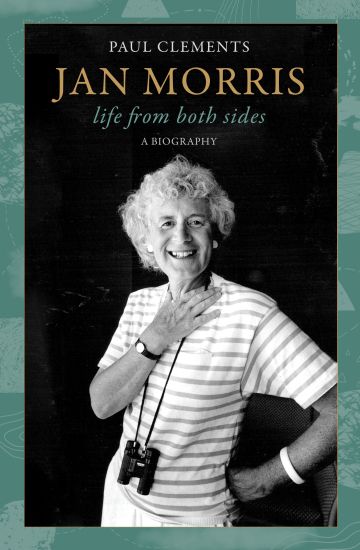
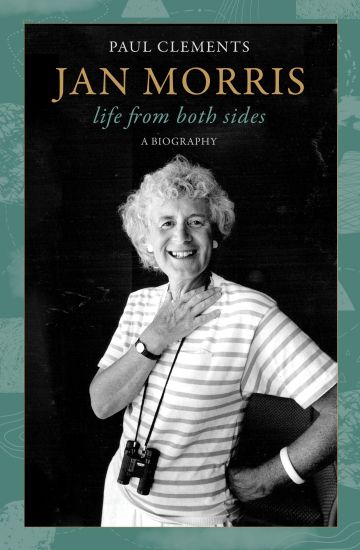
‘A marvel of clarity, fluency, and (Morris’s favourite word in her final days) kindness.’ The Sunday Times ‘A measured and elegant biography that Morris aficionados will find fascinating.’ The Times The first full account of a truly remarkable life. When Jan Morris passed away in 2020, she was considered one of Britain’s best-loved writers. The author of Venice, Pax Britannica, Conundrum, and more than fifty other books, her work was known for its observational genius, lyricism, and humour, and had earned her a passionate readership around the world. Morris’s life was no less fascinating than her oeuvre. Born in 1926, she spent her childhood amidst Oxford’s Gothic beauty and later participated in military service in Italy and the Middle East, before embarking on a career as an internationally fêted foreign correspondent. From being the only journalist to join the first ascent of Mount Everest in 1953 to covering the trial of Adolf Eichmann, Morris’s reportage spanned many of the twentieth century’s defining moments. However, public success masked a private dilemma that was only resolved when she transitioned genders in the 1960s, becoming renowned as a transgender pioneer. She went on to live happily with her wife, Elizabeth, in Wales for another five decades, and never stopped writing and publishing. Here, for the first time, the many strands of Morris’s rich and at times paradoxical life are brought together. Based on a wealth of interviews, archival material, and hitherto unpublished documents, Jan Morris: life from both sides portrays a person of extraordinary talent, curiosity, and joie de vivre.
Jan Morris

Jan Morris

Paul Clements

Scribe Publications
2023
pokkari
‘A marvel of clarity, fluency, and (Morris’s favourite word in her final days) kindness.’ The Sunday Times The first full account of the remarkable life of Jan Morris: writer, soldier, traveller, and trans pioneer. Jan Morris is widely considered one of Britain’s best-loved writers, known for her observational genius, lyricism, and humour. Born in 1926, she spent her childhood amidst Oxford’s Gothic beauty and later participated in military service in Italy and the Middle East, before becoming an internationally fêted foreign correspondent. However, public success masked a private dilemma that was only resolved when she transitioned gender in the late sixties. She went on to live happily with her wife Elizabeth in Wales for another five decades, and never stopped writing and publishing. Here, for the first time, the many strands of Morris’s rich and at times paradoxical life are brought together.
Jan Morris: Life from Both Sides

Jan Morris: Life from Both Sides

Paul Clements

Scribe Us
2022
sidottu
"No matter what topic Morris covered over the course of her nearly eight-decade career--from travel to history to her own transition--she did so with insight, elegance and unflinching honesty." --Stuart Emmrich, Vogue The first ever biography of a world famous author and transgender pioneer. When Jan Morris passed away in 2020, she was considered one of Britain's best-loved writers. The author of Venice, Pax Britannica, Conundrum, and more than fifty other books, her work was known for its observational genius, lyricism, and humor, and had earned her a passionate readership around the world. Morris's life was no less fascinating than her oeuvre. Born James Humphry Morris in 1926, a childhood spent amidst Oxford's Gothic beauty and military service in Italy and the Middle East were followed by a career as an internationally feted foreign correspondent. From being the only journalist to join the first ascent of Mount Everest in 1953 to covering the trial of Adolf Eichmann, Morris's reportage spanned many of the twentieth century's defining moments. However, public success masked a private dilemma that was only resolved when she transitioned genders in the late 1960s, becoming renowned as a transgender pioneer. She went on to live happily with her wife Elizabeth in Wales for another five decades, and never stopped writing and publishing. Here, for the first time, the many strands of Morris's rich life are brought together, portraying a person of extraordinary talent, curiosity, and joie de vivre. Paul Clements is the author of five travel books on Ireland. He knew Jan Morris personally for thirty years. "Perhaps the greatest travel writer of her time." --Matt Schudel, Washington Post "To open a book by Jan Morris is like popping the cork on a bottle of champagne: pop, fizz, then bubbles of delight." --Scott Simon, NPR "Distinctive, elegant, formidable ... Morris made travel seem like the best way to truly be alive in one's skin." --Dwight Garner, New York Times
Holy? Me

Holy? Me

Paul Clements

Cobb Publishing
2024
pokkari
The command to be holy is seen in Scripture many times but so often is viewed as a foreign concept unable to be obtained by humankind. How can people whom the Bible states have "all sinned and fallen short of the glory of God" (Rom 3:23) follow this command?Join Paul as he takes us through a simple study of the Scriptures to show how every Christian can and should strive toward this excellent goal and see how your life can be transformed by your obedience.