Kirjojen hintavertailu. Mukana 11 342 296 kirjaa ja 12 kauppaa.

Kirjahaku

Etsi kirjoja tekijän nimen, kirjan nimen tai ISBN:n perusteella.

19 kirjaa tekijältä Paul Coates
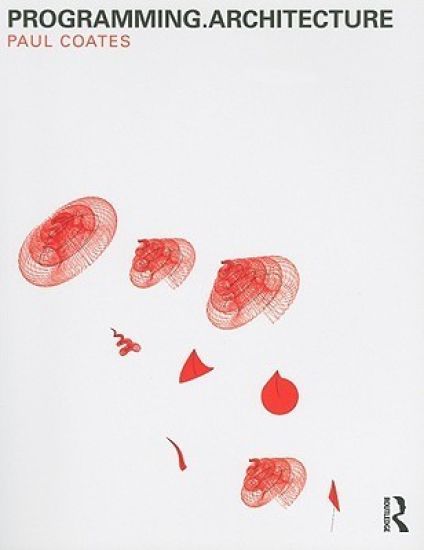
Programming.Architecture

Programming.Architecture

Paul Coates

Routledge
2010
sidottu
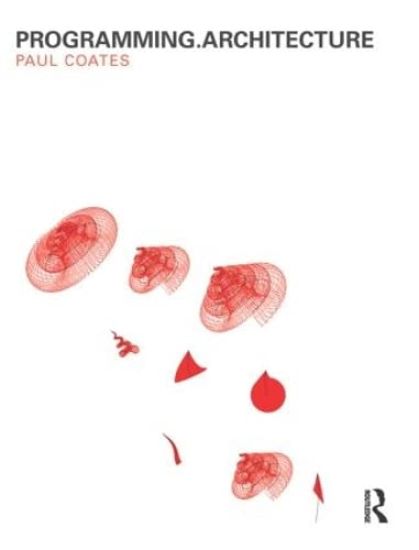
Programming.Architecture is a simple and concise introduction to the history of computing and computational design, explaining the basics of algorithmic thinking and the use of the computer as a tool for design and architecture. Paul Coates, a pioneer of CAAD, demonstrates algorithmic thinking through projects and student work collated through his years of teaching students of computing and design. The book takes a detailed and practical look at what the techniques and philosophy of coding entail, and gives the reader many "glimpses under the hood" in the form of code snippets and examples of algorithms. This is essential reading for student and professional architects and designers interested in how the development of computers has influenced the way we think about, and design for, the built environment.
Programming.Architecture

Programming.Architecture

Paul Coates

Routledge
2010
nidottu
Programming.Architecture is a simple and concise introduction to the history of computing and computational design, explaining the basics of algorithmic thinking and the use of the computer as a tool for design and architecture. Paul Coates, a pioneer of CAAD, demonstrates algorithmic thinking through projects and student work collated through his years of teaching students of computing and design. The book takes a detailed and practical look at what the techniques and philosophy of coding entail, and gives the reader many "glimpses under the hood" in the form of code snippets and examples of algorithms. This is essential reading for student and professional architects and designers interested in how the development of computers has influenced the way we think about, and design for, the built environment.
The Gorgon's Gaze

The Gorgon's Gaze

Paul Coates

Cambridge University Press
2008
pokkari
The Gorgon's Gaze is an interdisciplinary study of recurrent themes in German cinema as it has developed since the early twentieth century. Focusing on pertinent films of the pre- and post-World War II eras, Paul Coates explores the nature of expressionism, which is generally agreed to have ended with the advent of sound cinema, and its persistence in the styles of such modern masters of Film noir as Orson Welles and Ingmar Bergman. In considering the possibility of homologies between the necessary silence of pre-sound cinema and the widespread modernist aspiration to an aesthetic of silence, Coates relates theories of the sublime, the uncanny, and the monstrous to his subject. He also reflects upon problems of representability and the morality of representation of events that took place during the Nazi era.
Film at the Intersection of High and Mass Culture

Film at the Intersection of High and Mass Culture

Paul Coates

Cambridge University Press
2009
pokkari
Film at the Intersection of High and Mass Culture analyses the contradictions and interaction between high and low art, with particular reference to Hollywood and European cinema. Written in the essayistic speculative tradition of Walter Benjamin and Thedor Adorno, this study also includes analyses of several key films of the 1980s. Tracing the boundaries of such genres as film noir, science fiction and melodrama, it demonstrates how these genres were radically expanded by such film makers as Neil Jordan, Chris Marker and Georges Franju. This work also reflects on kitsch, the star system, racial and gender stereotypes and the nature of audience participation. While defining the conditions under which the symbiotic relationship between high and mass culture can be cross-fertilising, the study stresses their inevitably contradictory characteristics.
The Gorgon's Gaze

The Gorgon's Gaze

Paul Coates

Cambridge University Press
1991
sidottu
The Gorgon’s Gaze is an interdisciplinary study of recurrent themes in German cinema as it has developed since the early twentieth century. Focusing on pertinent films of the pre- and post-World War II eras, Paul Coates explores the nature of expressionism, which is generally agreed to have ended with the advent of sound cinema, and its persistence in the styles of such modern masters of Film noir as Orson Welles and Ingmar Bergman. In considering the possibility of homologies between the necessary silence of pre-sound cinema and the widespread modernist aspiration to an aesthetic of silence, Coates relates theories of the sublime, the uncanny, and the monstrous to his subject. He also reflects upon problems of representability and the morality of representation of events that took place during the Nazi era.
Film at the Intersection of High and Mass Culture

Film at the Intersection of High and Mass Culture

Paul Coates

Cambridge University Press
1994
sidottu
At the Intersection of High and Mass Culture analyses the contradictions and interaction between high and low art, with particular reference to Hollywood and European cinema. Written in the essayist, speculative tradition of Walter Benjamin and Theodore Adorno, this study also includes analyses of several key films of the 1980s. Tracing the boundaries of such genres as film noir, science fiction and melodrama, it demonstrates how these genres were radically expanded by such filmmakers as Neil Jordan, Chris Merker and Georges Franju. This work also reflects on kitsch, the star system, racial and gender stereotypes, and the nature of audience participation. While defining the conditions under which the symbiotic relationship between high and mass culture can be cross-fertilising, this study stresses their inevitably contradictory characteristics.
Diary of a Retiree

Diary of a Retiree

Paul Coates

Paul Coates
2025
nidottu
Now before you discard this book thinking to yourself 'Jesus, the diary of a retiree this is going to be as riveting as watching paint dry.' STOP NOW. I can't promise you Mission Impossible or James Bond, but I can make certain guarantees. Within this book you will find pathos, humour, tales of 'derring do' (as they say in Victorian novels), legendary sporting moments, courtroom drama, fighting the systems and I may, or may not, throw in a couple of sizzling gypsies.
Cinema, Religion and the Romantic Legacy

Cinema, Religion and the Romantic Legacy

Paul Coates

Ashgate Publishing Limited
2003
sidottu
Cinema, Religion and the Romantic Legacy surveys the ways in which notions of religion and spirituality have impinged upon the cinema. Cinema is conceived as a post-Romantic form for which religion and spirituality can be unified only problematically. While inspecting many of the well-established themes and topoi of writing on religion and film (such as films about priests and 'Christ-figures') it also seeks to problematize them, focusing primarily upon the issues of religious representation foregrounded by such European directors as Kieslowski and Godard. Coates draws on theories of theologians, philosophers and cultural and literary critics including: Otto, Kant, Schiller and Girard. Addressing the relationship between religion and spirituality from a film studies specialist's perspective, this book offers all those concerned with film, media or religious studies an invaluable examination of artistic interaction with the theological and aesthetic issues of representation and representability. Paul Coates is Reader in Film Studies at the University of Aberdeen, Scotland, and author of many books including: The Gorgon's Gaze (CUP), Film at the Intersection of High and Mass Culture (CUP), The Story of the Lost Reflection (Verso).
Cinema, Religion and the Romantic Legacy

Cinema, Religion and the Romantic Legacy

Paul Coates

TAYLOR FRANCIS LTD
2022
nidottu
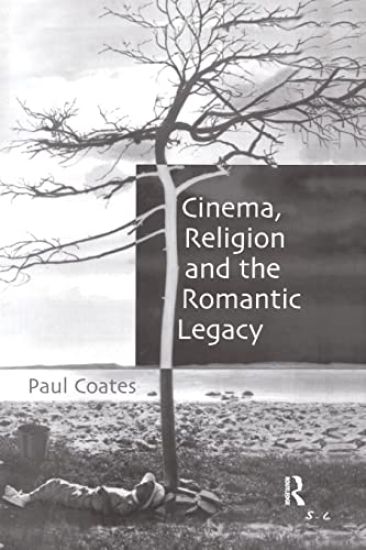
Cinema, Religion and the Romantic Legacy surveys the ways in which notions of religion and spirituality have impinged upon the cinema. Cinema is conceived as a post-Romantic form for which religion and spirituality can be unified only problematically. While inspecting many of the well-established themes and topoi of writing on religion and film (such as films about priests and 'Christ-figures') it also seeks to problematize them, focusing primarily upon the issues of religious representation foregrounded by such European directors as Kieslowski and Godard. Coates draws on theories of theologians, philosophers and cultural and literary critics including: Otto, Kant, Schiller and Girard. Addressing the relationship between religion and spirituality from a film studies specialist's perspective, this book offers all those concerned with film, media or religious studies an invaluable examination of artistic interaction with the theological and aesthetic issues of representation and representability. Paul Coates is Reader in Film Studies at the University of Aberdeen, Scotland, and author of many books including: The Gorgon's Gaze (CUP), Film at the Intersection of High and Mass Culture (CUP), The Story of the Lost Reflection (Verso).
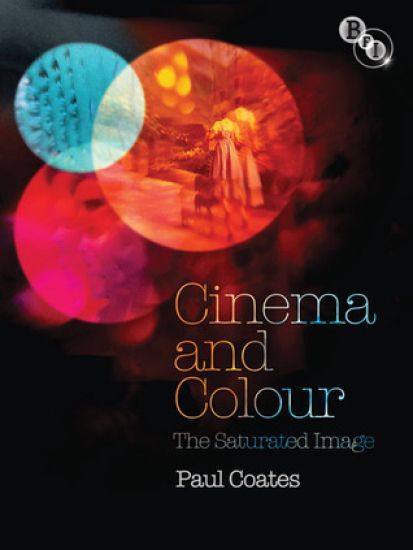
Cinema and Colour

Cinema and Colour

Paul Coates

BFI Publishing
2010
nidottu
Cinema and Colour: The Saturated Image is a major new critical study of the use of colour in cinema. Using the dialectic of colour and monochrome as a starting point, Paul Coates explores the symbolic meanings that colour bears in different cultures, and engages with a range of critical approaches to filmic colour, building on the work of such theorists as Sergei Eisenstein, Rudolf Arnheim and Stanley Cavell. Coates also provides close analyses of films by directors such as Antonioni, Bergman, Godard, Hitchcock, Hou Hsiao-Hsien, Sirk, Kieslowski, Tarkovsky, Von Trier and Zhang Yimou. Coates' focus is on films that deliberately exploit the rich multiplicity of cultural meanings and associations ascribed to colour, including All That Heaven Allows, Deux ou trois choses que je sais d'elle, The Double Life of Véronique, The Flight of the Red Balloon, Red Desert, Schindler's List, Silent Light, Solaris, The Three Colours Trilogy and The Wizard of Oz.
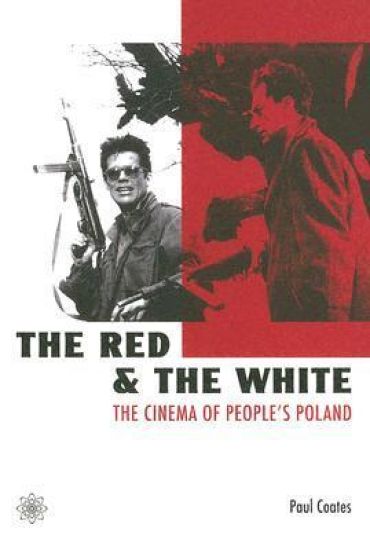
The Red and the White – The Cinema of People`s Poland
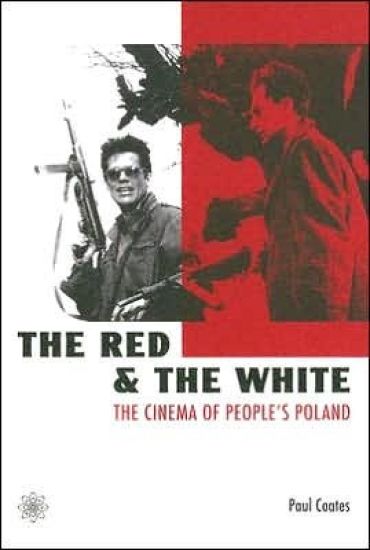
"The Red and the White: The Cinema of People's Poland" takes a fascinating look at the history of Polish cinema from 1945 to 1989. Exploring how Poland was affected by the political, social and cultural upheavals throughout those eras. Poland has produced a number of successful and highly regarded directors. Paul Coates pays particular attention to the work of Krzysztof Kieslowski and Andrzej Wajda while placing them within the wider context of Polish cinema. This volume includes unique primary archival research into the role of state-sponsored censorship and coverage of Polish-Jewish representations in film. Films discussed include Europa, Europa, Eroica, Ashes and Diamonds, and Decalogue Eight.
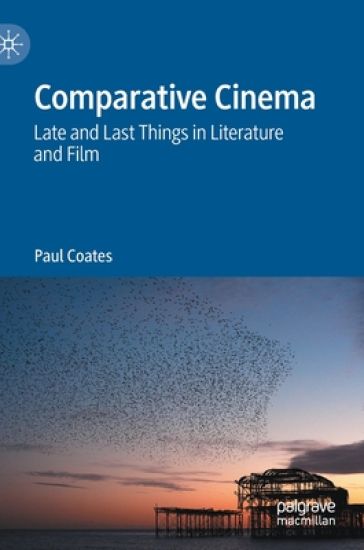
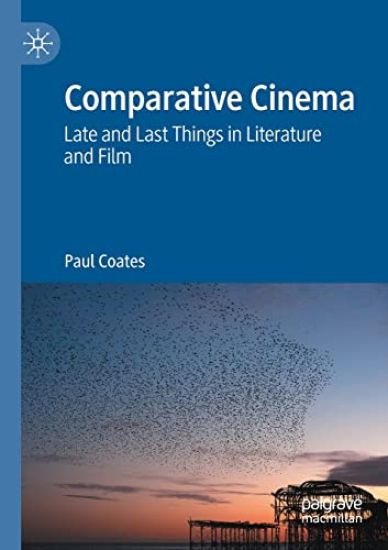
Comparative Cinema

Comparative Cinema

Paul Coates

Springer Nature Switzerland AG
2021
sidottu
This book comprises what may be called exercises in ‘comparative cinema’. Its focus on endings, near-endings and ‘late style’ is connected with the author’s argument that comparative criticism itself may constitute an endgame of criticism, arising at the moment at which societies or individuals relinquish primary adherence to one tradition or medium. The comparisons embrace different works and artistic media and primarily concern works of literature and film, though they also consider issues raised by the interrelationship of language and moving and still images, as well as inter- and intra-textuality. The works probed most fully are ones by Theo Angelopoulos, Ingmar Bergman, Harun Farocki, Theodor Fontane, Henry James, Krzysztof Kieslowski, Chang-dong Lee, Roman Polanski, Thomas Pynchon, and Paul Schrader, while the key recurrent motifs are those of dusk, the horizon, the labyrinth, and the ruin.
Comparative Cinema

Comparative Cinema

Paul Coates

Springer Nature Switzerland AG
2022
nidottu
This book comprises what may be called exercises in ‘comparative cinema’. Its focus on endings, near-endings and ‘late style’ is connected with the author’s argument that comparative criticism itself may constitute an endgame of criticism, arising at the moment at which societies or individuals relinquish primary adherence to one tradition or medium. The comparisons embrace different works and artistic media and primarily concern works of literature and film, though they also consider issues raised by the interrelationship of language and moving and still images, as well as inter- and intra-textuality. The works probed most fully are ones by Theo Angelopoulos, Ingmar Bergman, Harun Farocki, Theodor Fontane, Henry James, Krzysztof Kieslowski, Chang-dong Lee, Roman Polanski, Thomas Pynchon, and Paul Schrader, while the key recurrent motifs are those of dusk, the horizon, the labyrinth, and the ruin.