Kirjojen hintavertailu. Mukana 11 244 527 kirjaa ja 12 kauppaa.

Kirjahaku

Etsi kirjoja tekijän nimen, kirjan nimen tai ISBN:n perusteella.

27 kirjaa tekijältä Paul Collier

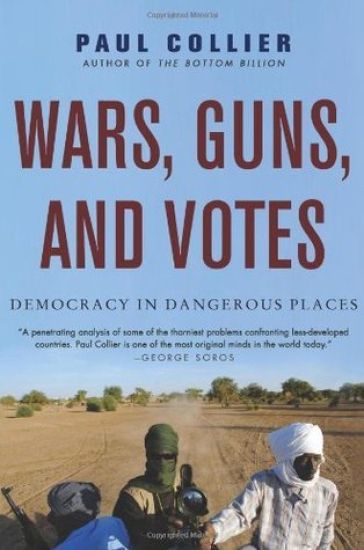
Wars, Guns, and Votes

Wars, Guns, and Votes

Paul Collier

HARPERCOLLINS PUBLISHERS INC
2010
pokkari
"Collier has made a substantial contribution to current discussions. His evidence-based approach is a worthwhile corrective to the assumptions about democracy that too often tend to dominate when Western policy makers talk about the bottom billion." --The New York Times Book Review "Before President Obama makes a move he would do well to read Professor Paul Collier's Wars, Guns, and Votes. . . Unlike many academics Collier comes up with very concrete proposals and some ingenious solutions." -- The Times (London) In Wars, Guns, and Votes, esteemed author Paul Collier offers a groundbreaking, radical look at the world's most violent, corrupt societies, how they got that way, and what can be done to break the cycle. George Soros calls Paul Collier "one of the most original minds in the world today," and Wars, Guns, and Votes, like Collier's previous award-winning book The Bottom Billion, is essential reading for anyone interested in current events, war, poverty, economics, or international business.
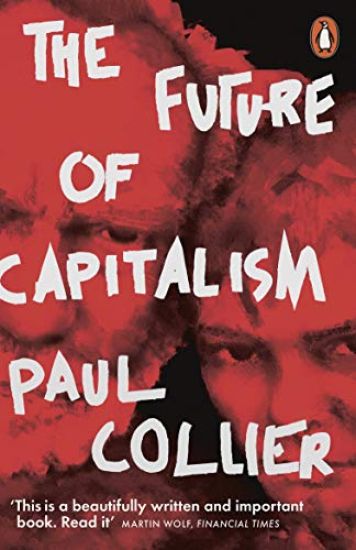
The Future of Capitalism: Facing the New Anxieties
Bill Gates's Five Books for Summer Reading 2019From world-renowned economist Paul Collier, a candid diagnosis of the failures of capitalism and a pragmatic and realistic vision for how we can repair it.Deep new rifts are tearing apart the fabric of the United States and other Western societies: thriving cities versus rural counties, the highly skilled elite versus the less educated, wealthy versus developing countries. As these divides deepen, we have lost the sense of ethical obligation to others that was crucial to the rise of post-war social democracy. So far these rifts have been answered only by the revivalist ideologies of populism and socialism, leading to the seismic upheavals of Trump, Brexit, and the return of the far-right in Germany. We have heard many critiques of capitalism but no one has laid out a realistic way to fix it, until now.In a passionate and polemical book, celebrated economist Paul Collier outlines brilliantly original and ethical ways of healing these rifts--economic, social and cultural--with the cool head of pragmatism, rather than the fervor of ideological revivalism. He reveals how he has personally lived across these three divides, moving from working-class Sheffield to hyper-competitive Oxford, and working between Britain and Africa, and acknowledges some of the failings of his profession.Drawing on his own solutions as well as ideas from some of the world's most distinguished social scientists, he shows us how to save capitalism from itself--and free ourselves from the intellectual baggage of the twentieth century.
The Future of Capitalism: Facing the New Anxieties
Bill Gates's Five Books for Summer Reading 2019From world-renowned economist Paul Collier, a candid diagnosis of the failures of capitalism and a pragmatic and realistic vision for how we can repair it.Deep new rifts are tearing apart the fabric of the United States and other Western societies: thriving cities versus rural counties, the highly skilled elite versus the less educated, wealthy versus developing countries. As these divides deepen, we have lost the sense of ethical obligation to others that was crucial to the rise of post-war social democracy. So far these rifts have been answered only by the revivalist ideologies of populism and socialism, leading to the seismic upheavals of Trump, Brexit, and the return of the far-right in Germany. We have heard many critiques of capitalism but no one has laid out a realistic way to fix it, until now.In a passionate and polemical book, celebrated economist Paul Collier outlines brilliantly original and ethical ways of healing these rifts--economic, social and cultural--with the cool head of pragmatism, rather than the fervor of ideological revivalism. He reveals how he has personally lived across these three divides, moving from working-class Sheffield to hyper-competitive Oxford, and working between Britain and Africa, and acknowledges some of the failings of his profession.Drawing on his own solutions as well as ideas from some of the world's most distinguished social scientists, he shows us how to save capitalism from itself--and free ourselves from the intellectual baggage of the twentieth century.
Wars, Guns and Votes

Wars, Guns and Votes

Paul Collier

Vintage
2010
pokkari
The world is in a mess. For more than a billion people, everyday life is played out against the backdrop of civil wars, military coups and failing economies. Award-winning academic Paul Collier's vision for the future of the developing world is eye-opening, provocative and refreshingly unequivocal.
The Plundered Planet

The Plundered Planet

Paul Collier

Penguin Books Ltd
2011
pokkari
In The Plundered Planet: How to Reconcile Prosperity with Nature Paul Collier proposes a radical and often counter-intuitive rethink of international policy in order to combat global poverty and environmental devastation. How can we help poorer countries become richer without harming the planet? Is there a way of reconciling prosperity with nature? World-renowned economist Paul Collier offers smart, surprising and above all realistic answers to this dilemma. Steering a path between the desires of unchecked profiteering and the romantic views of environmentalists, he explores creative ways to deal with poverty, overpopulation and climate change - showing that the solutions needn't cost the earth. 'A practical handbook for ending world poverty. He wants us to read the evidence, not wear slogans on our T-shirts' Sunday Times 'Collier and his team have researched the detail ... If you want to help the world, stem your bleeding heart and tell your broker to switch your funds to Emerging Markets (Africa)' Sunday Telegraph 'An intriguing take on how western nations can stop poor countries rich in resources from being exploited' Observer 'Anyone looking for a primer on how best to exploit the riches of nature could do worse than reading this introduction to the problem' Economist 'Paul Collier must be read if one is to begin to understand the most vital contemporary arguments' Bob Geldof Paul Collier is Professor of Economics and Director of the Center for the Study of African Economies at Oxford University and a former director of Development Research at the World Bank. In addition to the award-winning The Bottom Billion, he is the author of Wars, Guns, and Votes: Democracy in Dangerous Places.
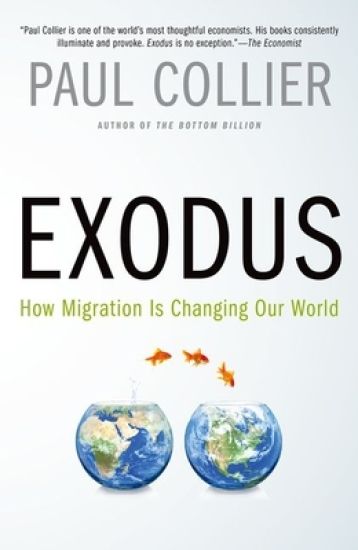
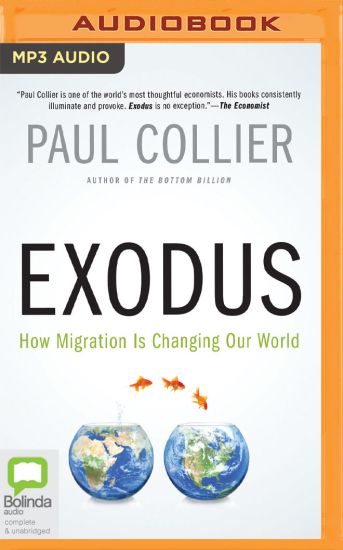
Exodus

Exodus

Paul Collier

Penguin Books Ltd
2014
pokkari
Exodus is an insightful, expert foray into the explosive issue of immigration, from Paul Collier, award-winning economist and author of The Bottom BillionMass international migration is a response to extreme global inequality, and immigration has a profound impact on the way we live. Yet our views - and those of our politicians - remain caught between two extremes: popular hostility to migrants, tinged by xenophobia and racism; and the view of business and liberal elites that 'open doors' are both economically and ethically imperative. With migration set to accelerate, few issues are so urgently in need of dispassionate analysis - and few are more incendiary.Here, world-renowned economist Paul Collier seeks to defuse this explosive subject. Exodus looks at how people from the world's poorest societies struggle to migrate to the rich West: the effects on those left behind and on the host societies, and explores the impulses and thinking that inform Western immigration policy. Migration, he concludes, is a fact, and we urgently need to think clearly about its possibilities and challenges: it is not a question of whether migration is good or bad, but how much is best?'Exodus is an important book and one I have been waiting to read for many years ... [it is] a work that is humane and hard-headed about one of the greatest issues of our times' - David Goodhart, Sunday Times'Paul Collier is one of the world's most thoughtful economists. His books consistently illuminate and provoke. Exodus is no exception' - Economist'Tinged with poignancy ... a humane and sensible voice in a highly toxic debate' - Colin Kidd, GuardianPaul Collier is Professor of Economics and Director of the Centre for the Study of African Economies at Oxford University and a former director of Development Research at the World Bank. He is the author of, among others, the award-winning The Bottom Billion and The Plundered Planet.
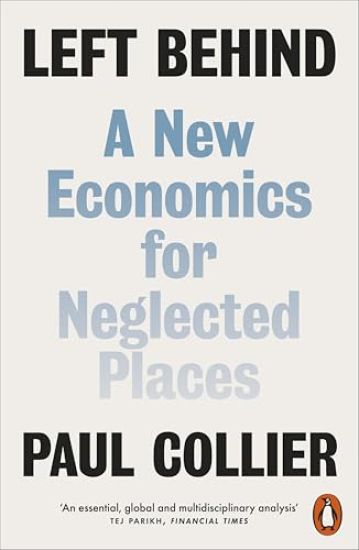
Left Behind

Left Behind

Paul Collier

PENGUIN BOOKS LTD
2025
pokkari
A FINANCIAL TIMES BEST BOOK OF 2024The world-renowned economist offers a ground-breaking new vision for inclusive prosperityLeft behind places can be found in prosperous countries—from South Yorkshire, integral to the industrial revolution and now England’s poorest county, to Barranquilla, once Colombia’s portal to the Caribbean and now struggling. More alarmingly, the poorest countries in the world are diverging further from the rest of humanity than they were at the start of this century. Why have these places fallen behind? And what can we do about it?World-renowned development economist Paul Collier has spent his life working in neglected communities. In this book he offers his candid diagnosis of why some regions and countries are failing, and a new vision for how they can catch up. Collier lays the blame for widening inequality on stale economic orthodoxies that prioritize market forces to revive left behind regions, and on the arrogant, hands-off and one-size fits all approach of centralized bureaucracies like the UK Treasury. As a result, Collier argues, the UK has become the most unequal and unfair society in the western world.Yet the core message of Left Behind is hopeful: bringing together encouraging case studies of recovery from around the world, Collier shows how renewal is achievable through a combination of collective learning, moral leadership and local agency. With keen insight, he draws lessons from such seemingly disparate fields as behavioural psychology, evolutionary biology and moral philosophy to share a bold, galvanizing vision for a more inclusive, prosperous world.
Future of Capitalism

Future of Capitalism

Paul Collier

Penguin Books Ltd.
2019
pokkari
Deep new rifts are tearing apart the fabric of Britain and other Western societies: thriving cities versus the provinces, the highly skilled elite versus the less educated, wealthy versus developing countries. As these divides deepen, we have lost the sense of ethical obligation to others that was crucial to the rise of post-war social democracy. So far these rifts have been answered only by the revivalist ideologies of populism and socialism, leading to the seismic upheavals of Trump, Brexit and the return of the far right in Germany. We have heard many critiques of capitalism but no one has laid out a realistic way to fix it, until now.In a passionate and polemical book, celebrated economist Paul Collier outlines brilliantly original and ethical ways of healing these rifts - economic, social and cultural - with the cool head of pragmatism, rather than the fervour of ideological revivalism. He reveals how he has personally lived across these three divides, moving from working-class Sheffield to hyper-competitive Oxford, and working between Britain and Africa, and acknowledges some of the failings of his profession.Drawing on his own solutions as well as ideas from some of the world's most distinguished social scientists, he shows us how to save capitalism from itself - and free ourselves from the intellectual baggage of the 20th century.These times are in desperate need of Paul Collier's insights. The Future of Capitalism restores common sense to our views of morality, as it also describes their critical role in what makes families, organizations, and nations work. It is the most revolutionary work of social science since Keynes. Let's hope it will also be the most influential - George Akerlof, Nobel Laureate in Economics, 2001In this bold work of intellectual trespass, Paul Collier, a distinguished economist, ventures onto the terrain of ethics to explain what's gone wrong with capitalism, and how to fix it. To heal the divide between metropolitan elites and the left-behind, he argues, we need to rediscover an ethic of belonging, patriotism, and reciprocity. Offering inventive solutions to our current impasse, Collier shows how economics at its best is inseparable from moral and political philosophy' - Michael Sandel, author of What Money Can't Buy and Justice.
Exodus

Exodus

Paul Collier

Oxford University Press Inc
2015
pokkari
It is one of the most pressing and controversial questions of our time -- vehemently debated, steeped in ideology, profoundly divisive. Who should be allowed to immigrate and who not? What are the arguments for and against limiting the numbers? We are supposedly a nation of immigrants, and yet our policies reflect deep anxieties and the quirks of short-term self-interest, with effective legislation snagging on thousand-mile-long security fences and the question of how long and arduous the path to citizenship should be. In Exodus, Paul Collier, the world-renowned economist and bestselling author of The Bottom Billion, clearly and concisely lays out the effects of encouraging or restricting migration. Drawing on original research and case studies, he explores this volatile issue from three perspectives: that of the migrants themselves, that of the people they leave behind, and that of the host societies where they relocate. Immigration is a simple economic equation, but its effects are complex. Exodus confirms how crucial it will be that public policy face and address all of its ramifications. Sharply written and brilliantly clarifying, Exodus offers a provocative analysis of an issue that affects us all.
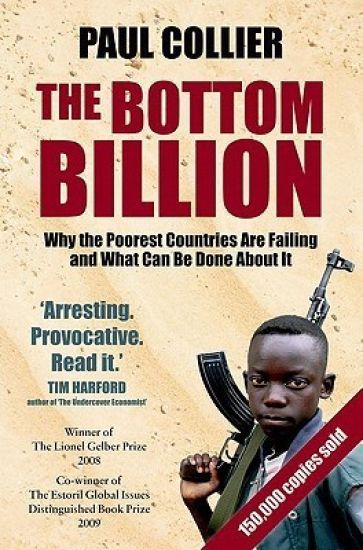
The Bottom Billion: Why the Poorest Countries Are Failing and What Can Be Done about It
A leading authority on global poverty reveals what we must do to help the poorest nations on Earth Global poverty is falling rapidly, but in around fifty failing states, the world's poorest people face a tragedy that is growing inexorably worse. This bottom billion live on less than a dollar a day and while the rest of the world moves steadily forward, this forgotten billion is left further and further behind with potentially serious consequences not only for them but for the stability of the rest of the world. Why do the states these people live in defy all the attempts of the international aid community to help them? Why does nothing seem to make a difference? In The Bottom Billion , Paul Collier pinpoints the issues of corruption, political instability and resource management that lie at the root of the problem. He describes the battle raging in these countries between corrupt leaders and would-be reformers and the factors such as civil war, dependence on the export of natural resources and lack of good governance that trap them into a downward spiral of economic and social decline. Collier addresses the fact that conventional aid has been unable to tackle these problems and puts forward a radical new plan of action including a new agenda for the G8 which includes more effective anti-corruption measures, preferential trade policies and where necessary direct military intervention. All of these initiatives are carefully designed to help the forgotten bottom billion, one of the key challenges facing the world in the twenty first century.
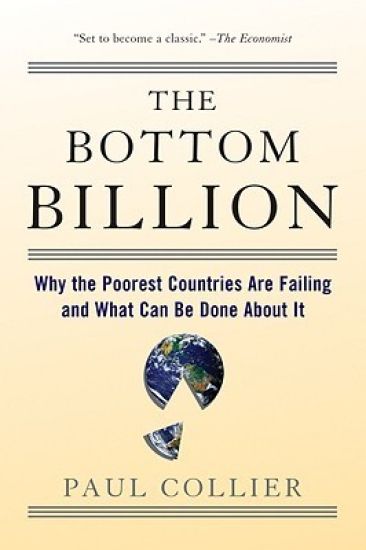
The Bottom Billion

The Bottom Billion

Paul Collier

Oxford University Press Inc
2008
nidottu
In this elegant and impassioned synthesis from one of the world's leading experts on Africa and poverty, economist Paul Collier writes persuasively that although nearly five billion of the world's people are beginning to climb from desperate poverty and to benefit from globalization's reach to developing countries, there is a "bottom billion" of the world's poor whose countries, largely immune to the forces of global economy, are falling farther behind and are in danger of falling apart, separating permanently and tragically from the rest of the world. Collier identifies and explains the four traps that prevent the homelands of the world's billion poorest people from growing and receiving the benefits of globalization - civil war, the discovery and export of natural resources in otherwise unstable economies, being landlocked and therefore unable to participate in the global economy without great cost, and finally, ineffective governance. As he demonstrates that these billion people are quite likely in danger of being irretrievably left behind, Collier argues that we cannot take a "headless heart" approach to these seemingly intractable problems; rather, that we must harness our despair and our moral outrage at these inequities to a reasoned and thorough understanding of the complex and interconnected problems that the world's poorest people face.
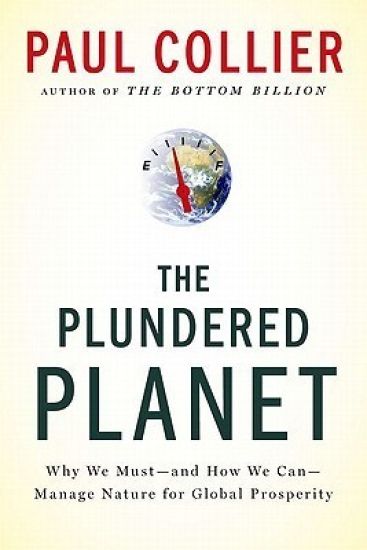
Plundered Planet: Why We Must--And How We Can--Manage Nature for Global Prosperity
Paul Collier's The Bottom Billion was greeted as groundbreaking when it appeared in 2007, winning the Estoril Distinguished Book Prize, the Arthur Ross Book Award, and the Lionel Gelber Prize. Now, in The Plundered Planet, Collier builds upon his renowned work on developing countries and the world's poorest populations to confront the global mismanagement of natural resources.
Plundered Planet: Why We Must--And How We Can--Manage Nature for Global Prosperity
Paul Collier's The Bottom Billion was greeted as groundbreaking when it appeared in 2007, winning the Estoril Distinguished Book Prize, the Arthur Ross Book Award, and the Lionel Gelber Prize. Now, in The Plundered Planet, Collier builds upon his renowned work on developing countries and the world's poorest populations to confront the global mismanagement of natural resources. Proper stewardship of natural assets and liabilities is a matter of planetary urgency: natural resources have the potential either to transform the poorest countries or to tear them apart, while the carbon emissions and agricultural follies of the developed world could further impoverish them. The Plundered Planet charts a course between unchecked profiteering on the one hand and environmental romanticism on the other to offer realistic and sustainable solutions to dauntingly complex issues. Grounded in a belief in the power of informed citizens, Collier proposes a series of international standards that would help poor countries rich in natural assets better manage those resources, policy changes that would raise world food supply, and a clear-headed approach to climate change that acknowledges the benefits of industrialization while addressing the need for alternatives to carbon trading. Revealing how all of these forces interconnect, The Plundered Planet charts a way forward to avoid the mismanagement of the natural world that threatens our future.
Left Behind

Left Behind

Paul Collier

PENGUIN BOOKS LTD
2024
sidottu
A FINANCIAL TIMES BEST BOOK OF 2024The world-renowned economist offers a ground-breaking new vision for inclusive prosperityLeft behind places can be found in prosperous countries—from South Yorkshire, integral to the industrial revolution and now England’s poorest county, to Barranquilla, once Colombia’s portal to the Caribbean and now struggling. More alarmingly, the poorest countries in the world are diverging further from the rest of humanity than they were at the start of this century. Why have these places fallen behind? And what can we do about it? World-renowned development economist Paul Collier has spent his life working in neglected communities. In this book he offers his candid diagnosis of why some regions and countries are failing, and a new vision for how they can catch up. Collier lays the blame for widening inequality on stale economic orthodoxies that prioritize market forces to revive left behind regions, and on the arrogant, hands-off and one-size fits all approach of centralized bureaucracies like the UK Treasury. As a result, Collier argues, the UK has become the most unequal and unfair society in the western world. Yet the core message of Left Behind is hopeful: bringing together encouraging case studies of recovery from around the world, Collier shows how renewal is achievable through a combination of collective learning, moral leadership and local agency. With keen insight, he draws lessons from such seemingly disparate fields as behavioural psychology, evolutionary biology and moral philosophy to share a bold, galvanizing vision for a more inclusive, prosperous world.
Living Down the Past

Living Down the Past

Paul Collier

Institute of Economic Affairs
1998
nidottu
Professor Paul Collier argues that the prospects for growth and stability in Africa would be enhanced if the concern about policy reversals were diminished, thus maximising inward investment flows. He advocates the EU taking a wider role and exerting more pressure on recalcitrant regimes.
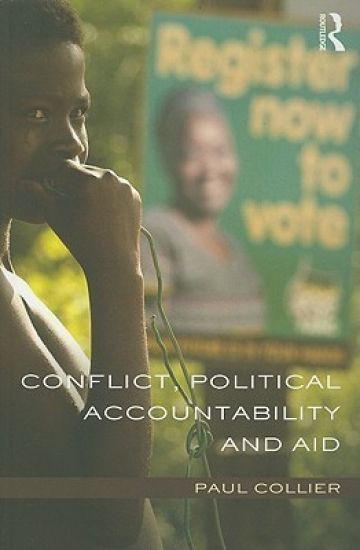
Conflict, Political Accountability and Aid
Paul Collier’s contributions to development economics,and in regard to Africa in particular, have marked him out as one of the most influential commentators of recent times. His research has centred upon the causes and consequences of civil war, the effects of aid, and the problems of democracy in low-income and natural-resource-rich societies. His work has also enjoyed substantial policy impact, having seen him sit as a senior adviser to Tony Blair’s Commission on Africa and addressed the General Assembly of the United Nations This collection of Collier’s major writings, with assistance from Anke Hoeffler and Jan Gunning, and accompanied by a new introduction, provide the definitive account of a wide range of macroeconomic, microeconomic and political economy topics concerned with Africa. Within macroeconomics, there is a focus on external shocks, exchange rate and trade policies, whilst microeconomic topics focus upon labour and financial markets, as well as rural development. Collier’s book The Bottom Billion had become a landmark book and this summation of the research underpinning it will be a superb guide for all those concerned with African development.
Conflict, Political Accountability and Aid
Paul Collier’s contributions to development economics,and in regard to Africa in particular, have marked him out as one of the most influential commentators of recent times. His research has centred upon the causes and consequences of civil war, the effects of aid, and the problems of democracy in low-income and natural-resource-rich societies. His work has also enjoyed substantial policy impact, having seen him sit as a senior adviser to Tony Blair’s Commission on Africa and addressed the General Assembly of the United Nations This collection of Collier’s major writings, with assistance from Anke Hoeffler and Jan Gunning, and accompanied by a new introduction, provide the definitive account of a wide range of macroeconomic, microeconomic and political economy topics concerned with Africa. Within macroeconomics, there is a focus on external shocks, exchange rate and trade policies, whilst microeconomic topics focus upon labour and financial markets, as well as rural development. Collier’s book The Bottom Billion had become a landmark book and this summation of the research underpinning it will be a superb guide for all those concerned with African development.
The Struggle for South Sudan

The Struggle for South Sudan

Paul Collier

I.B. Tauris
2018
nidottu
South Sudan, the world’s youngest country, has experienced a rocky start to its life as an independent nation. Less than three years after gaining independence in 2011 following a violent liberation war, the country slid back into conflict. In the wake of infighting within the ruling Sudan People’s Liberation Movement (SPLM), violence erupted in South Sudan’s capital, Juba, in December 2013. The conflict pitted President Salva Kiir’s predominantly Dinka presidential guard against Nuer fighters loyal to the former Vice President Riek Machar. As fighting spread across the country, it has taken on an increasingly ethnic nature. Ceasefires have been agreed, but there have been repeated violations by all sides. Today the conflict continues unabated and the humanitarian situation grows ever more urgent. This book analyses the crisis and some of its contributing factors. The contributors have worked on South Sudan for a number of years and bring a wealth of knowledge and different perspectives to this discussion. Providing the most comprehensive analysis yet of South Sudan’s social and political history, post-independence governance systems and the current challenges for development, this book will be essential reading for all those interested in the continuing struggle for peace in South Sudan.
The Second World War (4)

The Second World War (4)

Paul Collier

Osprey Publishing
2003
nidottu
This work explores the idea that the Mediterranean theatre of World War II was the first truly modern war. It was a highly mobile conflict, in which logistics were a critical factor, and from the beginning the close relationship between the land, sea, and air elements was vital. Victory could not be achieved by either side unless the three services worked in intimate cooperation. Each side advanced and withdrew across 1000 miles of desert until the axis forces were decisively defeated at El Alamein in 1942.