Kirjojen hintavertailu. Mukana 11 627 622 kirjaa ja 12 kauppaa.

Kirjahaku

Etsi kirjoja tekijän nimen, kirjan nimen tai ISBN:n perusteella.

46 kirjaa tekijältä Paul Collins

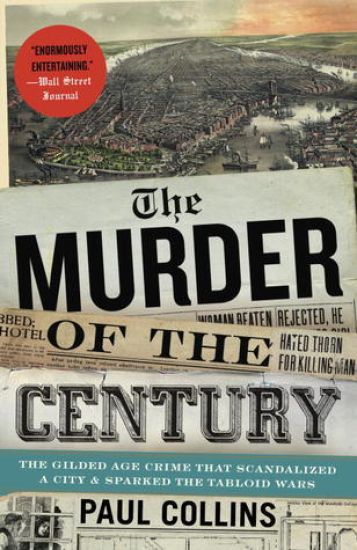
The Murder of the Century

The Murder of the Century

Paul Collins

Broadway Books (A Division of Bantam Doubleday Dell Publishing Group Inc)
2012
pokkari
"No writer better articulates ourinterest in the confluence of hope, eccentricity, and the timelessness of the bold and strange than Paul Collins."--DAVE EGGERS On Long Island, a farmer finds a duck pond turned red with blood. On the Lower East Side, two boys playing at a pier discover a floating human torso wrapped tightly in oilcloth. Blueberry pickers near Harlem stumble upon neatly severed limbs in an overgrown ditch. Clues to a horrifying crime are turning up all over New York, but the police are baffled: There are no witnesses, no motives, no suspects. The grisly finds that began on the afternoon of June 26, 1897, plunged detectivesheadlong into the era's most baffling murder mystery. Seized upon by battling media moguls Joseph Pulitzer and William Randolph Hearst, the case became a publicity circus. Reenactments of the murder were staged in Times Square, armed reporters lurked in the streets of Hell's Kitchen in pursuit of suspects, and an unlikely trio--a hard-luck cop, a cub reporter, and an eccentric professor--all raced to solve the crime. What emerged was a sensational love triangle and an even more sensational trial: an unprecedented capital case hinging on circumstantial evidence around a victim whom the police couldn't identify with certainty, and who the defense claimed wasn't even dead. The Murder of the Century is a rollicking tale--a rich evocation of America during the Gilded Age and a colorful re-creation of the tabloid wars that have dominated media to this day.
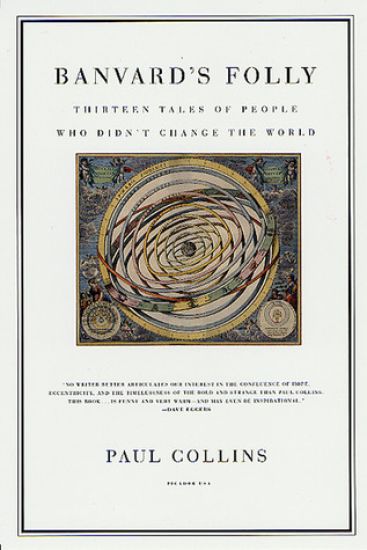
Banvard's Folly: Thirteen Tales of People Who Didn't Change the World
The historical record crowns success. Those enshrined in its annals are men and women whose ideas, accomplishments, or personalities have dominated, endured, and most important of all, found champions. John F. Kennedy's Profiles in Courage, Giorgio Vasari's Lives of the Artists, and Samuel Johnson's Lives of the Poets are classic celebrations of the greatest, the brightest, the eternally constellated. Paul Collins' Banvard's Folly is a different kind of book. Here are thirteen unforgettable portraits of forgotten people: men and women who might have claimed their share of renown but who, whether from ill timing, skullduggery, monomania, the tinge of madness, or plain bad luck-or perhaps some combination of them all-leapt straight from life into thankless obscurity. Among their number are scientists, artists, writers, entrepreneurs, and adventurers, from across the centuries and around the world. They hold in common the silenced aftermath of failure, the name that rings no bells. Collins brings them back to glorious life. John Banvard was an artist whose colossal panoramic canvasses (one behemoth depiction of the entire eastern shore of the Mississippi River was simply known as "The Three Mile Painting") made him the richest and most famous artist of his day. . . before he decided to go head to head with P. T. Barnum. Ren Blondot was a distinguished French physicist whose celebrated discovery of a new form of radiation, called the N-Ray, went terribly awry. At the tender age of seventeen, William Henry Ireland signed "William Shakespeare" to a book and launched a short but meteoric career as a forger of undiscovered works by the Bard -- until he pushed his luck too far. John Symmes, a hero of the War of 1812, nearly succeeded in convincing Congress to fund an expedition to the North Pole, where he intended to prove his theory that the earth was hollow and ripe for exploitation; his quixotic quest counted Jules Verne and Edgar Allan Poe among its greatest admirers. Collins' love for what he calls the "forgotten ephemera of genius" give his portraits of these figures and the other nine men and women in Banvard's Folly sympathetic depth and poignant relevance. Their effect is not to make us sneer or revel in schadenfreude; here are no cautionary tales. Rather, here are brief introductions-acts of excavation and reclamation-to people whom history may have forgotten, but whom now we cannot.
Blood & Ivy

Blood & Ivy

Paul Collins

WW Norton Co
2018
sidottu
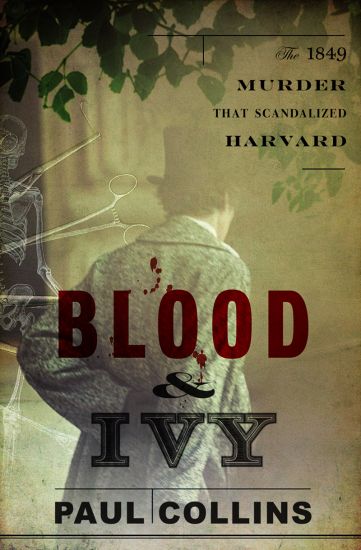
On 23 November 1849, in the heart of Boston, one of the city’s richest men vanished. Dr. George Parkman, who owned much of Boston's West End, was last seen that afternoon visiting his alma mater, Harvard Medical School. Police scoured city tenements and the harbour but a Harvard janitor held a much darker suspicion: that their ruthless benefactor had not left the Medical School building. His shocking discovery engulfed America in one of its most infamous trials, The Commonwealth of Massachusetts vs. John White Webster, Harvard’s professor of chemistry. A baffling case of red herrings, grave robbing and dismemberment; it became a landmark in the use of medical forensics. Rich in characters and atmosphere, Blood & Ivy explores the fatal entanglement of new science and old money in one of America’s greatest murder mysteries.
Blood & Ivy

Blood & Ivy

Paul Collins

WW Norton Co
2019
nidottu
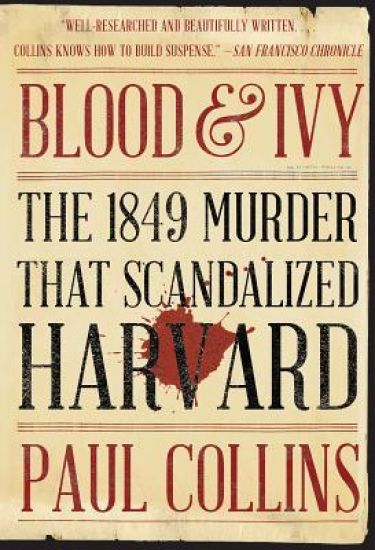
On November 23rd of 1849, in the heart of Boston, one of the city’s richest men simply vanished. Dr. George Parkman, a Brahmin who owned much of Boston’s West End, was last seen that afternoon visiting his alma mater, Harvard Medical School. Police scoured city tenements and the harbor, and leads put the elusive Dr. Parkman at sea or hiding in Manhattan. But one Harvard janitor held a much darker suspicion: that their ruthless benefactor had never left the Medical School building alive. His shocking discoveries in a chemistry professor’s laboratory engulfed America in one of its most infamous trials: The Commonwealth of Massachusetts v. John White Webster. A baffling case of red herrings, grave robbery, and dismemberment, it became a landmark case in the use of medical forensics and the meaning of reasonable doubt. Paul Collins brings nineteenth-century Boston back to life in vivid detail, weaving together newspaper accounts, letters, journals, court transcripts, and memoirs from this groundbreaking case. Rich in characters and evocative in atmosphere, Blood & Ivy explores the fatal entanglement of new science and old money in one of America’s greatest murder mysteries.
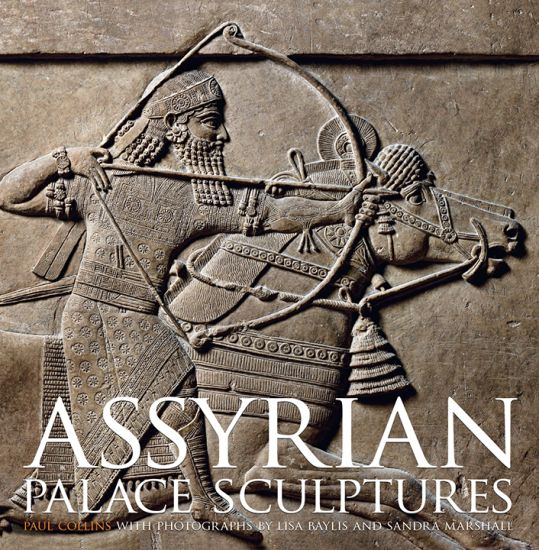
Assyrian Palace Sculptures

Assyrian Palace Sculptures

Paul Collins

British Museum Press
2008
sidottu
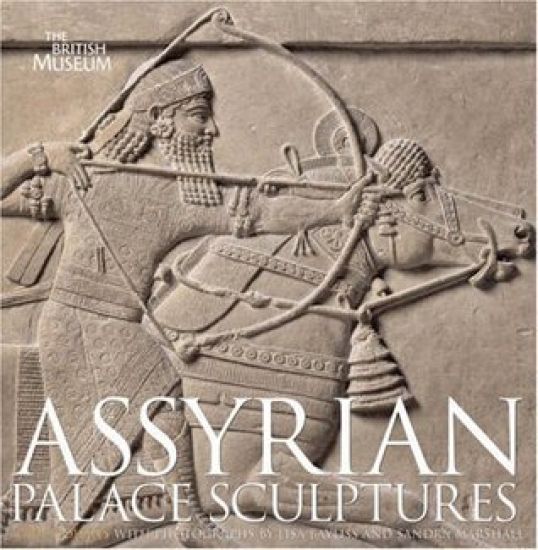
A superb visual introduction to what are undoubtedly some of the greatest works of art from the ancient world, showcasing a series of specially taken photographs of the British Museum's unrivalled collection of Assyrian sculptures.
Crash Course: Gastroenterology
Covering all aspects of the syllabus, Crash Course offers you a fast way to recap on all you need to know to get through the exams with ease! Styled in an easy-to-follow, readily accessible format, each book has been prepared by senior medical students or junior doctors - under faculty supervision - to give you the correct level of information exactly as you need it! Each book begins with 'The Patient Presents With..' whilst the second part covers the common diseases and disorders you are likely to see in the clinical situation. Richly illustrated throughout, each chapter commences with learning objectives and has ample use of 'Hints and Tips' boxes, 'Communication' boxes and other useful aide-memoires. Self-assessment material - closely reflecting current exam requirements - concludes each volume and provides you with an opportunity to perfect both your knowledge and exam technique! Fly through your exams with Crash Course - THE revision aid to get you the results you need! Provides the exam syllabus in one place! Written by senior medical students or junior doctors - authors who really understand today's exam situation! Senior Faculty Advisors ensure complete accuracy of the text! Full artwork programme, improved 'Hints and Tips' boxes, and 'Communication' boxes help you remember the key points! Self-Assessment section - fully updated to reflect new curriculum requirements - helps you maximise your grade! Solid, accurate, user-friendly coverage provides enough detail even for those aiming at distinction Fully updated self-assessment section - ideal for current examination practice! Includes useful 'Learning Objectives' at the start of each chapter. Pharmacological and disease management information updated in line with current best practice guidelines. Includes recent research findings. Discusses key aspects of patient communication - presented in easy 'Communication' boxes. Fully updated to include feedback from hundreds of students!
The Trouble with Tom

The Trouble with Tom

Paul Collins

Bloomsbury Publishing PLC
2006
nidottu
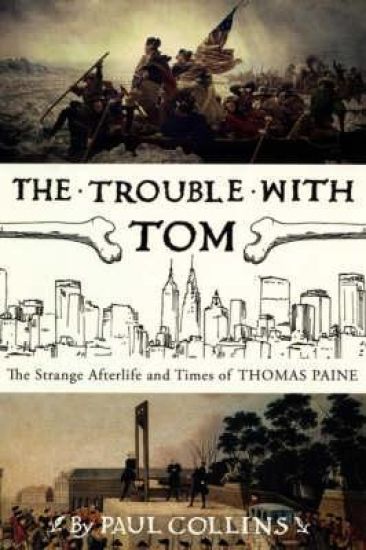
The author of "Common Sense" and "The Rights of Man", a radical on the run from the law in London, a founding father of the United States of America, a senator of revolutionary France, Thomas Paine alone claims a key role in the development of three modern democracies. He was a walking revolution in human form - the most dangerous man alive. But in death, Paine's story turns truly bizarre - his bones were taken from New York to London and eventually disappeared. In Paris, London and New York, in bars, grocers, shops and national libraries, crossing paths along the way with, among others, Benjamin Franklin, George Washington, William Cobbett, Walt Whitman, Charles Darwin and even Lord Bryon, Paul Collins sets himself the challenge of finding out what happened to Paine's bones, and ends up telling one of the most extraordinary stories of modern history.
Black Country Canals

Black Country Canals

Paul Collins

The History Press Ltd
2011
nidottu
The Black Country has more miles of canal than Venice. During the industrial revolution this transport system developed to serve the steel, coal, lime and glass industries that grew up so extensively. Now much of the area’s heavy industry has disappeared, but many of the canals remain – to be utilised as an integral part of the Black Country’s thriving tourist industry. Black Country Canals includes a wide range of photographs, many previously unpublished, and is accompanied by fascinating and informative captions which combine to illustrate the canals in their heyday and more recently. The book is sure to appeal to all who live in or visit the Black Country, and to transport historians everywhere.
The Kinver Light Railway

The Kinver Light Railway

Paul Collins

The History Press Ltd
2012
nidottu
The Kinver Light Railway once linked the Black Country to Kinver, an inland resort to which local people flocked on high days and holidays. On some occasions over 20,000 people were carried by tramcar in one day! Part conventional street tramway, part cross-country electric railway, the line withered and died as those it branched from closed. Yet, despite having been gone for many years, much survives from the tramway and its echoes are still around. After charting the line’s history, this book recreates a ride along the line to Kinver using a plethora of historic photographs, many of which have not been published before. Kinver’s delights are highlighted before the return journey is made in the present day, pointing out the many features and objects from the tramway that survive along the way.
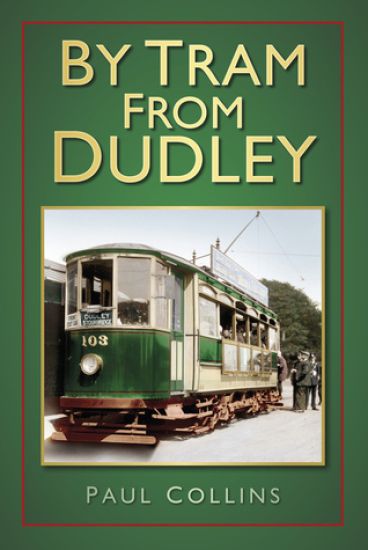
By Tram From Dudley

By Tram From Dudley

Paul Collins

The History Press Ltd
2013
nidottu
Dudley was connected by tram to various parts of the Black Country, first by steam trams and then by electric ones. This book takes a route-by-route look at the development, operation and run-down of the tramway system which once linked Dudley to Brierley Hill, Stourbridge, Netherton, Cradley Heath, Pensnett, Kingswinford, Wordsley, Kinver, Lye, Wollaston, Old Hill and Blackheath. After charting each line’s history, the book recreates a ride along them using a plethora of historic photographs, many of which have not been published before, highlighting the many features and objects from the tramway that survive along the way.
The Stylus Phantasticus and Free Keyboard Music of the North German Baroque
The concept of stylus phantasticus (or ’fantastic style’) as it was expressed in free keyboard music of the north German Baroque forms the focus of this book. Exploring both the theoretical background to the style and its application by composers and performers, Paul Collins surveys the development of Athanasius Kircher’s original concept and its influence on music theorists such as Brossard, Janovka, Mattheson, and Walther. Turning specifically to fantasist composers of keyboard works, the book examines the keyboard toccatas of Merulo, Fresobaldi, Rossi and Froberger and their influence on north German organists Tunder, Weckmann, Reincken, Buxtehude, Bruhns, Lubeck, Bohm, and Leyding. The free keyboard music of this distinguished group highlights the intriguing relationship at this time between composition and performance, the concept of fantasy, and the understanding of originality and individuality in seventeenth-century culture.
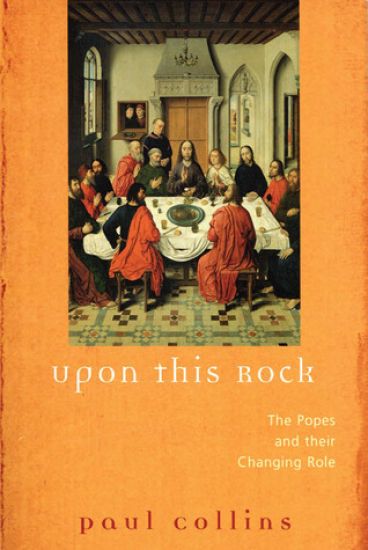
Upon This Rock

Upon This Rock

Paul Collins

Crossroad Publishing Co ,U.S.
2002
nidottu
A Vatican-censured former priest, tells the history of the papacy from the point of view of the women, radicals, and marginalized who have been betrayed by conservative historians. This survey of key popes documents the evolution of the papacy from its beginning to all its monarchical trappings in our own day.
Dangerous Waters

Dangerous Waters

Paul Collins

Writeadvice Press
2016
nidottu
Lieutenant Alastair Mitchell, RCNVR, had two loves - HMCS Dartmouth and Second Officer Linda Halley, WRCNS. He had to choose, but he couldn't. Then, on a cold, overcast November night off Bell Island, Newfoundland, the enemy made the choice for him.Whether called Sea Wolves or Raiders of the Deep, Nazi U-boats prowled the waters around Newfoundland...and some never left. Now Iron Coffins, they lie forgotten, rusting on the seabed along with their victims. The debris of war, they remain broken remnants of mankind's greatest conflict.
The Stylus Phantasticus and Free Keyboard Music of the North German Baroque
The concept of stylus phantasticus (or ’fantastic style’) as it was expressed in free keyboard music of the north German Baroque forms the focus of this book. Exploring both the theoretical background to the style and its application by composers and performers, Paul Collins surveys the development of Athanasius Kircher’s original concept and its influence on music theorists such as Brossard, Janovka, Mattheson, and Walther. Turning specifically to fantasist composers of keyboard works, the book examines the keyboard toccatas of Merulo, Fresobaldi, Rossi and Froberger and their influence on north German organists Tunder, Weckmann, Reincken, Buxtehude, Bruhns, Lubeck, Bohm, and Leyding. The free keyboard music of this distinguished group highlights the intriguing relationship at this time between composition and performance, the concept of fantasy, and the understanding of originality and individuality in seventeenth-century culture.
Assyrian Palace Sculptures

Assyrian Palace Sculptures

Paul Collins

J. Paul Getty Museum
2020
sidottu
Between the ninth and seventh centuries BCE, the small kingdom of Assyria (present-day northern Iraq) expanded through conquest from Egypt to Iran. The relief sculptures that decorated Assyrian palaces represent the high point of Mesopotamian art of the first millennium BCE, both for their artistic quality and their vivid depictions of warfare, rituals, mythology, hunting, and other aspects of Assyrian life. Together, the sculptures constitute some of the most impressive and eloquent witnesses of the ancient Near East, their importance only increasing with the recent destruction by ISIS of many of the reliefs that remained in Iraq. Originally published by the British Museum in 2008, this book serves as a superb visual introduction to these extraordinary sculptures, showcasing a series of stunning photographs of the museum's unrivaled collection of Assyrian reliefs. Highlighting individual panels and their often overlooked details, these images capture the majesty of Assyrian kings, their splendid courts, and protecting divinities. An introduction by Collins sets the sculptures in their cultural and art historical context, while the following chapters provide a brief history of Assyria and its royal palaces as well as an overview of the artworks' discovery, reception, and understanding.
A Tale of Two Squirrels

A Tale of Two Squirrels

Paul Collins

Eloquent Books
2008
pokkari
The story takes a lighthearted look at how life might be for children in the future. Subsequent stories will explore ways in which people in different places and in different conditions cope with the problem of bringing the atmosphere back into balance.