Kirjojen hintavertailu. Mukana 11 244 527 kirjaa ja 12 kauppaa.

Kirjahaku

Etsi kirjoja tekijän nimen, kirjan nimen tai ISBN:n perusteella.

9 kirjaa tekijältä Paul D. Molnar

Divine Freedom and the Doctrine of the Immanent Trinity
Divine Freedom and the Doctrine of the Immanent Trinity is widely acclaimed by scholars in the field of Christian systematic theology. Molnar's quest to place the doctrine of the immanent Trinity on the agenda of the Christian doctrine of God has proven to be a signal contribution to the debate in contemporary Christian theology.The material in this second edition has been thoroughly updated: it contains a new preface and a new introduction, as well as a revised bibliography. The book includes a brand new chapter titled 'Divine Freedom Revisited' which addresses those questions that have arisen in connection with Molnar's original presentation of the divine freedom. Molnar re-visits here his discussion of the Logos Asarkos, the theologies of Karl Rahner and Wolfhart Pannenberg. He sheds new light on Rahner's and Torrance's discussions of the Resurrection; and incorporates modern discussions by contemporary theologians to offer new insights into Eberhard Jüngel’s thinking.
Freedom, Necessity, and the Knowledge of God

Freedom, Necessity, and the Knowledge of God

Paul D. Molnar

BLOOMSBURY PUBLISHING PLC
2021
sidottu
Paul D. Molnar discusses issues related to the concepts of freedom and necessity in trinitarian doctrine. He considers the implications of “non-conceptual knowledge of God” by comparing the approaches of Karl Rahner and T. F. Torrance. He also reconsiders T. F. Torrance’s “new” natural theology and illustrates why Christology must be central when discussing liberation theology. Further, he explores Catholic and Protestant relations by comparing the views of Elizabeth Johnson, Walter Kasper and Karl Barth, as well as relations among Christians, Jews and Muslims by considering whether it is appropriate to claim that all three religions should be understood to be united under the concept of monotheism. Finally, he probes the controversial issues of how to name God in a way that underscores the full equality of women and men and how to understand “universalism” by placing Torrance and David Bentley Hart into conversation on that subject.
Freedom, Necessity, and the Knowledge of God

Freedom, Necessity, and the Knowledge of God

Paul D. Molnar

BLOOMSBURY PUBLISHING PLC
2021
nidottu
Paul D. Molnar discusses issues related to the concepts of freedom and necessity in trinitarian doctrine. He considers the implications of “non-conceptual knowledge of God” by comparing the approaches of Karl Rahner and T. F. Torrance. He also reconsiders T. F. Torrance’s “new” natural theology and illustrates why Christology must be central when discussing liberation theology. Further, he explores Catholic and Protestant relations by comparing the views of Elizabeth Johnson, Walter Kasper and Karl Barth, as well as relations among Christians, Jews and Muslims by considering whether it is appropriate to claim that all three religions should be understood to be united under the concept of monotheism. Finally, he probes the controversial issues of how to name God in a way that underscores the full equality of women and men and how to understand “universalism” by placing Torrance and David Bentley Hart into conversation on that subject.
The Centrality of Christ in the Theology of Thomas F. Torrance
Leading systematic theologian, Paul D. Molnar examines the theology of Thomas F. Torrance in three powerful essays. In a ground-breaking chapter, Molnar discusses whether Chalcedon needs to be repaired in order to recognize and maintain the full and complete humanity of Jesus Christ as the incarnate Word.He also delves into Torrance's view of justification by grace alone and emphasizes its relation to Liberation Theology. Additionally, comparing the approaches of Karl Rahner and T. F. Torrance, this book explores and explains how a number of Rahner’s presuppositions and conclusions differ from the positions espoused by Torrance, all in order to illustrate the importance of grace in theologies of both thinkers.
The Centrality of Christ in the Theology of Thomas F. Torrance
Leading systematic theologian, Paul D. Molnar examines the theology of Thomas F. Torrance in three powerful essays. In a ground-breaking chapter, Molnar discusses whether Chalcedon needs to be repaired in order to recognize and maintain the full and complete humanity of Jesus Christ as the incarnate Word.He also delves into Torrance's view of justification by grace alone and emphasizes its relation to Liberation Theology. Additionally, comparing the approaches of Karl Rahner and T. F. Torrance, this book explores and explains how a number of Rahner’s presuppositions and conclusions differ from the positions espoused by Torrance, all in order to illustrate the importance of grace in theologies of both thinkers.
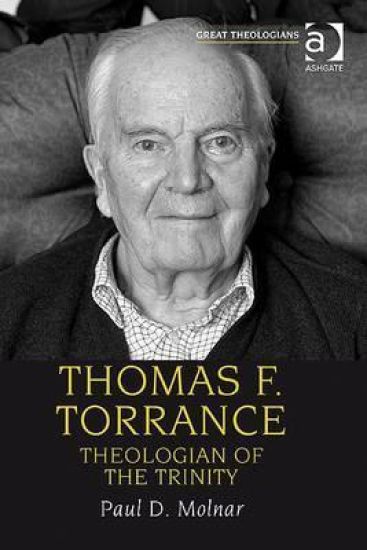
Thomas F. Torrance

Thomas F. Torrance

Paul D. Molnar

Ashgate Publishing Limited
2009
sidottu
This book provides an important study of the theology of Thomas F. Torrance, who is generally considered to have been one of the most significant theologians writing in English during the twentieth century, with a view toward showing how his theological method and all his major doctrinal views were shaped by his understanding of the doctrine of the Trinity. Torrance pursued a theology that was realist because he attempted to think in accordance with the unique nature of the object that is known. In holding to such a methodology, he drew an analogy between theology and natural science. This book demonstrates how, for Torrance, God relates with humanity within time and space so that creation finds its meaning in relation to God and not in itself; this enabled him to avoid many theological pitfalls such as agnosticism, subjectivism and dualism while explaining the positive implications of various Christian doctrines in a penetrating and compelling manner. This book offers an important resource for students of theology and for scholars who are interested in seeing how serious dogmatic theology shapes and should shape our understanding of the Christian life.
Thomas F. Torrance

Thomas F. Torrance

Paul D. Molnar

Ashgate Publishing Limited
2009
nidottu
This book provides an important study of the theology of Thomas F. Torrance, who is generally considered to have been one of the most significant theologians writing in English during the twentieth century, with a view toward showing how his theological method and all his major doctrinal views were shaped by his understanding of the doctrine of the Trinity. Torrance pursued a theology that was realist because he attempted to think in accordance with the unique nature of the object that is known. In holding to such a methodology, he drew an analogy between theology and natural science. This book demonstrates how, for Torrance, God relates with humanity within time and space so that creation finds its meaning in relation to God and not in itself; this enabled him to avoid many theological pitfalls such as agnosticism, subjectivism and dualism while explaining the positive implications of various Christian doctrines in a penetrating and compelling manner. This book offers an important resource for students of theology and for scholars who are interested in seeing how serious dogmatic theology shapes and should shape our understanding of the Christian life.
Karl Barth and the Theology of the Lord's Supper

Karl Barth and the Theology of the Lord's Supper

Paul D. Molnar

Peter Lang Publishing Inc
1996
nidottu
This study of the Lord's Supper (which Barth did not live to write) systematically develops the implications of Karl Barth's doctrine of God for his view of the sacrament. It analyzes his conceptions of God, revelation, grace, and sacramental causality, critically comparing them to the views of Rahner, Torrance, Wainwright, Jungel, Moltmann, Pannenberg, Gunton, and others. By contrasting Barth's views with more recent theology, this study clarifies many important issues that are often neglected or misunderstood by theologians who have moved -beyond- Barth without grappling with the important questions he raised, especially concerning God's freedom. Sacramental controversies are explored in the context of Christology and Trinitarian theology."