Kirjahaku
Etsi kirjoja tekijän nimen, kirjan nimen tai ISBN:n perusteella.
5 kirjaa tekijältä Paul D. Taylor
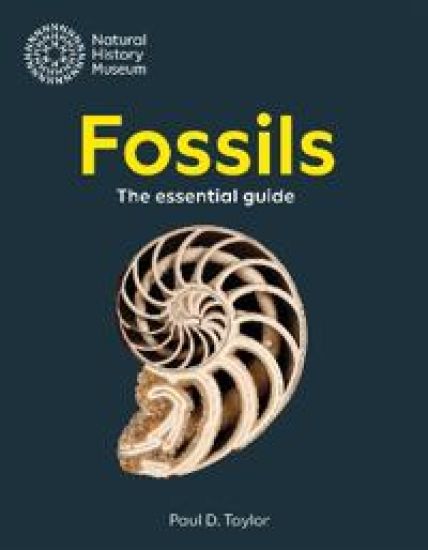
An introduction to the study of fossils, from expert Paul Taylor, with original specimens drawn from the collections of the Natural History Museum.
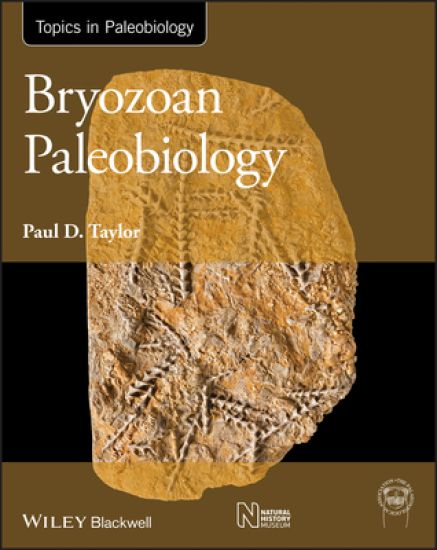
Bryozoa are among the most abundant yet least understood of phyla in the fossil record. These exclusively colonial animals can be traced back to the Ordovician as fossils and are common elements of sediments deposited in shallow marine environments. On occasion their calcareous skeletons are sufficiently numerous to produce bryozoan limestones. The potential of bryozoans in facies analysis, and their use in macroevolutionary studies, have both been widely recognised, but to date have been incompletely exploited. Bryozoan Paleobiology brings together the scattered research on living and fossil bryozoans in broad and profusely illustrated overview that will help students and researchers alike in understanding this fascinating group of animals. Beginning with the basics of bryozoan morphology, ecology and classification, the book progresses from the smallest scale of skeletal ultrastructure, to the largest of bryozoan distributions in time and space. On the way, topics such as the origin of zooidal polymorphism and macroevolutionary trends in colony forms are covered. Case studies illuminate these topics, and areas in which further research is particularly required are highlighted.
Bryozoa are among the most abundant yet least understood of phyla in the fossil record. These exclusively colonial animals can be traced back to the Ordovician as fossils and are common elements of sediments deposited in shallow marine environments. On occasion their calcareous skeletons are sufficiently numerous to produce bryozoan limestones. The potential of bryozoans in facies analysis, and their use in macroevolutionary studies, have both been widely recognised, but to date have been incompletely exploited. Bryozoan Paleobiology brings together the scattered research on living and fossil bryozoans in broad and profusely illustrated overview that will help students and researchers alike in understanding this fascinating group of animals. Beginning with the basics of bryozoan morphology, ecology and classification, the book progresses from the smallest scale of skeletal ultrastructure, to the largest of bryozoan distributions in time and space. On the way, topics such as the origin of zooidal polymorphism and macroevolutionary trends in colony forms are covered. Case studies illuminate these topics, and areas in which further research is particularly required are highlighted.