
Kirjahaku
Etsi kirjoja tekijän nimen, kirjan nimen tai ISBN:n perusteella.
12 kirjaa tekijältä Paul Dillon
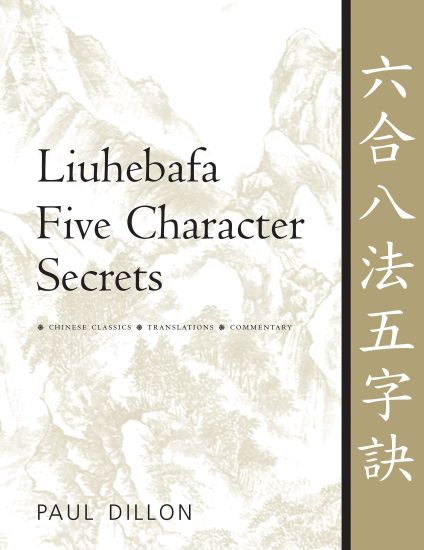
The origins of Liuhebafa (also called Water Boxing) can be traced back to the Daoist sage Chen Tuan (c. 871-989 A.D.). Chen is a mystical figure whose advice and perspective was sought by ancient Chinese Emperors. Liuhebafa was the last of the internal methods to be taught outside China. Even inside China, Liuhebafa had an almost mythic quality. Among the groups of inner circle students, Liuhebafa was graduate study in the internal arts. Liuhebafa's Five Character Secrets (of Li Dong Feng) are the original precepts of this rare internal martial art known as Huayue Xinyi Liuhebafaquan. Li Dong Feng discovered aged manuscripts of Chen Tuan, during an expedition to Chen's ancient mountain home. Realizing the importance of what he had found, Li remained on Mount Hua until he mastered the material in the manuscripts. Li returned to his home and then recorded all he had learned on Mount Hua in one hundred and thirty-four verses now known as The Five Character Secrets of Li Dong Feng. This is the only existing treatise on the original principles of Liuhebafa. This book contains the original Chinese treatise of Li Dong Feng, Pinyin Romanization of the Chinese characters, word for word translation, literal translation, interpretive translation and the author's commentary on the meaning of each verse. There is more here than meets the eye. It is wise to approach the Secrets with a beginner's mind. Imagine being beckoned to sit by the fire. Lean a little closer to better hear the master as he recites the lines that will open the doors of your mind and heart.
The origins of Liuhebafa (also called Water Boxing) can be traced back to the Daoist sage Chen Tuan (c. 871-989 A.D.). Chen is a mystical figure whose advice and perspective was sought by ancient Chinese Emperors. Liuhebafa was the last of the internal methods to be taught outside China. Even inside China, Liuhebafa had an almost mythic quality. Among the groups of inner circle students, Liuhebafa was graduate study in the internal arts. Liuhebafa's Five Character Secrets (of Li Dong Feng) are the original precepts of this rare internal martial art known as Huayue Xinyi Liuhebafaquan. Li Dong Feng discovered aged manuscripts of Chen Tuan, during an expedition to Chen's ancient mountain home. Realizing the importance of what he had found, Li remained on Mount Hua until he mastered the material in the manuscripts. Li returned to his home and then recorded all he had learned on Mount Hua in one hundred and thirty-four verses now known as The Five Character Secrets of Li Dong Feng. This is the only existing treatise on the original principles of Liuhebafa. This book contains the original Chinese treatise of Li Dong Feng, Pinyin Romanization of the Chinese characters, word for word translation, literal translation, interpretive translation and the author's commentary on the meaning of each verse. There is more here than meets the eye. It is wise to approach the Secrets with a beginner's mind. Imagine being beckoned to sit by the fire. Lean a little closer to better hear the master as he recites the lines that will open the doors of your mind and heart.

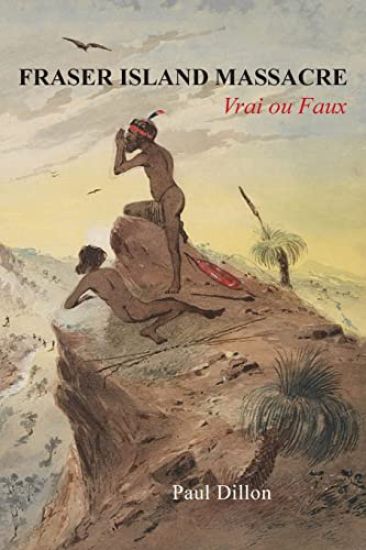
Mr. Paul Dillon, a Sunshine Coast author of several books on Queensland history has written another straight-talking, straight-shooting book about the Wide Bay frontier during colonial times: Fraser Island Massacre Vrai ou Faux.Captain Cook called it the Great Sandy Island; the locals called it Fraser Island; now the Queensland Labor government calls it K'gari. It's the place to be when you need a secluded, tranquil haven set among hundred year- old gum trees, palms, ferns, exotic plants, and mysterious lakes and waterways. It's the place to be if you want to catch a fish or two, or see a dingo in the raw.A group has arisen that claim to be the long-lost tribes and clans of Fraser Island. To that end, they have persuaded the Queensland Labor government to acknowledge their existence and in turn their heredity rights. Accordingly, the Queensland Labor government consented to a grant of native title known as QCD2014/015 - Butchulla People #2 over Fraser Island and recently re-named the area as K'gari.In making that claim the clans have felt it necessary to impeach and defame the forbearers and pioneers of another group of citizens. Whether it was necessary to adopt that approach is another matter. However, in doing so it extended to the offended party the right to at least examine the material put forward by the claimants.But massacre there was none. This book by Paul Dillon is a forensic audit of the modern-day propaganda that has grown up around the politics involved in bringing into existence the political identity known as K'gari.
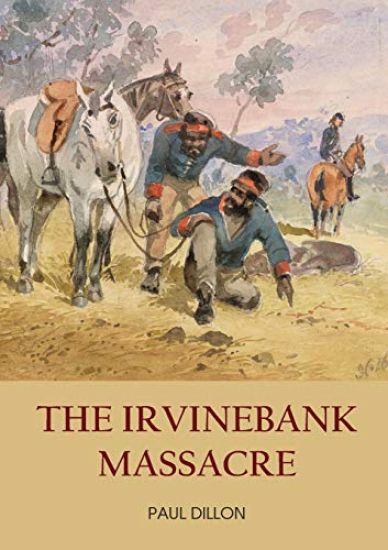
On the evening of 18 October 1884, a group of at least five Aborigines, were sitting round a camp fire boiling the billy and yarning in blackfellow talk when they were fusilladed. Tommy jumped up and ran for it; followed by the thwacks and zings of the bullets as they whizzed after him. The others stayed where they fell. The next day, Alicky, a town blackboy spoke to John Moffat, a leading citizen about the incident, who asked to be shown the campsite.On reaching the camp, a gruesome scene of partially burnt Aborigines confronted the eyes of Moffat. Driven by curiosity and trepidation, he examined the bodies. One was the body of an old blackfellow, the two others were adult females and one was a picaninny whose sex was unknown. The bodies were lying side by side. Two with their heads one way and the other two in the opposite direction. The fire being in the middle of them. There were no observable marks of violence on the bodies other than that caused by the fire. The faces were turned somewhat downwards and it could not be established whether they were disfigured or not.Mr. Mowbray, the Police Magistrate at Herberton was notified. On 23 October 1884, when he arrived in Irvinebank to conduct an inquest on the bodies of the four Aborigines, all that he found was the remains of a large fire. The fire was still smouldering but no bodies were found. Constable Moroney raked the fire and several pieces of bone were recovered from the ashes. But nothing could be identified. Nevertheless, Mowbray held an inquest and suspicion fell on the native police who were in Irvinebank at the time.The Attorney-General then requested the police to investigate the matter. They arrested the Nigger Creek native police including Sub-Inspector William Nichols, and the rest is history.

The History of Bêche-de-mer Fishing in Queensland Waters and Adjacent Islands
Paul Dillon
Connor Court Publishing Pty Ltd
2023
pokkari
B che-de-mer is an edible sea creature used to make soup. These primitive sea creatures are a popular food in several Asian cultures, especially Chinese, Japanese, Korean and Vietnamese cuisines. During the colonial period of Queensland's history, Aboriginals were employed to harvest the animals at low tide amongst the coral reefs of Torres Strait and the Great Barrier Reef. Many hands were required to hunt the exposed reefs and shoals, to wade the rock pools and dive the shallow waters of the fringing reefs.After a day of harvesting the animals, the work parties would return to the employer's b che-de-mer station, located on the nearest island, and begin the equally labour-intensive process of bringing the product to a marketable condition so that it might be sold in Hong Kong.These island work camps or "sit-down country" proved to be locations of dissatisfaction where the Aboriginal workforce would, it appears, acutely experience or develop an intense feeling of isolation and disgruntlement through pining and fretting for their tribal country. Consequently, the imperative to return to their tribal haunts and habitats, drove them on occasion to steal vessels and even to murder their overseers. Employing Aboriginals or Binghis, as they were known, proved to be a challenging task knowing that their unpredictability might at any time lead to an outburst of violence, which would not only terminate the contract of labour but also the life of the employer.
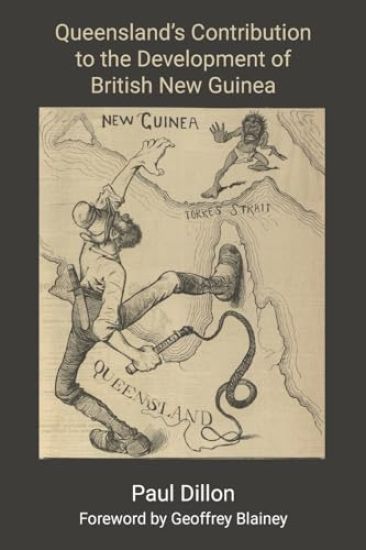
Queensland's Contribution to the Development of British New Guinea
Paul Dillon
Connor Court Publishing Pty Ltd
2023
pokkari
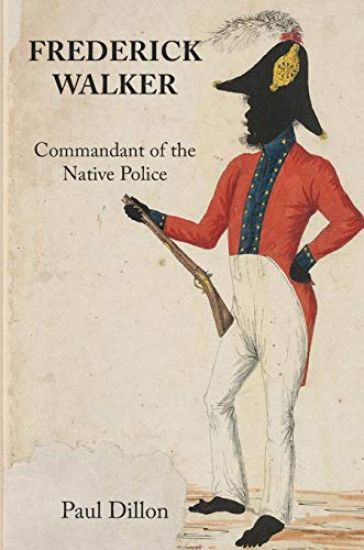
This is the first and only complete biography of Frederick Walker, 1820 to 1866. Mr Walker's life was one of isolation, hardship and rejection. As Commandant of the Native Police, he was the man who stood at the front line of Australian history with his true and trusty sable force. He was much abused in his day by the squatters for his careful and clement handling of Aborigines, ami des noirs. He is still much abused and neglected today and stands accused of many high crimes and misdemeanours against humanity and the aboriginal natives of Australia. These are all gross slanders and monstrous calumnies. This treatise on his life and times is a complete defence to these infamous allegations, backed with pages of original sources. After being driven from his command of the Native Police by petty minded squatters and disloyal officers, he took up the worthy profession of a run-hunter and opened up much grazing land in southern and central Queensland, in particular, Plant Downs. He was readily enlisted in the search for Burke and Wills, the forever lamentable tragedy of Australian heroism lost to the unforgiving Outback. Frederick Walker's final act was in the service of the State of Queensland in surveying a telegraph line from Townsville to Burketown for the purposes of an overseas telegraphic link to India. He now lies in a bush grave where he fell on the road to Floraville, Leichhardt River, Queensland. Walker was a bushman par excellence, an Aboriginal Whisperer beyond comparison and an explorer without equal.
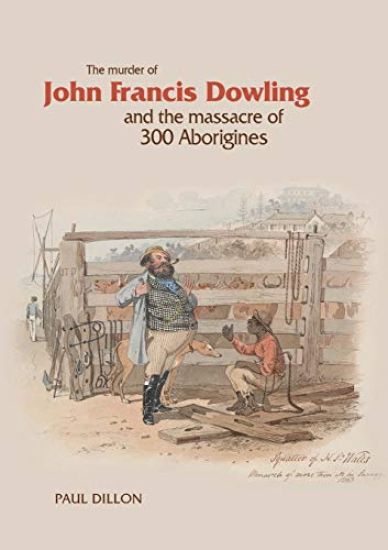
The Murder of John Francis Dowling and the Massacre of 300 Aborigines
Paul Dillon
Connor Court Publishing Pty Ltd
2019
pokkari
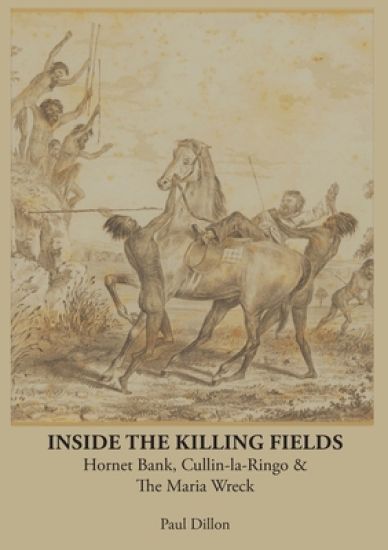
Cowboys and Indians, does that mean anything anymore? As a movie genre, it portrayed the white Anglo male as a hero, who sought to assert his authority over nature and all that inhabited it: Indians, rivers, mountains, animals, droughts, floods and gunmen. Were there any Cowboys and Indians in Australia's colonial past? Perhaps there were similarities. The white man took up the challenge of spreading the gospel and western technology so that he could convert the waste lands of Australia into an agrarian paradise where truth, justice and freedom prevailed against the benighted wilderness that stood menacingly at the farm gate. Did the heroic struggle of taming that wilderness for white settlers bring prosperity and civilisation to this vast land of primordial jungle and ignorance? Is there anything of value in the history of the settlement of Australia or was it just a tawdry bunch of colonial louts and new chums wandering the outback rootin, tootin and shootin? This book looks at a series of tragedies from the colonial past which have become lost symbols of heroism and fortitude. These tragedies were the result of crimes committed against defenceless white settlers. These tragic events should mean more than they do in the fabric of our national heritage but because Australia is such a vast land with so few people and even less national cohesion, they remain forever sideshows in cringe alley.