Kirjojen hintavertailu. Mukana 11 627 220 kirjaa ja 12 kauppaa.

Kirjahaku

Etsi kirjoja tekijän nimen, kirjan nimen tai ISBN:n perusteella.

8 kirjaa tekijältä Paul E. Spector

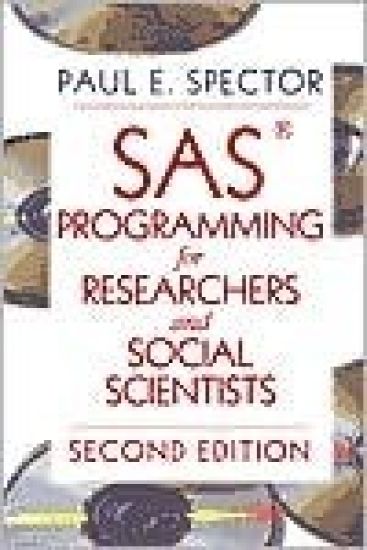
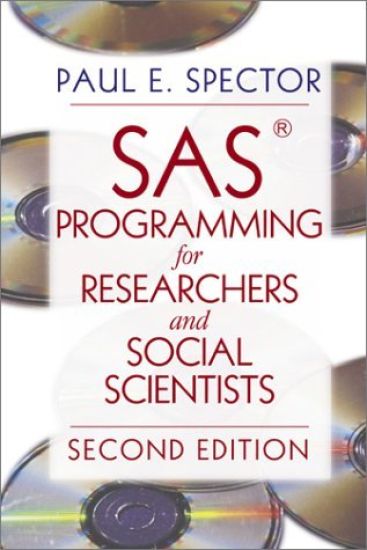
SAS Programming for Researchers and Social Scientists

SAS Programming for Researchers and Social Scientists

Paul E. Spector

SAGE Publications Inc
2001
sidottu
Second EditionSAS® PROGRAMMING FOR RESEARCHERS AND SOCIAL SCIENTISTSBy PAUL E. SPECTOR, University of South FloridaUniversity of South Florida"Just what the novice SAS programmer needs, particularly those who have no real programming experience. For example, branching is one of the more difficult programming commands for students to implement and the author does an excellentjob of explaining this topic clearly and at a basic level. A big plus is the Common Errors section since students will definitely encounter errors."—Robert Pavur, Management Science, University of North TexasThe book that won accolades from thousands has been completely revised! Taking a problem solving approach that focuses on common programming tasks that social scientists encounter in doing data analysis, Spector uses sample programs and examples from social science problems to show readers how to write orderly programs and avoid excessive and disorganized branching. He provides readers with a three-step approach (preplanning, writing the program, and debugging) and tips about helpful features and practices as well as how to avoid certain pitfalls. "Spector has done an excellent job in explaining a somewhat difficult topic in a clear and concise manner. I like the fact that screen captures are included. It allows students to better follow what is being described in the book in relation to what is on the screen."—Philip Craiger, Computer Science, University of Nebraska, OmahaThis book provides readers with even more practical tips and advice. New features in this edition include:*New sections on debugging in each chapter that provide advice about common errors*End of chapter Debugging Exercises that offer readers the chance to practice spotting the errors in the sample programs*New section in Chapter 1 on how to use the interface, including how to work with three separate windows, where to write the program, executing the program, managing the program files, and using the F key*Five new appendices, including a Glossary of Programming Terms, A Summary of SAS Language Statements, A Summary of SAS PROCs, Information Sources for SAS PROCs, and Corrections for the Debugging Exercises*Plus, a link to Spector's online SAS course!Appropriate for readers with little or no knowledge of the SAS language, this book will enable readers to run each example, adapt the examples to real problems that the reader may have, and create a program."A solid introduction to programming in SAS, with a good, brief explanation of how that process differs from the usual point-and-click of Windows-based software such as SPSS and a spreadsheet. Even uninformed students can use it as a guide to creating SAS datasets, manipulating them, and writing programs in the SAS language that will produce all manner of statistical results."—James P. Whittenburg, History, College of William & Mary "Bridges the gap between programming syntax and programming applications. In contrast to other books on SAS programming, this book combines a clear explanation of the SAS language with a problem-solving approach to writing a SAS program. It provides the novice programmer with a useful and meaningful model for solving the types of programming problems encountered by researchers and social scientists."—John E. Cornell, Biostatistician, Audie L. Murphy Memorial Hospital
SAS Programming for Researchers and Social Scientists

SAS Programming for Researchers and Social Scientists

Paul E. Spector

SAGE Publications Inc
2001
nidottu
Second EditionSAS® PROGRAMMING FOR RESEARCHERS AND SOCIAL SCIENTISTSBy PAUL E. SPECTOR, University of South FloridaUniversity of South Florida"Just what the novice SAS programmer needs, particularly those who have no real programming experience. For example, branching is one of the more difficult programming commands for students to implement and the author does an excellentjob of explaining this topic clearly and at a basic level. A big plus is the Common Errors section since students will definitely encounter errors."—Robert Pavur, Management Science, University of North TexasThe book that won accolades from thousands has been completely revised! Taking a problem solving approach that focuses on common programming tasks that social scientists encounter in doing data analysis, Spector uses sample programs and examples from social science problems to show readers how to write orderly programs and avoid excessive and disorganized branching. He provides readers with a three-step approach (preplanning, writing the program, and debugging) and tips about helpful features and practices as well as how to avoid certain pitfalls. "Spector has done an excellent job in explaining a somewhat difficult topic in a clear and concise manner. I like the fact that screen captures are included. It allows students to better follow what is being described in the book in relation to what is on the screen."—Philip Craiger, Computer Science, University of Nebraska, OmahaThis book provides readers with even more practical tips and advice. New features in this edition include:*New sections on debugging in each chapter that provide advice about common errors*End of chapter Debugging Exercises that offer readers the chance to practice spotting the errors in the sample programs*New section in Chapter 1 on how to use the interface, including how to work with three separate windows, where to write the program, executing the program, managing the program files, and using the F key*Five new appendices, including a Glossary of Programming Terms, A Summary of SAS Language Statements, A Summary of SAS PROCs, Information Sources for SAS PROCs, and Corrections for the Debugging Exercises*Plus, a link to Spector's online SAS course!Appropriate for readers with little or no knowledge of the SAS language, this book will enable readers to run each example, adapt the examples to real problems that the reader may have, and create a program."A solid introduction to programming in SAS, with a good, brief explanation of how that process differs from the usual point-and-click of Windows-based software such as SPSS and a spreadsheet. Even uninformed students can use it as a guide to creating SAS datasets, manipulating them, and writing programs in the SAS language that will produce all manner of statistical results."—James P. Whittenburg, History, College of William & Mary "Bridges the gap between programming syntax and programming applications. In contrast to other books on SAS programming, this book combines a clear explanation of the SAS language with a problem-solving approach to writing a SAS program. It provides the novice programmer with a useful and meaningful model for solving the types of programming problems encountered by researchers and social scientists."—John E. Cornell, Biostatistician, Audie L. Murphy Memorial Hospital
Research Designs

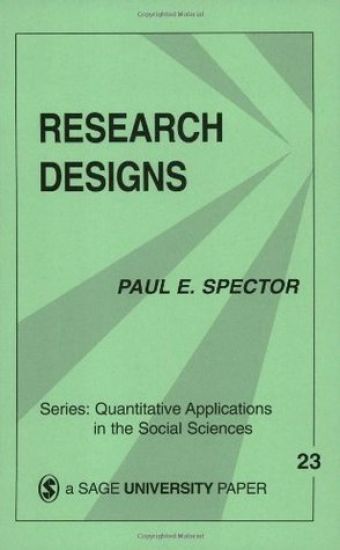
Research Designs

Paul E. Spector

SAGE Publications Inc
1981
nidottu
Author Paul E. Spector provides a clear introduction to the principles of experimental and non-experimental design, including single group design, pre-test, post-test designs, and factorial designs. Spector also covers hierarchical designs, multivariate designs, the Solomon four group design, panel designs, and designs with concomitant variables.
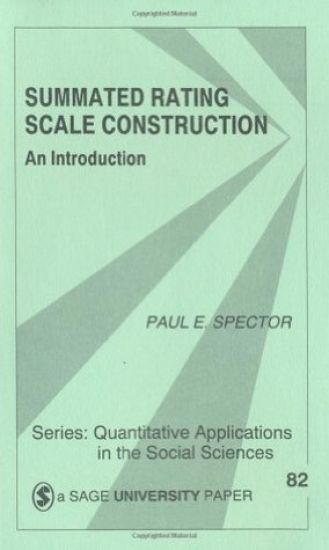
Summated Rating Scale Construction

Summated Rating Scale Construction

Paul E. Spector

SAGE Publications Inc
1992
nidottu
When a social scientist conducts a survey, the goal is to develop a rating on some attitude, value, or opinion—a summated rating scale. Aimed at helping researchers construct more effective summated rating scales, Spector shows how to determine the amount of items necessary, the appropriate amount of response categories, the most productive wording of items, how to sort good items from bad (including item-remainder coefficients and Cronbach's alpha), and how to validate a scale, including dimensional validity from factor analysis. This accessible book concludes with a step-by-step account of how to develop a summated rating scale based on classical test theory.
Job Satisfaction

Job Satisfaction

Paul E. Spector

TAYLOR FRANCIS LTD
2022
nidottu
Distilling the vast literature on this most frequently studied variable in organizational behavior, Paul E. Spector provides students and professionals with a pithy overview of the research and application of job satisfaction. In addition to discussing the nature of and techniques for assessing job satisfaction, this text summarizes the findings regarding how people feel toward work, including cultural and gender differences in job satisfaction, personal and organizational antecedents, potential consequences, and interventions to improve job satisfaction. Students, researchers, and practitioners will particularly appreciate the extensive list of references and the Job Satisfaction Survey included in the Appendix. This book includes the latest research and new topics including the business case for job satisfaction, customer service, disabled workers, leadership, mental health, organizational climate, virtual work, and work-family issues. Further, paulspector.com features an ongoing series of blog articles, links to assessments mentioned in the book, and other resources on job satisfaction to coincide with this text. This book is ideal for professionals, researchers, and undergraduate and graduate students in industrial and organizational psychology and organizational behavior, as well as in specialized courses on job attitudes or job satisfaction..
Job Satisfaction

Job Satisfaction

Paul E. Spector

TAYLOR FRANCIS LTD
2022
sidottu
Distilling the vast literature on this most frequently studied variable in organizational behavior, Paul E. Spector provides students and professionals with a pithy overview of the research and application of job satisfaction. In addition to discussing the nature of and techniques for assessing job satisfaction, this text summarizes the findings regarding how people feel toward work, including cultural and gender differences in job satisfaction, personal and organizational antecedents, potential consequences, and interventions to improve job satisfaction. Students, researchers, and practitioners will particularly appreciate the extensive list of references and the Job Satisfaction Survey included in the Appendix. This book includes the latest research and new topics including the business case for job satisfaction, customer service, disabled workers, leadership, mental health, organizational climate, virtual work, and work-family issues. Further, paulspector.com features an ongoing series of blog articles, links to assessments mentioned in the book, and other resources on job satisfaction to coincide with this text. This book is ideal for professionals, researchers, and undergraduate and graduate students in industrial and organizational psychology and organizational behavior, as well as in specialized courses on job attitudes or job satisfaction..
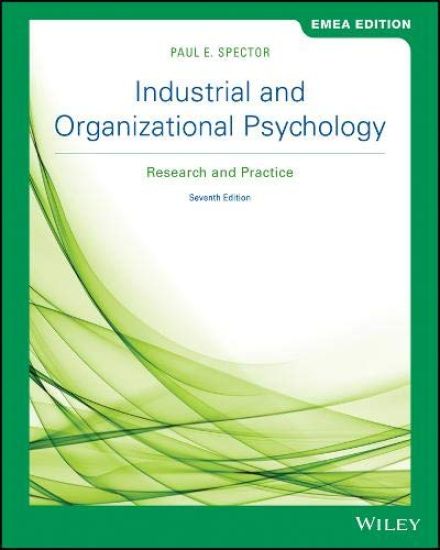
Industrial and Organizational Psychology

Industrial and Organizational Psychology

Paul E. Spector

John Wiley Sons Inc
2019
nidottu
Distinct from any other text of its kind, Industrial and Organizational Psychology: Research and Practice, 7th Edition provides a thorough and clear overview of the field, without overwhelming today's I/O Psychology student. Newly updated for its seventh edition, author Paul Spector provides readers with (1) cutting edge content and includes new and emerging topics, such as occupational health and safety, and (2) a global perspective of the field.
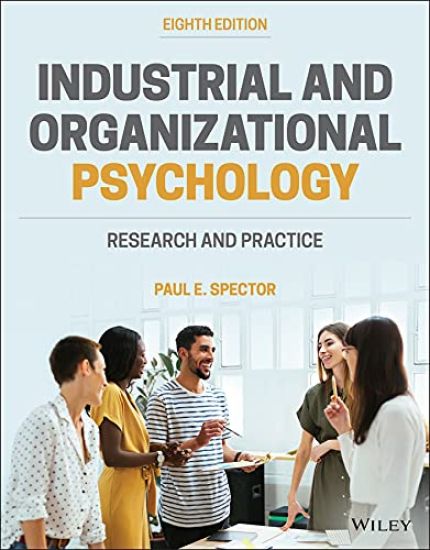
Industrial and Organizational Psychology

Industrial and Organizational Psychology

Paul E. Spector

JOHN WILEY SONS INC
2021
nidottu
Explore the foundations of, and latest developments in, industrial-organizational psychology from employee and employer perspectives In the newly revised Eighth Edition of Industrial and Organizational Psychology: Research and Practice, distinguished researcher and psychologist Paul E. Spector delivers a robust and up-to-date review of the industrial-organizational field that covers the latest research on contemporary trends and traditional areas of the subject. The author draws on four decades of research and teaching experience, balancing employee and organizational perspectives by covering issues relating to both employee well-being and productivity. The new edition places a special focus on how technology is affecting a variety of issues in industrial-organizational psychology, especially employee selection and training. The growing trend of gamification as it relates to employee assessment, motivation, and training is discussed. Each chapter includes a special feature that links to the author’s weekly blog expanding on the topics explained within the book. The book includes an instructor guide for using the blog in class. The book also offers: Current and balanced discussions of the most pertinent issues in industrial-organizational psychology todayA special focus on the use of technology by employers to impact employee selection and trainingPractical discussions of gamification as a tool in employee assessment, motivation, and trainingSpecial features in each chapter that link back to the author’s popular, weekly blog on a variety of industrial-organizational issues Perfect for undergraduate and graduate students studying industrial-organizational psychology, Industrial and Organizational Psychology: Research and Practice will also earn a place in the libraries of business students with an interest in organizational psychology seeking an accessible overview of the industrial-organizational field.