Kirjojen hintavertailu. Mukana 11 627 362 kirjaa ja 12 kauppaa.

Kirjahaku

Etsi kirjoja tekijän nimen, kirjan nimen tai ISBN:n perusteella.

7 kirjaa tekijältä Paul Edward Gottfried

Carl Schmitt

Carl Schmitt

Paul Edward Gottfried

Praeger Publishers Inc
1990
sidottu
Gottfried looks at Carl Schmitt as a critic of modern liberalism and as a defender of the national state who examined carefully Western historical and political traditions. Challenging the view that Schmitt was a mere polemicist who set out to subvert German democracy, Gottfried's work argues instead, that Schmitt criticized liberalism and democracy from a highly reflective position that combined analytical depth with staggering erudition. The book shows that almost all of Schmitt's critics try to deflect the thrust of his observations by stressing his unpleasant political associations and allegedly hidden motives. This new source also provides a useful bibliography on secondary literature dealing with Carl Schmitt's work. Gottfried's book is the most comprehensive study to date that addresses the major criticisms raised against Schmitt's understanding of politics. The book also underscores a point made by George Schwab and other recent biographers: that Schmitt made some of his strongest criticisms of liberal democracy while still a defender of the Weimar Republic. An excellent bibliographic resource, this book should appeal to anyone interested in German politics and to specialists in political theory and international relations.

After Liberalism

After Liberalism

Paul Edward Gottfried

Princeton University Press
2001
pokkari
In this trenchant challenge to social engineering, Paul Gottfried analyzes a patricide: the slaying of nineteenth-century liberalism by the managerial state. Many people, of course, realize that liberalism no longer connotes distributed powers and bourgeois moral standards, the need to protect civil society from an encroaching state, or the virtues of vigorous self-government. Many also know that today's "liberals" have far different goals from those of their predecessors, aiming as they do largely to combat prejudice, to provide social services and welfare benefits, and to defend expressive and "lifestyle" freedoms. Paul Gottfried does more than analyze these historical facts, however. He builds on them to show why it matters that the managerial state has replaced traditional liberalism: the new regimes of social engineers, he maintains, are elitists, and their rule is consensual only in the sense that it is unopposed by any widespread organized opposition. Throughout the western world, increasingly uprooted populations unthinkingly accept centralized controls in exchange for a variety of entitlements. In their frightening passivity, Gottfried locates the quandary for traditionalist and populist adversaries of the welfare state. How can opponents of administrative elites show the public that those who provide, however ineptly, for their material needs are the enemies of democratic self-rule and of independent decision making in family life? If we do not wake up, Gottfried warns, the political debate may soon be over, despite sporadic and ideologically confused populist rumblings in both Europe and the United States.
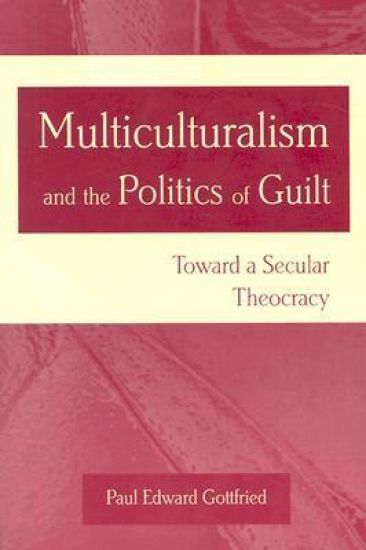
Multiculturalism and the Politics of Guilt

Multiculturalism and the Politics of Guilt

Paul Edward Gottfried

University of Missouri Press
2004
nidottu
Multiculturalism and the Politics of Guilt extends Paul Gottfried's examination of Western managerial government's growth in the last third of the twentieth century. Linking multiculturalism to a distinctive political and religious context, the book argues that welfare-state democracy, unlike bourgeois liberalism, has rejected the once conventional distinction between government and civil society.
The Strange Death of Marxism

The Strange Death of Marxism

Paul Edward Gottfried

University of Missouri Press
2018
nidottu
The Strange Death of Marxism seeks to refute certain misconceptions about the current European Left and its relation to Marxist and Marxist-Leninist parties that existed in the recent past. Among the misconceptions that the book treats critically and in detail is that the Post-Marxist Left (a term the book uses to describe this phenomenon) springs from a distinctly Marxist tradition of thought and that it represents an unqualified rejection of American capitalist values and practices.Three distinctive features of the book are the attempts to dissociate the present European Left from Marxism, the presentation of this Left as something that developed independently of the fall of the Soviet empire, and the emphasis on the specifically American roots of the European Left. Gottfried examines the multicultural orientation of this Left and concludes that it has little or nothing to do with Marxism as an economic-historical theory. It does, however, owe a great deal to American social engineering and pluralist ideology and to the spread of American thought and political culture to Europe.American culture and American political reform have foreshadowed related developments in Europe by years or even whole decades. Contrary to the impression that the United States has taken antibourgeois attitudes from Europeans, the author argues exactly the opposite. Since the end of World War II, Europe has lived in the shadow of an American empire that has affected the Old World, including its self-described anti-Americans. Gottfried believes that this influence goes back to who reads or watches whom more than to economic and military disparities. It is the awareness of American cultural as well as material dominance that fuels the anti-Americanism that is particularly strong on the European Left. That part of the European spectrum has, however, reproduced in a more extreme form what began as an American leap into multiculturalism. Hostility toward America, however, can be transformed quickly into extreme affection for the United States, which occurred during the Clinton administration and during the international efforts to bring a multicultural society to the Balkans.Clearly written and well conceived, The Strange Death of Marxism will be of special interest to political scientists, historians of contemporary Europe, and those critical of multicultural trends, particularly among Euro-American conservatives.
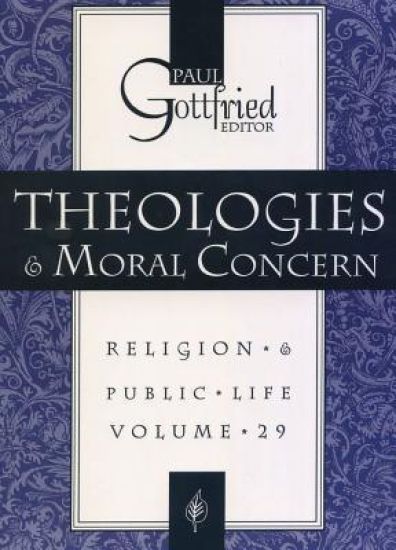
Theologies and Moral Concern

Theologies and Moral Concern

Paul Edward Gottfried

Routledge
2018
sidottu
This is the twenty-ninth volume in This World, a series on religion and public affairs. It focuses on theological and moral questions of deep significance for our time. The lines of division separating secular and religious outlooks, modernity and postmodernism, and romantic and classical styles of thought are some of the topics treated in this volume. Additional features are an exchange of opinions and a position paper intended to generate further discussion. This ongoing series of volumes seeks to provide a wide-ranging forum for differing views on religious and ethical considerations.Theologies and Moral Concern include the following major contributions: "Distinctions of Power: How Church and State Divide America" by Brian Mitchell; "Beyond the Impasses: Making Moral Sense of Abortion" by Anthony Matteo; "Are Religions Ever Traditional" by Jacob Neusner; "Philosophical Issues in Darwinian Theory" by Kenneth T. Gallagher; "Monotheism and Skepticism" by Aryeh Botwinick; "Defining Romantic Theology" by Gerhard Spiegler; and "The YMCA and Suburban America" by Clifford Putney. In addition, the volume features a dialogue between Michael A. Weinstein and Paul Gottfried on what constitutes the proper role for liberal arts education in contemporary American society as well as a position paper titled "The Pitfalls of Political Correctness" by Lawrence Nannery.Theologies and Moral Concern is part of an annual survey of religion and public life which aims to provide relevant information and ideas about significant issues of the day. It is directly pertinent to understanding the connection between religion and the state. This particular volume, coming at a time of intense public scrutiny of fundamentalism, evangelicism, and new religious movements generally, should have special appeal for political scientists, American studies specialists, sociologists, and those involved in the creation of public policy.
Theologies and Moral Concern

Theologies and Moral Concern

Paul Edward Gottfried

Transaction Publishers
1995
nidottu
This is the twenty-ninth volume in This World, a series on religion and public affairs. It focuses on theological and moral questions of deep significance for our time. The lines of division separating secular and religious outlooks, modernity and postmodernism, and romantic and classical styles of thought are some of the topics treated in this volume. Additional features are an exchange of opinions and a position paper intended to generate further discussion. This ongoing series of volumes seeks to provide a wide-ranging forum for differing views on religious and ethical considerations.Theologies and Moral Concern include the following major contributions: "Distinctions of Power: How Church and State Divide America" by Brian Mitchell; "Beyond the Impasses: Making Moral Sense of Abortion" by Anthony Matteo; "Are Religions Ever Traditional" by Jacob Neusner; "Philosophical Issues in Darwinian Theory" by Kenneth T. Gallagher; "Monotheism and Skepticism" by Aryeh Botwinick; "Defining Romantic Theology" by Gerhard Spiegler; and "The YMCA and Suburban America" by Clifford Putney. In addition, the volume features a dialogue between Michael A. Weinstein and Paul Gottfried on what constitutes the proper role for liberal arts education in contemporary American society as well as a position paper titled "The Pitfalls of Political Correctness" by Lawrence Nannery.Theologies and Moral Concern is part of an annual survey of religion and public life which aims to provide relevant information and ideas about significant issues of the day. It is directly pertinent to understanding the connection between religion and the state. This particular volume, coming at a time of intense public scrutiny of fundamentalism, evangelicism, and new religious movements generally, should have special appeal for political scientists, American studies specialists, sociologists, and those involved in the creation of public policy.
Multikulturalismus und die Politik der Schuld

Multikulturalismus und die Politik der Schuld

Paul Edward Gottfried

ARES Verlag
2004
sidottu
Multikulturalismus ist eines der hervorstechenden Merkmale der neueren westlichen Zivilisation. Paul Gottfried stellt dieses Phänomen in einen politischen und religiösen Zusammenhang. Für die neue politische Elite sind staatliche Wirtschaftslenkung und sozialpolitische Umverteilungen inzwischen weniger wichtig geworden als die Kontrolle über Meinungen, Gedanken und Redefreiheit. Eine auch von den Medien geförderte und stetig steigende unterschwellige Feindschaft gegenüber tradierten christlichen Werten ist das Kennzeichen dessen, was Gottfried den "therapeutischen Staat" nennt. Für Paul Gottfried hat eine immer aufdringlicher werdende political correctness insbesondere in den protestantisch geprägten westlichen Gesellschaften das traditionelle Christentum in eine Form der aggressiven Zivilreligion verwandelt. Religion reduziert sich immer mehr auf Sozialarbeit, darüber hinaus spielt das liberale Christentum des ausgehenden 20. Jhdts eine bedeutende Rolle als Verfechter der "Politik der Schuld". Die etablierten weißen Kirchen wandeln die ursprünglich rein metaphysisch verstandene Schuld um in eine freiwillige politische Selbsterniedrigung; die ungerecht leidenden Opfer werden identifiziert mit rassischen, kulturellen und lifestyle-Minderheiten. Diese Stilisierung gesellschaftlicher Opferrollen ist eines der Kennzeichen des sich in der Folge entwickelnden therapeutischen Staates. Gleichzeitig aber sorgt sich der Autor auch um das Anwachsen eines amerikanischen "Empire", das versucht, europäische Werte und Überlieferungen maßgeblich zu beeinflussen und zu ändern. Die Europäer, so der Autor, haben begonnen, die aus dem amerikanischen Protestantismus entstandene multikulturelle Bewegung als essentiell notwendig für eine demokratische Entwicklung hinzustellen. Damit hätten sie, bei aller sonstigen Kritik, auf diesem Gebiet in geradezu autoritätshöriger Weise amerikanische Vorstellungen übernommen. Eine vernünftige Entwicklung weg von diesen für die europäischen Kulturen und Nationalstaaten verderblichen "Politik der Schuld" wird aber nach Gottfried so lange nicht stattfinden, wie die Menschen einer radikal verzerrten Karikatur ihrer eigenen Geschichte hinterherlaufen.