Kirjojen hintavertailu. Mukana 11 717 486 kirjaa ja 12 kauppaa.

Kirjahaku

Etsi kirjoja tekijän nimen, kirjan nimen tai ISBN:n perusteella.

20 kirjaa tekijältä Paul Giles

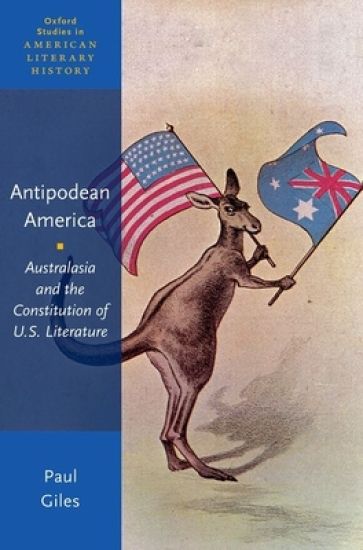
Antipodean America

Antipodean America

Paul Giles

Oxford University Press Inc
2016
nidottu
Although North America and Australasia occupy opposite ends of the earth, they have never been that far from each other conceptually. The United States and Australia both began as British colonies and mutual entanglements continue today, when contemporary cultures of globalization have brought them more closely into juxtaposition. Taking this transpacific kinship as his focus, Paul Giles presents a sweeping study that spans two continents and over three hundred years of literary history to consider the impact of Australia and New Zealand on the formation of U.S. literature. Early American writers such as Benjamin Franklin, Thomas Jefferson, Joel Barlow and Charles Brockden Brown found the idea of antipodes to be a creative resource, but also an alarming reminder of Great Britain's increasing sway in the Pacific. The southern seas served as inspiration for narratives by Washington Irving, Edgar Allan Poe, and Herman Melville. For African Americans such as Harriet Jacobs, Australia represented a haven from slavery during the gold rush era, while for E.D.E.N. Southworth its convict legacy offered an alternative perspective on the British class system. In the 1890s, Henry Adams and Mark Twain both came to Australasia to address questions of imperial rivalry and aesthetic topsy-turvyness. The second half of this study considers how Australia's political unification through Federation in 1901 significantly altered its relationship to the United States. New modes of transport and communication drew American visitors, including novelist Jack London. At the same time, Americans associated Australia and New Zealand with various kinds of utopian social reform, particularly in relation to gender politics, a theme Giles explores in William Dean Howells, Charlotte Perkins Gilman, and Miles Franklin. He also considers how American modernism in New York was inflected by the Australasian perspectives of Lola Ridge and Christina Stead, and how Australian modernism was in turn shaped by American styles of iconoclasm. After World War II, Giles examines how the poetry of Karl Shapiro, Louis Simpson, Yusef Komunyakaa, and others was influenced by their direct experience of Australia. He then shifts to post-1945 fiction, where the focus extends from Irish-American cultural politics (Raymond Chandler, Thomas Keneally) to the paradoxes of exile (Shirley Hazzard, Peter Carey) and the structural inversions of postmodernism and posthumanism (Salman Rushdie, Donna Haraway). Ranging from figures like John Ledyard to John Ashbery, from Emily Dickinson to Patricia Piccinini and J. M. Coetzee, Antipodean America is a truly epic work of transnational literary history.
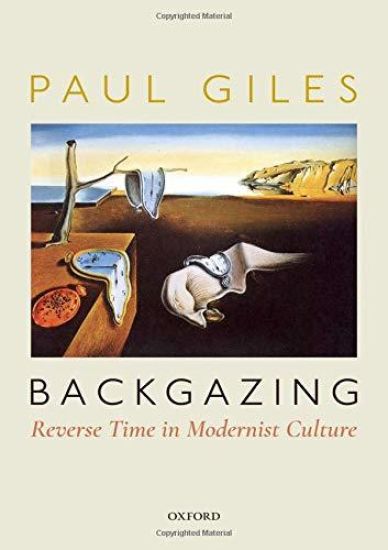
Backgazing: Reverse Time in Modernist Culture

Backgazing: Reverse Time in Modernist Culture

Paul Giles

Oxford University Press
2019
sidottu
This volume trace ways in which time is represented in reverse forms throughout modernist culture, from the beginning of the twentieth century until the decade after World War II. Though modernism is often associated with revolutionary or futurist directions, this book argues instead that a retrograde dimension is embedded within it. By juxtaposing the literature of Europe and North America with that of Australia and New Zealand, it suggests how this antipodean context serves to defamiliarize and reconceptualize normative modernist understandings of temporal progression. Backgazing thus moves beyond the treatment of a specific geographical periphery as another margin on the expanding field of 'New Modernist Studies'. Instead, it offers a systematic investigation of the transformative effect of retrograde dimensions on our understanding of canonical modernist texts. The title, 'backgazing', is taken from Australian poet Robert G. FitzGerald's 1938 poem 'Essay on Memory', and it epitomizes how the cultural history of modernism can be restructured according to a radically different discursive map. Backgazing intellectually reconfigures US and European modernism within a planetary orbit in which the literature of Australia and the Southern Hemisphere, far from being merely an annexed margin, can be seen substantively to change the directional compass of modernism more generally. By reading canonical modernists such as James Joyce and T. S. Eliot alongside marginalized writers such as Nancy Cunard and others and relatively neglected authors from Australia and New Zealand, this book offers a revisionist cultural history of modernist time, one framed by a recognition of how its measurement is modulated across geographical space.
The Planetary Clock

The Planetary Clock

Paul Giles

Oxford University Press
2021
sidottu
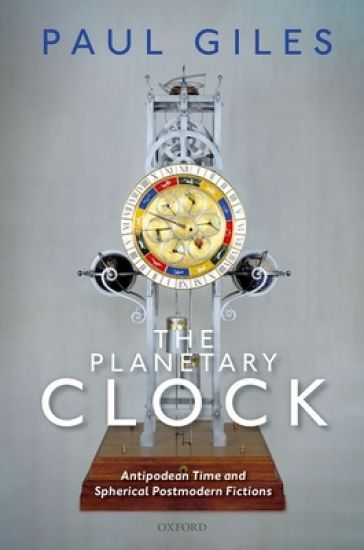
The theme of The Planetary Clock is the representation of time in postmodern culture and the way temporality as a global phenomenon manifests itself differently across an antipodean axis. To trace postmodernism in an expansive spatial and temporal arc, from its formal experimentation in the 1960s to environmental concerns in the twenty-first century, is to describe a richer and more complex version of this cultural phenomenon. Exploring different scales of time from a Southern Hemisphere perspective, with a special emphasis on issues of Indigeneity and the Anthropocene, The Planetary Clock offers a wide-ranging, revisionist account of postmodernism, reinterpreting literature, film, music, and visual art of the post-1960 period within a planetary framework. By bringing the culture of Australia and New Zealand into dialogue with other Western narratives, it suggests how an antipodean impulse, involving the transposition of the world into different spatial and temporal dimensions, has long been an integral (if generally occluded) aspect of postmodernism. Taking its title from a Florentine clock designed in 1510 to measure worldly time alongside the rotation of the planets, The Planetary Clock ranges across well-known American postmodernists (John Barth, Toni Morrison) to more recent science fiction writers (Octavia Butler, Richard Powers), while bringing the US tradition into juxtaposition with both its English (Philip Larkin, Ian McEwan) and Australian (Les Murray, Alexis Wright) counterparts. By aligning cultural postmodernism with music (Messiaen, Ligeti, Birtwistle), the visual arts (Hockney, Blackman, Fiona Hall), and cinema (Rohmer, Haneke, Tarantino), this volume enlarges our understanding of global postmodernism for the twenty-first century.
Atlantic Republic

Atlantic Republic

Paul Giles

Oxford University Press
2006
sidottu
Atlantic Republic traces the legacy of the United States both as a place and as an idea in the work of English writers from 1776 to the present day. Seeing the disputes of the Reformation as a precursor to this transatlantic divide, it argues that America has operated since the Revolution as a focal point for various traditions of dissent within English culture. By ranging over writers from Richard Price and Susanna Rowson in the 1790s to Angela Carter and Salman Rushdie at the turn of the twenty-first century, the book argues that America haunts the English literary tradition as a parallel space where ideology and aesthetics are configured differently. Consequently, it suggests, many of the key episodes in British history-parliamentary reform in the 1830s, the imperial designs of the Victorian era, the twentieth-century conflict with fascism, the advance of globalization since 1980-have been shaped by implicit dialogues with American cultural models. Rather than simply reinforcing the benign myth of a 'special relationship', Paul Giles considers how various English writers over the past 200 years have engaged with America for various complicated reasons: its promise of political republicanism (Byron, Mary Shelley); its emphasis on religious disestablishment (Clough, Gissing); its prospect of pastoral regeneration (Ruxton, Lawrence); its vision of scientific futurism (Huxley, Ballard). The book also analyses the complex cultural relations between Britain and the United States around the time of the Second World War, suggesting that writers such as Wodehouse, Isherwood, and Auden understood the United States and Germany to offer alternative versions of the kind of technological modernity that appeared equally hostile to traditional forms of English culture. The book ends with a consideration of ways in which the canon of English literature might appear in a different light if seen from a transnational rather than a familiar national perspective.
Antipodean America

Antipodean America

Paul Giles

Oxford University Press Inc
2014
sidottu
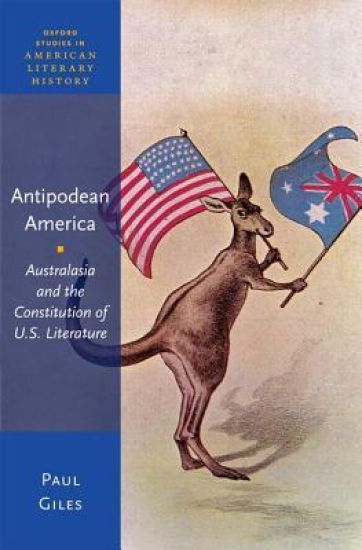
A sweeping study that spans two continents and over three hundred years of literary history, Antipodean America argues that images of Australasia as an imagined "end of the earth" establishes the presence of an understudied historical and global consciousness, oriented toward the Pacific, in American literature. Paul Giles shows how places like Australia and New Zealand become the silent other whose likenesses to the US induce condescension, fear, paranoia, envy, rivalry, and narcissistic appropriation. The American engagement with Australasia, Giles demonstrates, has been constant since the eighteenth century and it is evinced in works by the most canonical figures in US literary history. Reading a range of works by figures like Benjamin Franklin, Herman Melville, Emily Dickinson, Mark Twain, Raymond Chandler, and John Ashbery, alongside writers like Miles Franklin, Peter Carey, and J.M. Coetzee, Antipodean America provides a welcome transnational perspective that will redefine our perception of what constitutes American literature.
Atlantic Republic

Atlantic Republic

Paul Giles

Oxford University Press
2009
nidottu
Atlantic Republic traces the legacy of the United States both as a place and as an idea in the work of English writers from 1776 to the present day. Seeing the disputes of the Reformation as a precursor to this transatlantic divide, it argues that America has operated since the Revolution as a focal point for various traditions of dissent within English culture. By ranging over writers from Richard Price and Susanna Rowson in the 1790s to Angela Carter and Salman Rushdie at the turn of the twenty-first century, the book argues that America haunts the English literary tradition as a parallel space where ideology and aesthetics are configured differently. Consequently, it suggests, many of the key episodes in British history-parliamentary reform in the 1830s, the imperial designs of the Victorian era, the twentieth-century conflict with fascism, the advance of globalization since 1980-have been shaped by implicit dialogues with American cultural models. Rather than simply reinforcing the benign myth of a 'special relationship', Paul Giles considers how various English writers over the past 200 years have engaged with America for various complicated reasons: its promise of political republicanism (Byron, Mary Shelley); its emphasis on religious disestablishment (Clough, Gissing); its prospect of pastoral regeneration (Ruxton, Lawrence); its vision of scientific futurism (Huxley, Ballard). The book also analyses the complex cultural relations between Britain and the United States around the time of the Second World War, suggesting that writers such as Wodehouse, Isherwood, and Auden understood the United States and Germany to offer alternative versions of the kind of technological modernity that appeared equally hostile to traditional forms of English culture. The book ends with a consideration of ways in which the canon of English literature might appear in a different light if seen from a transnational rather than a familiar national perspective.
American Catholic Arts and Fictions

American Catholic Arts and Fictions

Paul Giles

Cambridge University Press
2008
pokkari
Paul Giles describes how secular transformations of religious ideas have helped to shape the style and substance of works by American writers, filmmakers and artists from Catholic backgrounds such as Orestes Brownson, Theodore Dreiser, Mary McCarthy, Robert Mapplethorpe, Alfred Hitchcock and Robert Altman. The book also explores how Catholicism was represented and mythologized by other American writers. By highlighting the recurring themes and preoccupations of American Catholic fictions, Giles challenges many of the accepted ideas about the centrality of Romanticism to the American literary canon. He reconstructs the different social, historical and philosophical contexts from which aesthetics in the 'Catholic' tradition have emerged, and shows how these stand in an oblique relationship to the assumptions of the American Enlightenment.
Hart Crane

Hart Crane

Paul Giles

Cambridge University Press
2009
pokkari
When Hart Crane's epic poem The Bridge was published in 1930, it was generally judged a failure. Critics said the poet had unwisely attempted to create a mystical synthesis of modern America out of inadequate materials. Crane himself, who committed suicide in 1932, did little to correct this impression; and although the poet's reputation has fluctuated over the past fifty years, many people still find The Bridge unsatisfactory. In this analysis of Crane's long poem, Paul Giles demonstrates that the author was consciously constructing his Bridge out of a huge number of puns and paradoxes, most of which have never been noticed by Crane's readers. Dr Giles shows how Crane was directly influenced by the early work of James Joyce; how the composition of The Bridge ran parallel to the first serialisation of Finnegans Wake in Paris; and how The Bridge is the first great work of the 'Revolution of the Word' movement, predating the final published version of Finnegans Wake by nine years.
Hart Crane

Hart Crane

Paul Giles

Cambridge University Press
1986
sidottu
When Hart Crane's epic poem The Bridge was published in 1930, it was generally judged a failure. Critics said the poet had unwisely attempted to create a mystical synthesis of modern America out of inadequate materials. Crane himself, who committed suicide in 1932, did little to correct this impression, and many people still find the poem unsatisfactory. In this startling and exhaustive analysis of The Bridge Paul Giles shows that Crane was consciously constructing his poem out of a huge number of puns and paradoxes, most of which have until now never been noticed. He also shows how. Crane was directly influenced by James Joyce (the composition of The Bridge ran parallel to the first serialisation of Finnegans Wake) and he suggests a number of other contexts which illuminate the poem: Einstein and relativity, Freud and psychoanalysis, bootlegging, burlesque theatre, Hollywood cinema.
American Catholic Arts and Fictions

American Catholic Arts and Fictions

Paul Giles

Cambridge University Press
1992
sidottu
Paul Giles describes how secular transformations of religious ideas have helped to shape the style and substance of works by American writers, filmmakers and artists from Catholic backgrounds such as Orestes Brownson, Theodore Dreiser, Mary McCarthy, Robert Mapplethorpe, Alfred Hitchcock and Robert Altman. The book also explores how Catholicism was represented and mythologized by other American writers. By highlighting the recurring themes and preoccupations of American Catholic fictions, Giles challenges many of the accepted ideas about the centrality of Romanticism to the American literary canon. He reconstructs the different social, historical, and philosophical contexts from which aesthetics in the ‘Catholic’ tradition have emerged, and shows how these stand in an oblique relationship to the assumptions of the American Enlightenment.
The Global Remapping of American Literature

The Global Remapping of American Literature

Paul Giles

Princeton University Press
2011
sidottu
This book charts how the cartographies of American literature as an institutional category have varied radically across different times and places. Arguing that American literature was consolidated as a distinctively nationalist entity only in the wake of the U.S. Civil War, Paul Giles identifies this formation as extending until the beginning of the Reagan presidency in 1981. He contrasts this with the more amorphous boundaries of American culture in the eighteenth century, and with ways in which conditions of globalization at the turn of the twenty-first century have reconfigured the parameters of the subject. In light of these fluctuating conceptions of space, Giles suggests new ways of understanding the shifting territory of American literary history. ranging from Cotton Mather to David Foster Wallace, and from Henry Wadsworth Longfellow to Zora Neale Hurston. Giles considers why European medievalism and Native American prehistory were crucial to classic nineteenth-century authors such as Emerson, Hawthorne, and Melville. He discusses how twentieth-century technological innovations, such as air travel, affected representations of the national domain in the texts of F. Scott Fitzgerald and Gertrude Stein. And he analyzes how regional projections of the South and the Pacific Northwest helped to shape the work of writers such as William Gilmore Simms, Jose Marti, Elizabeth Bishop, and William Gibson. Bringing together literary analysis, political history, and cultural geography, The Global Remapping of American Literature reorients the subject for the transnational era.
The Global Remapping of American Literature

The Global Remapping of American Literature

Paul Giles

Princeton University Press
2018
pokkari
This book charts how the cartographies of American literature as an institutional category have varied radically across different times and places. Arguing that American literature was consolidated as a distinctively nationalist entity only in the wake of the U.S. Civil War, Paul Giles identifies this formation as extending until the beginning of the Reagan presidency in 1981. He contrasts this with the more amorphous boundaries of American culture in the eighteenth century, and with ways in which conditions of globalization at the turn of the twenty-first century have reconfigured the parameters of the subject. In light of these fluctuating conceptions of space, Giles suggests new ways of understanding the shifting territory of American literary history. ranging from Cotton Mather to David Foster Wallace, and from Henry Wadsworth Longfellow to Zora Neale Hurston. Giles considers why European medievalism and Native American prehistory were crucial to classic nineteenth-century authors such as Emerson, Hawthorne, and Melville. He discusses how twentieth-century technological innovations, such as air travel, affected representations of the national domain in the texts of F. Scott Fitzgerald and Gertrude Stein. And he analyzes how regional projections of the South and the Pacific Northwest helped to shape the work of writers such as William Gilmore Simms, José Martí, Elizabeth Bishop, and William Gibson. Bringing together literary analysis, political history, and cultural geography, The Global Remapping of American Literature reorients the subject for the transnational era.
Transnationalism in Practice

Transnationalism in Practice

Paul Giles

Edinburgh University Press
2010
sidottu
Transnationalism in Practice brings together fourteen essays written by Paul Giles between 1994 and 2009 on the subjects of American studies, literature and religion. In an introduction written especially for the collection, Giles traces the evolution of critical transnationalism as it developed through the 1980s and 1990s. The volume includes "Reconstructing American Studies" (1994), one of the first articles to address the field from a transnational perspective, along with other pieces on methodological and practical issues surrounding the internationalization of American studies. The essays on American literature contain work on Theodore Dreiser, Henry James and the critic F. O. Matthiessen, along with a new study of Jamaica Kincaid in relation to postcolonialism. The section on religion traces the circulation of secularized forms of Catholicism in U.S. culture, from nineteenth-century slave narratives to the musical performances of Bruce Springsteen. Transnationalism in Practice ranges widely, from the culture of colonial America to the novels of Robert Coover and Kathy Acker, while also encompassing a broad range of interdisciplinary topics, from the presidency of George W. Bush to the role of religion in American society. This book will be of interest to all of those concerned with the place of U.S. culture in the world today.
Transatlantic Insurrections

Transatlantic Insurrections

Paul Giles

University of Pennsylvania Press
2001
pokkari
Selected by Choice magazine as an Outstanding Academic Title Paul Giles traces the paradoxical relations between English and American literature from 1730 through 1860, suggesting how the formation of a literary tradition in each national culture was deeply dependent upon negotiation with its transatlantic counterpart. Using the American Revolution as the fulcrum of his argument, Giles describes how the impulse to go beyond conventions of British culture was crucial in the establishment of a distinct identity for American literature. Similarly, he explains the consolidation of British cultural identity partly as a response to the need to suppress the memory and consequences of defeat in the American revolutionary wars. Giles ranges over neglected American writers such as Mather Byles and the Connecticut Wits as well as better-known figures like Franklin, Jefferson, Irving, and Hawthorne. He reads their texts alongside those of British authors such as Pope, Richardson, Equiano, Austen, and Trollope. Taking issue with more established utopian narratives of American literature, Transatlantic Insurrections analyzes how elements of blasphemous, burlesque humor entered into the making of the subject.
Virtual Americas

Virtual Americas

Paul Giles

Duke University Press
2002
sidottu
Arguing that limited nationalist perspectives have circumscribed the critical scope of American Studies scholarship, Virtual Americas advocates a comparative criticism that illuminates the work of well-known literary figures by defamiliarizing it-placing it in unfamiliar contexts. Paul Giles looks at a number of canonical nineteenth- and twentieth-century American writers by focusing on their interactions with British culture. He demonstrates how American authors from Herman Melville to Thomas Pynchon have been compulsively drawn to negotiate with British culture so that their nationalist agendas have emerged, paradoxically, through transatlantic dialogues. Virtual Americas ultimately suggests that conceptions of national identity in both the United States and Britain have emerged through engagement with-and, often, deliberate exclusion of-ideas and imagery emanating from across the Atlantic.Throughout Virtual Americas Giles focuses on specific examples of transatlantic cultural interactions such as Frederick Douglass’s experiences and reputation in England; Herman Melville’s satirizing fictions of U.S. and British nationalism; and Vladimir Nabokov’s critique of European high culture and American popular culture in Lolita. He also reverses his perspective, looking at the representation of San Francisco in the work of British-born poet Thom Gunn and Sylvia Plath’s poetic responses to England. Giles develops his theory about the need to defamiliarize the study of American literature by considering the cultural legacy of Surrealism as an alternative genealogy for American Studies and by examining the transatlantic dimensions of writers such as Henry James and Robert Frost in the context of Surrealism.
Virtual Americas

Virtual Americas

Paul Giles

Duke University Press
2002
pokkari
Arguing that limited nationalist perspectives have circumscribed the critical scope of American Studies scholarship, Virtual Americas advocates a comparative criticism that illuminates the work of well-known literary figures by defamiliarizing it-placing it in unfamiliar contexts. Paul Giles looks at a number of canonical nineteenth- and twentieth-century American writers by focusing on their interactions with British culture. He demonstrates how American authors from Herman Melville to Thomas Pynchon have been compulsively drawn to negotiate with British culture so that their nationalist agendas have emerged, paradoxically, through transatlantic dialogues. Virtual Americas ultimately suggests that conceptions of national identity in both the United States and Britain have emerged through engagement with-and, often, deliberate exclusion of-ideas and imagery emanating from across the Atlantic.Throughout Virtual Americas Giles focuses on specific examples of transatlantic cultural interactions such as Frederick Douglass’s experiences and reputation in England; Herman Melville’s satirizing fictions of U.S. and British nationalism; and Vladimir Nabokov’s critique of European high culture and American popular culture in Lolita. He also reverses his perspective, looking at the representation of San Francisco in the work of British-born poet Thom Gunn and Sylvia Plath’s poetic responses to England. Giles develops his theory about the need to defamiliarize the study of American literature by considering the cultural legacy of Surrealism as an alternative genealogy for American Studies and by examining the transatlantic dimensions of writers such as Henry James and Robert Frost in the context of Surrealism.
American World Literature: An Introduction
A scholarly review of American world literature from early times to the postmodernist era American World Literature: An Introduction explores how the subject of American Literature has evolved from a national into a global phenomenon. As the author, Paul Giles – a noted expert on the topic – explains, today American Literature is understood as engaging with the wider world rather than merely with local or national circumstances. The book offers an examination of these changing conceptions of representation in both a critical and an historical context. The author examines how the perception of American culture has changed significantly over time and how this has been an object of widespread social and political debate. From examples of early American literature to postmodernism, the book charts ways in which the academic subject areas of American Literature and World Literature have converged – and diverged – over the past generations. Written for students of American literature at both undergraduate and postgraduate levels and in all areas of historical specialization, American World Literature offers an authoritative guide to global phenomena of American World literature and how this subject has undergone crucial changes in perception over the past thirty years.
American World Literature: An Introduction
A scholarly review of American world literature from early times to the postmodernist era American World Literature: An Introduction explores how the subject of American Literature has evolved from a national into a global phenomenon. As the author, Paul Giles – a noted expert on the topic – explains, today American Literature is understood as engaging with the wider world rather than merely with local or national circumstances. The book offers an examination of these changing conceptions of representation in both a critical and an historical context. The author examines how the perception of American culture has changed significantly over time and how this has been an object of widespread social and political debate. From examples of early American literature to postmodernism, the book charts ways in which the academic subject areas of American Literature and World Literature have converged – and diverged – over the past generations. Written for students of American literature at both undergraduate and postgraduate levels and in all areas of historical specialization, American World Literature offers an authoritative guide to global phenomena of American World literature and how this subject has undergone crucial changes in perception over the past thirty years.
Globalnyj peresmotr karty amerikanskoj literatury

Globalnyj peresmotr karty amerikanskoj literatury

Paul Giles

Academic Studies Press/BiblioRossika
2023
sidottu
V knige Pola Dzhajlza pokazano, kak radikalno menjalas karta amerikanskoj literatury v raznye epokhi. Utverzhdaja, chto ponjatie amerikanskoj literatury vozniklo uzhe posle Grazhdanskoj vojny, vo vtoroj polovine devjatnadtsatogo veka, avtor razvorachivaet kartinu protsessa formirovanija amerikanskogo literaturnogo kanona, kotoryj prodolzhalsja vplot do nachala prezidentstva Rejgana v 1981 godu.Dzhajlz predlagaet novye sposoby ponimanija menjajuschejsja territorii amerikanskoj literaturnoj istorii ot Kottona Mezera do Devida Fostera Uollesa, ot Genri Longfello do Zory Nil Kherston.Perevodchik: Polej Olga