Kirjojen hintavertailu. Mukana 11 627 220 kirjaa ja 12 kauppaa.

Kirjahaku

Etsi kirjoja tekijän nimen, kirjan nimen tai ISBN:n perusteella.

23 kirjaa tekijältä Paul Griffiths

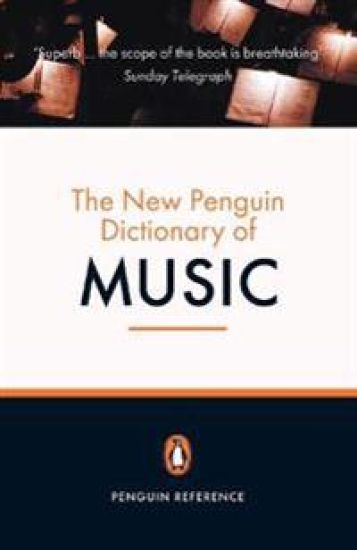
The New Penguin Dictionary of Music

The New Penguin Dictionary of Music

Paul Griffiths

Penguin Books Ltd
2006
pokkari
The New Penguin Dictionary of Music is the essential A-Z of some 1,000 years of Western music. It explores in detail the lives and achievements of a huge range of composers, and examines such key topics as music history (from medieval plainchant to contemporary minimalism), performers, theory and jargon. Written by an award-winning music critic, and blending scholarship with personal insight and opinion, this dictionary is both a pleasurable read and an invaluable and authoritative reference book for all lovers of music, whether amateur or professional.
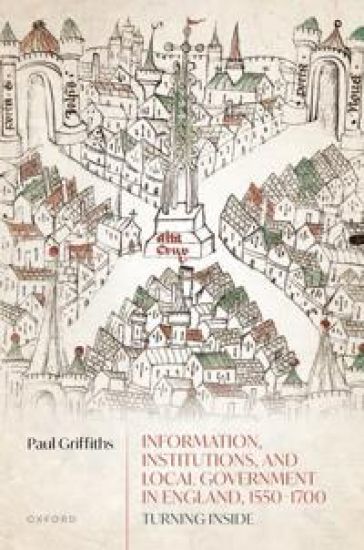
Information, Institutions, and Local Government in England, 1550-1700
The years between 1550 and 1700 saw significant changes in the nature and scope of local government: sophisticated information and intelligence systems were developed; magistrates came to rely more heavily on surveillance to inform 'good government'; and England's first nationwide system of incarceration was established within bridewells. But while these sizeable and lasting shifts have been well studied, less attention has been paid to the important characteristic that they shared: the 'turning inside' of the title. What was happening beneath this growth in activity was a shift from 'open' to 'closed' management of a host of problems--from the representation of authority itself to treatment of every kind of local disorder, from petty crime and poverty to dirty streets. Information, Institutions, and Local Government in England, 1550-1700 explores the character and consequences of these changes for the first time. Drawing on wide-ranging archival research in 34 archives, the book examines the ways in which the notion of representing authority and ethics in public (including punishment) was increasingly called into question in early modern England, and how and why local government officials were involved in this. This 'turning inside' was encouraged by insistence on precision and clarity in broad bodies of knowledge, culture, and practice that had lasting impacts on governance, as well as a range of broader demographic, social, and economic changes that led to deeper poverty, thinner resources, more movement, and imagined or real crime-waves. In so doing, and by drawing on a diverse range of examples, the book offers important new perspectives on local government, visual representation, penal cultures, institutions, incarceration, and surveillance in the early modern period.
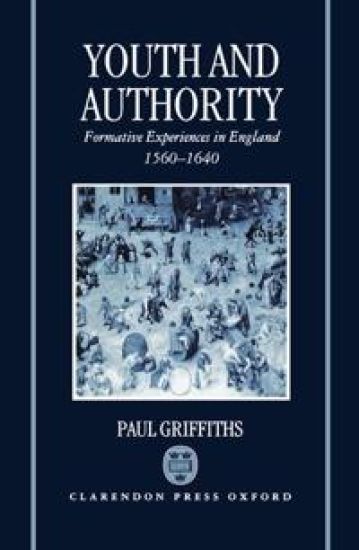
Youth and Authority

Youth and Authority

Paul Griffiths

Clarendon Press
1996
sidottu
It is now well-known that there was a separate age of youth in sixteenth-and seventeenth-century society (and before) but in much of the writing on this subject, youth has emerged as a passive construct of the adult society, lacking formative experiences. Paul Griffiths seeks to redress this imbalance by presenting a more `positive' image of young people, showing that they had a creative presence, an identity, and a historical significance which has never been fully explored. The author looks beyond the prescriptive codes of moralists and governors to survey the attitudes and activities of young people, examining their reaction to authority and to society's concept of the `ideal place' for them in the social order. He sheds new light on issues as diverse as juvenile delinquency, masculinity, the celebration of Shrovetide, sexual behaviour and courtship, clothing, catechizing, office-holding, vocabularies of insult, prostitution, and church seating plans. His research reveals much about the nature of youth culture, religious commitment, and master/servant relations, and leads to the identification of a separate milieu of `masterless' young people. Contemporary moralists called youth `the choosing time', a time of great risks and great potential; and the best time to incalculate political conformity and sound religion. Yet the concept of choice was double-edged, it recognized that young people had other options besides these expectations. This ambiguity is a central theme of theis book which demonstrates that although there was a critical politics of age during this period, young people had their own initiatives and strategies and grew up in all sorts of ways.
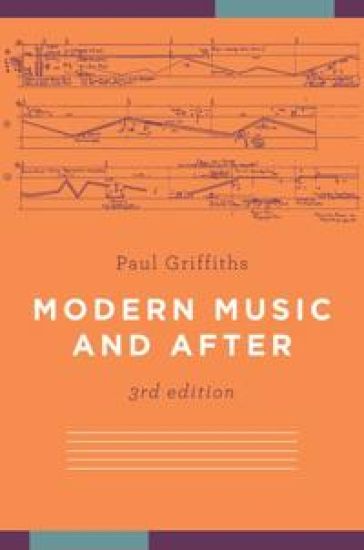
Modern Music and After

Modern Music and After

Paul Griffiths

Oxford University Press Inc
2011
nidottu
Over three decades, Paul Griffiths's survey has remained the definitive study of music since the Second World War; this fully revised and updated edition re-establishes Modern Music and After as the preeminent introduction to the music of our time. The disruptions of the war, and the struggles of the ensuing peace, were reflected in the music of the time: in Pierre Boulez's radical reformation of compositional technique and in John Cage's development of zen music; in Milton Babbitt's settling of the serial system and in Dmitry Shostakovich's unsettling symphonies; in Karl Stockhausen's development of electronic music and in Luigi Nono's pursuit of the universally human, in Iannis Xenakis's view of music as sounding mathematics and in Luciano Berio's consideration of it as language. The initiatives of these composers and their contemporaries opened prospects that haven't yet stopped unfolding. This constant expansion of musical thinking since 1945 has left us with no singular history of music; Griffiths's study accordingly follows several different paths, showing how and why they converge and diverge. This new edition of Modern Music and After discusses not only the music of the fifteen years that have passed since the previous edition, but also the recent explosion of scholarly interest in the latter half of the Twentieth Century. In particular, the third section of the book, 1980-1990, is expanded to incorporate the variety of responses to the modernist impasse experienced by composers of the time. In addition, a new fourth part, "After Postmodernism: the 1990s and 2000s," examines highly influential composers like Philip Glass and Pierre Boulez as well as such topics as "Modernist Continuation" and "Music and the Internet." For its breadth, wealth of detail, and characteristic wit and clarity, the third edition of Modern Music and After is required reading for the student and the enquiring listener.
A Concise History of Western Music

A Concise History of Western Music

Paul Griffiths

Cambridge University Press
2009
pokkari
Engaging, clear and informative, this is the story of western music - of its great composers and also of its performers and listeners, of changing ideas of what music is and what it is for. Paul Griffiths shows how music has evolved through the centuries, and suggests how its evolution has mirrored developments in the human notion of time, from the eternity of heaven to the computer's microsecond. The book provides an enticing introduction for students and beginners, using the minimum of technical terms, all straightforwardly defined in the glossary. Its perspective and its insights will also make it illuminating for teachers, musicians and music lovers. Suggestions for further reading and recommended recordings are given for each of the 24 short chapters.
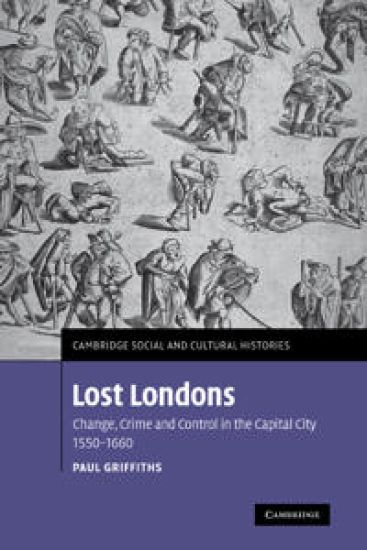
Lost Londons

Lost Londons

Paul Griffiths

Cambridge University Press
2010
pokkari
A major study of the transformation of early modern London. By focusing on policing, prosecution, and the language and perceptions of the authorities and the underclasses, Paul Griffiths explores the swift growth of London and the changes to its cultures, communities, and environments. Through a series of thematic chapters he maps problem areas and people; reconstructs the atmosphere of the streets; and traces the development of policing in the city. The book provided the first full study of petty crime before 1660, analysing worlds and words of crime, criminal rings and cultures, and tracking changing meanings of crime to reveal alternative emphases on environmental crimes and crimes committed by women. It also examines the key roles of Bridewell prison, hospitals, medical provision, and penal practices, shedding light on investigation, detection, surveillance, and public prosecution. Viewed through this fascinating account, the city will never look the same again.
Igor Stravinsky: The Rake's Progress

Igor Stravinsky: The Rake's Progress

Paul Griffiths

Cambridge University Press
1982
pokkari
The Rake’s Progress is Stravinsky’s biggest work and one of the few great operas written since the 1920s, rare too for the unusual quality of its libretto, by Auden and Kallman. Its importance is undisputed, but so too are the problems it raises: problems of both performance and understanding, caused by the irony with which it is so thoroughly permeated. In aspects of style and operatic convention it looks back to the eighteenth century, and in particular to the operas of Mozart and da Ponte, while making references also to other periods, to operas from Monteverdi to Verdi. Yet at the same time it is wholly a work of the twentieth century, and indeed it is centrally concerned with the impossibility of return, artistic, psychological or actual, as well as with the nature and limitiation of human free will. The Rake’s Progress is not one of unbridled dissipation but rather, more interestingly, one of attachment to naive notions of freedom and choice, and his tragedy is that he can never go back.
A Concise History of Western Music

A Concise History of Western Music

Paul Griffiths

Cambridge University Press
2006
sidottu
Engaging, clear and informative, this is the story of western music - of its great composers and also of its performers and listeners, of changing ideas of what music is and what it is for. Paul Griffiths shows how music has evolved through the centuries, and suggests how its evolution has mirrored developments in the human notion of time, from the eternity of heaven to the computer's microsecond. The book provides an enticing introduction for students and beginners, using the minimum of technical terms, all straightforwardly defined in the glossary. Its perspective and its insights will also make it illuminating for teachers, musicians and music lovers. Suggestions for further reading and recommended recordings are given for each of the 24 short chapters.
Lost Londons

Lost Londons

Paul Griffiths

Cambridge University Press
2008
sidottu
A major study of the transformation of early modern London. By focusing on policing, prosecution, and the language and perceptions of the authorities and the underclasses, Paul Griffiths explores the swift growth of London and the changes to its cultures, communities, and environments. Through a series of thematic chapters he maps problem areas and people; reconstructs the atmosphere of the streets; and traces the development of policing in the city. The book provided the first full study of petty crime before 1660, analysing worlds and words of crime, criminal rings and cultures, and tracking changing meanings of crime to reveal alternative emphases on environmental crimes and crimes committed by women. It also examines the key roles of Bridewell prison, hospitals, medical provision, and penal practices, shedding light on investigation, detection, surveillance, and public prosecution. Viewed through this fascinating account, the city will never look the same again.
Olivier Messiaen and the Music of Time

Olivier Messiaen and the Music of Time

Paul Griffiths

Faber Faber
2008
nidottu
Olivier Messiaen was one of the outstanding creative artists of his time. The strength of his appeal, to listeners as well as to composers, is a measure of the individuality of his music, which draws on a vast range of sources: rhythms of twentieth-century Europe and thirteenth-century India, ripe romantic harmony and brittle birdsong, the sounds of Indonesian percussion and modern electronic instruments. What binds all these together is, on one level, his unswerving devotion to praising God in his art, and on another, his independent view of how music is made. Messiaen's music offers a range of ways of experiencing time: time suspended in music of unparalleled changelessness, time racing in music of wild exuberance, time repeating itself in vast cycles of reiteration.In Olivier Messiaen and the Music of Time, leading writer and musicologist, Paul Griffiths, explores the problems of religious art, and includes searching analyses and discussions of all the major works, suggesting how they function as works of art and not only as theological symbols. This comprehensive and stimulating book covers the whole of Messiaen's output up to and including his opera, Saint Francoise d'Assise.
Myself and Marco Polo

Myself and Marco Polo

Paul Griffiths

Faber Faber
2008
nidottu
Returned from twenty years of travelling in China, Marco Polo now languishes in a Genoan prison cell. But his fellow inmate, Rustichello of Pisa, turns out to be an author of popular romances and persuades Polo to dictate his memoirs to him. The scribe listens, ignores, alters and embellishes. The consequent ironies, uncertainties, slippages between fact and fiction are the very stuff of the post-modern writer. On first publication in 1989, it was widely praised.'The narrative loops are as graceful as any Arabian calligraphy ... Paul Griffiths writes superbly.' Hilary Mantel, Daily Telegraph'A thoroughly modern piece of fiction which queries the nature of authorship, readership and truth itself ... Marco's doubtful account of himself rapidly falters and falls victim to ambiguity, paradox, self-reference, wilful anachronism and parody.' Robert Irwin, TLS
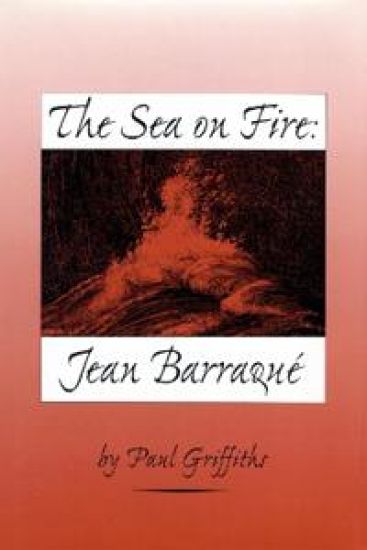
The Sea on Fire: Jean Barraqué

The Sea on Fire: Jean Barraqué

Paul Griffiths

University of Rochester Press
2003
sidottu
The life and works of one of the most difficult yet rewarding composers of modern time. Jean Barraqué is increasingly being recognized as one of the great composers of the second half of the 20th century. Though he left only seven works, his voice in each of them is unmistakeable, and powerful. He had no doubt of hisresponsibility, as a creator, to take his listeners on challenging adventures that could not but leave them changed. After the collapse of morality he had witnessed as a child growing up during the Second World War, and having taken notice of so much disarray in the culture around him, he set himself to make music that would, out of chaos, speak. Three others were crucial to him. One was Pierre Boulez, who, three years older, provided him with keysto a new musical language -- a language more dramatic, driving and passionate than Boulez's. Another was Michel Foucault, to whom he was close personally for a while, and with whom he had a dialogue that was determinative for bothof them. Finally, in the writings of Hermann Broch-and especially in the novel The Death of Virgil-he found the myth he needed to realize musically. He played for high stakes, and he took risks with himself as well as in hisart. Intemperate and difficult, even with his closest friends, he died in 1973 at the age of forty-five. Paul Griffiths was chief music critic for the London Times (1982-92) and The New Yorker (1992-96) and since 1996 has written regularly for the New York Times. He has written books on Boulez, Cage, Messiaen, Ligeti, Davies, Bartók and Stravinsky, as well as several librettos, among them The Jewel Box (Mozart, 1991), Marco Polo (Tan Dun, 1996) and What Next? (Elliott Carter, 1999).
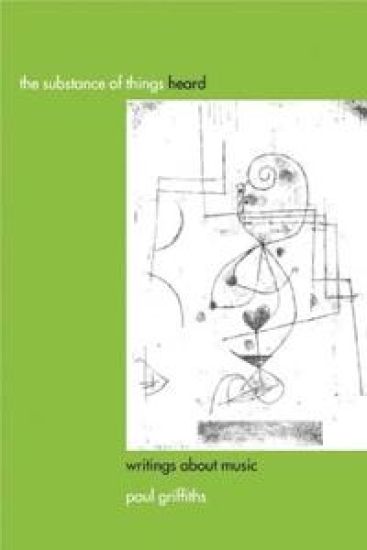
The Substance of Things Heard

The Substance of Things Heard

Paul Griffiths

University of Rochester Press
2005
sidottu
A choice selection of essays, reviews and interviews providing insights into musical performance, composition in the late 20th century and very early 21st, and the nature of opera. Paul Griffiths offers his own personal selection of some of his most substantial and imaginative articles and concert reviews from over three decades of indefatigable concertgoing around the world. He reports on premieres and other important performances of works by such composers as Elliott Carter, Sofia Gubaidulina, Karlheinz Stockhausen, and Steve Reich, as well as Harrison Birtwistle and other important British figures. Griffiths vividly conveys the vision, aura, and idiosyncrasies of prominent pianists, singers, and conductors [such as Herbert von Karajan], and debates changing styles of performing Monteverdi and Purcell. A particular delight is his response to the worldof opera, including Debussy's Pelléas et Mélisande [six contrasting productions], Pavarotti and Domingo in Verdi at New York's Metropolitan Opera, Schoenberg's Moses and Aaron, and two wildly different Jonathan Miller versions of Mozart's Don Giovanni. From the author's preface: "We cannot say what music is. Yet we are verbal creatures, and strive with words to cast a net around it, knowing most of this immaterial stuff will evadecapture. The stories that follow cover a wide range of events over a period of great change. Yet the net's aim was always the same, to catch the substance of things heard. "Criticism has to work largely by analogy and metaphor. This is no limitation. It is largely through such verbal ties that music is linked to other sorts of experience, not least the natural world and the orchestra of our feelings." Paul Griffiths's reviews and articleshave appeared extensively in both Britain [Times, Financial Times, Times Literary Supplement] and the United States [New Yorker, New York Times]. He has written numerous books on Bartók, Cage, Messiaen, Boulez, Maxwell Davies, twentieth-century music, opera, and the string quartet, and is the author of the recent Penguin Companion to Classical Music. He is also author of The Sea on Fire: Jean Barraqué.
Let Me Tell You and Let Me Go on

Let Me Tell You and Let Me Go on

Paul Griffiths

New York Review of Books
2025
nidottu
Two novels from the perspective of Hamlet's Ophelia--the first set before the events of the play, the second after--written entirely by remixing and repurposing the character's dialogue from Shakespeare's original text. "So: now I come to speak." With this line, Shakespeare's Ophelia starts telling her story. In let me tell you, this newly revealed woman uses exactly the same words Shakespeare gave her in Hamlet, shifted as in a kaleidoscope to create a very different voice: her own. We hear her personal narrative from childhood to the moments before the start of the play, when she knows she has a fateful decision to make. Along the way, we discover whole new angles on her father, her brother, the prince, and other characters who come out from behind the curtain. In let me go on, her decision made, she refashions herself. Emerging from her old world, she explores a new one, of magical variety yet coherent. As she goes in search of what she may still become, she meets a new cast of characters, some poignant, some hilarious. Paul Griffiths gives this remarkable protagonist--and us--a play-full of humor, poignancy, passion, adventure, and a great many surprises.
Five Eyes

Five Eyes

Paul Griffiths

Independently Published
2019
nidottu
Inspector Bill Painter is an old-school policeman with a love of jazz, a belief in old-fashioned police procedure and a reluctance to work with women. When he's presented with two separate and apparently accidental deaths in London, one of which concerns the son of the king of Qatri, Painter is immediately suspicious that the two deaths may be linked, despite the opinion of his female Commander who orders him to stop investigating. Will he be able to prevent what he belives may be a conspiracy among senior members of the Metropolitan Police and solve the murders?
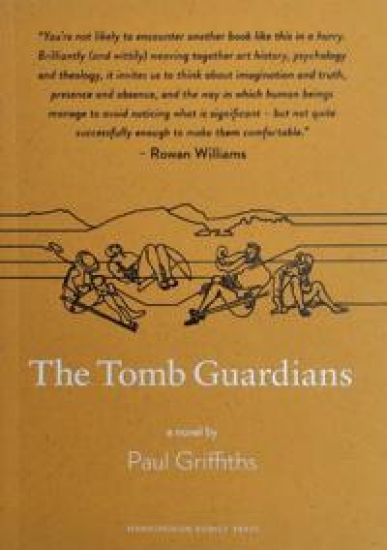
The Tomb Guardians

The Tomb Guardians

Paul Griffiths

Henningham Family Press
2021
nidottu
Two conversations oscillate, separated by the canvas. Two viewers of the Grave Guardians painted by Bernhard Striegel, and the guardians themselves, realising that Christ has disappeared while they slept. A meditation on the limits of art criticism, the Real and the fear of missing out.
let me tell you

let me tell you

Paul Griffiths

Henningham Family Press
2023
pokkari
Ophelia uses the words Shakespeare gave her to tell her own story. First published in 2008 to great acclaim, it inspired 'the greatest classical composition of the 21st century' (The Guardian on Hans Abrahamsen's song cycle after let me tell you)
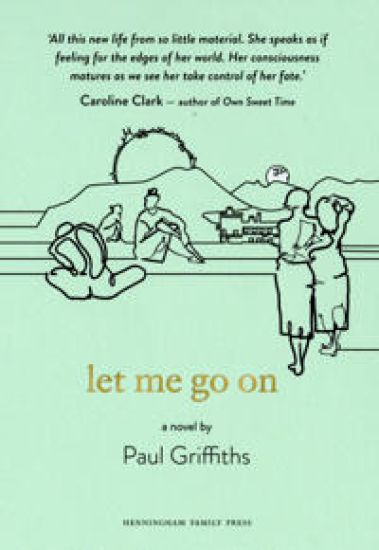
let me go on

let me go on

Paul Griffiths

Henningham Family Press
2023
pokkari
Ophelia uses the words Shakespeare gave her to choose her own fate. Following the inventive, moving novel let me tell you, "O" (constrained by the 481 words she speaks in Hamlet) goes on to encounter others on a similar journey and explore her fabulous new world.