Kirjojen hintavertailu. Mukana 11 709 659 kirjaa ja 12 kauppaa.

Kirjahaku

Etsi kirjoja tekijän nimen, kirjan nimen tai ISBN:n perusteella.

9 kirjaa tekijältä Paul Hamilton

Realpoetik

Realpoetik

Paul Hamilton

Oxford University Press
2013
sidottu
Realpoetik compares the writings of key German, French, and Italian Romantics, with an eye to their differences from British Romanticism. The principle of selection is to choose writers whose use of fiction is realistic -- not realist, but fundamentally contributory to the purposes of non-fictional discourse. The political resonance audible when we put Real at the start of a compound noun is also true to the period looked at. At that time, positive political institutions were recovering from their upending in the French Revolution and their strategic re-shaping in the period of Restoration after Napoleon. In this volume, Paul Hamilton pinpoints a moment when the political imagination was actually creative of political reality. It is a long gloss on Friedrich Meinecke's description of the early Romantic period in Germany as 'that past era of teeming intellectual impulses with its excess of non-political political ideals', but Hamilton finds his insight into the contemporary inextricability of the ideal and the political true of France and Italy. Before the existence of a unified Germany or Italy, and in the new France after Napoleon, there was an opportunity and a necessity to imagine the kind of nation which would be desirable. Realpoetik examines the extent to which this illuminates the fiction and philosophy of Friedrich Schlegel, Madame de Staël, Giacomo Leopardi and others. It also reflects on current dissatisfaction with existing political arrangements and our contemporary desire to re-imagine a new, more representative politics.
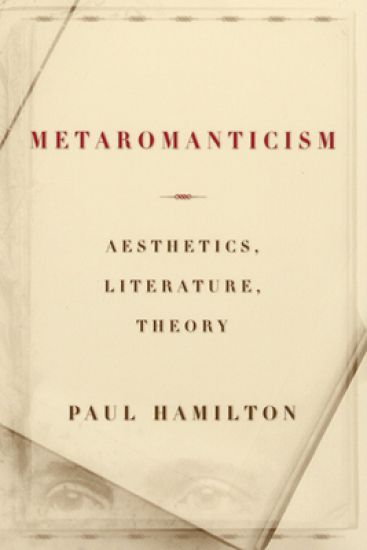
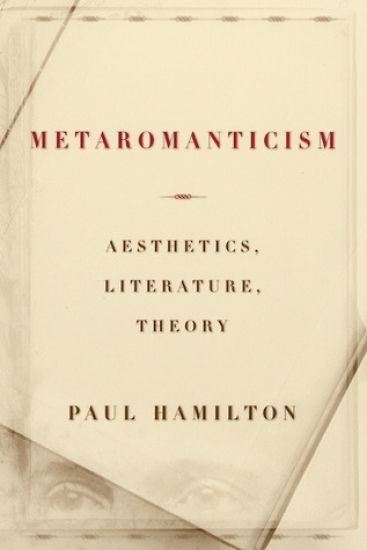
Metaromanticism

Metaromanticism

Paul Hamilton

University of Chicago Press
2003
sidottu
Paul Hamilton here redefines romanticism in terms of its philosophical habits of self-consciousness. According to Hamilton, metaromanticism, or the ways in which writers of the romantic period generalized their own practices, was fundamentally characteristic of the romantic project itself. Through bracing analyses of the aesthetics of Friedrich Schiller and Jean-Jacques Rousseau, and key works by Samuel Taylor Coleridge, Percy and Mary Shelley, John Keats, Sir Walter Scott, and Jane Austen, Hamilton shows how the romantic movement's struggle with its own tenets was not an effort to seek an alternative way of thought, but instead a way of becoming what it already was. And yet, as Hamilton reveals, the romanticists were still not content with their own self-consciousness. Pushed to the limits, such contemplation either manifested itself as self-disgust or forced romanticists to search for a discourse outside of aesthetics. Adding greater clarity to our understanding of romanticism and shedding much-needed light on the commerce between English writers and philosophers in Germany and France, this study should be valuable to students of literature, aesthetics and critical theory.
Metaromanticism

Metaromanticism

Paul Hamilton

University of Chicago Press
2003
nidottu
Paul Hamilton here redefines romanticism in terms of its philosophical habits of self-consciousness. According to Hamilton, metaromanticism, or the ways in which writers of the romantic period generalized their own practices, was fundamentally characteristic of the romantic project itself. Through bracing analyses of the aesthetics of Friedrich Schiller and Jean-Jacques Rousseau, and key works by Samuel Taylor Coleridge, Percy and Mary Shelley, John Keats, Sir Walter Scott, and Jane Austen, Hamilton shows how the romantic movement's struggle with its own tenets was not an effort to seek an alternative way of thought, but instead a way of becoming what it already was. And yet, as Hamilton reveals, the romanticists were still not content with their own self-consciousness. Pushed to the limits, such contemplation either manifested itself as self-disgust or forced romanticists to search for a discourse outside of aesthetics. Adding greater clarity to our understanding of romanticism and shedding much-needed light on the commerce between English writers and philosophers in Germany and France, this study should be valuable to students of literature, aesthetics and critical theory.
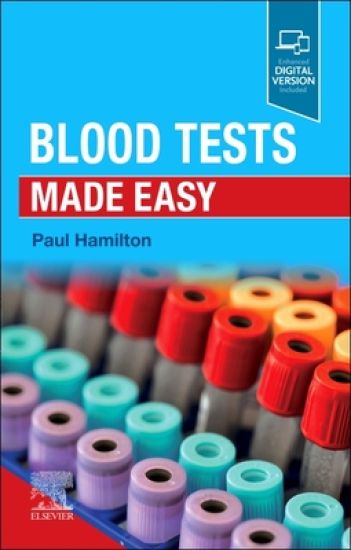
Blood Tests Made Easy

Blood Tests Made Easy

Paul Hamilton

Elsevier - Health Sciences Division
2022
nidottu
Blood Tests Made Easy is a quick reference guide designed to bring medical students up to speed when interpreting blood tests on their clinical placements. Small enough to be carried and quickly referenced on the go, this book covers everything you need to know when interpreting bloods, including the main abnormalities you are likely to encounter. Rather than focusing on theory or physiology, it is designed to provide an easy-to-follow guide to support clinical decision making. This latest addition to the Made Easy series will fill knowledge gaps on blood test interpretation, becoming a valuable asset both for medical students and, later, as a reference guide to increase junior doctors’ confidence on the wards. Relevant to real life - material laid out like real hospital laboratory tests Easy to use - information presented in a clear and accessible format Case studies and multiple-choice questions to aid revision Portable for easy access on the wards
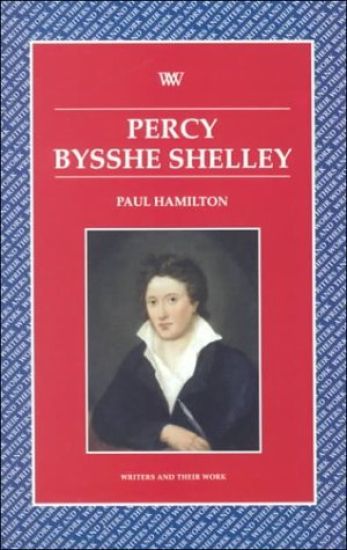
Percy Bysshe Shelley

Percy Bysshe Shelley

Paul Hamilton

Liverpool University Press
2000
nidottu
This book is both a general introduction to and a particular interpretation of Shelley’s thought and major writings. As an introduction, it stresses his seriousness and sophistication, his poetic brilliance and intellectual courage. More specifically, its readings emphasise the materialistic and corporeal orientation of his work in opposition to a traditional view of him as a Romantic solipsist, a characterisation some of his own statements seem to invite. Fundamentally Shelley is understood here as a vanguard, revolutionary figure who writes for a better democratic future, but one which, paradoxically, he fears may threaten the cultural privilege it took to imagine it. But this pessimism is always the other side of an openness to new associations which continually reform both private and political life, relationship and citizenship.
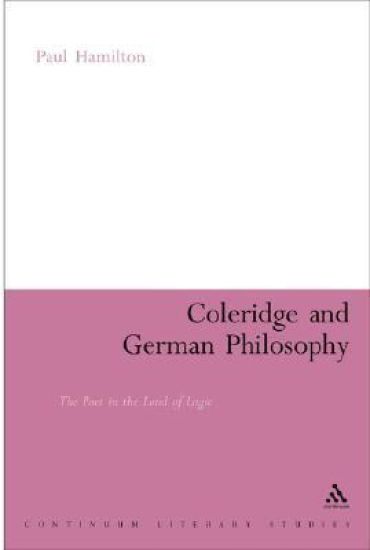
Coleridge and German Philosophy

Coleridge and German Philosophy

Paul Hamilton

Continuum International Publishing Group Ltd.
2007
sidottu
Samuel Taylor Coleridge frequently bridged the gap between British and European Romantic thought. This study sets Coleridge's mode of thinking within a German Romantic philosophical context as the place where his ideas can naturally extend themselves, stretch and find speculations of comparable ambition. It argues that Coleridge found his philosophical adventures in the dominant idiom of his times exciting and as imaginatively engaging as poetry. Paul Hamilton situates major themes in Coleridge's prose and poetic writings in relation to his passion for German philosophy. He argues that Coleridge's infectious attachment to German (post-Kantian) philosophy was due to its symmetries with the structure of his Christian belief. Coleridge is read as an excited and winning expositor of this philosophy's power to articulate an absolute grounding of reality. Its comprehensiveness, however, rendered redundant further theological description, undermining the faith it had seemed to support. Thus arose Coleridge's anxious disguising of his German plagiarisms, aspersions cast on German originality, and his claims to have already experienced their insights within his own religious sensibility or in the writings of Anglican divines and neo-Platonists. This book recovers the extent to which his ideas call to be expanded within German philosophical debate.
Orientation in European Romanticism

Orientation in European Romanticism

Paul Hamilton

Cambridge University Press
2022
sidottu
Exploring the experiments in individual and national self-consciousness conducted during the Romantic period, this essential comparative study of European literature, philosophy and politics makes original and often surprising connections and contrasts to reveal how personal and social identities were re-orientated and disorientated from the French Revolution onwards. Reviving a contested moment in the history of aesthetic theory, this study shows how the growing awareness of irresolution in Kant's third Kritik allowed Romantic writers to put the aesthetic to radical uses not envisaged by its parent philosophy. It also recounts how they would go on to force philosophy to revise received notions of authority, empowering women and subordinated ethnic groups to re-orientate existing hierarchies. The sheer range and variety of writers covered is testament both to the breadth of writing that Kant's philosophy so rashly legitimated and to the wider importance of philosophy to the understanding of Romantic literature.
Orientation in European Romanticism

Orientation in European Romanticism

Paul Hamilton

Cambridge University Press
2025
pokkari
Exploring the experiments in individual and national self-consciousness conducted during the Romantic period, this essential comparative study of European literature, philosophy and politics makes original and often surprising connections and contrasts to reveal how personal and social identities were re-orientated and disorientated from the French Revolution onwards. Reviving a contested moment in the history of aesthetic theory, this study shows how the growing awareness of irresolution in Kant's third Kritik allowed Romantic writers to put the aesthetic to radical uses not envisaged by its parent philosophy. It also recounts how they would go on to force philosophy to revise received notions of authority, empowering women and subordinated ethnic groups to re-orientate existing hierarchies. The sheer range and variety of writers covered is testament both to the breadth of writing that Kant's philosophy so rashly legitimated and to the wider importance of philosophy to the understanding of Romantic literature.
Fathers, Monsters and Sons

Fathers, Monsters and Sons

Paul Hamilton

Covenant Books
2017
pokkari
Paul Hamilton's narrative on family dysfunction is in the tradition of Jeanette Wall's 'The Glass Castle'. Hamilton uncovers secrets about his family's past after he places his father in a dementia care facility. Hamilton sorts through his father's belongings and discovers documents revealing his father's immorality.Fathers, Monsters and Sons explores the perplexities of the father-son relationship. Hamilton reviews the relationship by looking at this theme in movies like Star Wars and classic novels such as Frankenstein. Hamilton shares his journey towards recovery with straightforward poetry about his father and family. Hamilton concludes his narrative by issuing a call to reclaim the power of storytelling.