Kirjojen hintavertailu. Mukana 11 244 527 kirjaa ja 12 kauppaa.

Kirjahaku

Etsi kirjoja tekijän nimen, kirjan nimen tai ISBN:n perusteella.

23 kirjaa tekijältä Paul Helm

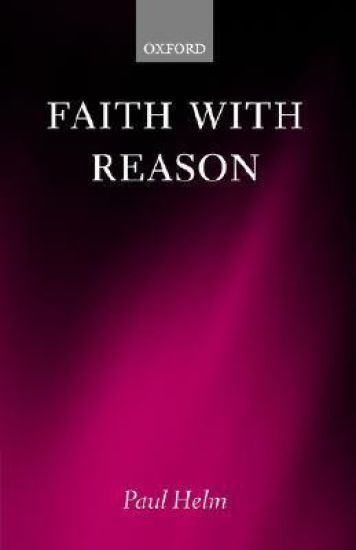
Faith with Reason

Faith with Reason

Paul Helm

Clarendon Press
2000
sidottu
Paul Helm presents a new study of the nature of religious faith, investigating what makes it reasonable. Religious belief needs to meet and sustain philosophical scrutiny just as any other type of belief does; nothing about religion purchases immunity from this. But at the same time religious epistemology must also respect the contours of religion, the distinctiveness of the subject-matter of religious belief. Helm looks sympathetically at two currently prominent ways of defending the rationality of religious belief: 'Reformed' epistemology and the cumulative case for theism. He argues that the reasonableness of faith depends not only on beliefs about the world but also on beliefs about oneself (for instance about what one wants, about one's hopes and fears) and on what one is willing to trust. Helm goes on to look at the relations between belief and trust, and between faith and virtue, and concludes with an exploration of one particular type of belief about oneself, the belief that one is oneself a believer. This is a book for anyone interested in the basis of religious faith.
John Calvin's Ideas

John Calvin's Ideas

Paul Helm

Oxford University Press
2006
nidottu
This is a major study of the theological thought of John Calvin, which examines his central theological ideas through a philosophical lens, looking at issues in Metaphysics, Epistemology, and Ethics. The study, the first of its kind, is concerned with how Calvin actually uses philosophical ideas in his work as a theologian and biblical commentator. The book also includes a careful examination of those ideas of Calvin to which the Reformed Epistemologists appeal, to find grounds and precedent for their development of `Reformed Epistemology', notably the sensus divinitatis and the internal testimony of the Holy Spirit.
John Calvin's Ideas

John Calvin's Ideas

Paul Helm

Oxford University Press
2004
sidottu
This is a major study of the theological thought of John Calvin, which examines his central theological ideas through a philosophical lens, looking at issues in Metaphysics, Epistemology, and Ethics. The study, the first of its kind, is concerned with how Calvin actually uses philosophical ideas in his work as a theologian and biblical commentator. The book also includes a careful examination of those ideas of Calvin to which the Reformed Epistemologists appeal, to find grounds and precedent for their development of `Reformed Epistemology', notably the sensus divinitatis and the internal testimony of the Holy Spirit.
Faith with Reason

Faith with Reason

Paul Helm

Clarendon Press
2003
nidottu
Paul Helm presents a new study of the nature of religious faith, investigating what makes it reasonable. Religious belief needs to meet and sustain philosophical scrutiny just as any other type of belief does; nothing about religion purchases immunity from this. But at the same time religious epistemology must also respect the contours of religion, the distinctiveness of the subject-matter of religious belief. Helm looks sympathetically at two currently prominent ways of defending the rationality of religious belief: 'Reformed' epistemology and the cumulative case for theism. He argues that the reasonableness of faith depends not only on beliefs about the world but also on beliefs about oneself (for instance about what one wants, about one's hopes and fears) and on what one is willing to trust. Helm goes on to look at the relations between belief and trust, and between faith and virtue, and concludes with an exploration of one particular type of belief about oneself, the belief that one is oneself a believer. This is a book for anyone interested in the basis of religious faith.
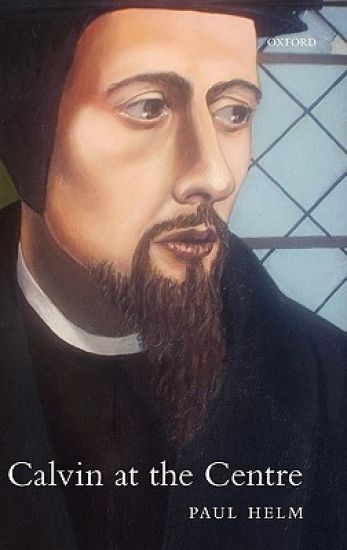
Calvin at the Centre

Calvin at the Centre

Paul Helm

Oxford University Press
2009
sidottu
Calvin at the Centre explores the consequences of various ideas in the thought of John Calvin, and the influence of his ideas on later theologians. The book sets to one side the assumption that Calvin's views are purely biblical and unaffected by the particular intellectual circumstances in which he lived. The emphasis is on philosophical ideas within Calvin's theology, and the chapters are organised to reflect this, dealing in turn with epistemological, metaphysical, and ethical issues. Paul Helm highlights some of the complexities in the relation between Calvin and Calvinism. Like the author's study John Calvin's Ideas (2004), the volume focuses on the coincidence of ideas between Calvin and other thinkers rather than offering an historical account of how such influences were transmitted. Among the topics are: the knowledge of God and of ourselves, Scripture and reason, the visibility of God, providence and predestination, compatibilism, and the intermediate state. The chapters range over thinkers as different as Pierre Bayle and Karl Barth. This illuminating study is relevant to anyone with an interest in Reformation thought, systematic theology, or the philosophy of religion. Helm's approach provides a fresh perspective on Calvin's theological context and legacy.
Eternal God

Eternal God

Paul Helm

Oxford University Press
2010
nidottu
Paul Helm presents a new, expanded edition of his much praised 1988 book Eternal God , which defends the view that God exists in timeless eternity. This is the classical Christian view of God, but it is claimed by many theologians and philosophers of religion to be incoherent. Paul Helm rebuts the charge of incoherence, arguing that divine timelessness is grounded in the idea of God as creator, and that this alone makes possible a proper account of divine omniscience. He develops some of the consequences of divine timelessness, particularly as it affects both divine and human freedom, and considers some of the alleged problems about referring to God. The book thus constitutes a unified treatment of the main concepts of philosophical theology. Helm's revised edition includes four new chapters that develop and extend his account of God and time, taking account of significant work in the area that has appeared since the publication of the first edition, by such prominent figures as William Lane Craig, Brian Leftow, and Richard Swinburne. This new discussion takes the reader into further areas, notably timelessness and creation and the nature of divine causality.
Eternal God

Eternal God

Paul Helm

Oxford University Press
2010
sidottu
Paul Helm presents a new, expanded edition of his much praised 1988 book Eternal God , which defends the view that God exists in timeless eternity. This is the classical Christian view of God, but it is claimed by many theologians and philosophers of religion to be incoherent. Paul Helm rebuts the charge of incoherence, arguing that divine timelessness is grounded in the idea of God as creator, and that this alone makes possible a proper account of divine omniscience. He develops some of the consequences of divine timelessness, particularly as it affects both divine and human freedom, and considers some of the alleged problems about referring to God. The book thus constitutes a unified treatment of the main concepts of philosophical theology. Helm's revised edition includes four new chapters that develop and extend his account of God and time, taking account of significant work in the area that has appeared since the publication of the first edition, by such prominent figures as William Lane Craig, Brian Leftow, and Richard Swinburne. This new discussion takes the reader into further areas, notably timelessness and creation and the nature of divine causality.
Varieties of Belief

Varieties of Belief

Paul Helm

Routledge
2002
sidottu
First published in 2002. This is Volume IV of seven in the Library of Philosophy series on the Philosophy of Religion. The Library of Philosophy was designed as a contribution to the History of Modern Philosophy under the heads: first of Different schools of Thought - Sensationalist, Realist, Idealist, Intuitivist; secondly of different Subjects - Psychology, Ethics, Aesthetics, Political Philosophy, Theology. Written in 1973, work in the philosophy of religion in the last thirty years has focused increasingly on the language of religion. Too often it seems that unless one happens to share the particular religious outlook of the writer, religious or theological premises are being made to yield philosophical conclusions. There is an obvious need for a less question-begging procedure, one that separates the philosophy from the religion. The aim of the study is to make a point about philosophical methodology no grounds are offered for preferring one analysis of religious belief to another.
Referring to God

Referring to God

Paul Helm

Routledge
2011
nidottu
There is a long tradition of discussion in the philosophy of religion about the problems and possibilities involved in talking about God. This book presents accounts of the problem within Jewish and Christian philosophy.
Belief Policies

Belief Policies

Paul Helm

Cambridge University Press
2007
pokkari
How do we form and modify our beliefs about the world? It is widely accepted that what we believe is determined by evidence, and is therefore not directly under our control; but according to what criteria is the credibility of the evidence established? Professor Helm argues that no theory of knowledge is complete without standards for accepting and rejecting evidence as belief-worthy. These standards, or belief-policies, are not themselves determined by evidence, but determine what counts as credible evidence. Unlike single beliefs, belief-policies are directly subject to the will, and therefore to the possibility of weakness of will and self-deception. Helm sets out to interpret standard epistemological positions in terms of belief-policies, and to illustrate their operation in the history of philosophy. He establishes connections between belief-policies, responsibility for beliefs, and the desirability of toleration, before reassessing fideism in the light of his argument.
Belief Policies

Belief Policies

Paul Helm

Cambridge University Press
1994
sidottu
How do we form and modify our beliefs about the world? It is widely accepted that what we believe is determined by evidence, and is therefore not directly under our control; but according to what criteria is the credibility of the evidence established? Professor Helm argues that no theory of knowledge is complete without standards for accepting and rejecting evidence as belief-worthy. These standards, or belief-policies, are not themselves determined by evidence, but determine what counts as credible evidence. Unlike single beliefs, belief-policies are directly subject to the will, and therefore to the possibility of weakness of will and self-deception. Helm sets out to interpret standard epistemological positions in terms of belief-policies, and to illustrate their operation in the history of philosophy. He establishes connections between belief-policies, responsibility for beliefs, and the desirability of toleration, before reassessing fideism in the light of his argument.
Calvin: A Guide for the Perplexed

Calvin: A Guide for the Perplexed

Paul Helm

T. T.Clark Ltd
2008
nidottu
As a major theologian John Calvin is often the subject of widespread misunderstanding and misinterpretation, and this new "Guide for the Perplexed" will provide an ideal introduction to his thoughts and views.John Calvin is a major theologian of the Christian Church, but one who is also the subject of widespread misunderstanding and misinterpretation. He is also a figure whom other theologians either seek to 'capture' to endorse their own (often very different positions) or whom they seek to vilify. His situation in late medievalism is often overlooked. So there is an important need to re-situate Calvin."Calvin: A Guide for the Perplexed" attempts to do this in the context of providing a 'middle level' introduction to his thought. The need for such re-situating will be stressed in the first Chapter, 'Orientation'. As befits the series, attention will be focussed on Calvin's thought, not on his personal character or career, though reference will be made to these as necessary, and the Introduction will include a brief overview of his life and times. Attention will be made not only to Calvin's theological positions, but also to the philosophy intertwined within them, the significance and interest of which is often overlooked."Continuum's Guides for the Perplexed" are clear, concise and accessible introductions to thinkers, writers and subjects that students and readers can find especially challenging - or indeed downright bewildering. Concentrating specifically on what it is that makes the subject difficult to grasp, these books explain and explore key themes and ideas, guiding the reader towards a thorough understanding of demanding material.
Referring to God

Referring to God

Paul Helm

RoutledgeCurzon
1999
sidottu
There is a long tradition of discussion in the philosophy of religion about the problems and possibilities involved in talking about God. This book presents accounts of the problem within Jewish and Christian philosophy.
Reason in the Service of Faith

Reason in the Service of Faith

Paul Helm

Ashgate Publishing Limited
2023
sidottu
Paul Helm is a distinguished philosopher, with particular interests in the philosophy of religion. His work covers some of the most important aspects of the field as it has developed in the last thirty years with particular contributions to metaphysics, religious epistemology, and philosophical theology. In celebration of Helm’s life’s work, Reason in the Service of Faith brings together a range of his essays which reflect these central concerns of his thought.Over thirty of Helm's selected essays and four unpublished articles are gathered into five parts: Metaphilosophical Issues; Action, Change, and Personal Identity; Epistemology; God; and Creation, Providence, and Prayer. The volume is prefaced with a short editorial introduction, and ends with an extensive bibliography of Helm’s published works.Demonstrating the important connection between Helm’s theological and philosophical interests across his body of work, this collection is a remarkable resource for scholars of religion, philosophy, and theology.
The Providence of God

The Providence of God

Paul Helm

INTERVARSITY PRESS
1994
nidottu
In this concise and accessible introduction, Paul Helm outlines for students and interested readers the doctrine of divine providence. Unlike many doctrinal treatments, his approach is not historically oriented. Instead Helm focuses on the underlying metaphysical and moral aspects of God's providence, paying particular attention to the ideas of divine control, providence and evil, and the role of prayer in relationship to providence.
The Providence of God

The Providence of God

Paul Helm

Inter-Varsity Press
1993
pokkari
The word 'providence' seems to have dropped out of our everyday Christian vocabulary. But questions about God's activity in our world - his 'provide-ence' for us and his creation - are as alive as ever before. Providence is the point at which theologians and the broader Christian community find their most intense conversations. Questions about God's activity in the world today, his guidance of believers, human freedom versus divine will, the place of prayer in the workings of his will, his responsibility for evil - all of these are related to his providence. How we think about these issues is deeply related to our understanding of God and of how we should serve and worship him. In the face of recent arguments that God's knowledge of the future is limited and that he therefore takes risks, Paul Helm undergirds his discussion of divine providence with an understanding of God as risk-free. The Providence of God is a clear, vigorous and thought-provoking introduction to a critical area of theology.
Reason in the Service of Faith

Reason in the Service of Faith

Paul Helm

TAYLOR FRANCIS LTD
2024
nidottu
Paul Helm is a distinguished philosopher, with particular interests in the philosophy of religion. His work covers some of the most important aspects of the field as it has developed in the last thirty years with particular contributions to metaphysics, religious epistemology, and philosophical theology. In celebration of Helm’s life’s work, Reason in the Service of Faith brings together a range of his essays which reflect these central concerns of his thought.Over thirty of Helm's selected essays and four unpublished articles are gathered into five parts: Metaphilosophical Issues; Action, Change, and Personal Identity; Epistemology; God; and Creation, Providence, and Prayer. The volume is prefaced with a short editorial introduction, and ends with an extensive bibliography of Helm’s published works.Demonstrating the important connection between Helm’s theological and philosophical interests across his body of work, this collection is a remarkable resource for scholars of religion, philosophy, and theology.
Varieties of Belief

Varieties of Belief

Paul Helm

Routledge
2014
nidottu
First published in 2002. This is Volume IV of seven in the Library of Philosophy series on the Philosophy of Religion. The Library of Philosophy was designed as a contribution to the History of Modern Philosophy under the heads: first of Different schools of Thought - Sensationalist, Realist, Idealist, Intuitivist; secondly of different Subjects - Psychology, Ethics, Aesthetics, Political Philosophy, Theology. Written in 1973, work in the philosophy of religion in the last thirty years has focused increasingly on the language of religion. Too often it seems that unless one happens to share the particular religious outlook of the writer, religious or theological premises are being made to yield philosophical conclusions. There is an obvious need for a less question-begging procedure, one that separates the philosophy from the religion. The aim of the study is to make a point about philosophical methodology no grounds are offered for preferring one analysis of religious belief to another.
Reforming Free Will

Reforming Free Will

Paul Helm

Mentor
2020
pokkari
In the light of what powers and faculties are human beings responsible individuals in the everyday? In his theological, historical and philosophical examination of reformed orthodox views of free will and divine sovereignty Paul Helm considers determinism and compatibilism and their historical development between 1500 and 1800. He graciously tackles the views of Richard A. Muller and Antonie Vos to argue that compatibilism is deeply rooted and represents the mainstream understanding of the reformers’ conviction on the matter.