Kirjojen hintavertailu. Mukana 11 244 527 kirjaa ja 12 kauppaa.

Kirjahaku

Etsi kirjoja tekijän nimen, kirjan nimen tai ISBN:n perusteella.

14 kirjaa tekijältä Paul J. Griffiths

Religious Reading

Religious Reading

Paul J. Griffiths

Oxford University Press Inc
1999
sidottu
What social conditions and intellectual practices are necessary in order for religious cultures to flourish? Paul Griffiths finds the answer in 'religious reading' -- the kind of reading in which a religious believer allows his mind to be furnished and his heart instructed by a sacred text, understood in the light of an authoritative tradition. He favourably contrasts the practices and pedagogies of traditional religious cultures with those of our own fragmented and secularized culture and insists that religious reading should be preserved.
Regret

Regret

Paul J. Griffiths

University of Notre Dame Press
2021
sidottu
In this brilliant theological essay, Paul J. Griffiths takes the reader through all the stages of regret. To various degrees, all human beings experience regret. In this concise theological grammar, Paul J. Griffiths analyzes this attitude toward the past and distinguishes its various kinds. He examines attitudes encapsulated in the phrase, "I would it were otherwise," including regret, contrition, remorse, compunction, lament, and repentance. By using literature (especially poetry) and Christian theology, Griffiths shows both what is good about regret and what can be destructive about it. Griffiths argues that on the one hand regret can take the form of remorse—an agony produced by obsessive and ceaseless examination of the errors, sins, and omissions of the past. This kind of regret accomplishes nothing and produces only pain. On the other hand, when regret is coupled with contrition and genuine sorrow for past errors, it has the capacity both to transfigure the past—which is never merely past—and to open the future. Moreover, in thinking about the phenomenon of regret in the context of Christian theology, Griffiths focuses especially on the notion of the LORD's regret. Is it even reasonable to claim that the LORD regrets? Griffiths shows not only that it is but also that the LORD's regret should structure how we regret as human beings. Griffiths investigates the work of Henry James, Emily Dickinson, Tomas Tranströmer, Paul Celan, Jane Austen, George Herbert, and Robert Frost to show how regret is not a negative feature of human life but rather is essential for human flourishing and ultimately is to be patterned on the LORD's regret. Regret: A Theology will be of interest to scholars and students of philosophy, theology, and literature, as well as to literate readers who want to understand the phenomenon of regret more deeply.
Regret

Regret

Paul J. Griffiths

University of Notre Dame Press
2021
nidottu
In this brilliant theological essay, Paul J. Griffiths takes the reader through all the stages of regret. To various degrees, all human beings experience regret. In this concise theological grammar, Paul J. Griffiths analyzes this attitude toward the past and distinguishes its various kinds. He examines attitudes encapsulated in the phrase, "I would it were otherwise," including regret, contrition, remorse, compunction, lament, and repentance. By using literature (especially poetry) and Christian theology, Griffiths shows both what is good about regret and what can be destructive about it. Griffiths argues that on the one hand regret can take the form of remorse—an agony produced by obsessive and ceaseless examination of the errors, sins, and omissions of the past. This kind of regret accomplishes nothing and produces only pain. On the other hand, when regret is coupled with contrition and genuine sorrow for past errors, it has the capacity both to transfigure the past—which is never merely past—and to open the future. Moreover, in thinking about the phenomenon of regret in the context of Christian theology, Griffiths focuses especially on the notion of the LORD's regret. Is it even reasonable to claim that the LORD regrets? Griffiths shows not only that it is but also that the LORD's regret should structure how we regret as human beings. Griffiths investigates the work of Henry James, Emily Dickinson, Tomas Tranströmer, Paul Celan, Jane Austen, George Herbert, and Robert Frost to show how regret is not a negative feature of human life but rather is essential for human flourishing and ultimately is to be patterned on the LORD's regret. Regret: A Theology will be of interest to scholars and students of philosophy, theology, and literature, as well as to literate readers who want to understand the phenomenon of regret more deeply.
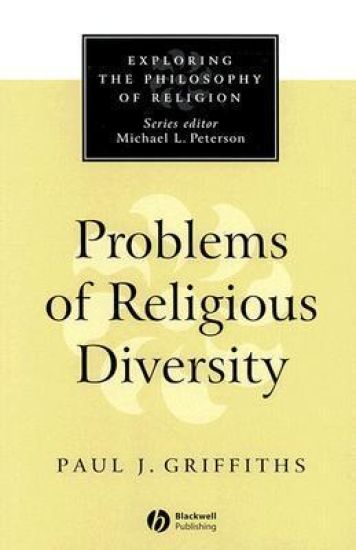
Problems of Religious Diversity

Problems of Religious Diversity

Paul J. Griffiths

Blackwell Publishers
2001
sidottu
Exploring Religious Diversity analyzes the philosophical questions raised by the fact that many religions in the world often appear to contradict each other in doctrine and practice. Analyzes the philosophical questions raised by the fact that many religions in the world often appear to contradict each other in doctrine and practice.Evaluates the fundamental philosophical underpinnings of the debates between religious and non-religious approaches to religious diversity.Contains a glossary that defines the book's key technical terms and how they are related to one another.
Problems of Religious Diversity

Problems of Religious Diversity

Paul J. Griffiths

JOHN WILEY AND SONS LTD
2001
nidottu
Exploring Religious Diversity analyzes the philosophical questions raised by the fact that many religions in the world often appear to contradict each other in doctrine and practice. Analyzes the philosophical questions raised by the fact that many religions in the world often appear to contradict each other in doctrine and practice.Evaluates the fundamental philosophical underpinnings of the debates between religious and non-religious approaches to religious diversity.Contains a glossary that defines the book's key technical terms and how they are related to one another.
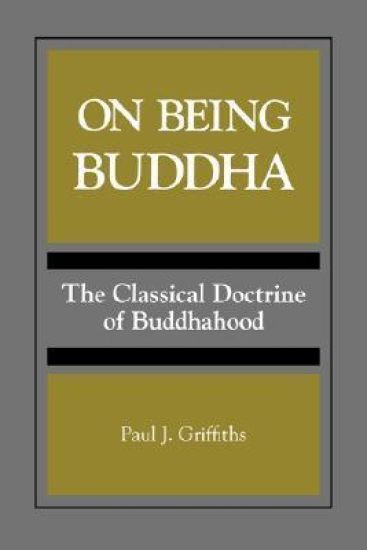
On Being Buddha

On Being Buddha

Paul J. Griffiths

State University of New York Press
1994
pokkari
What is it like to be a Buddha? Is there only one Buddha or are there many? What can Buddhas do and what do they know? Is there anything they cannot do and cannot know? These and associated questions were much discussed by Buddhist thinkers in India, and a complex and subtle set of doctrinal positions was developed to deal with them. This is the first book in a western language to treat these doctrines about Buddha from a philosophical and thoroughly critical viewpoint.The book shows that Buddhist thinkers were driven, when theorizing about Buddha, by a basic intuition that Buddha must be maximally perfect, and that pursuing the implications of this intuition led them into some conceptual dilemmas that show considerable similarity to some of those treated by western theists. The Indian Buddhist tradition of thought about these matters is presented here as thoroughly systematic, analytical, and doctrinal.The book's analysis is based almost entirely upon original sources in their original languages. All extracts discussed are translated into English and the book is accessible to nonspecialists, while still treating material that has not been much discussed by western scholars.
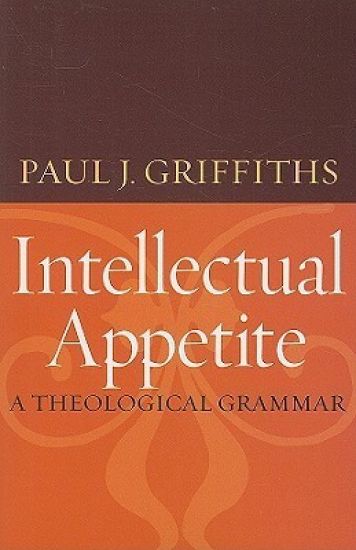
Intellectual Appetite

Intellectual Appetite

Paul J. Griffiths

The Catholic University of America Press
2009
nidottu
The appetite for knowledge - wanting to know things - is very strong in humans. Some will sacrifice all other goods (sex, power, food, life itself) for it. But this is not a simple appetite, and this book treats some of its complications, deformations, beauties, and intensities. Christian thinkers have traditionally distinguished between good and bad forms of the appetite for knowledge, calling the good 'studiousness' and the bad 'curiosity'. The former is aimed at joyful contemplation of what can be known as gift given; the latter seeks ownership and control of what can be known as property for the taking. Paul J. Griffiths' ""Intellectual Appetite"" offers an extended study of the difference between the two, with special attention to the question of ownership: What is it like to think of yourself as the owner of what you know, and how might it be different to think of what you know as a gift given you? How these questions are answered has a deep impact on a number of issues in contemporary educational and legal theory. Most fundamentally, there is the question of what it means to know something at all. On that, this book offers an account of knowledge in terms of intimacy: to know something (a mathematical formula, a past event, another human being, the lineaments of a galaxy) is to become intimate with it according to its kind. There are also important and currently pressing ancillary questions; for example, that of what plagiarism is and how it should be addressed. Plagiarism is often understood in part as theft of intellectual property, and since it is essential to the argument of this book that seeking knowledge ought not to be understood as seeking ownership, the book offers a theological defense of plagiarism.
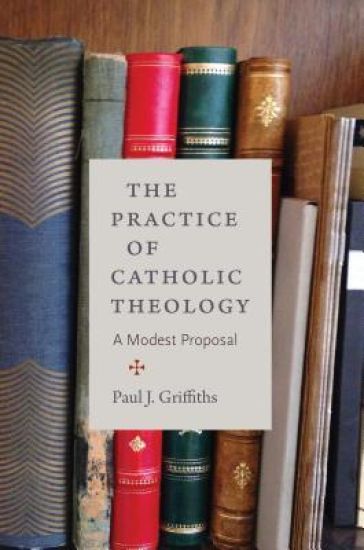
The Practice of Catholic Theology

The Practice of Catholic Theology

Paul J. Griffiths

The Catholic University of America Press
2016
nidottu
In The Practice of Catholic Theology: A Modest Proposal, Paul J. Griffiths has written a how-to book for Catholic theologians that will both instruct beginners and challenge long-time practitioners to sharpen their understanding of their craŸ. He defines Catholic theology as the practice of thinking, speaking, and writing about the God of Christian confession; so understood, it’s something that anyone can learn to do. Personal sanctity is not required, but as with any other practice, practitioners of this beautiful and elevated thought-performance need to know some things and to develop some skills in order to be able to perform it.This book lays out, clearly and in detail, what the relevant body of knowledge is and how to find access to it; it does that by describing the “Catholic archive” in all its variety (scriptural, conciliar, magisterial broadly and narrowly, liturgical, canon-legal, speculative), and by analyzing the authoritative weight of the various components of the archive. It shows the di erence between dogmatical and speculative theology, both by example and analysis. It also gives detailed instruction in the development of the theologian’s particular skills: argument, synthesis, intellectual imagination, thought-experiment, exegesis, and so on. And it describes, with particular recommendations, the essential components of the theologian’s working library, and how they ought to be used.
Why Read Pascal?

Why Read Pascal?

Paul J. Griffiths

The Catholic University of America Press
2021
nidottu
Blaise Pascal (1623-1662) is known in the English-speaking world principally for the wager (an argument that it is rational to do what will affect belief in God and irrational not to), and, more generally, for the Pensées, a collection of philosophical and theological fragments of unusual emotional and intellectual intensity collected and published after his death. He thought and wrote, however, about much more than this: mathematics; physics; grace, freedom, and predestination; the nature of the church; the Christian life; what it is to write and read; the order of things; the nature and purpose of human life; and more. He was among the polymaths of the seventeenth century, and among the principal apologists of his time for the Catholic faith, against both its Protestant opponents and its secular critics.Why Read Pascal? engages all the major topics of Pascal's theological and philosophical writing. It provides discussion of Pascal's literary style, his linked understandings of knowledge and of the various orders of things, his anthropology (with special attention to his presentation of affliction, death, and boredom), his politics, and his understanding of the relation between Christianity and Judaism. Pascal emerges as a literary stylist of a high order, a witty and polemical writer (never have the Jesuits been more thoroughly eviscerated), and, perhaps above all else, as someone concerned to show to Christianity's cultured despisers that the fabric of their own lives implies the truth of Christianity if only they can be brought to look at what their lives are like.Why Read Pascal? is the first book in English in a generation to engage all the principal themes in Pascal's theology and philosophy. The book takes Pascal seriously as an interlocutor and as a contributor of continuing relevance to Catholic thought; but it also offers criticisms of some among the positions he takes, showing, in doing so, how lively his writing remains for us now.
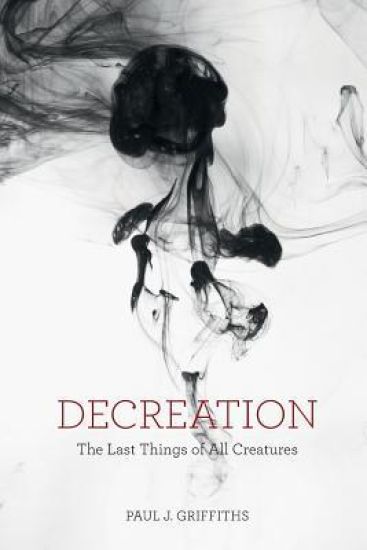
Decreation

Decreation

Paul J. Griffiths

Baylor University Press
2018
nidottu
Death is not the end - either for humans or for all creatures. But while Christianity has obsessed over the future of humanity, it has neglected the ends for nonhuman animals, inanimate creatures, and angels. In Decreation, Paul J. Griffiths explores how orthodox Christian theology might be developed to include the last things of all creatures.Griffiths employs traditional and historical Christian theology of the last things to create both a grammar and a lexicon for a new eschatology. Griffiths imagines heaven as an endless, repetitively static, communal, and enfleshed adoration of the triune God in which angels, nonhuman animals, and inanimate objects each find a place. Hell becomes a final and irreversible separation from God - annihilation - sin's true aim and the last success of the sinner. This grammar, Griffiths suggests, gives Christians new ways to think about the redemption of all things, to imagine relationships with nonhuman creatures, and to live in a world devastated by a double fall.
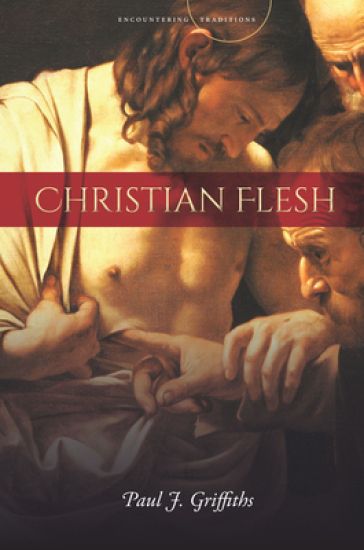
Christian Flesh

Christian Flesh

Paul J. Griffiths

STANFORD UNIVERSITY PRESS
2018
sidottu
A sustained and systematic theological reflection on the idea that being a Christian is, first and last, a matter of the flesh, Christian Flesh shows us what being a Christian means for fleshly existence. Depicting and analyzing what the Christian tradition has to say about the flesh of Christians in relation to that of Christ, the book shows that some kinds of fleshly activity conform well to being a Christian, while others are in tension with it. But to lead a Christian life is to be unconstrained by ordinary ethical norms. Arguing that no particular case of fleshly activity is forbidden, Paul J. Griffiths illustrates his message through extended case studies of what it is for Christians to eat, to clothe themselves, and to engage in physical intimacy.
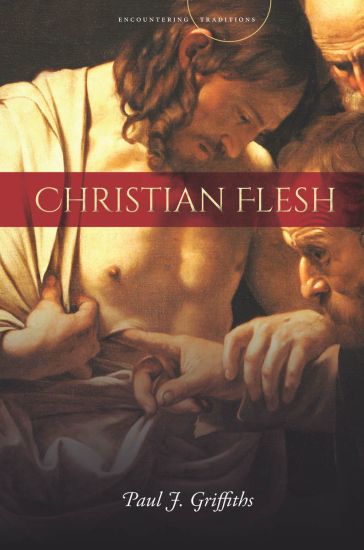
Christian Flesh

Christian Flesh

Paul J. Griffiths

Stanford University Press
2018
pokkari
A sustained and systematic theological reflection on the idea that being a Christian is, first and last, a matter of the flesh, Christian Flesh shows us what being a Christian means for fleshly existence. Depicting and analyzing what the Christian tradition has to say about the flesh of Christians in relation to that of Christ, the book shows that some kinds of fleshly activity conform well to being a Christian, while others are in tension with it. But to lead a Christian life is to be unconstrained by ordinary ethical norms. Arguing that no particular case of fleshly activity is forbidden, Paul J. Griffiths illustrates his message through extended case studies of what it is for Christians to eat, to clothe themselves, and to engage in physical intimacy.