Kirjojen hintavertailu. Mukana 12 425 997 kirjaa ja 12 kauppaa.

Kirjahaku

Etsi kirjoja tekijän nimen, kirjan nimen tai ISBN:n perusteella.

5 kirjaa tekijältä Paul K. Conkin

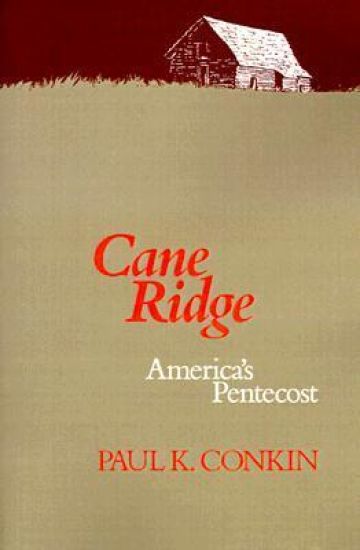
Cane Ridge

Cane Ridge

Paul K. Conkin

University of Wisconsin Press
1990
nidottu
What happened at or near the Cane Ridge meeting house in central Kentucky in August 1801 has become a legendary event in American religious history. Never before in America had so many thousands of people gathered for what became much more than the planned Presbyterian communion service. Never had so many families camped on the grounds. Never before had so many people been affected with involuntary physical exercises-sobbing, shouting, shaking, and swooning. And never before in American had a religious meeting led to so much national publicity, triggered so much controversy, or helped provoke such important denominational schisms. Paul Conkin tells the story of Cane Ridge in all its dimensions. The backdrop involves the convoluted history of Scotch-Irish Presbyterianism in America, the pluralistic religious environment in early Kentucky, and the gradual evolution of a new form of evangelical religious culture in eighteenth-century America. The aftermath was complex. Cane Ridge helped popularize religious camps and influenced the subsequent development of planned camp meetings. It exposed deep and developing divisions of doctrine among Presbyterian clergy, and contributed to the birth of two new denominations -Christians (Disciples of Christ) and Cumberland Presbyterians and furthered the growth of a new revival culture, keyed to a crisis-like conversion experience, even as it marked a gradual decline in sacramentalism.
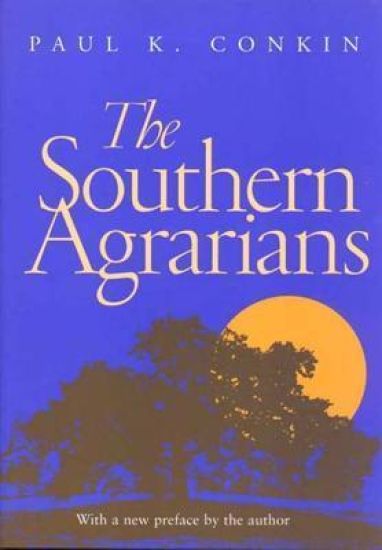
The Southern Agrarians

The Southern Agrarians

Paul K. Conkin

Vanderbilt University Press
2001
nidottu
The southern Agrarians were a group of twelve young men who joined, from 1929 to 1937, in a fascinating intellectual and political movement. Prominent among them were Robert Penn Warren, Allen Tate, John Crowe Ransom, and Donald Davidson. In the midst of the depression, these gifted writers tried, as did so many other intellectuals, to plot the best cultural and economic choices open to southerners and Americans as a whole. That they failed to gain most of their goals does not diminish the significance of their crusade, or the enduring values that they espoused. Interweaving group biography and intellectual history, Conkin traces how these young intellectuals came to write their classic manifesto, I'll Take My Stand, relates their political advocacy to the earlier Fugitive movement in poetry, and follows their careers after the Agrarian crusade fell apart. More than any other historian or critic, Conkin takes seriously the economic and political beliefs of these southern writers.
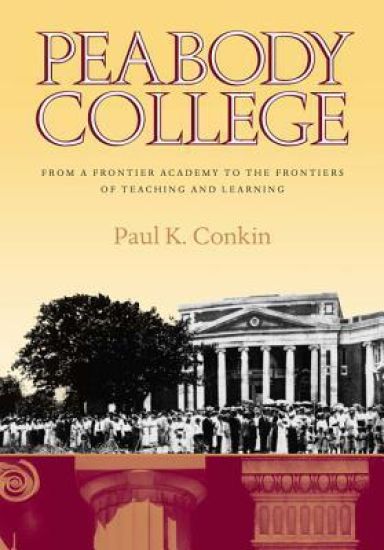
Peabody College

Peabody College

Paul K. Conkin

Vanderbilt University Press
2002
sidottu
Today George Peabody College is a part of Vanderbilt University, as it has been since its merger in 1979. Its prior history was rich and complex. In this book, Paul Conkin, author of the award-winning history of Vanderbilt, Gone with the Ivy, tells the story of Peabody's many lives, of its successes and failures, and of its many colorful leaders and professors. It all began as a small frontier academy in 1785. The institution that would become Peabody experienced its first reinvention two decades later as it became Cumberland College, and then, in 1826, the University of Nashville. The University maintained an elite undergraduate college until 1850, and, despite the success of its medical school and a military institute, it failed in three subsequent efforts to restart its undergraduate program. In 1875 the University offered its campus and degree-granting authority to the first normal school in the state of Tennessee, a school funded by the Peabody Education Fund. The Peabody Normal College was the best in the South, and, as such, exerted an enormous influence on education in the region. A new era began in 1909. The trustees of the Peabody Fund, at its liquidation, provided an eventual 1.5 million dollars to establish a graduate-level George Peabody College for Teachers. It opened for classes in 1914, on its present campus, where it quickly became the premier teachers' college in the South. As was the case with many private, independent institutions, Peabody faced intermittent financial struggles, which finally ended with its union with Vanderbilt. Today Peabody is, by almost any criteria, one of the five or six strongest colleges of education in the United States.
The New Deal

The New Deal

Paul K. Conkin

Harlan Davidson Inc
2014
nidottu
Demonstrating the intellectual excitement that is the practice of history at its best, Paul Conkin's The New Deal is still one of the best known titles in the very popular American History Series, edited by John Hope Franklin and A. S. Eisenstadt. The New Deal is still the best succinct and coherent description of a chaotic period. It is an account of the major domestic policies adopted during the Roosevelt administration. It is also a rich portrait of Roosevelt the man and consummate politician, and the satellite figures around him. This highly interpretive text, with its spirited and often subtle assessments of New Deal personalities and programs, will continue to bring the period to life for new generations of students. Includes extensive photo essay.
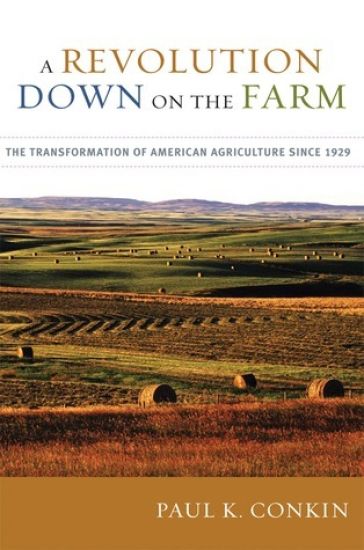
A Revolution Down on the Farm

A Revolution Down on the Farm

Paul K. Conkin

The University Press of Kentucky
2008
sidottu
Agriculture is the most fundamental of all human activities. Today, those who till the soil or tend livestock feed a world population of approximately 6.5 billion. Fifty years ago, the planet could not have sustained such a large population, and according to present projections, farmers will have to feed nine billion people by 2050. The greatest agricultural revolution in history has occurred in the last fifty years, with farmers in the United States leading the way. America's declining number of farms, however, comes as a surprise to many and may have dramatic implications. Paul K. Conkin's A Revolution Down on the Farm: The Transformation of American Agriculture since 1929 charts the profound changes in farming that have occurred during his lifetime. Conkin's personal experience growing up on a small Tennessee farm complements compelling statistical data from the U.S. Department of Agriculture. Using economic and historical analysis, Conkin assesses the skills, new technologies, and government policies that helped transform American farming. He clarifies the present status of a subsidized, large-scale, mechanized, and chemically supported agriculture, evaluates its environmental and human costs, and surveys alternatives to a troubled, widely challenged system.