Kirjojen hintavertailu. Mukana 11 627 373 kirjaa ja 12 kauppaa.

Kirjahaku

Etsi kirjoja tekijän nimen, kirjan nimen tai ISBN:n perusteella.

6 kirjaa tekijältä Paul K. Saint-Amour

Tense Future

Tense Future

Paul K. Saint-Amour

Oxford University Press Inc
2015
sidottu
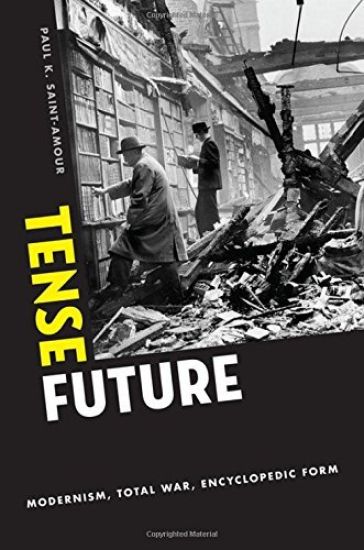
Tense Future falls into two parts. The first develops a critical account of total war discourse and addresses the resistant potential of acts, including acts of writing, before a future that looks barred or predetermined by war. Part two shifts the focus to long interwar narratives that pit both their scale and their formal turbulence against total war's portrait of the social totality, producing both ripostes and alternatives to that portrait in the practice of literary encyclopedism. The book's introduction grounds both parts in the claim that industrialized warfare, particularly the aerial bombing of cities, intensifies an under-examined form of collective traumatization: a pretraumatic syndrome in which the anticipation of future-conditional violence induces psychic wounds. Situating this claim in relation to other scholarship on "critical futurities," Saint-Amour discusses its ramifications for trauma studies, historical narratives generally, and the historiography of the interwar period in particular. The introduction ends with an account of the weak theory of modernism now structuring the field of modernist studies, and of weak theory's special suitability for opposing total war, that strongest of strong theories.
Tense Future

Tense Future

Paul K. Saint-Amour

Oxford University Press Inc
2015
nidottu
Tense Future falls into two parts. The first develops a critical account of total war discourse and addresses the resistant potential of acts, including acts of writing, before a future that looks barred or predetermined by war. Part two shifts the focus to long interwar narratives that pit both their scale and their formal turbulence against total war's portrait of the social totality, producing both ripostes and alternatives to that portrait in the practice of literary encyclopedism. The book's introduction grounds both parts in the claim that industrialized warfare, particularly the aerial bombing of cities, intensifies an under-examined form of collective traumatization: a pretraumatic syndrome in which the anticipation of future-conditional violence induces psychic wounds. Situating this claim in relation to other scholarship on "critical futurities," Saint-Amour discusses its ramifications for trauma studies, historical narratives generally, and the historiography of the interwar period in particular. The introduction ends with an account of the weak theory of modernism now structuring the field of modernist studies, and of weak theory's special suitability for opposing total war, that strongest of strong theories.
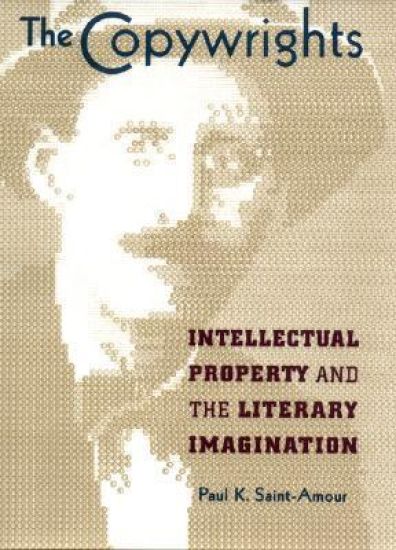
The Copywrights

The Copywrights

Paul K. Saint-Amour

Cornell University Press
2003
sidottu
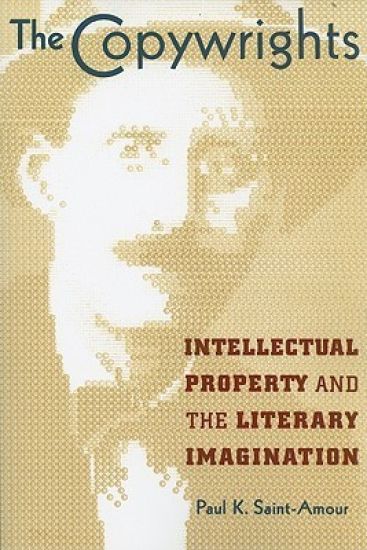
They borrow from published works without attribution. They remake literary creation in the image of consumption. They celebrate the art of scissors and paste. Who are these outlaws? Postmodern culture-jammers or file-sharing teens? No, they are the Copywrights—Victorian and modernist writers, among them Oscar Wilde and James Joyce, whose work wrestled with the intellectual property laws of their day. In a highly readable and thought-provoking book that places today's copyright wars in historical context, Paul K. Saint-Amour asks: Would their art have survived the copyright laws of the new millennium? Revisiting major works by Wilde and Joyce as well as centos assembled by anonymous writers from existing poems, Saint-Amour sees the period 1830–1930 as a time when imaginative literature became aware of its own status as intellectual property and began to register that awareness in its subjects, plots, and formal architecture. The authors of these self-reflexive literary texts were more conscious than their precursors of the role played by consumption in both the composition and the consecration of literature. The texts in question became, in turn, part of what Saint-Amour characterizes as a "counterdiscourse" to extensive monopoly copyright, a vocal minority that insisted on a broadly conceived public domain not only as indispensable to free expression and fresh creation but as a good in itself. Recent events such as the court battle over the Copyright Term Extension Act (CTEA), which extends copyright terms by 20 years, the patenting of the human genome and of genetically altered seed lines, and high-stakes controversies over literary parody have increased public awareness of intellectual property law. In The Copywrights, Saint-Amour challenges the notion that copyright's function ends with the provision of private incentives to creation and innovation. The cases he examines lead him to argue that copyright performs a range of political, emotional, and even sacred functions that are too often ignored and that what seems to have emerged as copyright's primary function—the creation of private property incentives—must not be an end in itself.
Copywrights

Copywrights

Paul K. Saint-Amour

CORNELL UNIVERSITY PRESS
muu
They borrow from published works without attribution. They remake literary creation in the image of consumption. They celebrate the art of scissors and paste. Who are these outlaws? Postmodern culture-jammers or file-sharing teens? No, they are the...
Copywrights

Copywrights

Paul K. Saint-Amour

CORNELL UNIVERSITY PRESS
muu
They borrow from published works without attribution. They remake literary creation in the image of consumption. They celebrate the art of scissors and paste. Who are these outlaws? Postmodern culture-jammers or file-sharing teens? No, they are the...
The Copywrights

The Copywrights

Paul K. Saint-Amour

Cornell University Press
2010
pokkari
They borrow from published works without attribution. They remake literary creation in the image of consumption. They celebrate the art of scissors and paste. Who are these outlaws? Postmodern culture-jammers or file-sharing teens? No, they are the Copywrights—Victorian and modernist writers, among them Oscar Wilde and James Joyce, whose work wrestled with the intellectual property laws of their day. In a highly readable and thought-provoking book that places today's copyright wars in historical context, Paul K. Saint-Amour asks: Would their art have survived the copyright laws of the new millennium? Revisiting major works by Wilde and Joyce as well as centos assembled by anonymous writers from existing poems, Saint-Amour sees the period 1830–1930 as a time when imaginative literature became aware of its own status as intellectual property and began to register that awareness in its subjects, plots, and formal architecture. The authors of these self-reflexive literary texts were more conscious than their precursors of the role played by consumption in both the composition and the consecration of literature. The texts in question became, in turn, part of what Saint-Amour characterizes as a "counterdiscourse" to extensive monopoly copyright, a vocal minority that insisted on a broadly conceived public domain not only as indispensable to free expression and fresh creation but as a good in itself. Recent events such as the court battle over the Copyright Term Extension Act (CTEA), which extends copyright terms by 20 years, the patenting of the human genome and of genetically altered seed lines, and high-stakes controversies over literary parody have increased public awareness of intellectual property law. In The Copywrights, Saint-Amour challenges the notion that copyright's function ends with the provision of private incentives to creation and innovation. The cases he examines lead him to argue that copyright performs a range of political, emotional, and even sacred functions that are too often ignored and that what seems to have emerged as copyright's primary function—the creation of private property incentives—must not be an end in itself.