
Kirjahaku
Etsi kirjoja tekijän nimen, kirjan nimen tai ISBN:n perusteella.
5 kirjaa tekijältä Paul R Secord

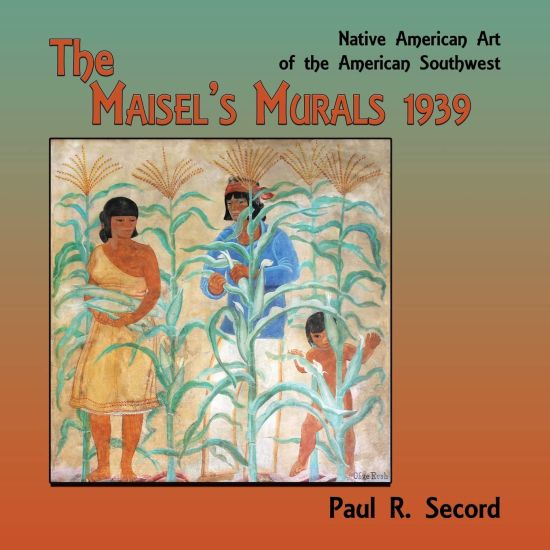
The murals fronting the entrance of Skip Maisel's Indian Jewelry and Crafts store at 510 Central Avenue SW in Albuquerque, New Mexico are a treasure of Native American painting and are of national importance. They represent some of the earliest and finest paintings by a seminal group of Southwestern native artists. Commissioned in 1939 by the store's founder, Maurice Maisel, the grandfather of the current owner, the murals are an extraordinary expression of fine arts, rarely seen on a commercial building. Despite their prominence on the building's fa ade, a fixture in downtown Albuquerque, they are essentially hidden in plain sight. The murals' subject matter demonstrates a unifying thematic context. Through the use of paired opposites, cultural themes and subjects can be compared and contrasted. In addition, the stylistic differences between artists, while showing the strong influence of training at "The Studio" art program at the Santa Fe Indian School established by Dorothy Dunn, they also demonstrate considerable differences in execution. The Maisel's building was designed by legendary New Mexico architect John Gaw Meem, popularizer of the Santa Fe Style. Meem hired well known Santa Fe artist Olive Rush for a total of $1,500 to paint the murals. She then hired eleven Native Americans to undertake the project and saw to it that they were paid a fair wage. Maisel's was to be Rush's last Native American project and she clearly wished the project to be a culmination statement of the mural work she had been engaged in with The Studio for nearly a decade. To that end, she included artists of varying ages, from forty-four year old Awa Tsireh of the first generation of Pueblo painters, to sixteen year old Popovi Da, a beginning Studio painter and the son of famous potters Maria and Julian Martinez, as well as including representatives of three principal Native American cultures in the Southwest: Pueblo, Navajo and Apache.
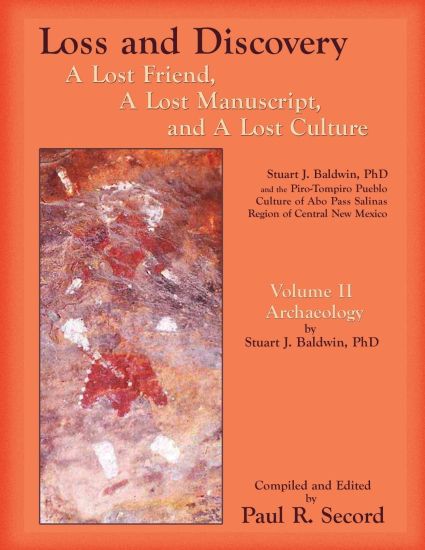
This book in two volumes is the culmination of over twenty-five years of conjecture. Why didn't archaeologist Stuart Baldwin, PhD (1946-1999) fully write up his research after a decade of work on the now extinct Piro-Tompiro culture in Central New Mexico? Why didn't he return to the Southwest after 1988? What happened to the artifacts and notes from five years of excavation by a University of Calgary, Alberta, Canada, field school at Tenabo Pueblo, a large fourteenth to seventeenth century pueblo? The answers to these questions, and a treasure trove of physical evidence and years of scholarship were discovered in 2016. This included detailed reports on the archaeology, ethnohistory and history of the Abo Pass region of New Mexico, along with complete site analyses of numerous surveys and limited excavations carried out in the region. Although completed nearly thirty years ago, Baldwin's work remains the single most comprehensive and accurate presentation on the Native American Pueblo culture in Central New Mexico. In these volumes we tell the story of rediscovering Baldwin's life work and present all of a nearly 1,400 page unpublished manuscript that remained hidden for years in a research library's archives. This is the second of these volumes and deals with archaeology and prehistory including rock art. Volume I is focused on history and ethnology. As Baldwin wrote in the preface of his "lost" manuscript: "I believe (in) any attempt to pull together and present available information on (a)...cultur(e)..., even if it is 'only' the morality of saving a people from historical obscurity."
The murals fronting the entrance of Skip Maisel's Indian Jewelry and Crafts store at 510 Central Avenue SW in Albuquerque, New Mexico are a treasure of Native American painting and are of national importance. They represent some of the earliest and finest paintings by a seminal group of Southwestern native artists. Commissioned in 1939 by the store's founder, Maurice Maisel, the grandfather of the current owner, the murals are an extraordinary expression of fine arts, rarely seen on a commercial building. Despite their prominence on the building's fa ade, a fixture in downtown Albuquerque, they are essentially hidden in plain sight. The murals' subject matter demonstrates a unifying thematic context. Through the use of paired opposites, cultural themes and subjects can be compared and contrasted. In addition, the stylistic differences between artists, while showing the strong influence of training at "The Studio" art program at the Santa Fe Indian School established by Dorothy Dunn, they also demonstrate considerable differences in execution. The Maisel's building was designed by legendary New Mexico architect John Gaw Meem, popularizer of the Santa Fe Style. Meem hired well known Santa Fe artist Olive Rush for a total of $1,500 to paint the murals. She then hired eleven Native Americans to undertake the project and saw to it that they were paid a fair wage. Maisel's was to be Rush's last Native American project and she clearly wished the project to be a culmination statement of the mural work she had been engaged in with The Studio for nearly a decade. To that end, she included artists of varying ages, from forty-four year old Awa Tsireh of the first generation of Pueblo painters, to sixteen year old Popovi Da, a beginning Studio painter and the son of famous potters Maria and Julian Martinez, as well as including representatives of three principal Native American cultures in the Southwest: Pueblo, Navajo and Apache.