Kirjojen hintavertailu. Mukana 11 699 587 kirjaa ja 12 kauppaa.

Kirjahaku

Etsi kirjoja tekijän nimen, kirjan nimen tai ISBN:n perusteella.

14 kirjaa tekijältä Paul Rabbitts

London’s Royal Parks

London’s Royal Parks

Paul Rabbitts

Shire Publications
2014
nidottu
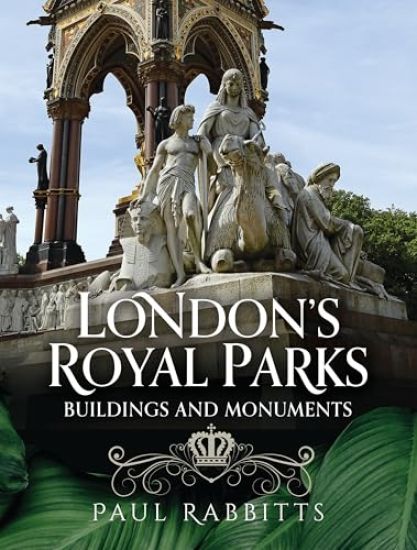
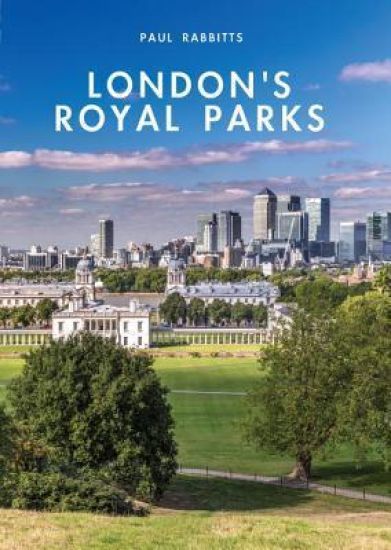
London’s royal parks are among its most beautiful and beloved spaces: just as much as the Houses of Parliament, Buckingham Palace or St Pancras Station, the mere mention of Hyde or Regent’s Park is enough to evoke the capital in all its glory for residents and tourists alike. They have a grand history – some were royally owned as far back as the Norman conquest, others were acquired by Henry VIII during the Reformation – and since being opened to the public during the eighteenth century, they have hosted some of London’s great events, including the Great Exhibition and innumerable jubilees and celebrations. This book tells the story of all eight of the parks from the point when they were acquired by the monarchy until the present day, including the major historic moments and events with which they are associated.
A Visitor's Guide to London's Royal Parks

A Visitor's Guide to London's Royal Parks

Paul Rabbitts

PEN SWORD BOOKS LTD
2025
nidottu
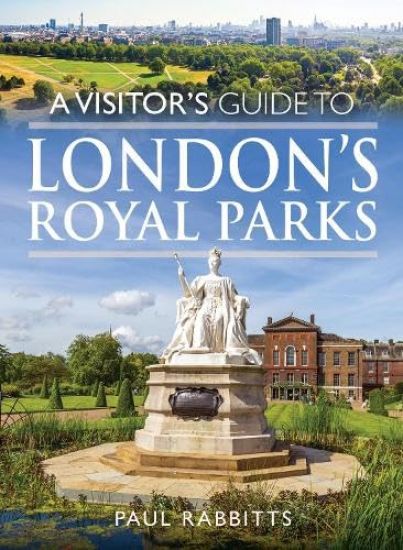
There are nearly 80 million visits to the Royal Parks every year, making them the most popular destinations in the capital. In 1956, author, poet and critic, Richard Thomas Church (1893-1972) wrote The Royal Parks of London, which was published by The Ministry of Public Building and Works as a guidebook at a cost of 3s 6d net. Many years has passed, and these parks continue to thrive, with new additions, events and celebrations. However, any visitor today will be overwhelmed by the beauty of these historic spaces that boast royal palaces, boathouses, bandstands, lodges, gatehouses, ornamental gardens, sculpture, public art, memorials, places for repose and refreshments. Today the Royal Parks as a charitable organisation is responsible for the care and maintenance of a large collection of historical built assets, comprising primarily of monuments, structures and buildings within the parks, and associated boundaries. This book will take you on a journey from Greenwich Park, the oldest of the Royal Parks, via Hyde Park, St James’s Park, Green Park, Regent’s Park, Bushy Park, Kensington Gardens to the largest of the royal parks – Richmond Park. It is hoped that the reader will gain a greater understanding of how these parks came about, but also to widen the visitor’s knowledge of some of the more unusual aspects of London’s Royal Parks, and to simply encourage the visitor to meander at will among them – the best way to discover the many pleasures within London’s Royal Parks.
London's Royal Parks

London's Royal Parks

Paul Rabbitts

PEN SWORD BOOKS LTD
2025
sidottu
London’s Royal Parks are among its most beautiful and beloved spaces: just as much as the Houses of Parliament, Buckingham Palace or St Pancras Station, the mere mention of Hyde Park or Greenwich Park is enough to evoke the capital in all its glory for residents and tourists alike. They have a magnificent history – some were royally owned as far back as the Norman conquest, others were acquired by Henry VIII during the Reformation and were great hunting grounds for successive monarchs – and since being opened to the public, they have hosted some of London’s great events, including the Great Exhibition in Hyde Park and innumerable jubilees, international games and competitions and celebrations. Today, the Royal Parks are visited by over 77 million visitors. But what are the ingredients of these magnificent green spaces? We often think of wider landscapes of trees, grass, lakes, meandering footways, bedding displays and herbaceous borders. But the Royal Parks are much more than this. Defined as ‘parkitecture’, we find royal palaces, stately homes, villas, monuments, memorials, statues of national figures and war heroes, public art, often controversial yet inspiring, sculpture, bandstands, gates and railings of exquisite designs, fountains, refreshments rooms, lodges and pavilions, bridges and boathouses. Each of the Royal Parks is defined by its ‘parkitecture’, from the formality of Regent’s and St James’s Parks to the rurality of Bushy and Richmond Parks. This new book is a long overdue complete celebration of the many buildings and monuments of London’s Royal Parks with over 250 beautiful illustrations.
Dunstable in 50 Buildings

Dunstable in 50 Buildings

Paul Rabbitts

AMBERLEY PUBLISHING
2024
nidottu
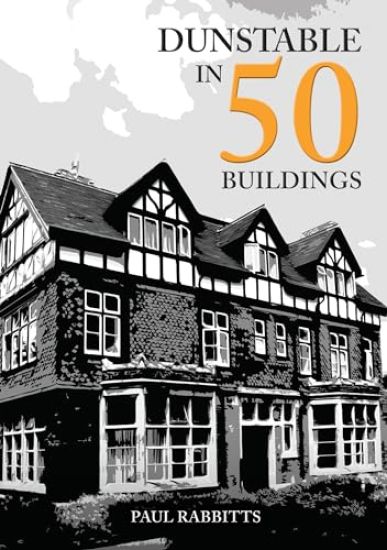
The Bedfordshire town of Dunstable can trace its origins back to Roman times and the building of Watling Street, which crossed the ancient Icknield Way at the point where Dunstable stands today. The Romans also constructed a posting station where travellers could change their horses, and a market town called Durocobrivis developed at the crossroads. When the Romans left Britain, Durocobrivis was abandoned and it wasn’t until 1109 that Henry I created a new town here and subsequently added a royal residence and a priory. Although wool cloth was once Dunstable’s main industry, it was later replaced by strawhat manufacturing, brewing and lace-making. Despite its small size it was also an important stage-coaching town. At the end of the nineteenth century, new industries arrived including printing and engineering, and when the railway reached the town in 1848 the population and building development increased. The twentieth century brought further expansion and growth with industries such as Vauxhall Motors. In Dunstable in 50 Buildings, author Paul Rabbitts focuses on the architectural heritage of the town from across the centuries. From almshouse to windmill and ancient road to shopping centre, a fascinating variety of structures and landmarks are featured, each one revealing the history and development of the town and the changing way of life for local people. Illustrated throughout, this engaging and accessible portrait of Dunstable’s architectural history will be of interest to residents, visitors and local historians alike.
Tring in 50 Buildings

Tring in 50 Buildings

Paul Rabbitts

AMBERLEY PUBLISHING
2024
nidottu
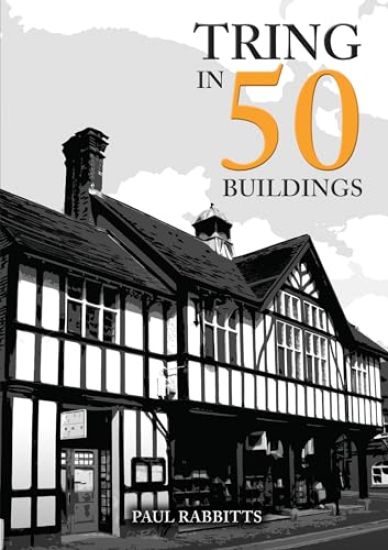
People have lived, farmed and traded in the Hertfordshire town of Tring for thousands of years. The Icknield Way, which hugs the Chiltern scarp, is reckoned to be the oldest road in Europe, while the Bulbourne Valley provided an obvious route for the Romans heading out west from St Albans. It was inevitable that a settlement would develop here on the well-drained soil, with springs and good sites for wind and water mills. In 1799, the Grand Junction Canal brought profound changes to this peaceful agricultural place. Coal, bricks and slates came in, while flour and farm produce were loaded for distant markets. Industry arrived in 1823 with the construction of a silk mill and the building of the London & Birmingham Railway in 1835 meant that Tring was within an hour’s journey of London. When the Rothschild family added Tring Park to their local estates in 1872, the banker and statesman Nathaniel, later the first Baron Rothschild, set about rebuilding the farms and constructing new cottages to replace decaying properties in the town. In this book, Paul Rabbitts highlights fifty of Tring’s buildings and landmarks – old and new – to explore its fascinating history. The structures included range from churches to cottages, court to clock house, museums to mills, and mansion to market house. Each has its story to tell and reveals the town's development through the centuries. Illustrated throughout, this accessible and engaging perspective will be of interest to residents, local historians and visitors alike.
Carlisle in 50 Buildings

Carlisle in 50 Buildings

Paul Rabbitts

AMBERLEY PUBLISHING
2022
nidottu
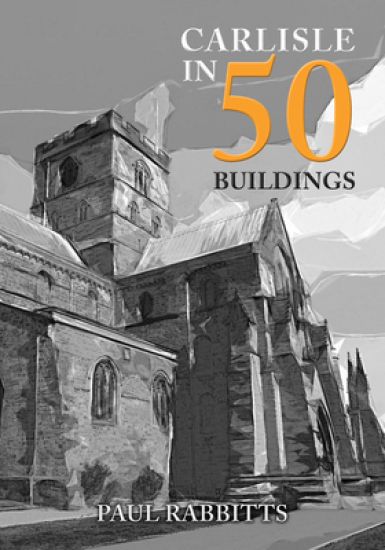
Originally established as a Roman settlement to serve the forts along Hadrian’s Wall, the Cumbrian city of Carlisle has a wealth of fascinating history. Its proximity to Scotland meant that it was a crucial military stronghold and its imposing eleventh-century castle and city walls have witnessed many conflicts through the centuries. During the Industrial Revolution it became an important hub on the railway network and a centre of textile manufacturing. Nicknamed the ‘Great Border City’, Carlisle is still the principal commercial and cultural centre of the county. In Carlisle in 50 Buildings author Paul Rabbitts explores fifty of the city’s architectural landmarks to discover its history, development and the changing way of life for its people. Both ancient and modern structures are featured, which have been used for many different purposes and reflect a wide range of architectural styles. The city’s success is based on its industry, which has shaped its built environment together with the many historic buildings and new structures. All these are celebrated within this well-illustrated book. This engaging and accessible portrait of the city’s rich history and its architectural heritage will appeal to residents and visitors alike.
Richmond Park

Richmond Park

Paul Rabbitts

Amberley Publishing
2016
pokkari
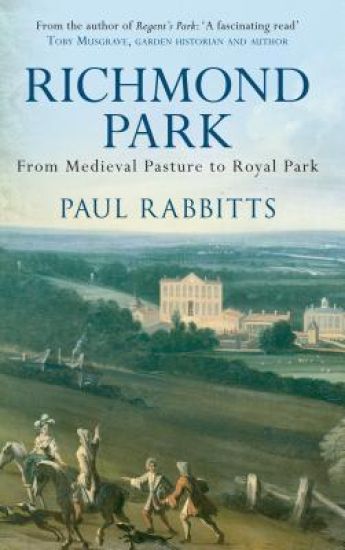
Richmond Park is the largest Royal Park in London, covering an area of 2,500 acres. From its heights there is an uninterrupted view of St Paul’s Cathedral, 12 miles away. The royal connections to this park probably go back further than any of the others, beginning with Edward I in the thirteenth century, when the area was known as the Manor of Sheen. The name was changed to Richmond during Henry VII’s reign. In 1625 Charles I brought his court to Richmond Palace to escape the plague in London and turned it into a park for red and fallow deer. His decision, in 1637, to enclose the land was not popular with the local residents, but he did allow pedestrians the right of way. To this day the walls remain. In 1847 Pembroke Lodge became the home of the then Prime Minister, Lord John Russell, and was later the childhood home of his grandson, Bertrand Russell. However, Richmond Park emerges from its historical record as a place that has seen many changes in fabric and detail and yet remains the embodiment of a medieval deer park. It is a palimpsest, retaining subtle clues to each period in its history.
London's Royal Parks The Postcard Collection

London's Royal Parks The Postcard Collection

Paul Rabbitts

Amberley Publishing
2017
nidottu
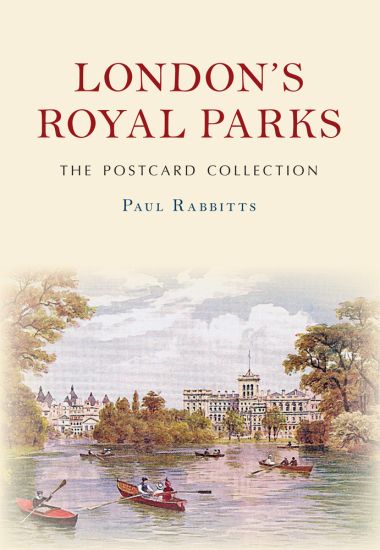
The royal parks of London are lands originally owned by the monarchy of the United Kingdom for the recreation (mostly hunting) of the royal family. They are part of the hereditary possessions of the Crown. With the increasing urbanisation of London, some of these were preserved as freely accessible open spaces and became public parks with the introduction of the Crown Lands Act 1851. Today there are eight parks formally described by this name and they cover almost 2,000 hectares of land in Greater London. Hyde Park, Kensington Gardens, Green Park, Regent’s Park and St James’s Park are the largest green spaces in central London; Bushy Park, Greenwich Park and Richmond Park are in the suburbs. London’s Royal Parks: The Postcard Collection takes the reader on an evocative journey into the past of these much-loved green spaces through a selection of old postcards that offer a fascinating window into their history and continuing development.
Luton in 50 Buildings

Luton in 50 Buildings

Paul Rabbitts

Amberley Publishing
2020
nidottu
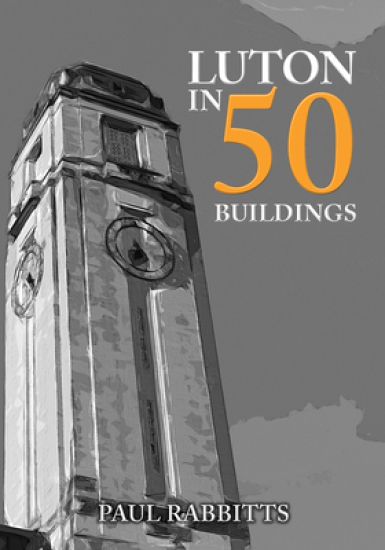
The Bedfordshire town of Luton originated in the sixth century when the Saxons established a farm or settlement (called a ‘tun’) by the River Lea. Farming and agriculture became the major industries, while the local market brought in people from the surrounding villages. The hat-making industry dominated the town from the seventeenth until the twentieth century, while in 1905 Vauxhall Motors opened there, followed by the airport in 1938. Although car manufacturing ceased in 2002, the town continues to prosper with a growing population and much redevelopment taking place. In Luton in 50 Buildings author Paul Rabbitts looks at how the town’s buildings and landmarks, both old and new, reflect its long and fascinating history. Among the places featured are some of the town’s historic churches, inns and residences, the town hall and the Kenilworth Road football ground. Also featured are Luton Central Mosque, the expanding airport and the stately home of Luton Hoo, originally designed by Robert Adam in the eighteenth century for the 3rd Earl of Bute. Each of these structures and landmarks has its own stories to tell, as well as documenting a significant aspect of Luton’s social, cultural and industrial heritage.
Sir Christopher Wren

Sir Christopher Wren

Paul Rabbitts

Shire Publications
2019
nidottu
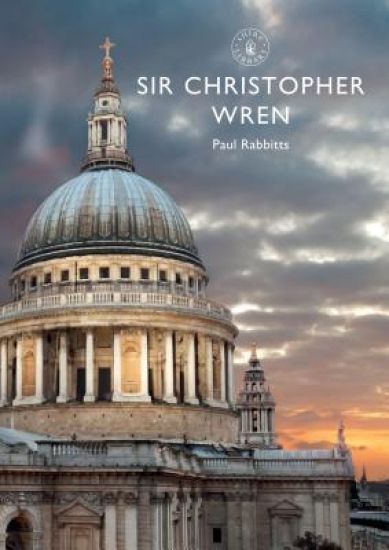
Sir Christopher Wren (1632–1723) is now mostly remembered as a genius of architecture – but he was also an accomplished polymath, who only came to architecture quite late in life. Most famous as the mastermind behind the rebuilding of St Paul’s Cathedral and more than fifty parish churches after the Great Fire of London, among his countless other projects Wren also designed the Royal Hospital at Chelsea, the Royal Naval Hospital at Greenwich, and much of Hampton Court Palace. Replete with colourful images of his buildings, this concise biography tells the story of a man whose creations are still popular tourist attractions to this day, but also casts light on Wren’s credentials as an intellectual and a founding member of the Royal Society.
Grinling Gibbons

Grinling Gibbons

Paul Rabbitts

Shire Publications
2020
nidottu
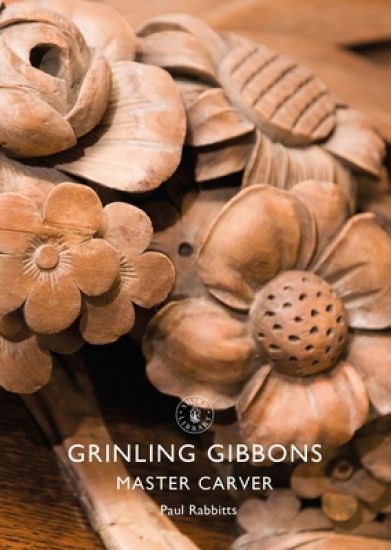
Master Carver Grinling Gibbons (1648–1721) is famous for his breathtakingly delicate, intricate and realistic carvings, both in wood and stone. Tantalising cascades of fruit and flowers, puffy-cheeked cherubs, crowds of figures and flourishes of architecture are all trademark features of his energetic, animated carvings that grace stately homes, palaces, churches and colleges across the country. His work can be found in some of Britain’s most beloved buildings, including St Paul’s Cathedral and Hampton Court Palace. From his early work in the Low Countries to his ‘discovery’ by the diarist John Evelyn in London, and his appointment as the king’s Master Carver, this book celebrates Grinling Gibbons’ unequalled talent, his visionary genius, and his ability to transform humble pieces of wood into some of the most exquisite artworks of his day.
Bandstands

Bandstands

Paul Rabbitts

Historic England
2018
nidottu
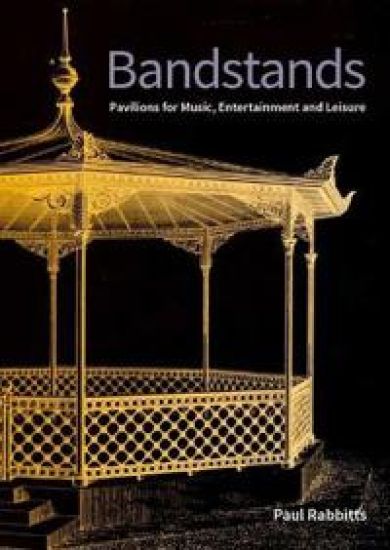
In 1833, the Select Committee for Public Walks was introduced so that ‘the provision of parks would lead to a better use of Sundays and the replacement of the debasing pleasures.’ Music was seen as an important moral influence and ‘musical cultivation … the safest and surest method of popular culture’, and it was the eventual introduction of the bandstand which became a significant aspect of the reforming potential of public parks. However, the move from the bull baiting of ‘Merrie England’ to the ordered recreation provided by bandstands has never been fully comprehended. Likewise, the extent of changes in leisure and public entertainment and the impact of music at seaside resorts often revolved around the use of seaside bandstands, with the subsequent growth of coastal resorts. Music in public spaces, and the history and heritage of the bandstand has largely been ignored. Yet in their heyday, there were over 1,500 bandstands in the country, in public parks, on piers and seaside promenades attracting the likes of crowds of over 10,000 in the Arboretum in Lincoln, to regular weekday and weekend concerts in most of London’s parks up until the beginning of the Second World War. Little is really known about them, from their evolution as ‘orchestras’ in the early Pleasure Gardens, the music played within them, to their intricate and ornate ironwork or art deco designs and the impact of the great foundries, their worldwide influence, to the great decline post Second World War and subsequent revival in the late 1990s. This book tells the story of these pavilions made for music, and their history, decline and revival.
Aylesbury in 50 Buildings

Aylesbury in 50 Buildings

Paul Rabbitts

AMBERLEY PUBLISHING
2022
nidottu
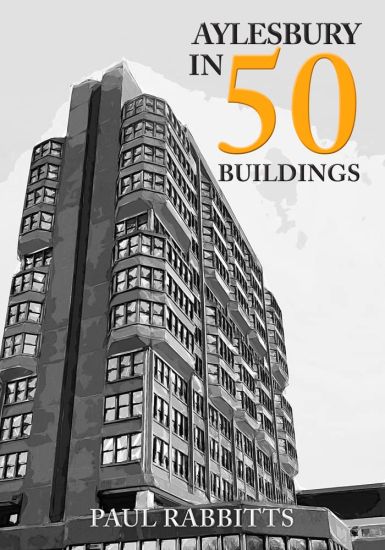
Aylesbury, the county town of Buckinghamshire, started as a Saxon settlement called Aegel’s burgh. By medieval times it had developed into an administrative centre, with its weekly market serving as a focal point for surrounding villages. Over the centuries the main industries were lace and silk making, printing and brewing. Its location on various important routes also led to it becoming a coaching town and, during the nineteenth century, it grew most notably with the arrival of the railway. However, it was in the 1950s that Aylesbury experienced its greatest period of growth when it became an overspill town for London. In this book, author Paul Rabbitts features fifty of the buildings and landmarks in the town to reveal the structures that are a testament to the history and development of Aylesbury. The chosen buildings are drawn from across the centuries and reflect diverse architectural styles and purposes, from educational and entertainment to residential and religious. By exploring Aylesbury’s architectural heritage in an engaging and accessible way, the author charts the changing face of the town and the places that have played a significant or surprising role in its history. Illustrated throughout, Aylesbury in 50 Buildings will be of great interest to residents, visitors and local historians.
British Bandstands

British Bandstands

Paul Rabbitts

Amberley Publishing
2017
nidottu
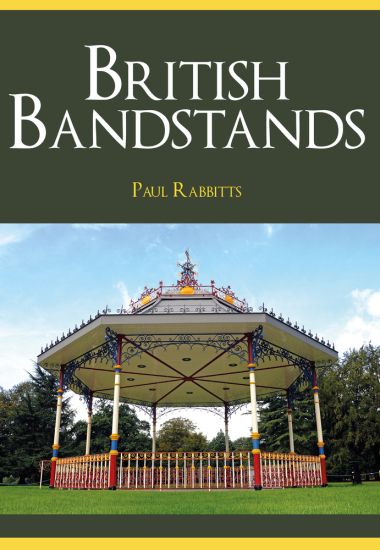
Bandstands have been a feature of the British way of life for well over a century – but, after the Second World War, an increasing number fell into disuse and were neglected. Sadly, many were demolished when public parks and seaside resorts went into a spiral of decline in the 1980s and 1990s. However, in 1997 the Heritage Lottery Fund started investing in our public parks and gardens and this has seen the rediscovery of bandstands, one which continues to this day. Former Director of the Heritage Lottery Fund Dr Stewart Harding has described them as ‘wonderfully exotic structures that are at once very familiar and also alien in their strange designs – looking like UFOs, Moorish temples, rustic cottages or Chinese pavilions’. Many have been restored in the last twenty years, with over 120 funded by the Heritage Lottery Fund, from Aberdeen to Aberystwyth, Nairn to Nottingham, Watford to Worcester. These restorations mark a rebirth of the bandstands across the nation, a rebirth that is celebrated in this book with images and information detailing imaginative restorations, designs and new usages for one of our most iconic cultural landmarks – the British bandstand.