Kirjojen hintavertailu. Mukana 11 627 220 kirjaa ja 12 kauppaa.

Kirjahaku

Etsi kirjoja tekijän nimen, kirjan nimen tai ISBN:n perusteella.

47 kirjaa tekijältä Paul Ricoeur

A Ricoeur Reader

A Ricoeur Reader

Paul Ricoeur

University of Toronto Press
1991
pokkari
Paul Ricoeur is one of the most important modern literary theorists and a philosopher of world renown. This collection brings together his published articles, papers, reviews, and interviews that focus on literary theory and criticism. The first of four sections includes early pieces that explore the philosophical foundations for a post-structural hermeneutics. The second contains reviews and essays in which Ricoeur engages in debate over some of the central themes of literary theory, including figuration/configuration and narrativity. In the third section are later essays on post-structuralist hermeneutics, and in the fourth, interviews in which he discusses text, language, and myths. Mario Valdés provides an introduction to the literary theories of Paul Ricoeur and the works in this collection particularly. He also includes a complete bibliography of Ricoeur's works that have appeared in English.
Oneself as Another

Oneself as Another

Paul Ricoeur

University of Chicago Press
1995
nidottu
Paul Ricoeur has been hailed as one of the most important thinkers of the century. Oneself as Another, the clearest account of his "philosophical ethics," substantiates this position and lays the groundwork for a metaphysics of morals. Focusing on the concept of personal identity, Ricoeur develops a hermeneutics of the self that charts its epistemological path and ontological status.
The Just

The Just

Paul Ricoeur

University of Chicago Press
2003
nidottu
The essays in this collection by the noted French philosopher Paul Ricoeur grew out of a series of invited lectures given in France on the question of the nature of justice and the law at the Institut des Hautes Etudes pour a Justice in Paris. Gathered under the title "The Just", the essays represent a sustained reflection on the relation between the concept of the juridical - as embedded in written laws, tribunals, judges and verdicts - and the philosophical concept of right, situated between moral theory and politics. In political philosophy, Ricoeur argues, the question of right is obscured by the haunting presence of historical evil. In a philosophy of right, on the other hand, the leading theme is peace. Building on the framework established in his earlier work, "Oneself as Another", Ricoeur shifts his focus from political considerations to those having to do with the juridical dimension of the problem of justice. Fleshing out this framework, Ricoeur revisits the work of Plato, Aristotle and Kant in his engagements with contemporary thinkers, particularly John Rawls, Michael Walzer, Hannah Arendt and Ronald Dworkin. His thought ranges from conceptual analysis, to the theory of law, and finally to the act of judging, exploring the ideas of sanction, rehabilitation, pardon and the status of conscience in relation to the demands of the law. A valuable work for understanding the development of Ricoeur's hermeneutic philosophy and the literary and religious dimensions of his thought, "The Just" should also be of interest to scholars interested in matters of ethics, law and justice.
Reflections on the Just

Reflections on the Just

Paul Ricoeur

University of Chicago Press
2007
sidottu
At the time of his death in 2005, French philosopher Paul Ricoeur was regarded as one of the great thinkers of his generation. In more than half a century of writing about the essential questions of human life, Ricoeur's thought encompassed a vast range of wisdom and experience, and he made landmark contributions that would go on to influence later scholars in such areas as phenomenology, hermeneutics, structuralism, and theology. Toward the end of his life, Ricoeur began to focus directly on ethical questions that he feared had been overshadowed by his other work; the result was a two-volume collection of essays on justice and the law. The University of Chicago Press published the English translation of the first volume, "The Just", to great acclaim in 2000. Now this translation of the second volume, "Reflections on the Just", completes the set and makes available to readers the whole of Ricoeur's meditations on the concept. Consisting of fifteen thematically organized essays, "Reflections on the Just" continues and expands on the work Ricoeur began with his "little ethics" in "Oneself as Another" and "The Just". In the preface, he considers what revisions he would make were he to start over and how that is reflected in these essays. The opening part brings phenomenology to bear on ethics; the second group of essays comprises shorter, occasional pieces considering the concept of justice in the works of other philosophers, including Max Weber and Charles Taylor. The final part turns to the specific domains of medicine and the law, examining how concepts of right and justice operate in those realms. Cogent, deeply considered, and fully engaged with the realities of the contemporary world, "Reflections on the Just" is an essential work for understanding the development of Ricoeur's thought in his final years.
Living Up to Death

Living Up to Death

Paul Ricoeur

University of Chicago Press
2009
sidottu
When French philosopher Paul Ricoeur died in 2005, he bequeathed to the world a highly regarded, widely influential body of work which established him as one of the greatest thinkers of our time. He also left behind a number of unfinished projects that are gathered here and translated into English for the first time. "Living Up to Death" consists of one major essay and nine fragments. Composed in 1996, the essay is the kernel of an unrealized book on the subject of mortality. Likely inspired by his wife's approaching death, it examines not one's own passing but one's experience of others dying. Ricoeur notes that when thinking about death the imagination is paramount, since we cannot truly experience our own passing. But those we leave behind do, and Ricoeur posits that the idea of life after death originated in the awareness of our own end posthumously resonating with our survivors. The fragments in this volume were written over the course of the last few months of Ricoeur's life as his health failed, and they represent his very last work. They cover a range of topics, touching on biblical scholarship, the philosophy of language, and the idea of selfhood he first addressed in "Oneself as Another". And while they contain numerous philosophical insights, these fragments are perhaps most significant for providing an invaluable look at Ricoeur's mind at work. As poignant as it is perceptive, "Living Up to Death" is a moving testimony to Ricoeur's willingness to confront his own mortality with serious questions, a touching insouciance, and hope for the future.
Lectures on Imagination

Lectures on Imagination

Paul Ricoeur

THE UNIVERSITY OF CHICAGO PRESS
2024
sidottu
Ricoeur’s theory of productive imagination in previously unpublished lectures. The eminent philosopher Paul Ricoeur was devoted to the imagination. These previously unpublished lectures offer Ricoeur’s most significant and sustained reflections on creativity as he builds a new theory of imagination through close examination, moving from Aristotle, Pascal, Spinoza, Hume, and Kant to Ryle, Price, Wittgenstein, Husserl, and Sartre. These thinkers, he contends, underestimate humanity’s creative capacity. While the Western tradition generally views imagination as derived from the reproductive example of the image, Ricoeur develops a theory about the mind’s power to produce new realities. Modeled most clearly in fiction, this productive imagination, Ricoeur argues, is available across conceptual domains. His theory provocatively suggests that we are not constrained by existing political, social, and scientific structures. Rather, our imaginations have the power to break through our conceptual horizons and remake the world.
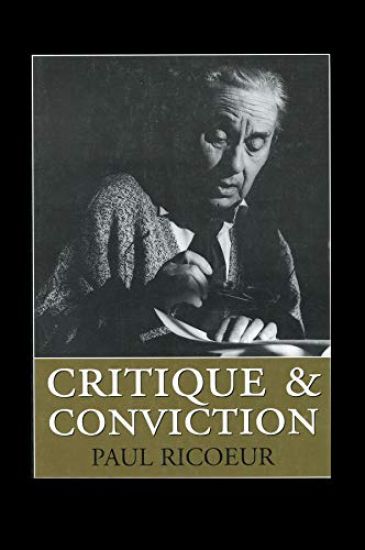
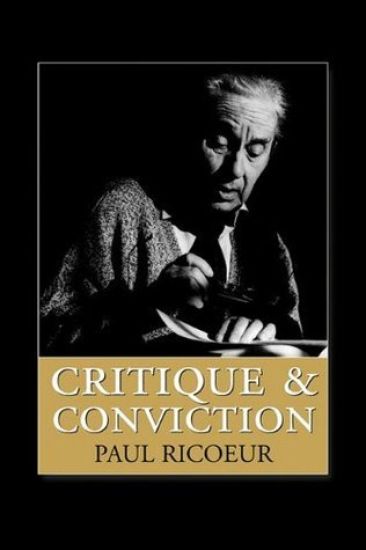
Critique and Conviction

Critique and Conviction

Paul Ricoeur

Columbia University Press
1998
sidottu
Criticism and Conviction offers a rare opportunity to share personally in the intellectual life and journey of the eminent philosopher Paul Ricoeur. Internationally known for his influential works in hermeneutics, theology, psychoanalysis, and aesthetics, until now, Ricoeur has been conspicuously silent on the subject of himself. In this book-a conversation about his life and work with Francois Azouvi and Marc de Launay-Ricoeur reflects on a variety of philosophical, social, religious, and cultural topics, from the paradoxes of political power to the relationship between life and art, and life and death. In the first of eight conversations, Ricoeur traces the trajectory of his life, recounting the origins of his convictions and the development of his intellect against the tragic events of the twentieth century. Declaring himself the "son of a victim of the First World War," Ricoeur, an orphan, sketches his early years in the house of stern but loving grandparents, and the molding of his intellect under the tutelage of Roland Dalbiez, Gabriel Marcel, and Andre Philip. Ricoeur tells the intriguing story of his capture and five-year imprisonment by the Germans during World War II, where he and his compatriots fashioned an intellectual life complete with a library and lectures, and where he, amazingly, was able to continue his dissertation research. Elegantly interweaving anecdotal with philosophical meditations, Ricoeur recounts his relationships with some of the twentieth century's greatest figures, such as Heidegger, Jaspers, and Eliade. He also shares his views on French philosophers and explains his tumultuous relationship with Jacques Lacan. And while expressing his deepest respect for the works of Claude Levi-Strauss and Michel Foucault, Ricoeur reserves his greatest admiration for the narratologist Algirdas Julien Greimas. Ricoeur also explores the relationship between the philosophical and religious domains, attempting to reconcile the two poles in his thought. And readers who have struggled with Ricoeur's work will be grateful for these illuminating discussions that provide an invaluable key to his writings on language and narrative, especially those on metaphor and time. Spontaneous and lively, Criticism and Conviction is a passionate confirmation of Ricoeur's eloquence, lucidity, and intellectual rigor, and affirms his position as one of this century's greatest thinkers. It is an essential book for anyone interested in philosophy and literary criticism.
Freud and Philosophy

Freud and Philosophy

Paul Ricoeur

Yale University Press
1977
pokkari
If Paul Ricoeur is correct in seeing the various currents of contemporary philosophy all converging on the problem of a "grand philosophy of language," then the first sixty pages of this absorbing study of Freud may become the rallying point from which future work can begin.This first part of Freud and Philosophy, "Problematic," presents a profound and clear theory of signification, symbol, and interpretation. The second part, "A Reading of Freud," is required reading for anyone seriously interested in psychoanalysis. The third section interpretation of Ricoeur's own theory of symbol—particularly religious symbol—which places this study at the center of contemporary debate over the sense of myth.In this book are revealed Ricoeur the philosopher of language; Ricoeur the critic of Freud; and Ricoeur the theologian of religious symbol. The author is outstanding in all three roles, and the book that emerges is of rare profundity, enormous scope, and complete timeliness.Paul Ricoeur is professor of philosophy at the University of Paris. “Paul Ricouer…has done a study that is all too rare these days, in which one intellect comes to grips with another, in which a scholar devotes himself to a thoughtful, searching, and comprehensive study of a genius…The final result is a unique survey of the panorama of Freudian thought by an observer who, although starting from outside, succeeds in penetrating to its core.” –American Journal of Psychiatry“Primarily an inquiry into the foundations of language and hermeneutics…[Ricoeur uses] the Freudian ‘hermeneutics of suspicion’ as a corrective and counter-balance for phenomenology and create a ‘new phenomenology’…This important work…should have an impact upon serious thinking in philosophy, theology, psychology, and other areas which have been affected by Freud studies.”—International Philosophical Quarterly“A stimulating tour de force that allows us to envisage both the psychoanalytic body of knowledge and the psychoanalytic movement in a broad perspective within the framework of its links to culture, history and the evolution of Western intellectual thought.” – Psychoanalytic Quarterly Paul Ricoeur is a professor of philosophy at the University of Chicago and the University of Paris.
The Rule of Metaphor

The Rule of Metaphor

Paul Ricoeur

Routledge
2003
nidottu
Paul Ricoeur is widely regarded as one of the most distinguished philosophers of our time. In The Rule of Metaphor he seeks 'to show how language can extend itself to its very limits, forever discovering new resonances within itself'. Recognizing the fundamental power of language in constructing the world we perceive, it is a fruitful and insightful study of how language affects how we understand the world, and is also an indispensable work for all those seeking to retrieve some kind of meaning in uncertain times.
On Translation

On Translation

Paul Ricoeur

Routledge
2006
sidottu
Paul Ricoeur was one of the most important philosophers of the twentieth century. In this short and accessible book, he turns to a topic at the heart of much of his work: What is translation and why is it so important?Reminding us that The Bible, the Koran, the Torah and the works of the great philosophers are often only ever read in translation, Ricoeur reminds us that translation not only spreads knowledge but can change its very meaning. In spite of these risk, he argues that in a climate of ethnic and religious conflict, the art and ethics of translation are invaluable.Drawing on interesting examples such as the translation of early Greek philosophy during the Renaissance, the poetry of Paul Celan and the work of Hannah Arendt, he reflects not only on the challenges of translating one language into another but how one community speaks to another. Throughout, Ricoeur shows how to move through life is to navigate a world that requires translation itself.Paul Ricoeur died in 2005. He was one of the great contemporary French philosophers and a leading figure in hermeneutics, psychoanalytic thought, literary theory and religion. His many books include Freud and Philosophy and Time and Narrative.
On Translation

On Translation

Paul Ricoeur

Routledge
2006
nidottu
Paul Ricoeur was one of the most important philosophers of the twentieth century. In this short and accessible book, he turns to a topic at the heart of much of his work: What is translation and why is it so important?Reminding us that The Bible, the Koran, the Torah and the works of the great philosophers are often only ever read in translation, Ricoeur reminds us that translation not only spreads knowledge but can change its very meaning. In spite of these risk, he argues that in a climate of ethnic and religious conflict, the art and ethics of translation are invaluable.Drawing on interesting examples such as the translation of early Greek philosophy during the Renaissance, the poetry of Paul Celan and the work of Hannah Arendt, he reflects not only on the challenges of translating one language into another but how one community speaks to another. Throughout, Ricoeur shows how to move through life is to navigate a world that requires translation itself.Paul Ricoeur died in 2005. He was one of the great contemporary French philosophers and a leading figure in hermeneutics, psychoanalytic thought, literary theory and religion. His many books include Freud and Philosophy and Time and Narrative.
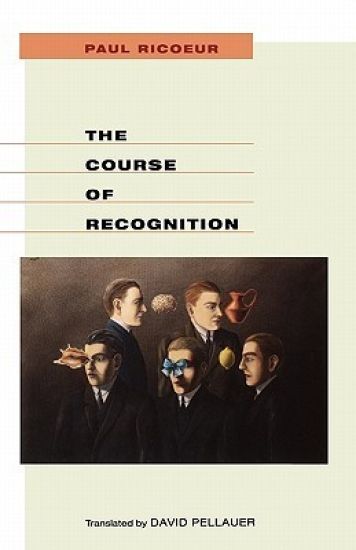
The Course of Recognition

The Course of Recognition

Paul Ricoeur

Harvard University Press
2007
nidottu
Recognition, though it figures profoundly in our understanding of objects and persons, identity and ideas, has never before been the subject of a single, sustained philosophical inquiry. This work, by one of contemporary philosophy’s most distinguished voices, pursues recognition through its various philosophical guises and meanings—and, through the “course of recognition,” seeks to develop nothing less than a proper hermeneutics of mutual recognition.Originally delivered as lectures at the Institute for the Human Sciences at Vienna, the essays collected here consider recognition in three of its forms. The first chapter, focusing on knowledge of objects, points to the role of recognition in modern epistemology; the second, concerned with what might be called the recognition of responsibility, traces the understanding of agency and moral responsibility from the ancients up to the present day; and the third takes up the problem of recognition and identity, which extends from Hegel’s discussion of the struggle for recognition through contemporary arguments about identity and multiculturalism. Throughout, Paul Ricoeur probes the significance of our capacity to recognize people and objects, and of self-recognition and self-identity in relation to the gift of mutual recognition. Drawing inspiration from such literary texts as the Odyssey and Oedipus at Colonus, and engaging some of the classic writings of the Continental philosophical tradition—by Kant, Hobbes, Hegel, Augustine, Locke, and Bergson—The Course of Recognition ranges over vast expanses of time and subject matter and in the process suggests a number of highly insightful ways of thinking through the major questions of modern philosophy.
Critique and Conviction

Critique and Conviction

Paul Ricoeur

Polity Press
1997
sidottu
In this new book Paul Ricoeur - one of the greatest contemporary philosophers - offers a personal reflection on his life and on the themes which have preoccupied him over the course of his career. Ranging across topics in ethics and metaphysics, psychoanalysis and hermeneutics, history, politics and religion, Critique and Conviction provides unique insight into the ideas and sources of influence which have shaped Ricoeur's philosophical approach and defined his core concerns. Ricoeur also discusses in detail a number of topics about which he has not written extensively before, including questions of aesthetics and current affairs. This remarkable testimony by one of the leading philosophers of the twentieth century will be of great interest to students of philosophy, theology, literary theory and social and political theory.
Critique and Conviction

Critique and Conviction

Paul Ricoeur

Polity Press
1997
nidottu
In this new book Paul Ricoeur - one of the greatest contemporary philosophers - offers a personal reflection on his life and on the themes which have preoccupied him over the course of his career. Ranging across topics in ethics and metaphysics, psychoanalysis and hermeneutics, history, politics and religion, Critique and Conviction provides unique insight into the ideas and sources of influence which have shaped Ricoeur's philosophical approach and defined his core concerns. Ricoeur also discusses in detail a number of topics about which he has not written extensively before, including questions of aesthetics and current affairs. This remarkable testimony by one of the leading philosophers of the twentieth century will be of great interest to students of philosophy, theology, literary theory and social and political theory.
Being, Essence and Substance in Plato and Aristotle
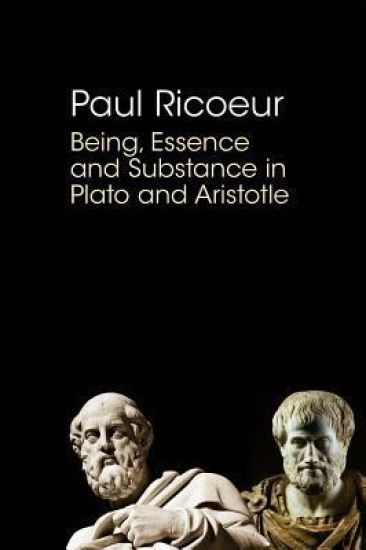
Paul Ricoeur (1913-2005) was one of the outstanding French philosophers of the 20th century and his work is widely read in the English-speaking world. This unique volume comprises the lectures that Ricoeur gave on Plato and Aristotle at the University of Strasbourg in 1953-54. The aim of these lectures is to analyse the metaphysics of Plato and Aristotle and to discern in their work the ontological foundations of Western philosophy. The relation between Plato and Aristotle is commonly portrayed as a contrast between a philosophy of essence and a philosophy of substance, but Ricoeur shows that this opposition is too simple. Aristotelian ontology is not a simple antithesis to Platonism: the radical ontology of Aristotle stands in a far more subtle relation of continuity and opposition to that of Plato and it is this relation we have to reconstruct and understand. Ricoeur’s lectures offer a brilliant analysis of the great works of Plato and Aristotle which has withstood the test of time. They also provide a unique insight into the development of Ricoeur’s thinking in the early 1950s, revealing that, even at this early stage of his work, Ricoeur was focused sharply on issues of language and the text.
Being, Essence and Substance in Plato and Aristotle
Paul Ricoeur (1913-2005) was one of the outstanding French philosophers of the 20th century and his work is widely read in the English-speaking world. This unique volume comprises the lectures that Ricoeur gave on Plato and Aristotle at the University of Strasbourg in 1953-54. The aim of these lectures is to analyse the metaphysics of Plato and Aristotle and to discern in their work the ontological foundations of Western philosophy. The relation between Plato and Aristotle is commonly portrayed as a contrast between a philosophy of essence and a philosophy of substance, but Ricoeur shows that this opposition is too simple. Aristotelian ontology is not a simple antithesis to Platonism: the radical ontology of Aristotle stands in a far more subtle relation of continuity and opposition to that of Plato and it is this relation we have to reconstruct and understand. Ricoeur’s lectures offer a brilliant analysis of the great works of Plato and Aristotle which has withstood the test of time. They also provide a unique insight into the development of Ricoeur’s thinking in the early 1950s, revealing that, even at this early stage of his work, Ricoeur was focused sharply on issues of language and the text.
Hermeneutics

Hermeneutics

Paul Ricoeur

Polity Press
2013
sidottu
Paul Ricoeur’s contribution to the theory of interpretation, or hermeneutics, is considerable: he ranks among the masters of this discipline alongside Schleiermacher, Dilthey, Heidegger and Gadamer. In addition to major works like The Conflict of Interpretations, he wrote many articles and shorter texts which deserve to be discovered and rediscovered. These allow us to gain a deeper understanding of the development of his work over time and to appreciate the full range of his contribution. Some of the texts examine the nature of metaphor while others guide the reader through the many challenges of the hermeneutic problem - from the symbol to the text, then to the text as action, taking full account of the ethical implications. Here one encounters Ricoeur’s reflections on the future of hermeneutics and his abiding concern to explore the relations between hermeneutics and analytical philosophy. Ricoeur’s contribution to biblical hermeneutics has also been decisive. Two masterful studies in this volume attest to Ricoeur’s attempt to explore the relations between revelation and truth, on the one hand, and between myths of salvation and reason, on the other. This book - the second volume of Ricoeur’s writings and lectures - brings together texts which appeared between 1972 and 2006. It is published under the auspices of Le Fonds Ricoeur.