Kirjojen hintavertailu. Mukana 11 717 486 kirjaa ja 12 kauppaa.

Kirjahaku

Etsi kirjoja tekijän nimen, kirjan nimen tai ISBN:n perusteella.

52 kirjaa tekijältä Paul Robinson

The White Russian Army in Exile 1920-1941

The White Russian Army in Exile 1920-1941

Paul Robinson

Oxford University Press
2002
sidottu
Paul Robinson traces the fate of the tens of thousands of soldiers of the anti-Bolshevik White Armies who fled Russia at the end of the Russian civil war. Even as the troops dispersed throughout the world, they continued to think of themselves as soldiers, kept their organization intact and in some cases even continued their military training. This book provides the first detailed history of this remarkable phenomenon. It outlines the activities of the White Army in exile, including its underground struggles against the Soviet Union, the humanitarian aid it supplied to its members, the ideological debates in which it participated, and its efforts to collaborate with Germany in the Second World War. The story of the afterlife of one of the largest combat forces ever dispersed in this way is a fascinating one, and Robinson's account gives due attention to several of the remarkable individuals who were involved. He sheds new light on the history of the White Movement in general, as well as on the personal histories of those Russians caught up in the mass emigration of the interwar years.
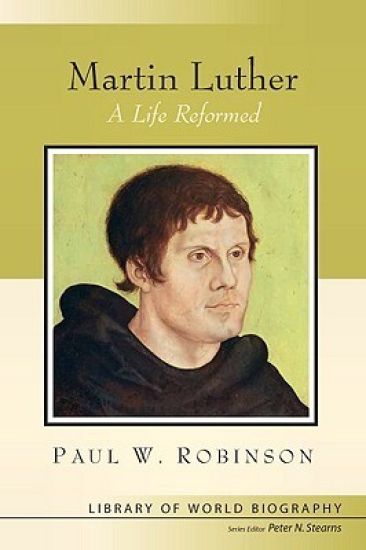
Martin Luther

Martin Luther

Paul Robinson

Pearson
2010
nidottu
This biography is a great addition to a Renaissance/Reformation course. The newest installment to the World Biography Series, this book profiles the life of Martin Luther and the impact he had on world events during his lifetime and long after. Concise and incisive, each interpretive biography in the Library of World Biography Series focuses on a person whose actions and ideas either significantly influenced world events or whose life reflects important themes and developments in global history.
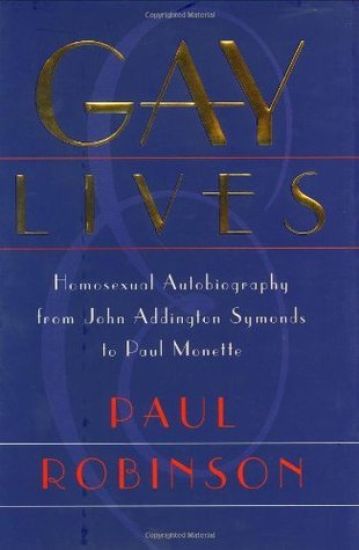
Gay Lives

Gay Lives

Paul Robinson

University of Chicago Press
1999
sidottu
In his autobiography, John Addington Symonds relates a glorious night of passion, in which he and his lover "lay covered from the cold in bed, tasting the honey of softly spoken words and the blossoms of lips pressed on lips". Christopher Isherwood's first autobiography, on the other hand, was far less direct; he wrote a second autobiography in part because the first was "not truly autobiographical" in that "the author conceals important facts about himself". These contradictions, evasions, and explicit sexual details of the life stories of 14 men form "Gay Lives", an account of homosexual autobiography. Paul Robinson reads the memoirs of French, British, and American gay authors - Andre Gide, Quentin Crisp, and Martin Duberman, among others - through the prism of sexual identity, asking questions about homosexuality and its relation to literary form. How did these authors discover their sexual identity? Did they embrace it or reject it? How did they express often conflicted desires in their words, which ranged from defiant and brutally frank to ambiguous and abstract? Robinson considers the choices each made - as a man and an author - to accommodate himself to society's homophobia or live in protest against his oppression. Despite the threads that connect these stories, "Gay Lives" refutes the notion that there is a typical homosexual "career" by showing that gay men have led wildly dissimilar lives - from the exuberant to the miserable - and that they have found no less dissimilar meanings in those lives.
Opera, Sex and Other Vital Matters

Opera, Sex and Other Vital Matters

Paul Robinson

University of Chicago Press
2002
sidottu
"Opera, Sex and Other Vital Matters" gathers both classic and never-before-published essays from one of the leading stylists in contemporary American letters, and one of our more revered public intellectuals, Paul Robinson. Diverse and elegant, the essays in this collection showcase the sly wit and lightly worn erudition of their author. Each celebrates art and the flesh, directing us to the twin ecstasies of music and eros. The essays on opera gathered here explore how masterpieces such as "Fidelio" and "The Magic Flute" reflect the intellectual currents of their day. Be it the work of Verdi or Mozart, Wagner or Strauss, Robinson compels us to search for meaning not just in the lyrics of opera but also in the music. In melody, not libretto, we are more likely to discern key historical complexities and appreciate the way opera transcends language and time. The essays on sexuality, meanwhile, are ruminative, funny and even moving. At one moment, Robinson measures whether homosexuality is the result of destiny or free choice. In another, he shares a touching exchange of letters with a gay student in the process of coming out. The final essays that encompass "other vital matters" find Robinson at his most incisive. Whether defending Freud as the most influential thinker of the 20th century, attacking the dreaded use of semicolons, reflecting on his own mortality, or even meditating on the nature of cats, Robinson has produced an eclectic work that should appeal to any reader interested in the continuing relevance of ideas to life.
Opera, Sex and Other Vital Matters

Opera, Sex and Other Vital Matters

Paul Robinson

University of Chicago Press
2002
nidottu
"Opera, Sex and Other Vital Matters" gathers both classic and never-before-published essays from one of the leading stylists in contemporary American letters, and one of our more revered public intellectuals, Paul Robinson. Diverse and elegant, the essays in this collection showcase the sly wit and lightly worn erudition of their author. Each celebrates art and the flesh, directing us to the twin ecstasies of music and eros. The essays on opera gathered here explore how masterpieces such as "Fidelio" and "The Magic Flute" reflect the intellectual currents of their day. Be it the work of Verdi or Mozart, Wagner or Strauss, Robinson compels us to search for meaning not just in the lyrics of opera but also in the music. In melody, not libretto, we are more likely to discern key historical complexities and appreciate the way opera transcends language and time. The essays on sexuality, meanwhile, are ruminative, funny and even moving. At one moment, Robinson measures whether homosexuality is the result of destiny or free choice. In another, he shares a touching exchange of letters with a gay student in the process of coming out. The final essays that encompass "other vital matters" find Robinson at his most incisive. Whether defending Freud as the most influential thinker of the 20th century, attacking the dreaded use of semicolons, reflecting on his own mortality, or even meditating on the nature of cats, Robinson has produced an eclectic work that should appeal to any reader interested in the continuing relevance of ideas to life.
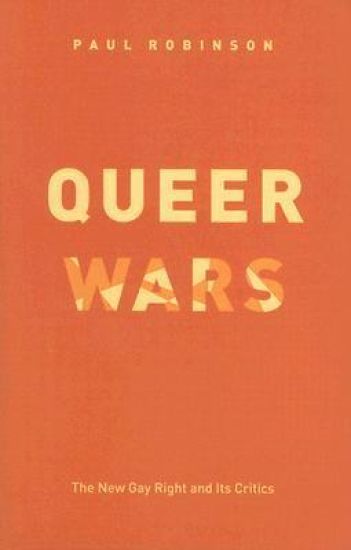
Queer Wars

Queer Wars

Paul Robinson

University of Chicago Press
2006
nidottu
The first extended consideration of gay conservatism and its more trenchant critics is offered in this detailed examination of three features of this new political movement--the rejection of a commitment to the causes of other marginalized people, the embrace of traditional gender ideals, and a condemnation of sexual promiscuity. Reprint.
Queer Wars

Queer Wars

Paul Robinson

University of Chicago Press
2005
sidottu
From the 1969 rebellion at Stonewall to recent battles over same-sex marriage, Gay Liberation in the United States has always been closely associated with the political left. But in recent years, Gay Liberation has taken a dramatic turn toward the right. And gaycons, as they were once archly referred to in the Nation, have taken politics and the media by storm. New Republic columnist Andrew Sullivan, for instance, is one of the most popular bloggers on the Internet. Writer Bruce Bawer, meanwhile, is celebrated for his incisive criticism of gay culture and its connections with camp and diva worship.Queer Wars limns this new gay right, offering the first extended consideration of gay conservatism and its more trenchant critics. Here celebrated historian of gay culture Paul Robinson draws particular attention to three features of this new political movement. First, he explores how gay conservatives have rejected the idea that commitment to gay freedom should involve equal dedication to the causes of other marginalized people, be they racial minorities, women, or the poor. Second, Robinson demonstrates why gay conservatives embrace more traditional gender ideals--why they are hostile to effeminacy among men and mannishness among women. Finally, exploring the support for sexual restraint among gay conservatives, Robinson dissects their condemnation of promiscuity and their assault on behavior they deem dissolute.Timely and rich in suggestive propositions, Queer Wars will prove to be essential reading for anyone interested in gay culture and contemporary politics.
Crime and Calamity in Old Rugeley and Cannock
This book details hundreds of events that happened in and around Rugeley and Cannock in the Victorian era. Almost none of these stories have appeared in print since they were first reported upon. Separate chapters cover accidents on the railways, roads and canals as well as mishaps in the workplace and at home. Discover remarkable happenings which took place at some of the best known places in the vicinity and get a glimpse into the lives of real people of the age, from the highest positions in society to the very lowest. Read fascinating stories about fires, floods, crashes and explosions, accounts of cruelty, neglect and squalor, and details of crimes ranging from petty theft to murder. Learn of suicide pacts and accidental shootings and follow the trail of dangerous stalkers and brazen fraudsters. You'll meet fighting vicars, heroic firemen, a naked bridegroom, rabid dogs and thieving children as well as uncovering the exploits of one of the most remarkable women Rugeley has ever produced!
Military Honour and the Conduct of War
This study presents the first examination of the influence of ideas of honour on the causes, conduct and ending of wars from Ancient Greece to the present day. Paul Robinson begins with a theoretical examination of the concept of honour, to clearly explain the many contradictions and tensions inherent within honour systems. He then shows how honour has often contradictory and paradoxical effects on the conduct of war and illustrates this through seven case studies: Classical Greece; Ancient Rome; mediaeval Chivalry; Elizabethan England; the American Civil War; the British Empire; and the Western world after World War II (including the Vietnam War and the current conflict in Iraq). Key topics covered include: honour and virtuehonour and the causes of warhonour as a motivation for fightinghonours and rewardsdeath and honourhonour and the conduct of warhonour and the enemyhonour and the ending of warswomen and honourThis book reveals that the often contradictory behaviour of soldiers during war is a product of the contradictions inherent in the concept of honour.This book will be of great interest to all students of military ethics, military history, politics, international relations, anthropology, sociology, philosophy and the history of ideas.
Military Honour and the Conduct of War
This study presents the first examination of the influence of ideas of honour on the causes, conduct and ending of wars from Ancient Greece to the present day. Paul Robinson begins with a theoretical examination of the concept of honour, to clearly explain the many contradictions and tensions inherent within honour systems. He then shows how honour has often contradictory and paradoxical effects on the conduct of war and illustrates this through seven case studies: Classical Greece; Ancient Rome; mediaeval Chivalry; Elizabethan England; the American Civil War; the British Empire; and the Western world after World War II (including the Vietnam War and the current conflict in Iraq). Key topics covered include: honour and virtuehonour and the causes of warhonour as a motivation for fightinghonours and rewardsdeath and honourhonour and the conduct of warhonour and the enemyhonour and the ending of warswomen and honourThis book reveals that the often contradictory behaviour of soldiers during war is a product of the contradictions inherent in the concept of honour.This book will be of great interest to all students of military ethics, military history, politics, international relations, anthropology, sociology, philosophy and the history of ideas.
Community Treatment of Eating Disorders

Community Treatment of Eating Disorders

Paul Robinson

John Wiley Sons Inc
2006
nidottu
The book is intended as a practical guide to setting up, staffing and running eating disorders services. The guidance and advice given is based on the experience of the eating disorder service at the Royal Free, which does not have specialised beds, but which is nevertheless considered to offer one of the best services in the UK. Each element of the service will be considered from referral, inpatient and outpatient treatment, service evaluation and multi-disciplinary teamworking. The book also discuss’s innovative approaches in treatment, including an evaluation of Email Bulimia Therapy. Ties in with NICE guidelines, which highlight the need for local services for treating eating disordersOffers practical guidance on setting up a community model of treatment and on working within a multi-disciplinary teamBased on the Royal Free experience – their Eating Disorders Service has twice been a finalist in the Hospital Doctor Team of the Year awards
Severe and Enduring Eating Disorder (SEED)

Severe and Enduring Eating Disorder (SEED)

Paul Robinson

John Wiley Sons Inc
2009
nidottu
The book explores the clinical challenge of long-term eating disorders and examines the physical and psychological problems, family issues and difficulties in day-to-day living that patients with SEED can experience. Explores the clinical challenge of long-term eating disorders—often compounded by co-morbidity with depression, self-harm, OCD or psychosisEating disorders can persist for many years, yet are rarely classified as ‘severe and enduring’ in the way that other disorders such as schizophrenia can beIntroduces Severe and Enduring Eating Disorder (SEED) as a concept, and draws on detailed case histories to describe its assessment and treatmentExamines the physical and psychological problems, family issues and difficulties in day-to-day living that patients with SEED can experienceDiscusses treatment approaches including Rehabilitation Eating Disorders Psychiatry—also covers treatment in a range of different settings
Freud and His Critics

Freud and His Critics

Paul Robinson

University of California Press
2018
pokkari
Wars against Freud were waged along virtually every front in the 1980s. In Freud and His Critics, Paul Robinson takes on three of Freud's most formidable detractors, mounting a thoughtful, witty, and ultimately devastating critique of the historian of science Frank Sulloway, the psychoanalyst Jeffrey Masson, and the philosopher Adolf Grünbaum. Frank Sulloway contends that Freud took most of his ideas from Darwin and other contemporary thinkers—that he was something of a closet biologist. Jeffrey Masson charges that Freud caved in to peer pressure when he abandoned his early seduction theory (which Masson believes was correct) in favor of the theory of infantile sexuality. Adolf Grünbaum impugns Freud's claim to have grounded his ideas—especially the idea of the unconscious—on solid empirical foundations. Under Robinson's rigorous cross-examination, the evidence of these three accusers proves ambiguous and their arguments biased by underlying assumptions and ideological commitments. Robinson concludes that the anti-Freudian writings of Sulloway, Masson, and Grünbaum reveal more about their authors' prejudices—and about the Zeitgeist of the 1980s—than they do about Freud. Indeed, they fundamentally distort and diminish Freud, pointedly ignoring his remarkable historical achievement—the invention of a new way of thinking about the self that has revolutionized the modern imagination. This title is part of UC Press's Voices Revived program, which commemorates University of California Press’s mission to seek out and cultivate the brightest minds and give them voice, reach, and impact. Drawing on a backlist dating to 1893, Voices Revived makes high-quality, peer-reviewed scholarship accessible once again using print-on-demand technology. This title was originally published in 1993.
Freud and His Critics

Freud and His Critics

Paul Robinson

University of California Press
2024
sidottu
Wars against Freud were waged along virtually every front in the 1980s. In Freud and His Critics, Paul Robinson takes on three of Freud's most formidable detractors, mounting a thoughtful, witty, and ultimately devastating critique of the historian of science Frank Sulloway, the psychoanalyst Jeffrey Masson, and the philosopher Adolf Grünbaum. Frank Sulloway contends that Freud took most of his ideas from Darwin and other contemporary thinkers—that he was something of a closet biologist. Jeffrey Masson charges that Freud caved in to peer pressure when he abandoned his early seduction theory (which Masson believes was correct) in favor of the theory of infantile sexuality. Adolf Grünbaum impugns Freud's claim to have grounded his ideas—especially the idea of the unconscious—on solid empirical foundations. Under Robinson's rigorous cross-examination, the evidence of these three accusers proves ambiguous and their arguments biased by underlying assumptions and ideological commitments. Robinson concludes that the anti-Freudian writings of Sulloway, Masson, and Grünbaum reveal more about their authors' prejudices—and about the Zeitgeist of the 1980s—than they do about Freud. Indeed, they fundamentally distort and diminish Freud, pointedly ignoring his remarkable historical achievement—the invention of a new way of thinking about the self that has revolutionized the modern imagination. This title is part of UC Press's Voices Revived program, which commemorates University of California Press’s mission to seek out and cultivate the brightest minds and give them voice, reach, and impact. Drawing on a backlist dating to 1893, Voices Revived makes high-quality, peer-reviewed scholarship accessible once again using print-on-demand technology. This title was originally published in 1993.
Dictionary of International Security

Dictionary of International Security

Paul Robinson

Polity Press
2007
sidottu
The Dictionary of International Security provides an easily understood introduction to the major concepts, issues, actors and institutions in the world of international security. Its 200 entries offer informed definitions of the subjects in question, as well as insights into the evolving debates over their meaning and importance. Entries are arranged alphabetically, from absolute war to weapons of mass destruction, and cover: types of security, such as national security and co-operative security; key concepts, including anarchy and balance of power; threats to security, from biological weapons to proliferation; responses to these threats, such as arms control and containment; terrorist organisations; topics related to peace and peacebuilding, such as conflict prevention and war termination; key international treaties and arms control initiatives; security and intelligence organisations; international organisations. Each entry is followed by carefully selected recommendations for additional reading to help students deepen their understanding of the topic. Overall, the dictionary is an invaluable resource for students, researchers and policy makers.
Dictionary of International Security

Dictionary of International Security

Paul Robinson

Polity Press
2007
nidottu
The Dictionary of International Security provides an easily understood introduction to the major concepts, issues, actors and institutions in the world of international security. Its 200 entries offer informed definitions of the subjects in question, as well as insights into the evolving debates over their meaning and importance. Entries are arranged alphabetically, from absolute war to weapons of mass destruction, and cover: types of security, such as national security and co-operative security; key concepts, including anarchy and balance of power; threats to security, from biological weapons to proliferation; responses to these threats, such as arms control and containment; terrorist organisations; topics related to peace and peacebuilding, such as conflict prevention and war termination; key international treaties and arms control initiatives; security and intelligence organisations; international organisations. Each entry is followed by carefully selected recommendations for additional reading to help students deepen their understanding of the topic. Overall, the dictionary is an invaluable resource for students, researchers and policy makers.
Realist Guide to Religion and Science
Why do some religious believers slaughter those who refuse to convert to their faith, refuse scientific evidence for an ancient universe, or hold God to be an utterly arbitrary being? Why do some scientists believe that universes pop into existence from nothing, that aliens seeded life on earth, or that fish turn into reptiles by chance processes? The answer, for both, is the same: the abandonment of realism, the human way for knowing reality. In The Realist Guide to Religion and Science, Fr Paul Robinson explains what realism is all about, then undertakes an historical exploration to show how religion and science become irrational when they abandon realism and intellectually fruitful when they embrace it.
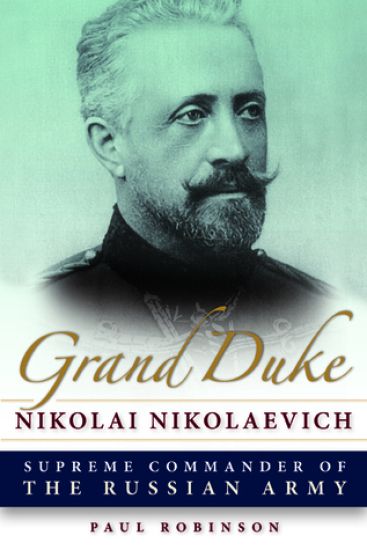
Grand Duke Nikolai Nikolaevich

Grand Duke Nikolai Nikolaevich

Paul Robinson

Northern Illinois University Press
2014
sidottu
Grand Duke Nikolai Nikolaevich Romanov (1856–1929) was a key figure in late Imperial Russia, and one of its foremost soldiers. At the outbreak of World War I, his cousin, Tsar Nicholas II, appointed him Supreme Commander of the Russian Army. From 1914 to 1915, and then again briefly in 1917, he was commander of the largest army in the world in the greatest war the world had ever seen. His appointment reflected the fact that he was perhaps the man the last Emperor of Russia trusted the most. At six foot six, the Grand Duke towered over those around him. His fierce temper was a matter of legend. However, as Robinson's vivid account shows, he had a more complex personality than either his supporters or detractors believed. In a career spanning fifty years, the Grand Duke played a vital role in transforming Russia's political system. In 1905, the Tsar assigned him the duty of coordinating defense and security planning for the entire Russian empire. When the Tsar asked him to assume the mantle of military dictator, the Grand Duke, instead of accepting, persuaded the Tsar to sign a manifesto promising political reforms. Less opportunely, he also had a role in introducing the Tsar and Tsarina to the infamous Rasputin. A few years after the revolution in 1917, the Grand Duke became de facto leader of the Russian émigré community. Despite his importance, the only other biography of the Grand Duke was written by one of his former generals in 1930, a year after his death, and it is only available in Russian. The result of research in the archives of seven countries, this groundbreaking biography—the first to appear in English—covers the Grand Duke's entire life, examining both his private life and his professional career. Paul Robinson's engaging account will be of great value to those interested in World War I and military history, Russian history, and biographies of notable figures.
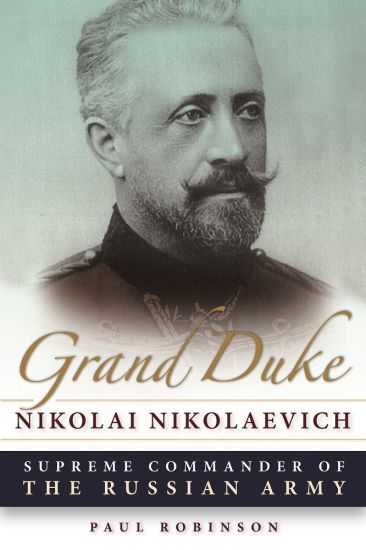
Grand Duke Nikolai Nikolaevich

Grand Duke Nikolai Nikolaevich

Paul Robinson

Northern Illinois University Press
2016
pokkari
Grand Duke Nikolai Nikolaevich Romanov (1856–1929) was a key figure in late Imperial Russia, and one of its foremost soldiers. At the outbreak of World War I, his cousin, Tsar Nicholas II, appointed him Supreme Commander of the Russian Army. From 1914 to 1915, and then again briefly in 1917, he was commander of the largest army in the world in the greatest war the world had ever seen. His appointment reflected the fact that he was perhaps the man the last Emperor of Russia trusted the most. At six foot six, the Grand Duke towered over those around him. His fierce temper was a matter of legend. However, as Robinson's vivid account shows, he had a more complex personality than either his supporters or detractors believed. In a career spanning fifty years, the Grand Duke played a vital role in transforming Russia's political system. In 1905, the Tsar assigned him the duty of coordinating defense and security planning for the entire Russian empire. When the Tsar asked him to assume the mantle of military dictator, the Grand Duke, instead of accepting, persuaded the Tsar to sign a manifesto promising political reforms. Less opportunely, he also had a role in introducing the Tsar and Tsarina to the infamous Rasputin. A few years after the revolution in 1917, the Grand Duke became de facto leader of the Russian émigré community. Despite his importance, the only other biography of the Grand Duke was written by one of his former generals in 1930, a year after his death, and it is only available in Russian. The result of research in the archives of seven countries, this groundbreaking biography—the first to appear in English—covers the Grand Duke's entire life, examining both his private life and his professional career. Paul Robinson's engaging account will be of great value to those interested in World War I and military history, Russian history, and biographies of notable figures.
The Thyroid Patient's Manual

The Thyroid Patient's Manual

Paul Robinson

Elephant in the Room Books
2018
nidottu
Paul Robinson is a thyroid patient with over thirty years of personal knowledge of hypothyroidism, and over ten years experience of supporting thousands of thyroid patients. He has already written two ground-breaking books: 'Recovering with T3' and 'The CT3M Handbook', which focus on recovering from thyroid and adrenal problems using the T3 thyroid hormone (Liothyronine) in the safest and most effective way. The 'Thyroid Patient's Manual' is a practical, easy-to-read book, which provides an excellent resource for people who are trying to understand hypothyroidism. It is aimed at patients who suspect they have low thyroid hormone levels, those who have just been diagnosed and are beginning treatment, and those who are on treatment already, but are still feeling ill. This book deals with all the main thyroid hormone treatment options, including T4 (Levothyroxine), NDT (natural desiccated thyroid), T3 (Liothyronine) and all combinations. An easy-to-grasp series of steps is presented that includes information on thyroid and adrenal hormones, diagnosis of hypothyroidism and selecting the right treatment. All the common problems that can get in the way are discussed, along with their solutions. It is consistent with recent research studies on thyroid diagnosis and treatment. The 'Thyroid Patient's Manual' gives you the tools needed to gain some control of your health, and to be able to work productively with your doctor, so that you can recover your health as fast as possible. Note: This book does not replace either of the previous two books ('Recovering with T3' and 'The CT3M Handbook'), which are vital to read for those trying to use the T3 thyroid hormone safely and successfully.