Kirjojen hintavertailu. Mukana 12 083 983 kirjaa ja 12 kauppaa.

Kirjahaku

Etsi kirjoja tekijän nimen, kirjan nimen tai ISBN:n perusteella.

11 kirjaa tekijältä Paul S. Sutter

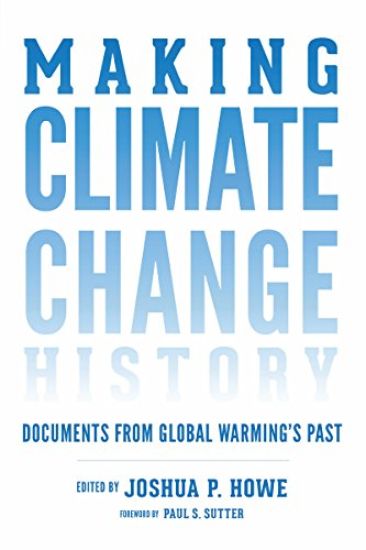
Making Climate Change History

Making Climate Change History

Paul S. Sutter

University of Washington Press
2017
sidottu
This collection pulls together key documents from the scientific and political history of climate change, including congressional testimony, scientific papers, newspaper editorials, court cases, and international declarations. Far more than just a compendium of source materials, the book uses these documents as a way to think about history, while at the same time using history as a way to approach the politics of climate change from a new perspective. Making Climate Change History provides the necessary background to give readers the opportunity to pose critical questions and create plausible answers to help them understand climate change in its historical context; it also illustrates the relevance of history to building effective strategies for dealing with the climatic challenges of the future.
Making Climate Change History

Making Climate Change History

Paul S. Sutter

University of Washington Press
2017
pokkari
This collection pulls together key documents from the scientific and political history of climate change, including congressional testimony, scientific papers, newspaper editorials, court cases, and international declarations. Far more than just a compendium of source materials, the book uses these documents as a way to think about history, while at the same time using history as a way to approach the politics of climate change from a new perspective. Making Climate Change History provides the necessary background to give readers the opportunity to pose critical questions and create plausible answers to help them understand climate change in its historical context; it also illustrates the relevance of history to building effective strategies for dealing with the climatic challenges of the future.
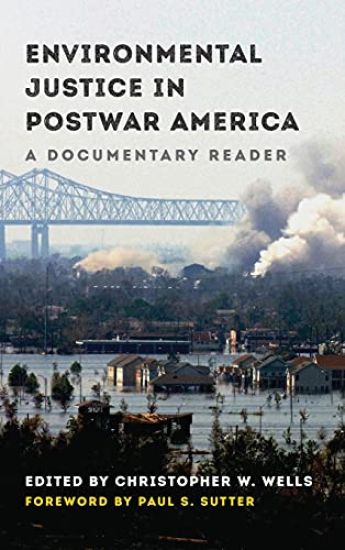
Environmental Justice in Postwar America

Environmental Justice in Postwar America

Paul S. Sutter

University of Washington Press
2018
sidottu
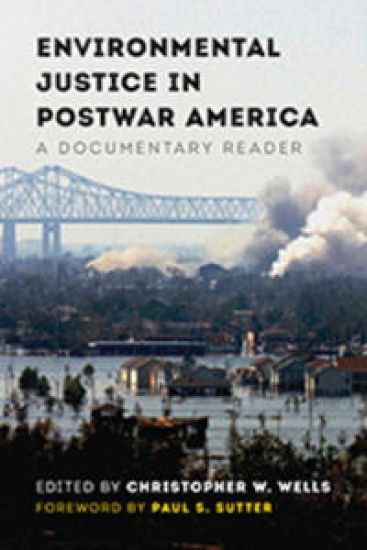
In the decades after World War II, the American economy entered a period of prolonged growth that created unprecedented affluence—but these developments came at the cost of a host of new environmental problems. Unsurprisingly, a disproportionate number of them, such as pollution-emitting factories, waste-handling facilities, and big infrastructure projects, ended up in communities dominated by people of color. Constrained by long-standing practices of segregation that limited their housing and employment options, people of color bore an unequal share of postwar America's environmental burdens.This reader collects a wide range of primary source documents on the rise and evolution of the environmental justice movement. The documents show how environmentalists in the 1970s recognized the unequal environmental burdens that people of color and low-income Americans had to bear, yet failed to take meaningful action to resolve them. Instead, activism by the affected communities themselves spurred the environmental justice movement of the 1980s and early 1990s. By the turn of the twenty-first century, environmental justice had become increasingly mainstream, and issues like climate justice, food justice, and green-collar jobs had taken their places alongside the protection of wilderness as "environmental" issues.Environmental Justice in Postwar America is a powerful tool for introducing students to the US environmental justice movement and the sometimes tense relationship between environmentalism and social justice.For more information, visit the editor's website: http://cwwells.net/PostwarEJ
Environmental Justice in Postwar America

Environmental Justice in Postwar America

Paul S. Sutter

University of Washington Press
2018
pokkari
In the decades after World War II, the American economy entered a period of prolonged growth that created unprecedented affluence—but these developments came at the cost of a host of new environmental problems. Unsurprisingly, a disproportionate number of them, such as pollution-emitting factories, waste-handling facilities, and big infrastructure projects, ended up in communities dominated by people of color. Constrained by long-standing practices of segregation that limited their housing and employment options, people of color bore an unequal share of postwar America's environmental burdens.This reader collects a wide range of primary source documents on the rise and evolution of the environmental justice movement. The documents show how environmentalists in the 1970s recognized the unequal environmental burdens that people of color and low-income Americans had to bear, yet failed to take meaningful action to resolve them. Instead, activism by the affected communities themselves spurred the environmental justice movement of the 1980s and early 1990s. By the turn of the twenty-first century, environmental justice had become increasingly mainstream, and issues like climate justice, food justice, and green-collar jobs had taken their places alongside the protection of wilderness as "environmental" issues.Environmental Justice in Postwar America is a powerful tool for introducing students to the US environmental justice movement and the sometimes tense relationship between environmentalism and social justice.For more information, visit the editor's website: http://cwwells.net/PostwarEJ
Debating Malthus

Debating Malthus

Paul S. Sutter

UNIVERSITY OF WASHINGTON PRESS
2022
sidottu
Introducing students to the place of population in environmental thinkingFor centuries, thinking about the earth's increasing human population has been tied to environmental ideas and political action. This highly teachable collection of contextualized primary sources allows students to follow European and North American discussions about intertwined and evolving concepts of population, resources, and the natural environment from early contexts in the sixteenth century through to the present day.Edited and introduced by Robert J. Mayhew, a noted biographer of Thomas Robert Malthus—whose Essay on the Principle of Population (1798), excerpted here, is an influential and controversial take on the topic—this volume explores themes including evolution, eugenics, war, social justice, birth control, environmental Armageddon, and climate change. Other responses to the idea of new "population bombs" are represented here by radical feminist work, by Indigenous views of the population-environment nexus, and by intersectional race-gender approaches. By learning the patterns of this discourse, students will be better able to critically evaluate historical conversations and contemporary debates.
Debating Malthus

Debating Malthus

Paul S. Sutter

UNIVERSITY OF WASHINGTON PRESS
2022
pokkari
Introducing students to the place of population in environmental thinkingFor centuries, thinking about the earth's increasing human population has been tied to environmental ideas and political action. This highly teachable collection of contextualized primary sources allows students to follow European and North American discussions about intertwined and evolving concepts of population, resources, and the natural environment from early contexts in the sixteenth century through to the present day.Edited and introduced by Robert J. Mayhew, a noted biographer of Thomas Robert Malthus—whose Essay on the Principle of Population (1798), excerpted here, is an influential and controversial take on the topic—this volume explores themes including evolution, eugenics, war, social justice, birth control, environmental Armageddon, and climate change. Other responses to the idea of new "population bombs" are represented here by radical feminist work, by Indigenous views of the population-environment nexus, and by intersectional race-gender approaches. By learning the patterns of this discourse, students will be better able to critically evaluate historical conversations and contemporary debates.
Nuclear Reactions

Nuclear Reactions

Paul S. Sutter

University of Washington Press
2016
sidottu
Nuclear Reactions explores the nuclear consensus that emerged in post–World War II America, characterized by widespread support for a diplomatic and military strategy based on nuclear weapons and a vision of economic growth that welcomed nuclear energy both for the generation of electricity and for other peaceful and industrial uses. Unease about the environmental consequences of nuclear energy and weapons development became apparent by the early 1960s and led to the first challenges to that consensus.The documents in this collection address issues such as the arms race, "mutually assured destruction," the emergence of ecosystems ecology and the environmental movement, nuclear protests, and climate change. They raise questions about how nuclear energy shaped—and continues to shape—the contours of postwar American life. These questions provide a useful lens through which to understand the social, economic, and environmental tradeoffs embedded within American choices about the use and management of nuclear energy.
Nuclear Reactions

Nuclear Reactions

Paul S. Sutter

University of Washington Press
2016
pokkari
Nuclear Reactions explores the nuclear consensus that emerged in post–World War II America, characterized by widespread support for a diplomatic and military strategy based on nuclear weapons and a vision of economic growth that welcomed nuclear energy both for the generation of electricity and for other peaceful and industrial uses. Unease about the environmental consequences of nuclear energy and weapons development became apparent by the early 1960s and led to the first challenges to that consensus.The documents in this collection address issues such as the arms race, "mutually assured destruction," the emergence of ecosystems ecology and the environmental movement, nuclear protests, and climate change. They raise questions about how nuclear energy shaped—and continues to shape—the contours of postwar American life. These questions provide a useful lens through which to understand the social, economic, and environmental tradeoffs embedded within American choices about the use and management of nuclear energy.
Let Us Now Praise Famous Gullies

Let Us Now Praise Famous Gullies

Paul S. Sutter

University of Georgia Press
2015
sidottu
Providence Canyon State Park, also known as Georgia’s “Little Grand Canyon,” preserves a network of massive erosion gullies allegedly caused by poor farming practices during the nineteenth century. It is a park that protects the scenic results of an environmental disaster. While little known today, Providence Canyon enjoyed a modicum of fame in the 1930s. During that decade, local boosters attempted to have Providence Canyon protected as a national park, insisting that it was natural. At the same time, national and international soil experts and other environmental reformers used Providence Canyon as the apotheosis of human, and particularly southern, land abuse.Let Us Now Praise Famous Gullies uses the unlikely story of Providence Canyon—and the 1930s contest over its origins and meaning—to recount the larger history of dramatic human-induced soil erosion across the South and to highlight the role that the region and its erosive agricultural history played in the rise of soil science and soil conservation in America. More than that, though, the book is a meditation on the ways in which our persistent mental habit of separating nature from culture has stunted our ability to appreciate places like Providence Canyon and to understand the larger history of American conservation.
Let Us Now Praise Famous Gullies

Let Us Now Praise Famous Gullies

Paul S. Sutter

University of Georgia Press
2018
pokkari
Providence Canyon State Park, also known as Georgia’s “Little Grand Canyon,” preserves a network of massive erosion gullies allegedly caused by poor farming practices during the nineteenth century. It is a park that protects the scenic results of an environmental disaster. While little known today, Providence Canyon enjoyed a modicum of fame in the 1930s. During that decade, local boosters attempted to have Providence Canyon protected as a national park, insisting that it was natural. At the same time, national and international soil experts and other environmental reformers used Providence Canyon as the apotheosis of human, and particularly southern, land abuse.Let Us Now Praise Famous Gullies uses the unlikely story of Providence Canyon—and the 1930s contest over its origins and meaning—to recount the larger history of dramatic human-induced soil erosion across the South and to highlight the role that the region and its erosive agricultural history played in the rise of soil science and soil conservation in America. More than that, though, the book is a meditation on the ways in which our persistent mental habit of separating nature from culture has stunted our ability to appreciate places like Providence Canyon and to understand the larger history of American conservation.
Social Roots

Social Roots

Paul S. Sutter

UNIVERSITY OF GEORGIA PRESS
2024
sidottu
Social Roots is an interdisciplinary volume that draws on contributions from inside and outside the academy to explore the relationships between nature and culture as expressed in the foodways of the Georgia and South Carolina coasts. In seventeen chapters, a handful of bespoke artworks, and recipes, Sarah V. Ross and her contributors illuminate the invisible threads that run in wild tangles through the Lowcountry, connecting massive live oaks and palmetto and freshwater sloughs with tidal waters flooding and draining the most extensive salt marshes on the Eastern Seaboard. These threads connect the landscape from the St. Marys River on the Georgia-Florida border to the confluence of Ashley and Cooper Rivers in Charleston, South Carolina. Flowing threads of tidal creeks—half ocean, half fresh river water—also connect us through time to cultures who feasted on an abundance of shellfish thousands of years ago. An enduring bounty of oysters, shrimps, crabs, clams, and mussels still lure us into their world. Looking across time and geography, this book interweaves fundamental ecological principles as it honors three early cultures: Native American, European, and African. All were enmeshed with the coastal environment. All shared similar threads connecting food production: hunting, foraging, planting, cultivating, harvesting, preserving, and cooking. Across the ages, this ongoing connection—among land, harvester or farmer, and cook—forms the infrastructure of cookery practices. In large part, Lowcountry foodways are built simultaneously on scarcity and fickle opportunity.