Kirjojen hintavertailu. Mukana 11 627 363 kirjaa ja 12 kauppaa.

Kirjahaku

Etsi kirjoja tekijän nimen, kirjan nimen tai ISBN:n perusteella.

6 kirjaa tekijältä Paul Sagar

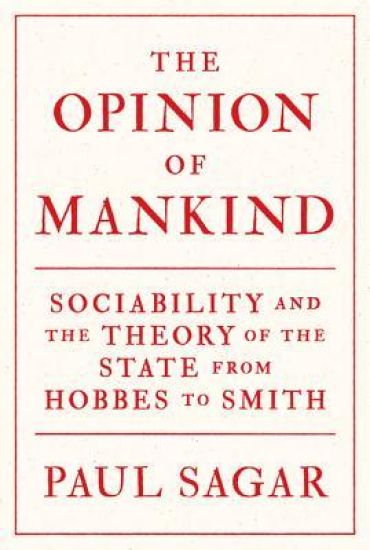
The Opinion of Mankind

The Opinion of Mankind

Paul Sagar

PRINCETON UNIVERSITY PRESS
2018
sidottu
How David Hume and Adam Smith forged a new way of thinking about the modern stateWhat is the modern state? Conspicuously undertheorized in recent political theory, this question persistently animated the best minds of the Enlightenment. Recovering David Hume and Adam Smith's long-underappreciated contributions to the history of political thought, The Opinion of Mankind considers how, following Thomas Hobbes's epochal intervention in the mid-seventeenth century, subsequent thinkers grappled with explaining how the state came into being, what it fundamentally might be, and how it could claim rightful authority over those subject to its power.Hobbes has cast a long shadow over Western political thought, particularly regarding the theory of the state. This book shows how Hume and Smith, the two leading lights of the Scottish Enlightenment, forged an alternative way of thinking about the organization of modern politics. They did this in part by going back to the foundations: rejecting Hobbes's vision of human nature and his arguments about our capacity to form stable societies over time. In turn, this was harnessed to a deep reconceptualization of how to think philosophically about politics in a secular world. The result was an emphasis on the "opinion of mankind," the necessary psychological basis of all political organization.Demonstrating how Hume and Smith broke away from Hobbesian state theory, The Opinion of Mankind also suggests ways in which these thinkers might shape how we think about politics today, and in turn how we might construct better political theory.
The Opinion of Mankind

The Opinion of Mankind

Paul Sagar

Princeton University Press
2019
pokkari
How David Hume and Adam Smith forged a new way of thinking about the modern stateWhat is the modern state? Conspicuously undertheorized in recent political theory, this question persistently animated the best minds of the Enlightenment. Recovering David Hume and Adam Smith's long-underappreciated contributions to the history of political thought, The Opinion of Mankind considers how, following Thomas Hobbes's epochal intervention in the mid-seventeenth century, subsequent thinkers grappled with explaining how the state came into being, what it fundamentally might be, and how it could claim rightful authority over those subject to its power.Hobbes has cast a long shadow over Western political thought, particularly regarding the theory of the state. This book shows how Hume and Smith, the two leading lights of the Scottish Enlightenment, forged an alternative way of thinking about the organization of modern politics. They did this in part by going back to the foundations: rejecting Hobbes's vision of human nature and his arguments about our capacity to form stable societies over time. In turn, this was harnessed to a deep reconceptualization of how to think philosophically about politics in a secular world. The result was an emphasis on the "opinion of mankind," the necessary psychological basis of all political organization.Demonstrating how Hume and Smith broke away from Hobbesian state theory, The Opinion of Mankind also suggests ways in which these thinkers might shape how we think about politics today, and in turn how we might construct better political theory.
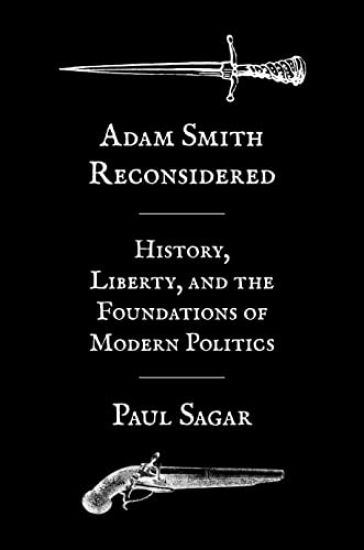
Adam Smith Reconsidered

Adam Smith Reconsidered

Paul Sagar

PRINCETON UNIVERSITY PRESS
2022
sidottu
A radical reinterpretation of Adam Smith that challenges economists, moral philosophers, political theorists, and intellectual historians to rethink him—and why he mattersAdam Smith has long been recognized as the father of modern economics. More recently, scholars have emphasized his standing as a moral philosopher—one who was prepared to critique markets as well as to praise them. But Smith’s contributions to political theory are still underappreciated and relatively neglected. In this bold, revisionary book, Paul Sagar argues that not only have the fundamentals of Smith’s political thought been widely misunderstood, but that once we understand them correctly, our estimations of Smith as economist and as moral philosopher must radically change.Rather than seeing Smith either as the prophet of the free market, or as a moralist who thought the dangers of commerce lay primarily in the corrupting effects of trade, Sagar shows why Smith is more thoroughly a political thinker who made major contributions to the history of political thought. Smith, Sagar argues, saw war, not commerce, as the engine of political change and he was centrally concerned with the political, not moral, dimensions of—and threats to—commercial societies. In this light, the true contours and power of Smith’s foundational contributions to western political thought emerge as never before.Offering major reinterpretations of Smith’s political, moral, and economic ideas, Adam Smith Reconsidered seeks to revolutionize how he is understood. In doing so, it recovers Smith’s original way of doing political theory, one rooted in the importance of history and the necessity of maintaining a realist sensibility, and from which we still have much to learn.
Adam Smith Reconsidered

Adam Smith Reconsidered

Paul Sagar

PRINCETON UNIVERSITY PRESS
2024
pokkari
A radical reinterpretation of Adam Smith that challenges economists, moral philosophers, political theorists, and intellectual historians to rethink him—and why he mattersAdam Smith has long been recognized as the father of modern economics. More recently, scholars have emphasized his standing as a moral philosopher—one who was prepared to critique markets as well as to praise them. But Smith’s contributions to political theory are still underappreciated and relatively neglected. In this bold, revisionary book, Paul Sagar argues that not only have the fundamentals of Smith’s political thought been widely misunderstood, but that once we understand them correctly, our estimations of Smith as economist and as moral philosopher must radically change.Rather than seeing Smith either as the prophet of the free market, or as a moralist who thought the dangers of commerce lay primarily in the corrupting effects of trade, Sagar shows why Smith is more thoroughly a political thinker who made major contributions to the history of political thought. Smith, Sagar argues, saw war, not commerce, as the engine of political change and he was centrally concerned with the political, not moral, dimensions of—and threats to—commercial societies. In this light, the true contours and power of Smith’s foundational contributions to western political thought emerge as never before.Offering major reinterpretations of Smith’s political, moral, and economic ideas, Adam Smith Reconsidered seeks to revolutionize how he is understood. In doing so, it recovers Smith’s original way of doing political theory, one rooted in the importance of history and the necessity of maintaining a realist sensibility, and from which we still have much to learn.
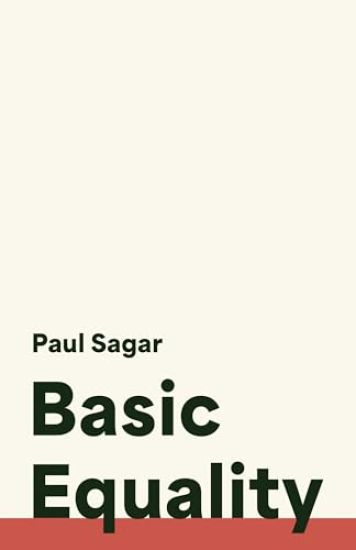
Basic Equality

Basic Equality

Paul Sagar

PRINCETON UNIVERSITY PRESS
2024
sidottu
An innovative argument that vindicates our normative commitment to basic equality, synthesising philosophy, history, and psychologyWhat makes human beings one another’s equals? That we are "basic equals" has become a bedrock assumption in Western moral and political philosophy. And yet establishing why we ought to believe this claim has proved fiendishly difficult, floundering in the face of the many inequalities that characterise the human condition. In this provocative work, Paul Sagar offers a novel approach to explaining and justifying basic equality. Rather than attempting to find an independent foundation for basic equality, he argues, we should instead come to see our commitment to this idea as the result of the practice of treating others as equals. Moreover, he continues, it is not enough to grapple with the problem through philosophy alone—by just thinking very hard, in our armchairs; we must draw insights from history and psychology as well.Sagar writes that, as things stand, there appear to be no good arguments for believing in the truth of basic equality. Indeed, for much of Western intellectual history and social practice, basic inequality has been the default position. How is it then, Sagar asks, that in Western societies, in a period of less than a century, basic equality emerged as the dominant view? Sagar approaches this not as a mere philosophical puzzle, but as a dramatic historical development. In so doing, he shows us what is at stake when human beings treat one another as equals just because they are human beings.
Basic Equality

Basic Equality

Paul Sagar

PRINCETON UNIVERSITY PRESS
2026
pokkari
An innovative argument that vindicates our normative commitment to basic equality, synthesising philosophy, history, and psychology What makes human beings one another’s equals? That we are "basic equals" has become a bedrock assumption in Western moral and political philosophy. And yet establishing why we ought to believe this claim has proved fiendishly difficult, floundering in the face of the many inequalities that characterise the human condition. In this provocative work, Paul Sagar offers a novel approach to explaining and justifying basic equality. Rather than attempting to find an independent foundation for basic equality, he argues, we should instead come to see our commitment to this idea as the result of the practice of treating others as equals. Moreover, he continues, it is not enough to grapple with the problem through philosophy alone—by just thinking very hard, in our armchairs; we must draw insights from history and psychology as well. Sagar writes that, as things stand, there appear to be no good arguments for believing in the truth of basic equality. Indeed, for much of Western intellectual history and social practice, basic inequality has been the default position. How is it then, Sagar asks, that in Western societies, in a period of less than a century, basic equality emerged as the dominant view? Sagar approaches this not as a mere philosophical puzzle, but as a dramatic historical development. In so doing, he shows us what is at stake when human beings treat one another as equals just because they are human beings.