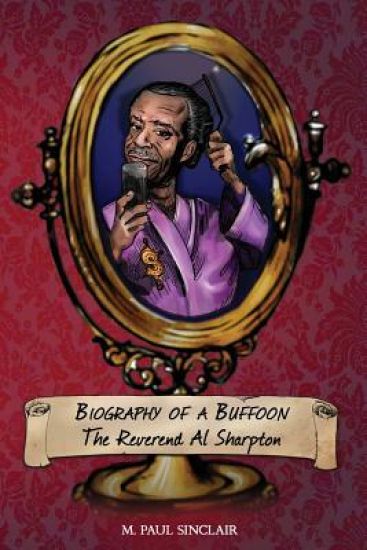
While Paul Sinclair uses the life of Reverend Al Sharpton as the foundation for his cutting political commentary, his message isn't about a single person. Instead, Sinclair examines Sharpton's tragicomedic relationship with the black community and uses it as an example of greater issues-the psychosis of deficiencies and dissonance of identities formed in oppression that gives rise to exploitation by charlatan politicians, preachers, and activists. Sinclair, who has spent his life championing diversity in the workplace and fighting racism in his own life, warns you against believing in charlatans, demagogues, and conmen bearing rhetorical gifts of waging "issues" campaigns on behalf of the oppressed and victimized in society. He uses examples from Sharpton's life as lessons in identifying and avoiding narcissists, megalomaniacs, and sanctioned hustlers. In doing so, Sinclair addresses controversial events, including Sharpton's extensive history of bartering black votes for endorsement cash in local New York City mayoral races, his "rent-a-protests" attempts at corporate shakedowns, and his national presidential campaign in 2004 that was financed and managed by visceral Republican opponents of the Democratic Party, seeking to weaken it. Sharpton's propensity for inventions and self-aggrandizement through association with the famous are also cited. This includes placing himself in Kinshasa, Zaire, for the famed 1974 Muhammad Ali-George Foreman boxing matchup when Sharpton was really sixty-four hundred miles away in New York City. Dropping himself in midst of Shirley Chisholm's historic 1972 presidential campaign is also cited, among many equally doubtful examples. Most importantly, Sinclair shows how the black leadership and the Democratic Party have been insidiously weakened from within by a man who subordinated the former by blackmailing the latter. His shocking indictment of Sharpton stems from Sharpton's own words. Sinclair tracks events, claims, and characters through Sharpton's own publications and points out the falsity of words and events Sharpton has written about. Throughout, Sinclair stresses the need for a new generation of courageous, morally untainted, and transparent black leaders. He points out the hypocrisy of Sharpton and others as a powerful warning of the perils of ignoring history and accepting anything at face value. In the end, he suggests that only black America can arrest its own exploitation and negation, the start of which is the removal of men like Reverend Sharpton from center stage.