
Kirjahaku
Etsi kirjoja tekijän nimen, kirjan nimen tai ISBN:n perusteella.
26 kirjaa tekijältä Paul Sutton

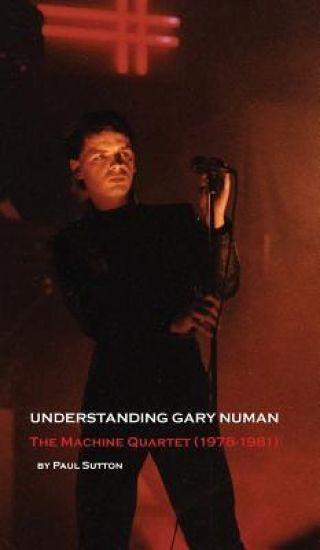
The first analytical study of the pioneering English musician. The historian, Paul Sutton begins by taking the reader through a vastly entertaining potted history of rock music pioneers, tracing them all back to "a delta of Mississippi mud from where howled the first harmonica, and from where was heard the first blue plucking finger on string," to show that popular music was strictly The Imitation Game until Gary Numan came along with his Machine Quartet, four albums that completely re-invigorated rock and roll. "Numan's music added so many new strands of DNA to the gene pool of what hitherto had been dead Mississippi mud that the transformative effect was immediate and everlasting." Artists major, from Frank Zappa, Neil Young and Alice Cooper, and bands then minor, including Tears for Fears and Depeche Mode, all stopped what they were doing and added lessons learned from Numan to their art. Sutton looks at the influence on Numan of David Bowie, Brian Eno, Kraftwerk and John Foxx, and deconstructs Numan's cryptic lyrics from the first single to the fourth album in order to unlock the art and mind of the world's first Asperger's pop star.

The first analytical study of the pioneering English musician. The historian, Paul Sutton begins by taking the reader through an entertaining potted history of rock music pioneers, tracing them all back to "a delta of Mississippi mud from where howled the first harmonica, and from where was heard the first blue plucking finger on string", to show that popular music was strictly The Imitation Game until Gary Numan came along with his Machine Quartet, four albums that completely re-invigorated rock and roll."Numan's music added so many new strands of DNA to the gene pool of what hitherto had been dead Mississippi mud that the transformative effect was immediate and everlasting."Artists major, from Frank Zappa, Neil Young and Alice Cooper, and bands then minor, including Tears for Fears and Depeche Mode, all stopped what they were doing and added lessons learned from Numan to their art.Sutton looks at the influence on Numan of David Bowie, Brian Eno, Kraftwerk and John Foxx, and deconstructs Numan's cryptic lyrics from the first single to the fourth album in order to unlock the art and mind of the world's first Asperger's pop star.
Standardized curricula and rigid approaches to teaching don’t engage students and don’t allow teachers to bring their true expertise to the classroom. But there is another path. Learn how to engage in instructional resistance to bring joy, purposefulness, and rigor back into your classrooms. In this empowering book, Paul S. Sutton shows how you can use your instructional expertise and skills to better serve students by resisting wrong-headed curricular mandates imposed upon you. He offers an instructional resistance framework that gives you a way to respond to the practices and policies you know are not in the best interest of your students. You’ll learn that you have more power than you think to question and critique the curricular mandates required by your district and school and make small, actionable, yet powerful changes to your practice that will change your classroom culture and bring more fulfilling teaching and more engaged learning. Throughout, there are case studies, examples, tools, and strategies applicable to all grade levels so you can start to become the teacher you imagined yourself to be, starting the very next day. A Teacher’s Guide to Instructional Resistance is inherently empowering and hopeful. This book will leave you feeling ready to leverage your creative genius in service of all of your students.
Standardized curricula and rigid approaches to teaching don’t engage students and don’t allow teachers to bring their true expertise to the classroom. But there is another path. Learn how to engage in instructional resistance to bring joy, purposefulness, and rigor back into your classrooms. In this empowering book, Paul S. Sutton shows how you can use your instructional expertise and skills to better serve students by resisting wrong-headed curricular mandates imposed upon you. He offers an instructional resistance framework that gives you a way to respond to the practices and policies you know are not in the best interest of your students. You’ll learn that you have more power than you think to question and critique the curricular mandates required by your district and school and make small, actionable, yet powerful changes to your practice that will change your classroom culture and bring more fulfilling teaching and more engaged learning. Throughout, there are case studies, examples, tools, and strategies applicable to all grade levels so you can start to become the teacher you imagined yourself to be, starting the very next day. A Teacher’s Guide to Instructional Resistance is inherently empowering and hopeful. This book will leave you feeling ready to leverage your creative genius in service of all of your students.
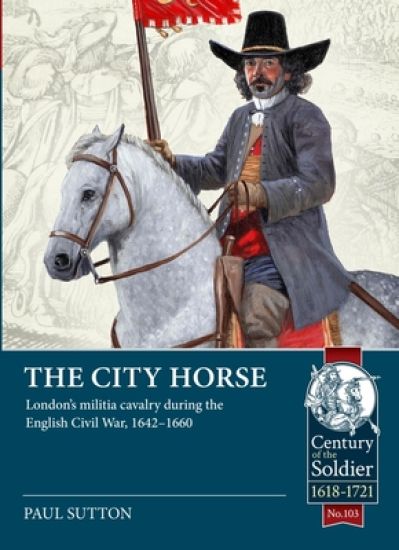
Throughout the English Civil War numerous militia and auxiliary cavalry formations were raised at the behest of Parliament in and around the City of London, which have been collectively called the City Horse. Using an extensive array of primary sources this book describes in detail the raising, equipping, maintenance and deployment of these units and analyses how effective they were in the Parliamentary war effort. The book follows the various units from their baptism of fire at Winchester in 1642, the main campaigns of 1643 & 1644, through to their peripheral role in the Parliamentary victory in 1645/46. It then describes the important role they played during the heady summer of 1647 as the New Model Army marched on the nation's capital to seek redress, as well as the part they played in the political turmoil in London during the Second Civil War in 1648. It further describes their reorganization under the Commonwealth, their participation at the Battle of Worcester in 1651, how some of the senior officers sought to prolong the English Republic and finally, how the City Horse welcomed the entry of Charles II into London in 1660. Uniquely amongst the units raised during the wars, the City Horse served throughout the conflict.The book demonstrates clearly how political imperatives created and molded this body of troops and how it was used as a pawn in the greater game of chess that was the English Revolution. It is a story of zealous political and religious individuals, of greed, avarice, treachery and naked ambition. It is a story of individuals, brought together by the political maelstrom of their times and how they endeavored to do what they considered to be right. The book recounts bravery and also not a small amount of cowardice.Finally, the book is a testimony to those Londoner's who served, and to those who died, in the City Horse, a military formation until now that has been sadly neglected by military historians.
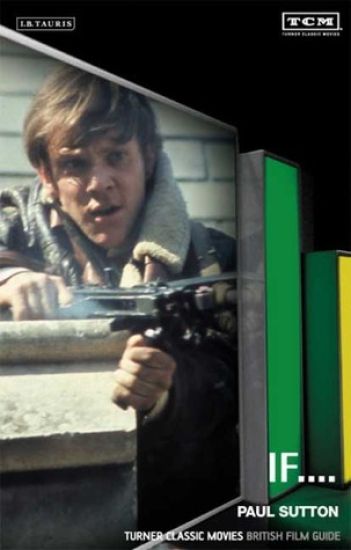
Lindsay Anderson's 1968 masterpiece, "If...", deals fundamentally - and controversially - with England and quintessential 'Englishness'. Coming six years after Anderson's double Oscar-nominated debut feature, "This Sporting Life", "If..." was the first film ever with a British setting and cast to win the Palme d'Or for Best Film at Cannes. The fruit of Anderson's first-hand studies of the Czech, Polish and Indian New Waves led by Milos Forman, Andrzej Wajda and, most famously, Satyajit Ray, it prophesied - and then mirrored - an international outbreak of youthful rebellion. An authority on Lindsay Anderson and his films, Sutton here draws on massive quantities of original material: Anderson's private archive, which illuminates the film's autobiographical elements; the original script "Crusaders"; the sequel on which he was working at the time of his death; interviews with key members of cast and crew including lead Malcolm McDowell, all are here explored to unravel the mysteries of a film which continues to delight, enrage and inspire.
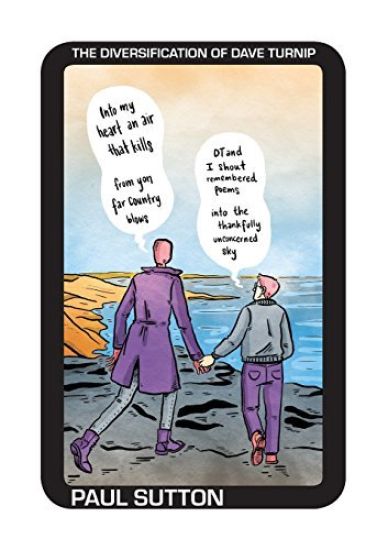
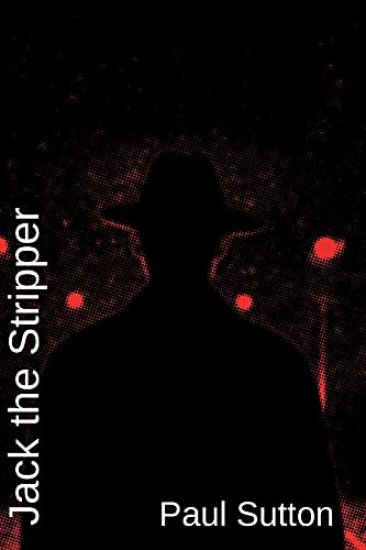
The unadorned language of Jack the Stripper ranges from the bitter comedy of monologues like 'His Story' to the touching pathos of the elegy 'Gone Below' and the vision of lost pastoral in 'Mud and Sun', taking in, en route, a hilarious skit of Arthur Conan Doyle. The speaker in these poems spares no-one - least of all himself - and presents a vision of contemporary life in which "literature had vanished, but the causes grew." In an age of competing orthodoxies, each sure of its rightness, we need what these poems offer; a contrariness, a refusal to say the right thing, a finely-judged deployment of irony and satire. Paul Sutton is an essential poet.- Alan BakerI'm not sure if any poet evokes the spiritual emptiness, the underlying soul-sapping blandness of life, and the sense of loss (but loss of what?) in contemporary Britain better than Paul Sutton. It's not about diversity, ethnicity, gender orientation, or any of the undeniably important issues that fashion demands the writer address at the moment to the point of predictability; Sutton is a writer who sees beyond fashion to the more difficult matter of how we are in the broadest sense.- Martin StannardPaul Sutton is an unfashionably straight-talking and cynical poet, an antidote to woolly-minded liberalism, egotistical confession and right-on propaganda. Whilst I may not always agree with the content or politics of his writing, Sutton is a clear-minded and astute wordsmith with a great sense of characterisation, wit and perceptive eye. I welcome his sly commentary and outspoken interventions, indeed any and every addition to his oeuvre.- Rupert Loydell
"To me, literature only works when freedoms of thought and expression are seen as essentials to liberty and life. That obviously isn't true in our culture where - at best - a crushing elite tolerates 'me speech' but not free speech. Many have suffered at their hands. I fictionalise my own experiences in The Poetry of Gin and Tea. Those misappropriated drinks represent something we've lost, linking our predicament with prophecies from the greatest of 20th-century English writers: George Orwell. He warned how this would happen, through control then destruction of our language. Supposedly done for 'progressive aims' but actually as displays of unchallengeable power, destroying our shared humanity and culture."Paul Sutton"I marvel at Paul Sutton's unique ability to confront the demons of our time and beat them at their own game - the game of words. His poetry is a subtle affront to the censorship around us. His speech is more than simply free." Ewan Morrison

Intercompany Agreements for Transfer Pricing Compliance: A Practical Guide
Paul Sutton
Law Brief Publishing
2019
nidottu
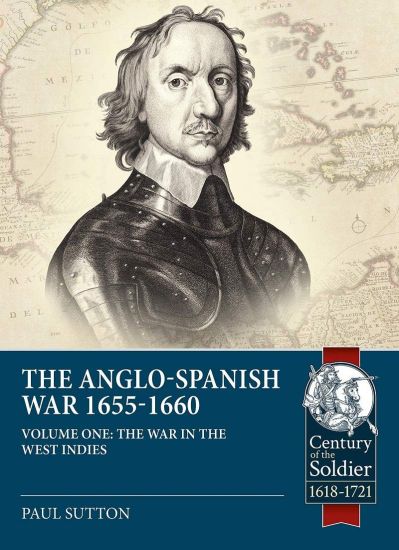
In 1655 Oliver Cromwell, England’s Lord Protector, sent a fleet to attack and seize Spanish possessions in South America. The English was flexing its muscles on the international stage and for political, religious and commercial reasons chose to attacked a weakened Spain in the West Indies believing it a soft target. In late 1654 possibly the largest military force to date ever to leave English shores set sail from Portsmouth under the command of General Robert Venables and Admiral William Penn. This book describes the reasons for war with Spain, the army and fleet assembled at Cromwell’s bidding and its objective. The attack on Hispaniola in April 1655 will be explained in detail along with the reasons for its failure as will the occupation of Jamaica as will the beginnings of the Spanish war of resistance. A subsequent volume will recount the war on Jamaica from the end of 1655 until 1660. This work draws upon extensive primary source material from England and Spain as well as the copious amounts of letters and narratives of soldiers and sailors present, from both sides.
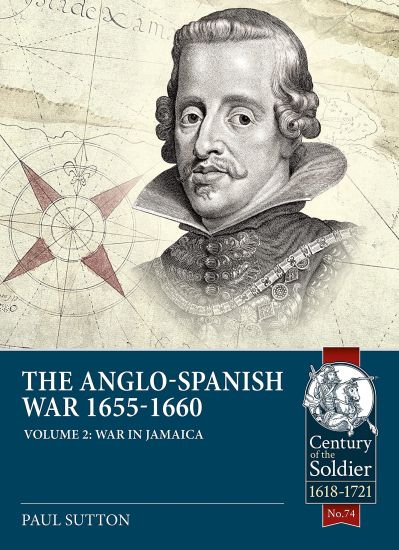
In 1655 Oliver Cromwell, England's Lord Protector, sent a fleet to attack and seize Spanish possessions in South America. After initial failure on Hispaniola the English occupied Jamaica and in so doing started a five year war with Spain in the West Indies, but one that was also to spread to Europe. This is the second of a two book series that describes the military campaign from late 1655 until 1660. It also puts the events that occurred in the West Indies into context with the wider European political situation and explains how the war spread to Europe. Utilising numerous English and Spanish sources the early years of the Jamaican colony are described in detail, whilst extensive previously unpublished Spanish maps of the island are reproduced . The book charts the course of the Spanish resistance and how challenging they were to English settlement but it also illustrates the division between the fractious Spanish government. Under the indomitable leadership of Edward Doyley the English faced high mortality from disease and famine along with Spanish invasion attempts but persevered to establish the jewel in the crown of the British colonial possessions in the Caribbean. The changing nature of the English forces are examined, as is the development of the nascent economy developed as are the roles that privateering and slavery played in this development. The book concludes with the transition from a Commonwealth to a Crown colony and the advent of civilian rule. Appendices also describe the occupation by the English of both Tortuga and the Cayman Islands as they gradually expanded the empire in the northern Caribbean.
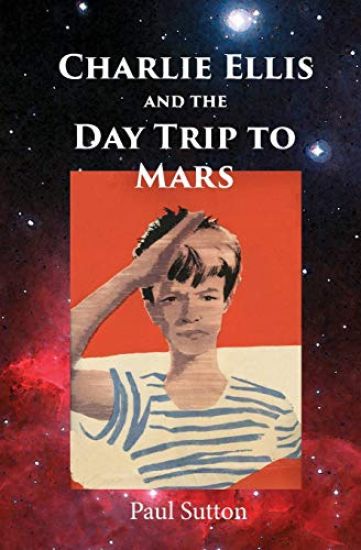
Film of a young boy flying round the Earth in a homemade spaceship brings the world's media to Horsepool's Hill, where the boy, Charlie Ellis, and his engineer, Steve Atherton, announce they are going on a day trip to Mars, an adventure matched in danger only by their new-found fame.