Kirjojen hintavertailu. Mukana 12 083 983 kirjaa ja 12 kauppaa.

Kirjahaku

Etsi kirjoja tekijän nimen, kirjan nimen tai ISBN:n perusteella.

99 kirjaa tekijältä Paul Taylor

Hackers

Hackers

Paul Taylor

Routledge
1999
sidottu
The practice of computer hacking is increasingly being viewed as a major security dilemma in Western societies, by governments and security experts alike. Using a wealth of material taken from interviews with a wide range of interested parties such as computer scientists, security experts and hackers themselves, Paul Taylor provides a uniquely revealing and richly sourced account of the debates that surround this controversial practice. By doing so, he reveals the dangers inherent in the extremes of conciliation and antagonism with which society reacts to hacking and argues that a new middle way must be found if we are to make the most of society's high-tech meddlers.
Hackers

Hackers

Paul Taylor

Routledge
1999
nidottu
The practice of computer hacking is increasingly being viewed as a major security dilemma in Western societies, by governments and security experts alike. Using a wealth of material taken from interviews with a wide range of interested parties such as computer scientists, security experts and hackers themselves, Paul Taylor provides a uniquely revealing and richly sourced account of the debates that surround this controversial practice. By doing so, he reveals the dangers inherent in the extremes of conciliation and antagonism with which society reacts to hacking and argues that a new middle way must be found if we are to make the most of society's high-tech meddlers.
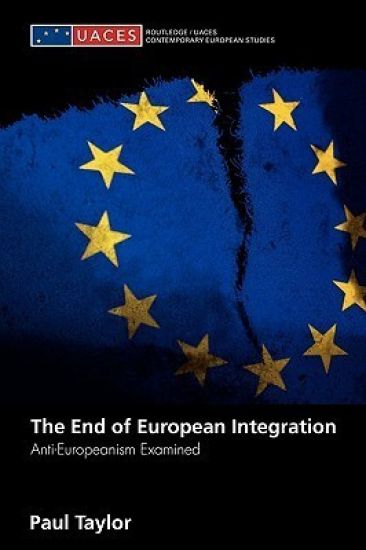
The End of European Integration

The End of European Integration

Paul Taylor

Routledge
2007
sidottu
This book provides an innovative examination of the European Union as it departs from its path of integration. Indeed, so far has it departed that it could be described as having entered a new reality. The original reality was that captured in the evocative phrase in its founding agreement, the Treaty of Rome, that it should be an ever-closer union of peoples. Largely that was the path followed until the 1990s, but by the early twenty-first century there have been signs that it is turning into an ordinary international organization in which there is little overriding sense of purpose.This book discusses the indications of this development and explains why it happened only a decade or so after a peak of popular enthusiasm in the early 1990s. The question was whether the EU would become less important for the member states, as seemed to be the case for the British, or whether the German pattern, in which the EU remained important, would prevail. This book concludes that the former is more likely in part because of problems with the policies of the European Union and its conduct, but more specifically because of the current prevailing political culture in Western Europe. Paul Taylor warns that the current problems are underestimated and that there is the risk of casually throwing away the considerable achievements of the integration process. The End of European Integration will be of interest to all those with an interest in European integration, whether for or against. It will also interest students of European studies, European politics, and politics and international relations in general.
The End of European Integration

The End of European Integration

Paul Taylor

Routledge
2007
nidottu
This book provides an innovative examination of the European Union as it departs from its path of integration. Indeed, so far has it departed that it could be described as having entered a new reality. The original reality was that captured in the evocative phrase in its founding agreement, the Treaty of Rome, that it should be an ever-closer union of peoples. Largely that was the path followed until the 1990s, but by the early twenty-first century there have been signs that it is turning into an ordinary international organization in which there is little overriding sense of purpose.This book discusses the indications of this development and explains why it happened only a decade or so after a peak of popular enthusiasm in the early 1990s. The question was whether the EU would become less important for the member states, as seemed to be the case for the British, or whether the German pattern, in which the EU remained important, would prevail. This book concludes that the former is more likely in part because of problems with the policies of the European Union and its conduct, but more specifically because of the current prevailing political culture in Western Europe. Paul Taylor warns that the current problems are underestimated and that there is the risk of casually throwing away the considerable achievements of the integration process. The End of European Integration will be of interest to all those with an interest in European integration, whether for or against. It will also interest students of European studies, European politics, and politics and international relations in general.
Practical Foundations of Mathematics

Practical Foundations of Mathematics

Paul Taylor

Cambridge University Press
1999
sidottu
Practical Foundations collects the methods of construction of the objects of twentieth century mathematics. Although it is mainly concerned with a framework essentially equivalent to intuitionistic Zermelo-Fraenkel logic, the book looks forward to more subtle bases in categorical type theory and the machine representation of mathematics. Each idea is illustrated by wide-ranging examples, and followed critically along its natural path, transcending disciplinary boundaries between universal algebra, type theory, category theory, set theory, sheaf theory, topology and programming. Students and teachers of computing, mathematics and philosophy will find this book both readable and of lasting value as a reference work.
Text-to-Speech Synthesis

Text-to-Speech Synthesis

Paul Taylor

Cambridge University Press
2009
sidottu
Text-to-Speech Synthesis provides a complete, end-to-end account of the process of generating speech by computer. Giving an in-depth explanation of all aspects of current speech synthesis technology, it assumes no specialised prior knowledge. Introductory chapters on linguistics, phonetics, signal processing and speech signals lay the foundation, with subsequent material explaining how this knowledge is put to use in building practical systems that generate speech. Including coverage of the very latest techniques such as unit selection, hidden Markov model synthesis, and statistical text analysis, explanations of the more traditional techniques such as format synthesis and synthesis by rule are also provided. Weaving together the various strands of this multidisciplinary field, the book is designed for graduate students in electrical engineering, computer science, and linguistics. It is also an ideal reference for practitioners in the fields of human communication interaction and telephony.
Orthodox Anglican Priest's Manual

Orthodox Anglican Priest's Manual

Paul Taylor

Paul Taylor

2009
sidottu
The offices for the sick and dying are the forgotten child of the Book of Common Prayer. The rubric has not been updated since 1549, but much has changed since then. People go to hospitals and nursing homes instead of taking to their bed. With longer life spans and modern medicine, people are living longer and often experience more and longer hospitalizations. Visitation of the Sick has been shortened to reflect use in a hospital or nursing home instead of at home. The Reserved Sacrament is usually preferable when ministering to the sick. The Communion Service is intended for use by chaplains and parish clergy during visits to hospitals, nursing homes, and assisted living facilities. It could also be used outside of chaplaincy. Chaplains have found that many of those who are dying like to have the Psalms read to them, so the Psalter has been included from the 1928 BCP (except for Psalm 23, which is KJV).
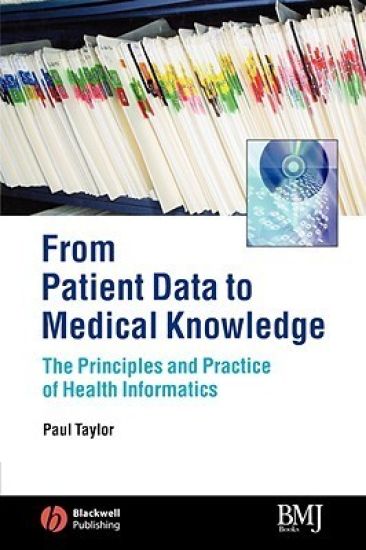
From Patient Data to Medical Knowledge
How can you make the best use of patient data to improve health outcomes? More and more information about patients' health is stored on increasingly interconnected computer systems. But is it shared in ways that help clinicians care for patients? Could it be better used as a resource for researchers? This book is aimed at all those who want to learn about how IT is transforming the way we think about medicine and medical research. The ideas explored here are taken from research carried out around the world, and are presented by a leading authority in Health Informatics based at University College London. This comprehensive guide to the field is split into three sections: What is health informatics? – an introductionTechniques for representing and analysing patient data and medical knowledgeImplementation in the clinical setting: changing practice to improve health care outcomes Whether you are a health professional, NHS manager or IT specialist, this book will help you understand how data can be managed to provide the information you and your colleagues want in the most helpful and accessible way for both you and your patients.
Glory Was Not Their Companion

Glory Was Not Their Companion

Paul Taylor

McFarland Co Inc
2010
pokkari
Recruited primarily from the gentle farmlands of central New York, the men of the Twenty-Sixth New York Volunteer Infantry were among the first to answer their nation's call during the Civil War. Death soon wrapped its cold arms around the regiment, whose losses were great. More often than not the Twenty-Sixth was placed in difficult or impossible tactical situations, which resulted in their being forced to leave the field in disorder. They did their best. This work covers the regiment's entire two-year term of enlistment from May 1861 to May 1863. It draws upon numerous unpublished letters and diaries from the collections of individuals, private libraries and public institutions, as well as contemporary newspapers and obscure government documents. Appendices cover the order of command within campaigns and post assignments. Also included is a regimental roster listing the 1,182 men who served in the Twenty-Sixth.
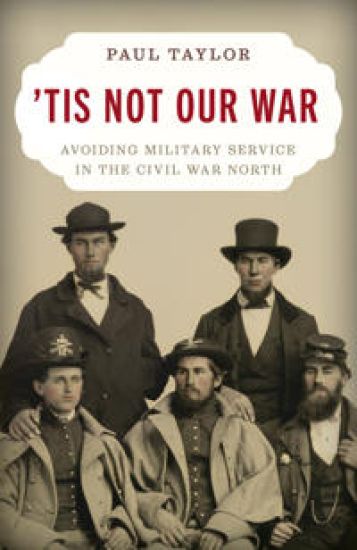
'Tis Not Our War

'Tis Not Our War

Paul Taylor

STACKPOLE BOOKS
2024
sidottu
James McPherson’s classic book For Cause & Comrades explained “why men fought in the Civil War”—and spurred countless other historians to ask and attempt to answer the same question. But few have explored why men did not fight. That’s the question Paul Taylor answers in this groundbreaking Civil War history that examines the reasons why at least 60 percent of service-eligible men in the North chose not to serve and why, to some extent, their communities allowed them to do so. Didthese other men not feel the same patriotic impulses as their fellow citizens who rushed to the enlistment office? Did they not believe in the sanctity of the Union? Was freeing men held in chains under chattel slavery not a righteous moral crusade? And why did some soldiers come to regret their enlistment and try to leave the military?’Tis Not Our War answers these questions by focusing on the thoughts, opinions, and beliefs of average civilians and soldiers. Taylor digs deep into primary sources—newspapers, diaries, letters, archival manuscripts, military reports, and published memoirs—to paint a vivid and richly complex portrait of men who questioned military service in the Civil War and to show that the North was never as unified in support of the war as portrayed in much of America’s collective memory. This book adds to our understanding of the Civil War and the men who fought—and did not fight—in it.
Private Domain

Private Domain

Paul Taylor

University of Pittsburgh Press
1999
nidottu
Taylor explores aspects of himself that have affected his work. He delves into the creation of Aureole and From Sea to Shining Sea, from their initial inception to the ways in which specific dancers influenced the choreography, including such notables as Pina Bausch, Laura Dean, David Parsons, Twyla Tharp, Dan Wagoner, Senta Driver—all of whom went on to form their own companies—and others—Bettie de Jong, Nicholas Gunn, and Carolyn Adams—who remained as much a part of the Taylor style as the choreography itself. Taylor writes with sincerity, wit, and charm of his associations with Martha Graham, Merce Cunningham, Jerome Robbins, Anthony Tudor, George Balanchine, and many others.
International Organization in the Age of Globalization

International Organization in the Age of Globalization

Paul Taylor

Continuum International Publishing Group Ltd.
2005
nidottu
Globalization has increased the need for global international organization, as more global activity has demanded greater global management. Paradoxically, this has also often strengthened the case for regional arrangements, as a way of supporting globalization. International Organization in the Age of Globalization examines how the relentless process of globalization has affected the world's international organizations. The author primarily focuses on the United Nations and the wider UN system, but he also examines the involvement of the WTO, the World Bank and regional organizations such as the EU, ASEAN, ASEM, NAFTA, and MERCOSUR in these processes. This wide ranging study concentrates on three key areas - the maintenance of peace and security, the management of economic and social activity, and the protection of individual welfare - which provide illustrations of the changing relationship between international organizations and individual states, a central interaction in global organization. Clearly and provocatively written, this book will be essential for anyone interested in processes of globalization. Students and researchers in international relations, politics, economics and sociology will benefit from the author's insights into the changing nature of international organization in the twenty-first century.
The Limits of European Integration

The Limits of European Integration

Paul Taylor

TAYLOR FRANCIS LTD
2025
sidottu
The Limits of European Integration (1983) examines the increasing resistance to the loss of authority to EEC institutions in the 1970s and 80s, and the resulting decline in the momentum towards European political integration. The limits which the member states imposed upon their involvement with the European community are assessed, and the various theories and models of integration are discussed.